Pinellia, Ban Xia 半夏
Prepared Pinellia, Zhi Ban Xia 制半夏
Ban Xia (TCM)
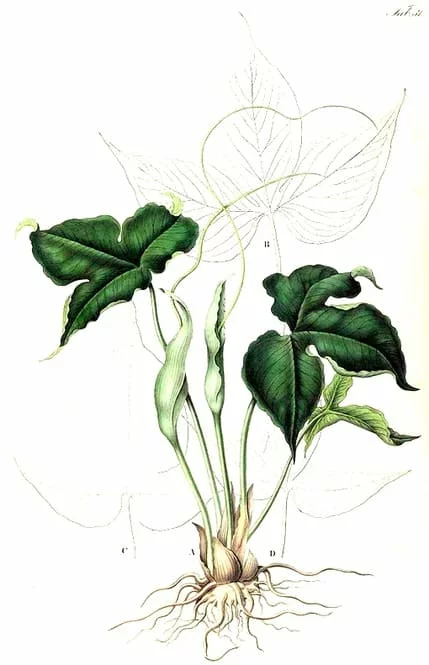
Blume, Rumphia, 1835
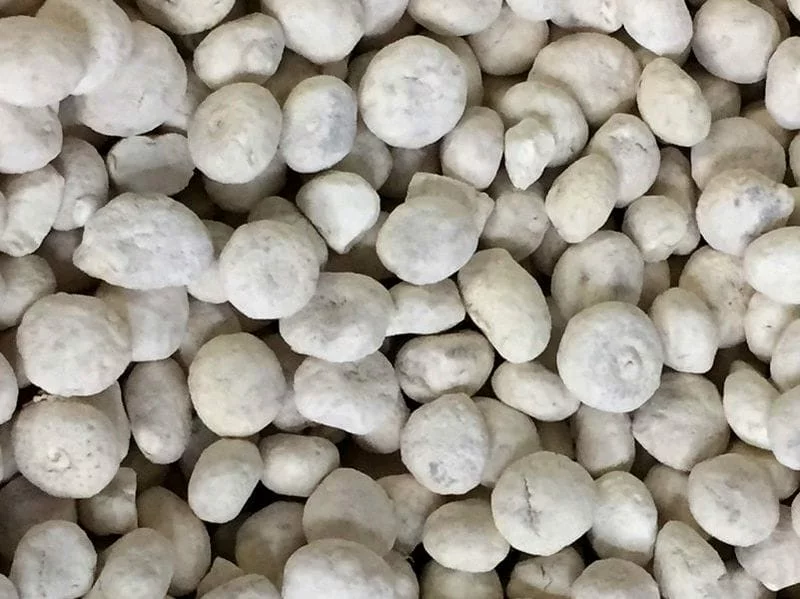
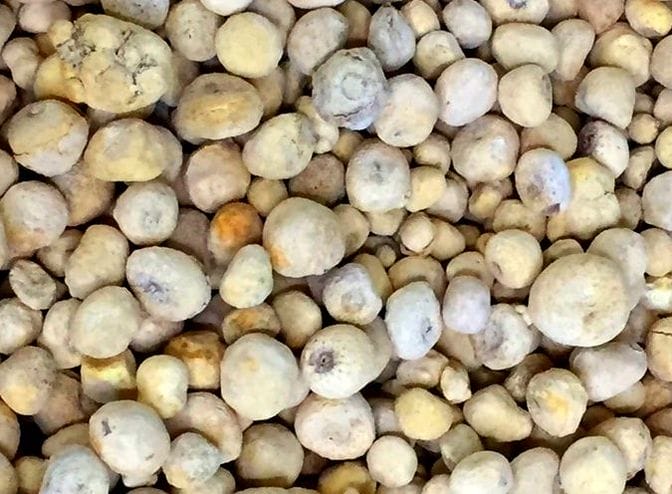
Left: Lime-prepared Pinellia Right: Ginger-prepared Pinellia (Jiang Ban Xia) (Adam, 2017)
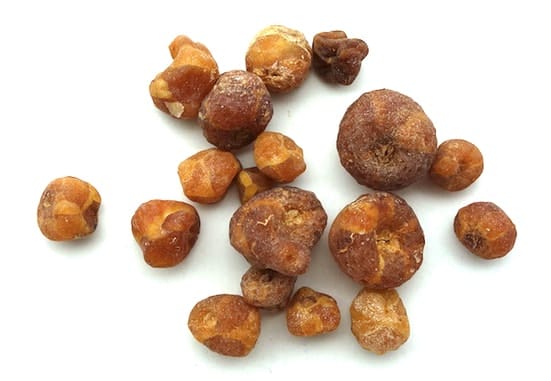
Prepared Pinellia Fa Ban Xia as commonly used in the West (Adam, 2017)
Botanical name:
Pinellia ternata
Parts used:
Prepared Rhizome
Temperature & Taste:
Very Warm, dry. Pungent. Toxic
Classification:
Uses:
1. Dries Damp, Clears Cold-Phlegm:
-Cough with copious sputum; Thick white sputum
-Phlegm or Damp associated with Spleen deficiency
-main medicine for Phlegm and Damp diseases in TCM
2. Stops Vomiting and Nausea, Directs Qi Downward:
-Nausea and Vomiting from excess Phlegm and rising Stomach Qi
-can be used for any type of Nausea and Vomiting depending on the medicines its combined with
-focal distention in the chest and epigastrium
3. Clears Phlegm, Reduces Masses:
-Phlegm-type Scrofula, Nodes and Kernels in the skin
Dose:
Only the prepared product should be used internally.
Decoction: 3–9 grams
Powder: 500mg–2 grams
Preparation:
A number of different preparations are used. Only prepared Pinellia Ban Xia is used internally, and is obtained that way on the Chinese medicine market. The primary methods of processing used today combine either Alum and Ginger, or Lime and Licorice.
1. Raw (unprocessed) Pinellia (Sheng Ban Xia):
Toxic, only used externally for swelling and pain.
Traditionally, raw Pinellia was sometimes decocted after soaking well without further preparation. In this case it is boiled for an extended period of time (2 hours), as in the case of Aconite. This is generally no longer done.
2. Traditional Processed Pinellia
The raw tubers were rinsed well in water 7–10 times to remove irritants. Then they were sun-dried.
While this does reduce irritant effects, later generations created better methods of preparation as shown below.
3. Alum-processed Pinellia (Qing Ban Xia):
Purified by being soaked and boiled, or soaked in Alum solution to remove toxicity. It is drying and used for Damp and Cold-Phlegm.
4. Prepared Pinellia (Fa Ban Xia):
Raw Ban Xia rhizome (100 parts) is soaked to reduce the numbing sensation, then it is soaked in a decoction of Lime (10 parts) and Licorice (15 parts) until the center becomes yellow and the rhizome is semi-transparent and horn-like. This is the standard product available in the west.
5. Ginger Pinellia (Jiang Ban Xia):
The rhizome is soaked as before; then it is boiled with fresh Ginger and Alum until cooked through. This is more warming, more drying, and better for Cold-Phlegm.
6. Lime-processed Pinellia;
Processed with Lime powder after it has been soaked and boiled.
7. Bamboo juice Pinellia (Zhu Li Ban Xia):
Raw or processed Pinellia Ban Xia is soaked in Bamboo juice and dried. This reduces its heat and makes it effective for Phlegm-Heat Cough, Vomiting due to Stomach Phlegm-Heat and Phlegm-Heat blocking internally.
9. There are several other traditional variations of preparation.
Ban Xia Qu (fermented leaven of Ban Xia):
Ban Xia Qu is a medicated Leaven prepared from Pinellia Ban Xia. It is a way to prepare Ban Xia to reduce its toxicity, while simultaneously making it stronger to resolve Phlegm and Damp.
There are 2 primary types of preparation, a Traditional, and a Modern (although there are many variations):
1. Ginger-Alum Stream (Han Shi Yi Tong Tradition)
Qing Ban Xia (Pre-soaked, semi-processed Pinellia powder): 100 parts
Wheat Flour (Mian Fen): 10 parts
Wheat Bran (Sheng Fu Pi): 10 parts
Fresh Ginger Juice (Sheng Jiang Zhi): 12.5 parts
White Alum (Bai Fan / Potassium Alum): 6 parts
Shen Qu (Standard Medicated Leaven powder): 3 parts
Dissolve the crystalline White Alum in a small amount of warm water, then filter it and mix it directly into the freshly squeezed Ginger juice.
Thoroughly blend the dry Qing Ban Xia powder, wheat flour, bran, and Shen Qu powder together. Next, Pour the Ginger-Alum liquid into the dry powder matrix. Knead firmly until it forms a uniform, semi-dry dough texture. Press the dough flat into rectangular cakes or small 1-inch cubes. Wrap the cakes in fresh Broussonetia leaves (Chu Ye) or damp cloth. Incubate in a dark, warm, humid environment (typically 30–35°C) until white mycelium (fungal mold) fully and evenly coats the surface. Then remove the cakes and sun-dry or bake at low heat until entirely dehydrated and crisp
2. Multi-Herbal Stream (Modern Production/Pharmacopoeia
Fa Ban Xia (Processed Pinellia powder): 100 kg
Wheat Flour: 400 kg
Chi Xiao Dou (Vigna umbellata): 30 kg
Ku Xing Ren (Bitter Apricot Seed): 30 kg
Fresh Qing Hao (Artemisia annua): 30 kg
Fresh La Liao (Polygonum hydropiper): 30 kg
Fresh Cang Er Cao (Xanthium sibiricum): 30 kg
Boil the fresh Qing Hao, La Liao, and Cang Er Cao together in a large vat of water to create a highly concentrated, dark green herbal extraction liquid. Strain. Then boil the Chi Xiao Dou until soft, crush them, and grind the Ku Xing Ren seeds down into a uniform oily flour.
Combine the Fa Ban Xia powder, wheat flour, seed powders, and starches. Add the warm herbal extraction juice gradually, mixing until a dough is formed. Press the dense paste into shallow molds and cut into standard 25-gram cubes. Pack them in insulated, straw-lined fermentation rooms for 3 to 5 days, tracking the relative humidity to ensure proper mold growth. Once the cubes take on a pale-yellow hue and display fine, porous honeycomb structures internally (Xi Feng Wo Yan), they are fully sun-dried
Main Combinations:
1. Cold-Phlegm and Damp diseases:
i. Pinellia Ban Xia with Tangerine peel Chen Pi and Poria Fu Ling., Honey-fried Licorice (Zhi Gan Cao) (as in Er Chen Tang)
ii. with Spleen and Qi deficiency, Pinellia Ban Xia with Ginseng, Atractylodes Bai Zhu, Tangerine peel Chen Pi2. Internal Damp with external Wind-Cold (inc. indigestion, acute gastroenteritis, food poisoning, traveller’s diarrhea) combine Pinellia Ban Xia with Pogostemon Huo Xiang, Angelica Bai Zhi, Citrus Chen Pi, Atractylodes Bai Zhu, Perilla Zi Su Ye, Areca Da Fu Pi (as in Huo Xiang Zheng Qi San)
3. Phlegm-Heat of the Lungs with Coughing of yellow sputum:
i. Pinellia Ban Xia with Scutellaria Huang Qin.
ii. Pinellia Ban Xia with Platycodon Jie Geng, Coltsfoot (Kuan Dong Hua), Scutellaria Huang Qin
4. Wind-Cold Cough or Wheezing, Pinellia Ban Xia with Ephedra Ma Huang, dry Ginger,
5. Asthma:
i. Pinellia Ban Xia, Ephedra Ma Huang, Coltsfoot (Kuan Dong Hua), Schisandra Wu Wei Zi, Mulberry root-bark (Sang Bai Pi)
ii. Pinellia Ban Xia, Ephedra Ma Huang, Coltsfoot (Kuan Dong Hua), Apricot kernel (Xing Ren), Scutellaria Huang Qin, Licorice (as in Ding Chuan Tang)
6. Phlegm and Qi obstruction with feeling of obstruction in the Throat, nausea, vomiting, Pinellia Ban Xia with Magnolia bark (Hou po), Poria Fu Ling, fresh Ginger, Perilla leaf Zi Su Ye (as in Ban Xia Hou Po Tang)
7. Nausea and Vomiting:
i. Cold-Phlegm with Nausea, Vomiting, combine Pinellia Ban Xia with dry Ginger.
ii. from Stomach Heat, Pinellia Ban Xia with Coptis Huang Lian.
iii. from Damp-Cold, Pinellia Ban Xia with fresh Ginger, Magnolia Hou Po, Atractylodes Cang Zhu, Pogostemon Huo Xiang
8. Severe Nausea and Vomiting during pregnancy, Pinellia Ban Xia with Amomum Sha Ren
9. Spleen Qi deficiency with Phlegm and Damp:
i. Pinellia Ban Xia, Citrus Chen Pi, Atractylodes Bai Zhu, Poria Fu Ling, Codonopsis Dang Shen, Licorice (as in Liu Jun Zi Tang)
ii. with more severe Cold and Qi stagnation, add Amomom Sha Ren and Costus Mu Xiang (as in Xiang Sha Liu Jun Zi Tang)
10. Food Stagnation with Phlegm, Pinellia Ban Xia, Citrus Chen Pi, Hawthorn fruit (Shan Zha), Fermented Leaven Shen Qu, Poria Fu Ling, Forsythia Lian Qiao (as in Bao He Wan)
11. Wind-Phlegm Dizziness and Vertigo, Pinellia Ban Xia with Atractylodes Bai Zhu, Gastrodia Tian Ma, Citrus Chen Pi, fresh Ginger (as in Ban Xia Bai Zhu Tian Ma Tang)
12. Phlegm masses, Scrofula, Lymphadenitis, Pinellia Ban Xia, Sargassum Hai Zao, Kelp (Kun Bu), Laminaria Hai Dai, Citrus Qing Pi, Forsythia Lian Qiao, Fritillaria Zhe Bei Mu, Licorice (as in Hai Zao Yu Hu Tang)
13. Chills and Fever with sore throat, nausea, or Malarial Fever, Pinellia Ban Xia with Bupleurum Chai Hu, Scutellaia Huang Qin, Ginseng (or Codonopsis), Honey-fried Licorice, fresh Ginger, Jujube (Da Zao) (as in Xiao Chai Hu Tang)
14. Cholecystitis, Pinellia Ban Xia, Citrus Zhi Shi, Scutellaria Huang Qin,
Major Formulas:
Ban Xia Hou Po Tang
Ban Xia Bai Zhu Tian Ma Tang
Bao He Wan
Chai Hu Gui Zhi Tang
Chai Hu Jia Long Gu Mu Li Tang
Chen Xiang Hua Tan Wan
Da Chai Hu Tang
Di Tan Tang
Ding Chuan Tang
Ding Xian Wan
Er Chen Tang
Gan Cao Xie Xin Tang
Gou Teng San
Hai Zao Yu Hu Tang
Huang Lian Wen Dan Tang
Huo Xiang Zheng Qi Shui
Liu Jun Zi Tang
Mu Xiang Liu Qi Yin
Qing Qi Hua Tan Wan
Su Zi Jiang Qi Tang
Tian Ma San
Wen Jing Tang
Xiang Sha Liu Jun Zi Tang
Xiao Chai Hu Tang
Xiao Qing Long Tang
Cautions:
1. Very drying. Not suitable for Yin deficiency
2. Not suitable for Dry Cough and Coughing Blood
3. Only the prepared rhizome should be used internally.
4. Use cautiously in pregnancy, avoid full doses.
Toxicity:
1. Toxicity is primarily due to Calcium Oxalate crystals and Lectins.
2. 4 week repeated-dose toxicity study in rats with water extracts of Pinellia Ban Xia at doses up to 2000mg/kg/day showed no ill effects (see here)
3. 6 gm/kg/day of Pinellia Ban Xia for 10 days given to rats showed changes in phospholipid metabolism, amino acid metabolism and carnitine metabolism. No Liver or Kidney toxicity was noted. (see here)
4. Alum solution is used in the preparation of Pinellia Ban Xia and has been shown to attenuate toxicity.
Antidotes:
1. A strong decoction of fresh Ginger can be taken to neutralize the toxicity in case of overdose.
Drug Interactions:
Not used with Aconitum species.
Main Preparations used:
Prepared Root
Click the above Tabs for more information on this medicine
GENERAL / REVIEW
–The ethnobotanical, phytochemical and pharmacological profile of the genus Pinellia
–Pinellia ternata (Thunb.) Breit: a review of its germplasm resources, genetic diversity and active components
–Study on chemical constituents in rhizome of Pinellia ternata
–A comprehensive review on ethnopharmacological, phytochemical, pharmacological and toxicological evaluation, and quality control of Pinellia ternata (Thunb.) Breit.
ANTIBACTERIAL
–Pinelloside, an antimicrobial cerebroside from Pinellia ternata
–Pinellia ternata agglutinin expression in chloroplasts confers broad spectrum resistance against aphid, whitefly, Lepidopteran insects, bacterial and viral pathogens
ANTI-VIRAL
–Pinellia ternata agglutinin expression in chloroplasts confers broad spectrum resistance against aphid, whitefly, Lepidopteran insects, bacterial and viral pathogens
IMMUNOSTIMULATING
–Characterization of an acidic polysaccharide with immunological activities from the tuber of Pinellia ternata
ASTHMA
–Network pharmacology-based study on the mechanism of pinellia ternata in asthma treatment
COPD:
–Pinellia ternata Attenuates Mucus Secretion and Airway Inflammation after Inhaled Corticosteroid Withdrawal in COPD Rats
ANTI-EMETIC:
–An anti-emetic principle of Pinellia ternata tuber
REFLUX ESOPHAGITIS / GASTRO-ESOPHAGEAL REFLUX:
–A comparative study on the effects of Pinellia ternata, zingiber officinale and sobanhatang on reflux esophagitis
–Efficacy and safety of modified Banxia Xiexin decoction (Pinellia decoction for draining the heart) for gastroesophageal reflux disease in adults
ANTI-OBESITY:
–Anti-obesity effect of Pinellia ternata extract in Zucker rats
HYPERTENSION:
–Network Pharmacology and Molecular Docking Combined to Analyze the Molecular and Pharmacological Mechanism of Pinellia ternata in the Treatment of Hypertension
INSOMNIA
–Pinellia ternata (Thunb.) Makino Preparation promotes sleep by increasing REM sleep
ANTI-DEPRESSANT:
–Exploring the potential antidepressant mechanisms of pinellia by using the network pharmacology and molecular docking
EHRLICH ASCITES TUMOR:
–Study on anti-ehrlich ascites tumor effect of Pinellia Ternata polysaccharide in vivo.
ANTI-CANCER:
–Structural characterization of an acid polysaccharide from Pinellia ternata and its induction effect on apoptosis of Hep G2 cells
–Purification of a mannose-binding lectin Pinellia ternata agglutinin and its induction of apoptosis in Bel-7404 cells
–A polysaccharide from Pinellia ternata inhibits cell proliferation and metastasis in human cholangiocarcinoma cells
You must be logged in to view this content, please login. If you're not a member then Click this link to subscribe