Paeonia lactiflora, Chinese Peony, Shao Yao 芍药
White Peony, Bai Shao 白芍
Red Peony, Chi Shao 赤芍

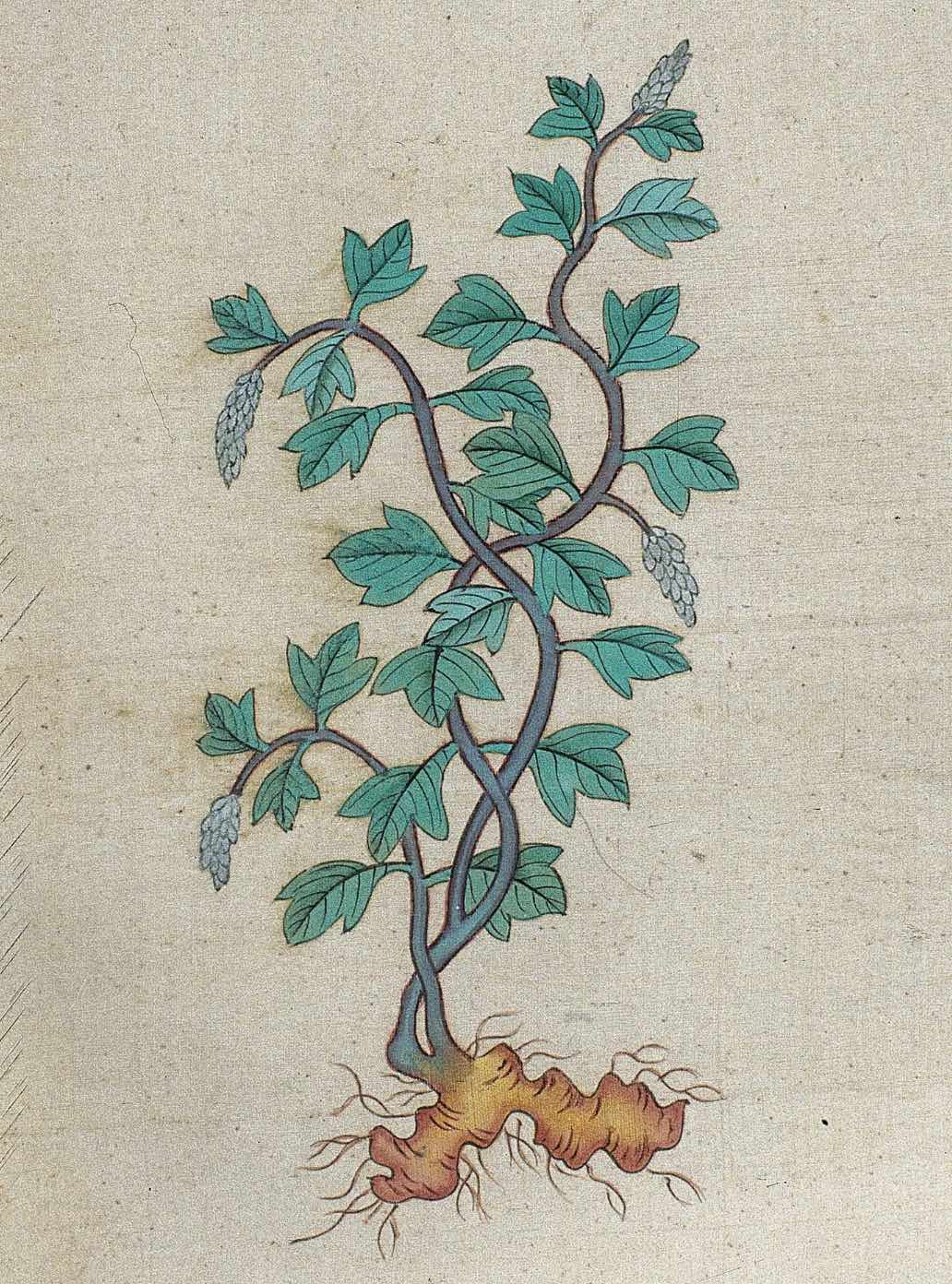
Chinese Peony (Ming Herbal (Welcome)
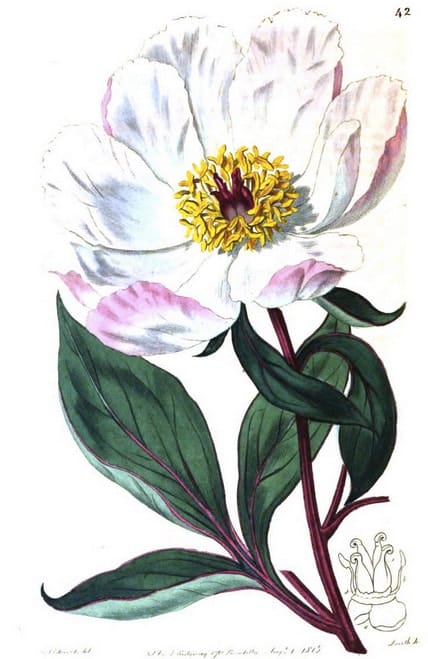
P. lactiflora
The Botanical Register, Edwards & Lindley, 1815
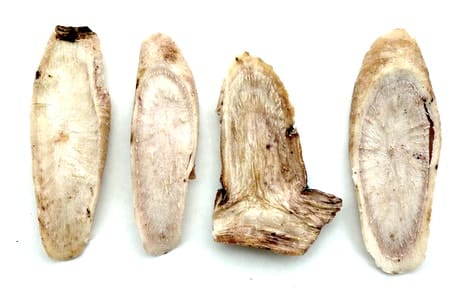
Slices of wild, unsulphured White Peony Bai Shao (Adam, Chengdu Medicine Market, 2017)
Botanical name:
TCM uses 2 types of herbaceous Peony, designated ‘Red’ and ‘White’ (based on the color of their root):
- White: Bai Shao Yao: Paeonia lactiflora, P. albiflora
- Red: Chi Shao Yao: P. lactiflora, P. veitchii, P. obvata
In addition, two other Peony species are used:
- P. officinalis (Western Peony)
- Tree Peony Mu Dan Pi. (Tree Peony)
Parts used:
Root
Temperature & Taste:
Cool, neutral in respect of dryness. Bitter, Sour.
The Red Peony is colder.
Classification:
White: N. Blood Tonic
Red: B. Clears Heat, Cools the Blood
Uses:
WHITE CHINESE:
1. Nourishes the Blood:
-signs of deficient blood, including pale face and tongue, fatigue, dizziness, headache
-menstrual dysfunction, uterine bleeding, leukorrhea.
-‘good for treating all sorts of feminine diseases including ante- and postpartum diseases’. (Da Ming)
-‘Improves Eyesight’ (Da Ming)
2. Calms and Soothes the Liver, Eases pain:
-a wide range of Liver disorders with symptoms such as pain in the chest, flank or abdomen, and also headaches, dizziness, irritability etc from Liver dysfunction.
-Spasms in the abdomen and cramps of the extremities.
-Wind disorders associated with Yin or Blood deficiency
-very important herb for a wide range of Liver disorders in TCM.
3. Restrains and Consolidates the Yin and Body fluids:
-leukorrhea, spermatorrhea.
-various types of sweating from deficiency, including Yin deficient night sweats, and spontaneous sweating
-Hectic Fever from Yin deficiency (Zhen Quan)
4. Benefits Spleen, Increases Qi:
-‘reinforces Qi’. (Shen Nong Ben Cao, Da Ming)
-treats Spleen deficiency. (Wang Haogu)
-‘reinforces the Five Viscera and tones the Kidney’. (Zhen Quan)
RED CHINESE:
1. Moves the Blood, Clears Blood Stasis:
-amenorrhea, dysmenorrhea
-abdominal pain
-headaches with fixed pain.
-various types of injury due to internal or external trauma to help ease the swelling and pain. (stir-fried in wine is best)
2. Clears Heat, Cools the Blood:
-when heat enters the blood during fevers, manifesting as purple blotches on the skin, red skin rashes etc.
-bleeding from strong heat in the blood.
-In TCM, Red Peony is often added to formulas where strong blood cooling medicines are used to prevent the blood stasis that can accompany such treatment.
3. Clears Liver Heat:
-red, swollen and painful eyes from Liver heat.
Dose:
Red and White Peony root can be used in the same doses.
Decoction: 3–9 grams
Powder: 1–3 grams
Comment:
1. The European Peony and Chinese White Peony are almost analogous with the European being better to stop Wind and settles Spasms, the Chinese White Peony being more tonifying to the Blood and Yin. The Chinese Red Peony is Colder, less tonifying, and better to move the Blood and clear Heat from the Blood and Liver.
2. Red Peony is better for clearing Blood heat and is slightly purgative, the White Peony nourishes Blood and Liver.
3. Red Peony can replace White Peony in a formula if there is Blood Heat or Blood stasis. White Peony is used when a stronger Blood and Liver Yin tonic is required.
Corrective:
1. Licorice
2. In summer, take with Scutellaria Huang Qin
Preparation:
1. Wine-fried Peony Shao Yao:
Slices of Peony root are sprinkled with wine, then stir-fried until dry and slightly yellowed. This reduces its cooling nature and makes it slightly warm while being better to activate the blood. Li Shi Zhen said it also nourishes Yin.
2. Vinegar-fried Peony Shao Yao:
The sliced root is prepared as above, using vinegar in place of wine. This was prepared by some for women’s diseases.
3. Steamed Peony root:
The sliced root is steeped in Honey and water, then steamed. This increases its nourishing, strengthening nature and makes it slightly warm and sweet.
4. Stir-fried with Licorice:
According to Li Shi Zhen, when stir-fried with Licorice root, it relieves abdominal pain.
Main Combinations:
WHITE CHINESE PEONY:
1. To Nourish the Liver and Blood:
i. Paeonia Bai Shao is combined with Dang Gui to nourish the Blood and regulate menstruation
ii. to nourish the Blood, Paeonia Bai Shao with Rehmannia Shu Di Huang and Ligustrum Chuan Xiong (as in Si Wu Tang)
2. To strengthen the Spleen, Paeonia Bai Shao with Atractylodes Bai Zhu
3. Menstrual cramping and pain Paeonia Bai Shao with Cyperus rotundus (Xiang Fu)
4. Heat of the Uterus, Paeonia, Soloman’s Seal, Tribulus as a decoction. (Tibetan Medicine)
5. To help expel Measles, Paeonia Bai Shao with Saposhnikovia Fang Feng (Li Shi Zhen)
6. To warm, the channels and expel humidity, Paeonia Bai Shao with fresh Ginger and Chinese Red Dates. (Li Shi Zhen)
7. Spontaneous Sweating, Paeonia Bai Shao with Astragalus Huang Qi.
8. Weakness after Childbirth Paeonia Bai Shao with Cinnamon and Licorice (as in Shao Yao Tang from Sheng Ji Zhong Lu [The Complete Record of Holy Benevolence])
9. Abdominal pain and cramping; weakness and spasms of the lower limbs, and headaches due to Blood deficiency, Paeonia Bai Shao with Licorice
10. To soothe the Liver, move Qi, for abdominal pain and cramping, Paeonia Bai Shao with Dang Gui, Cyperus rotundus, Peppermint, Licorice
11. Depression,
i. Paeonia Bai Shao with Rose, Licorice
ii. Paeonia Bai Shao with Bupleurum Chai Hu, Cyperus rotundus Xiang Fu
12. Dysentery:
i. Paeonia Bai Shao with Coptis Huang Lian (Li Shi Zhen)
ii. with Blood, Paeonia Bai Shao with Dang Gui, Coptis Huang Lian, Areca Bing Lang (Betel Nut), Costus Mu Xiang, Licorice (Gan Cao), Rhubarb root (Da Huang), Scutellaria Huang Qin, Cinnamon bark (Gui Pi) (as in Shao Yao Tang, from Su Wen Bing Ji Bao Ming Ji)
13. Health Tonic to nourish Qi and Blood:
i. Paeonia Bai Shao with Astragalus Huang Qi, Lycium Gou Qi Zi, Poria Fu Ling, Licorice
ii. Paeonia Bai Shao (5 parts) with Astragalus Huang Qi (2 parts), Ligusticum Chuan Xiong, Dang Gui, Rehmannia Shu Di Huang, Cinnamon, Licorice, Ginger, Chinese Dates (Da Zao) (1 part each). This is reputed to be the favorite tea of Huang Di (the Yellow Emperor). It nourishes Qi and Blood, treats exhuastion and convalescence.
RED CHINESE PEONY:
1. Menstrual pain and clotting from Qi and Blood stasis, Paeonia Chi Shao, Dang Gui, Ligusticum Chuan Xiong
2. For stronger Blood stasis add Peach kernel (Tao Ren) and Safflower (Hong Hua) to the above
3. Hypochondriac or abdominal pain, Paeonia Chi Shao, with Cyperus rotundus Xiang Fu
4. Bruising and Trauma, Paeonia Chi Shao, with Myrrh and Frankincense
5. Liver Heat, Paeonia Chi Shao, with Scutellaria Huang Qin
Major Formulas
Bai Zhu Shao Yao San
Bu Gan Tang
Chai Hu Shu Gan San
Dang Gui Shao Yan San
Dang Gui Yin Zi
Ding Jing Tang
Fu Zi Tang
Gu Chong Tang
Gui Zhi Fu Ling Wan
Gui Zhi Fu Zi Tang
Gui Zhi Tang
Hei Xiao Yao San
Hu Po San
Huang Lian E Jiao Tang
Ren Shen Yang Rong Tang
Shao Yao Gan Cao Tang
Si Ni San
Si Wu Tang
Tai Shan Pan Shi San
Tong Qiao Huo Xue Tang
Xiao Qing Long Tang
Xiao Yao San
Zhen Wu Tang
Cautions:
WHITE CHINESE: not used for Cold Stomach and Spleen
RED CHINESE: not used for anemia from deficiency (weak Blood)
Main Preparations used:
Click the above Tabs for more information on this medicine
Added 2023–9/2025
GENERAL / REVIEW:
–Construction of a Multi-Omics database for Paeonia lactiflora: A resource for comprehensive data integration and analysis.
–The Traditional Applications, Phytochemistry, Pharmacology, Pharmacokinetics, Quality Control and Safety of Paeoniae Radix Alba: A Review.
–Comprehensive chemical and bioactive investigation of Chinese peony flower: a case of valorization of by-products as a new food ingredient from Chinese herb.
–Progress in the Study of Chemical Structure and Pharmacological Effects of Total Paeony Glycosides Isolated from Radix Paeoniae Rubra.
–A review of the ethnopharmacology, phytochemistry, pharmacology, pharmacokinetics and quality control of Paeonia lactiflora Pall.
–The Genus Paeonia: A Review of the Targeted Signaling Pathways and Underlying Mechanisms of Pharmacological and Clinical Properties
COMBINATIONS:
–Cardiovascular Evaluations of a Mixed Extract of Salvia Miltiorrhiza Bunge and Paeonia Lactiflora Pall. (USCP-GVH-014): A 12 Weeks Clinical Perspective.
–Antidepressant effect of Radix bupleuri – Radix paeoniae alba herb pair on chronic unpredictable mild stress rats based on cortical metabolomics.
–Shaoyao-Gancao decoction for the treatment of muscle cramps in maintenance hemodialysis: A prospective randomized crossover controlled trial.
–Identification of the key role of IL-17RB in the treatment of osteoarthritis with Shaoyao Gancao decoction: Verification based on RNA-seq and bioinformatics analysis.
–Exploring synergistic effects of Achyranthes bidentata Blume and Paeonia lactiflora Pall. on hypertension with liver yang hyperactivity using the multidisciplinary integrative strategy.
PROCESSING
–LMD and LC-MS-based chemical constituents and pharmacological effects assessment for two different processing methods of the root of Paeonia lactiflora Pall.
ANTIBACTERIAL
–Antimicrobial Efficacy and Biocompatibility of a Denture Cleanser Containing Paeonia lactiflora Extract.
–Physicochemical, antibacterial and aromatic qualities of herbaceous peony (Paeonia lactiflora pall) tea with different varieties.
ANTIOXIDANT:
–Antioxidant effects of Paeoniflorin and relevant molecular mechanisms as related to a variety of diseases: A review.
ANTI-INFLAMMATORY
–Anti-Inflammatory Effects of Bioactive Peptides from Chinese Herbal Medicine: A Review.
–Two new compounds from the roots of Paeonia lactiflora Pall. and their anti-inflammatory effects.
IMMUNOREGULATORY
–The immunoregulatory effects of total glucosides of peony in autoimmune diseases.
SKIN DISEASES
–Therapeutic potential and pharmacological insights of total glucosides of paeony in dermatologic diseases: a comprehensive review.
DERMATITIS
–Investigating the therapeutic effects of paeoniflorin on atopic dermatitis and its potential pathogenesis through network pharmacology and in vivo and in vitro experiments.
MUSCLE CRAMPS
–Shaoyao-Gancao decoction for the treatment of muscle cramps in maintenance hemodialysis: A prospective randomized crossover controlled trial.
MUSCULAR ATROPHY
–Paeoniflorin alleviated muscle atrophy in cancer cachexia through inhibiting TLR4/NF-κB signaling and activating AKT/mTOR signaling
NEUROPROECTIVE
–Ultrasound-assisted deep eutectic solvent of neuroprotective extracts from Paeonia lactiflora Pall. root: Process optimization, compositions characterization, and neuroprotective activity validation.
–Neuroprotective Effects of Paeonia lactiflora Through the Regulation of Gut Dubosiella in an MPTP-Induced Parkinson’s Disease Mouse Model.
–Six new compounds with neuroprotective activity from the leaves of Paeonia lactiflora Pall.
–Protective mechanism of Paeonol on central nervous system.
REDUCES NEUROINFLAMMATION
–Paeoniflorin Alleviates Lipopolysaccharide-Induced Neuroinflammation and Depression Through the Keap1/Nrf2/HO-1 Signaling Pathway.
DEPRESSION: / PSYCHIATRIC DISORDERS
–Albiflorin on Neuropsychiatric and Neurodegenerative Disorders: A Systematic Review.
–Paeoniflorin and depression: a comprehensive review of underlying molecular mechanisms.
–Paeoniflorin Alleviates Lipopolysaccharide-Induced Neuroinflammation and Depression Through the Keap1/Nrf2/HO-1 Signaling Pathway.
–Identification of paeoniflorin from Paeonia lactiflora pall. As an inhibitor of tryptophan 2,3-dioxygenase and assessment of its pharmacological effects on depressive mice.
–Paeonia lactiflora Pall. Polysaccharide alleviates depression in CUMS mice by inhibiting the NLRP3/ASC/Caspase-1 signaling pathway and affecting the composition of their intestinal flora.
ALZHEIMER’S / PARKINSON’S DISEASE
–Albiflorin on Neuropsychiatric and Neurodegenerative Disorders: A Systematic Review.
–Tandem Mass Tags Quantitative Proteomics Reveal the Mechanism by Which Paeoniflorin Regulates the PI3K/AKT and BDNF/CREB Signaling Pathways to Inhibit Parkinson’s Disease.
–Neuroprotective Effects of Paeonia lactiflora Through the Regulation of Gut Dubosiella in an MPTP-Induced Parkinson’s Disease Mouse Model.
–Suffruticosol B from Paeonia lactiflora Ameliorates Alzheimer’s Disease Pathology by Inhibiting MAO-B Activity.
–Paeonol Derivative, 6′-Methyl Paeonol, Attenuates Aβ-Induced Pathophysiology in Cortical Neurons and in an Alzheimer’s Disease Mice Model.
CARDIOVASCULAR EFFECT:
–Cardiovascular Evaluations of a Mixed Extract of Salvia Miltiorrhiza Bunge and Paeonia Lactiflora Pall. (USCP-GVH-014): A 12 Weeks Clinical Perspective.
IRRITABLE BOWEL
–Atractylodes macrocephala-Paeonia lactiflora Class Formula for the Treatment of Irritable Bowel Syndrome: A Systematic Review With Meta-Analysis and Trial Sequential Analysis.
CHRONIC COLITIS / ULCERATIVE COLITIS
–Integrating 16srRNA sequencing, non-targeted metabolomics, and transcriptome sequencing to explore the mechanism of Total glucosides of paeony alleviating ulcerative colitis.
–Paeoniflorin ameliorates chronic colitis via the DR3 signaling pathway in group 3 innate lymphoid cells.
–Paeoniflorin improves ulcerative colitis via regulation of PI3K‑AKT based on network pharmacology analysis.
HEPATOPROTECTIVE
–Protective effects of albiflorin on acetaminophen-induced hepatotoxicity: Regulation of blood-biliary barrier integrity by ATF3.
–Comparative Study on Hepatoprotective Effects of Traditional Herbs, Roots of Angelica gigas Nakai, Glycyrrhiza uralensis Fischer, Zizyphus jujuba Mill., and Fruits of Paeonia lactiflora Pall., on Ethanol-Induced Liver Injury in Mice.
–Identification and hepatoprotective activity of total glycosides of paeony with high content of paeoniflorin extracted from Paeonia lactiflora Pall.
FATTY LIVER
–Paeoniflorin Alleviates Metabolic Dysfunction-Associated Fatty Liver Disease by Targeting STING-Mediated Pyroptosis via Inhibiting the NLRP3 Inflammasome.
LIVER FIBROSIS:
–Integration of network pharmacology and transcriptomics to reveal the mechanism of Paeoniae Radix Alba Polysaccharide in alleviating hepatic fibrosis.
–Albiflorin inhibits inflammation to improve liver fibrosis by targeting the CXCL12/CXCR4 axis in mice.
SJOGREN’S SYNDROME
–Total glucosides of paeony alleviates Sjogren’s syndrome by inhibiting Th1 and Th17 responses.
RHEUMATOID / OSTEO -ARTHRITIS
–Identification of the key role of IL-17RB in the treatment of osteoarthritis with Shaoyao Gancao decoction: Verification based on RNA-seq and bioinformatics analysis.
–Paeoniflorin inhibits the inflammation of rheumatoid arthritis fibroblast-like synoviocytes by downregulating hsa_circ_009012.
–Paeoniflorin, the Main Monomer Component of Paeonia lactiflora, Exhibits Anti-inflammatory Properties in Osteoarthritis Synovial Inflammation.
LUPUS NEPHRITIS
–Total glucosides of paeony ameliorates lupus nephritis by suppressing ZBP1-mediated PANoptosis in podocytes.
DIABETIC NEUROPATHY
–Pharmacological Effects of Paeonia lactiflora Focusing on Painful Diabetic Neuropathy.
–Protective effect of paeoniflorin in diabetic nephropathy: A preclinical systematic review revealing the mechanism of action.
POOR OVARIAN FUNCTION
–Advances in Traditional Chinese Medicine for Managing Diminished Ovarian Reserve: Mechanisms and Clinical Insights.
OVARIAN CYSTS
–Exploring the role of Chinese herbal medicine in the long-term management of postoperative ovarian endometriotic cysts: a systematic review and meta-analysis.
ENDOMETRIOSIS
–Formulation of Paeonia lactiflora root extract can induce atrophy of endometriotic lesions and accelerate embryo implantation following in vitro fertilization in endometriosis: An experimental study.
–Immunomodulatory insights of monoterpene glycosides in endometriosis: immune infiltration and target pathways analysis.
MENOPAUSE:
–Therapeutic effects and mechanism analysis of Paeonia lactiflora extract (PLE) in menopausal rats with hot flashes.
CANCER
–Exploring molecular targets in cancer: Unveiling the anticancer potential of Paeoniflorin through a comprehensive analysis of diverse signaling pathways and recent advances.
LEUKEMIA
–Paeoniflorin sensitizes imatinib mesylate-resistant chronic myeloid leukemia cells via the inhibition of Cyr61 production.
LIVER
–Paeoniflorin inhibits chronic restraint stress-induced progression of hepatocellular carcinoma through suppressing norepinephrine-induced activation of hepatic stellate cells via SRC/AKT/ERK pathways.
MELANOMA
–Total Glucosides of Paeony Induce Mitochondrial Dysfunction and Apoptosis by Promoting the Degradation of α5-nAChR in Melanoma Cells.
PROSTATE:
–Network Pharmacology and Experimental Validation Identify Paeoniflorin as a Novel SRC-Targeted Therapy for Castration-Resistant Prostate Cancer.
Red Chinese Peony, Chi Shao Yao
–Paeoniae Radix Rubra: A Review of Ethnopharmacology, Phytochemistry, Pharmacological Activities, Therapeutic Mechanism for Blood Stasis Syndrome, and Quality Control.
–A systematic review and meta-analysis of the anti-tumor effects of Paeoniae Radix Rubra in animal models.
You must be logged in to view this content, please login. If you're not a member then Click this link to subscribe