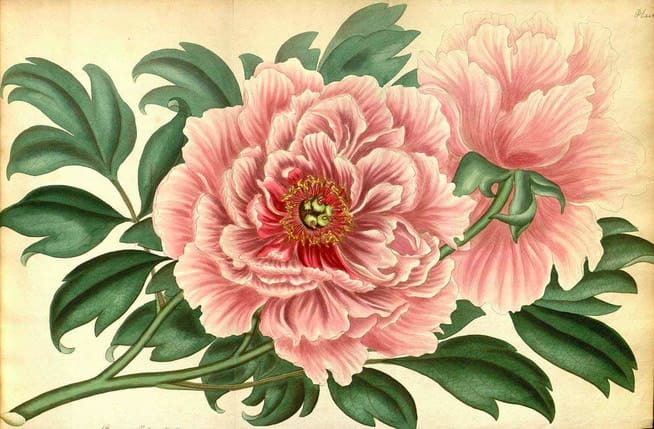
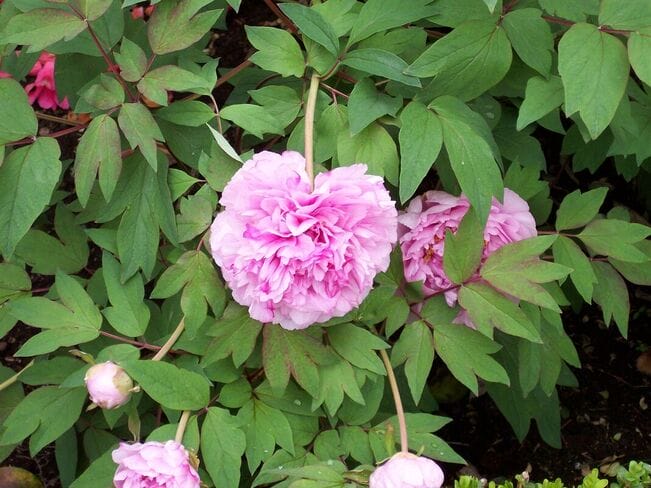
Paeonia suffruticosa, Tree Peony, Mu Dan Pi 牡丹皮
Tree Peony
Mu Dan Pi (TCM)
Shing pad ma ser po ཤིང་པད་མ་སེར་པོ་ (P. delavayi, Tibetan Medicine)
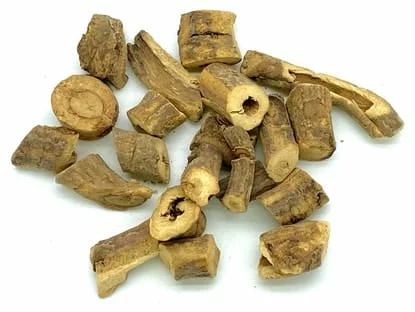
Botanical name:
Paeonia suffruticosa
P. delavayi (syn. P. lutea) is a yellow-flowered Tree Peony, the root of which is used in Tibetan Medicine (where it is called Shing pad ma ser po ཤིང་པད་མ་སེར་པོ་). It is used for Fever, Blood heat, Blood stasis, and to regulate menstruation and relieve menstrual pain. It can be considered synonymous to P. suffruticosa.
Parts used:
Root-bark
Temperature & Taste:
Cool, dry. Slightly Pungent, Bitter
Classification:
Uses:
1. Cools the Blood, Clears Heat:
-Heat that has penetrated the Blood (ie. from Epidemic and Infectious diseases) with Bleeding
-frequent or excessive Menstruation associated with Blood Heat
-‘disperses hidden Fire in the Blood’. (Li Shi Zhen)
-P. delavayi is used the same in Tibetan Medicine
2. Moves the Blood, Clears Stasis:
-Blood stasis causing Amenorrhea and menstrual pain with clotting
-abdominal masses and tumors
-Bruising associated with Injury
-‘disperses hard mass and blood stasis’. (Shen Nong Ben Cao)
-‘helps recovery of the damaged tendons and bones’. (Da Ming)
-‘promotes delivery, expels Placenta’. (Da Ming)
-P. delavayi is used the same in Tibetan Medicine
3. Clears Deficient Heat, Benefits the Yin:
-‘Steaming Bone Disorder’; (see below).
-Yin deficiency with Heat, such as in the Elderly, during Menopause, or the aftermath of chronic or Heat disease.
-Fever at night, or feeling of Heat during the night, especially where there is no sweating
-‘Long-term use makes one happy and able to enjoy a long life’. (Wu Pu)
4. Clears Liver Heat:
-Headache, Dizziness, eye pain, flushing and irritability
-skin diseases related to Heat of the Blood and Liver
-P. delavayi is used the same in Tibetan Medicine
5. Clears Heat, Resists Poison, Drains Pus, Reduces Swelling:
-Acne, Eczema and other skin diseases with redness and inflammation
-useful for abscesses; Lung or Intestinal Abscesses
-topically for firm, non-draining sores

Dose:
Decoction: 6–12 grams
Powder: 500mg–3 grams
Comment:
Paeonia Mu Dan Pi is a special medicine to clear excess of the Ministerial Fire. Li Shi Zhen noted that later Physicians preferred Phellodendron Huang Bai to clear the Ministerial Fire, but said Paeonia Mu Dan Pi is stronger.
Preparations:
1. Dry-fried Paeonia Mu Dan Pi:
Dry-fry in a pan until lightly scorched and yellowish. This reduces the coldness and improves the effect of clearing Deficient Heat.
2. Wine-fried Paeonia Mu Dan Pi:
When sprinkled with a little rice wine (alcohol) and stir-fried in a pan until lightly yellowed, it is stronger to move the Blood and clear Blood stasis.
Some older Physicians recommended cutting the root, mixing with wine, steaming it, then drying in the sun.
3. Charred Paeonia Mu Dan Pi:
When heated at a high heat until blackened, but not carbonised, and then sprinkled with water, it is stronger to stop Bleeding but without causing Blood Stasis.
Main Combinations:
1. Blood Heat from Heat entering the Blood (Infectious diseases):
i. combine Paeonia Mu Dan Pi with Paeonia Chi Shao (Red Peony root). This combination is also useful for Menstrual disorders with Heat and Stasis.
ii. with purplish Maculae or Bleeding, Paeonia Mu Dan Pi with Curcuma Yu Jin
iii. Erysipelas and Purpuric Rashes, Paeonia Mu Dan Pi with Scrophularia Xuan Shen
2. Deficient Heat with Night Fever, dry mouth, aching Back, with Rehmannia Sheng Di and Amenarrhena Zhi Mu
3. Hectic Fever from Yin deficiency, take Paeonia Mu Dan Pi with Si Wu Tang (Li Shi Zhen)
4. Liver heat with Qi stagnation, add Paeonia Mu Dan Pi and Anemarrhena Zhi Mu to Xiao Yao San (as in Dan Zhi Xiao Yao San)
5. Vomiting of Blood from Heat, Paeonia Mu Dan Pi with Scutellaria Huang Qin
6. Acne:
i. Paeonia Mu Dan Pi with Burdock seed (Niu Bang Zi)
ii. Paeonia Mu Dan Pi with Chrysanthemum Ju Hua, Licorice
iii. Paeonia Mu Dan Pi with Rhubarb (Da Huang), Coptis Huang Lian
iv. Paeonia Mu Dan Pi with Chinese Violet (Zi Hua Di Ding), Scutellaria Huang Qin
v. Paeonia Mu Dan Pi with Self Heal (Xia Ku Cao), Honeysuckle flower (Jin Yin Hua), Job’s Tears (Yi Yi Ren), Paeonia Chi Shao Yao (The Formulas of Dr. John H.F. Shen)
7. Internal Abscesses:
i. Paeonia Mu Dan Pi with Rhubarb (Da Huang) and Peach kernel (Tao Ren)
ii. Paeonia Mu Dan Pi with Coix Yi Yi Ren, Rhubarb (Da Huang)
8. Pain due to Bruising and Blood stasis, Amenorrhea and Dysmenorrhea with Peach kernel (Tao Ren) and Cinnamon twig (Gui Zhi)
9. Pain and swelling after Trauma, with Frankincense and Myrrh
10. Menopause, Paeonia Mu Dan Pi with Rehmannia Sheng Di Huang, Alisma Ze Xie (Water Plantain), Polygonum He Shou Wu, Mother of Pearl (Zhen Zhu Mu) (as in Geng Nian An Pian)
Major Formulas:
The following formulas are all based on Liu Wei Di Huang Wan (Rehmannia Six)
Liu Wei Di Huang Wan
Er Long Zuo Ci Wan
Ma Wei Di Huang Wan
Ming Mu Di Huang Wan
Qi Ju Di Huang Wan
Zhi Bai Di Huang Wan
Shen Qi Wan
Other Formulas:
Da Huang Mu Dan Tang
Dan Zhi Xiao Yao San
Du Qi Wan
Ge Xia Zhu Yu Tang
Geng Nian An Pian
Gui Zhi Fu Ling Wan
Hu Po San
Kai Yu Zhong Yu Tang
Mie Di Zhi Yang Tang
Ping Gan Kai Yu Zhi Xue Tang
Qi Zhen San
Qing Hao Bie Jia Tang
Qing Wei San
Qing Wen Bai Du Yin
Shi Hui San (Ten Charred Powder)
Wen Jing Tang
Xi Jiao Di Huang Tang
Xuan Yu Tong Jing Tang
Yang Yin Qing Fei Tang
Cautions:
1. Not for Cold or Blood deficiency
2. Not used during Pregnancy
3. Not for Excess Menstruation unless there is Heat with Blood stasis.
4. Occasional side effects may include dizziness and mild nausea which usually subside without stopping medication.
Main Preparations used:
Click the above Tabs for more information on this medicine
GENERAL / REVIEW
–Paeonia × suffruticosa (Moutan Peony)-A Review of the Chemical Composition, Traditional and Professional Use in Medicine, Position in Cosmetics Industries, and Biotechnological Studies.
–Traditional uses, phytochemistry, pharmacology, and pharmacokinetics of the root bark of Paeonia x suffruticosa andrews: A comprehensive review.
–Insight into Seasonal Change of Phytochemicals, Antioxidant, and Anti-Aging Activities of Root Bark of Paeonia suffruticosa (Cortex Moutan) Combined with Multivariate Statistical Analysis.
–Phytochemical variation among the traditional Chinese medicine Mu Dan Pi from Paeonia suffruticosa (tree peony).
–Origins, Phytochemistry, Pharmacology, Analytical Methods and Safety of Cortex Moutan (Paeonia suffruticosa Andrew): A Systematic Review.
–[Chemical constituents from seeds of Paeonia suffruticosa].
–[Study on chemical constituents of bark of Paeonia suffruticosa].
–Chemistry, pharmacokinetics, pharmacology and recent novel drug delivery systems of paeonol.
–Paeonol: pharmacological effects and mechanisms of action.
ANTIBACTERIAL
–Chemical constituents, antibacterial activity and mechanism of Paeonia suffruticosa Andr. buds extract against Staphylococcus aureus and Escherichia coli O157:H7.
–Anti-Helicobacter pylori and antiulcerogenic activities of the root cortex of Paeonia suffruticosa.
–A new monoterpene glycoside and antibacterial monoterpene glycosides from Paeonia suffruticosa.
ANTI-VIRAL
–Identification of anti-HBV activities in Paeonia suffruticosa Andr. using GRP78 as a drug target on Herbochip®.
–Inhibitory effect of anti-pyretic and anti-inflammatory herbs on herpes simplex virus replication.
–A comparison of HIV-1 integrase inhibition by aqueous and methanol extracts of Chinese medicinal herbs.
ANTI-FUNGAL
–Isolation of antifungal compound from Paeonia suffruticosa and its antifungal mechanism.
ANTI-INFLAMMATORY
–Root Bark of Paeonia suffruticosa Extract and Its Component Methyl Gallate Possess Peroxynitrite Scavenging Activity and Anti-inflammatory Properties through NF-κB Inhibition in LPS-treated Mice.
–New monoterpene glycosides from the root cortex of Paeonia suffruticosa and their potential anti-inflammatory activity.
–Screening of bioactive compounds from moutan cortex and their anti-inflammatory activities in rat synoviocytes.
ANTIOXIDANT
–Purification and identification of an antioxidative peptide from peony (Paeonia suffruticosa Andr.) seed dreg.
–Chemical Profile and Antioxidant Activity of the Oil from Peony Seeds (Paeonia suffruticosa Andr.).
–Antioxidant and antimelanogenic behaviors of Paeonia suffruticosa.
ANTI-SEPSIS
–Protective constituents against sepsis in mice from the root cortex of Paeonia suffruticosa.
CARDIOVASCULAR DISEASE
–Biological Activities of Paeonol in Cardiovascular Diseases: A Review.
–Paeonol for the Treatment of Atherosclerotic Cardiovascular Disease: A Pharmacological and Mechanistic Overview.
VASCULAR DILATION
–Vascular dilation by paeonol–a mechanism study.
ANTITHROMBOTIC / ANTICOAGULANT
–Antithrombotic Effects of Paeoniflorin from Paeonia suffruticosa by Selective Inhibition on Shear Stress-Induced Platelet Aggregation.
–Platelet anti-aggregatory and blood anti-coagulant effects of compounds isolated from Paeonia lactiflora and Paeonia suffruticosa.
–Antithrombotic Effects of Paeoniflorin from Paeonia suffruticosa by Selective Inhibition on Shear Stress-Induced Platelet Aggregation.
HEPATOPROTECTIVE
–Palbinone from Paeonia suffruticosa protects hepatic cells via up-regulation of heme oxygenase-1.
–Moutan Cortex Protects Hepatocytes against Oxidative Injury through AMP-Activated Protein Kinase Pathway.
LIVER DISEASE
–Paeoniflorin, a Natural Product With Multiple Targets in Liver Diseases-A Mini Review.
HEPATITIS B
–Identification of anti-HBV activities in Paeonia suffruticosa Andr. using GRP78 as a drug target on Herbochip®.
ACUTE LUNG INJURY
–Paeonol attenuates acute lung injury by inhibiting HMGB1 in lipopolysaccharide-induced shock rats.
CIGARETTE-INDUCED LUNG DAMAGE
–Paeonol attenuates cigarette smoke-induced lung inflammation by inhibiting ROS-sensitive inflammatory signaling.
PULMONARY FIBROSIS
–Prevention of Bleomycin-Induced Pulmonary Inflammation and Fibrosis in Mice by Paeonol.
ANTI-ULCER
–Anti-Helicobacter pylori and antiulcerogenic activities of the root cortex of Paeonia suffruticosa.
INFLAMMATORY BOWEL DISEASE
–Evaluations and Mechanistic Interrogation of Natural Products Isolated From Paeonia suffruticosa for the Treatment of Inflammatory Bowel Disease.
NEUROPROTECTIVE
–Protective effects of a herbal extract combination of Bupleurum falcatum, Paeonia suffruticosa, and Angelica dahurica against MPTP-induced neurotoxicity via regulation of nuclear receptor-related 1 protein.
–Effects of the root bark of Paeonia suffruticosa on mitochondria-mediated neuroprotection in an MPTP-induced model of Parkinson’s disease.
–Paeonol attenuates neurotoxicity and ameliorates cognitive impairment induced by d-galactose in ICR mice.
ALZHEIMER’S DISEASE
–Integrating network pharmacology analysis and pharmacodynamic evaluation for exploring the active components and molecular mechanism of moutan seed coat extract to improve cognitive impairment.
–Enzyme-assisted Solvent Extraction of High-yield Paeonia suffruticosa Andr. Seed Oil and Fatty Acid Composition and Anti-Alzheimer’s Disease Activity.
–A traditional medicinal herb Paeonia suffruticosa and its active constituent 1,2,3,4,6-penta-O-galloyl-beta-D-glucopyranose have potent anti-aggregation effects on Alzheimer’s amyloid beta proteins in vitro and in vivo.
–Enzyme-assisted Solvent Extraction of High-yield Paeonia suffruticosa Andr. Seed Oil and Fatty Acid Composition and Anti-Alzheimer’s Disease Activity.
–Paeonol increases levels of cortical cytochrome oxidase and vascular actin and improves behavior in a rat model of Alzheimer’s disease.
PARKINSON’S DISEASE
–Effects of the root bark of Paeonia suffruticosa on mitochondria-mediated neuroprotection in an MPTP-induced model of Parkinson’s disease.
–Moutan Cortex Radicis inhibits the nigrostriatal damage in a 6-OHDA-induced Parkinson’s disease model.
COGNITION
–Resveratrol oligomers from Paeonia suffruticosa protect mice against cognitive dysfunction by regulating cholinergic, antioxidant and anti-inflammatory pathways.
–Paeonol attenuates neurotoxicity and ameliorates cognitive impairment induced by d-galactose in ICR mice.
You must be logged in to view this content, please login. If you're not a member then Click this link to subscribe