Absinthium, Wormwood
Afsanteen (Unani)


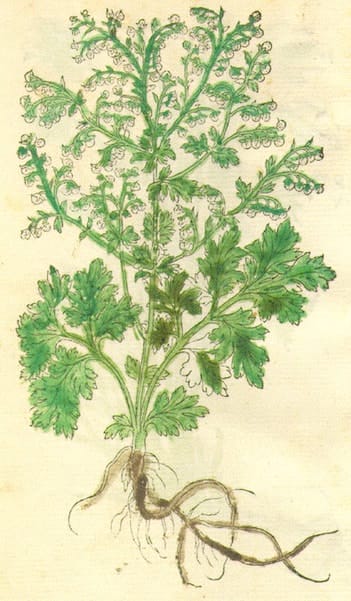
Wormwood
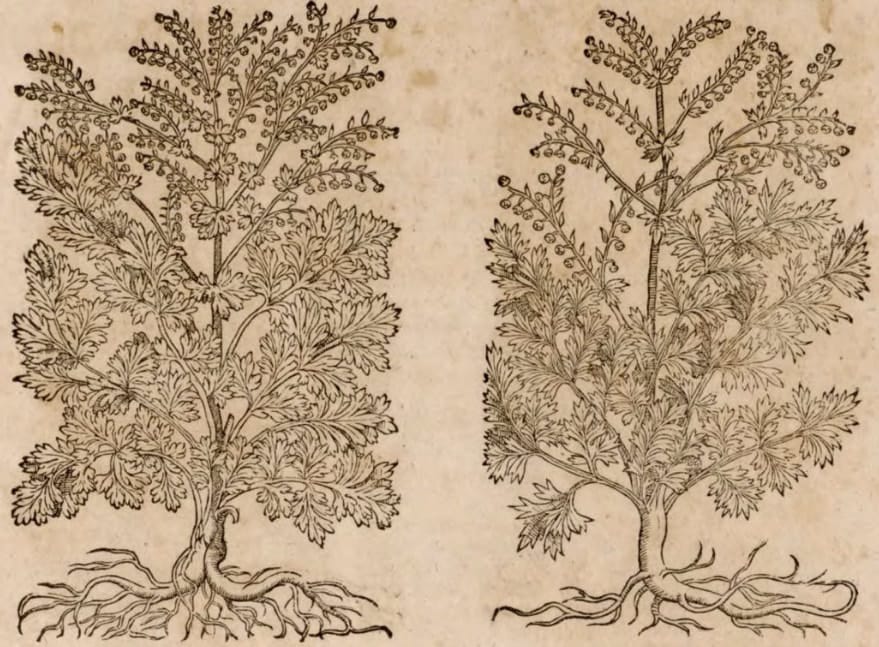
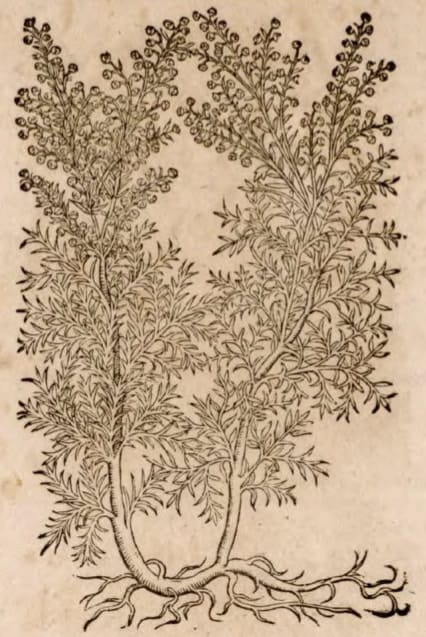
Common Wormwood Mountain or Roman Wormwood Pontic Wormwood of Galen
Eicones plantarum seu stirpium, Jacobus Theodorus, 1590
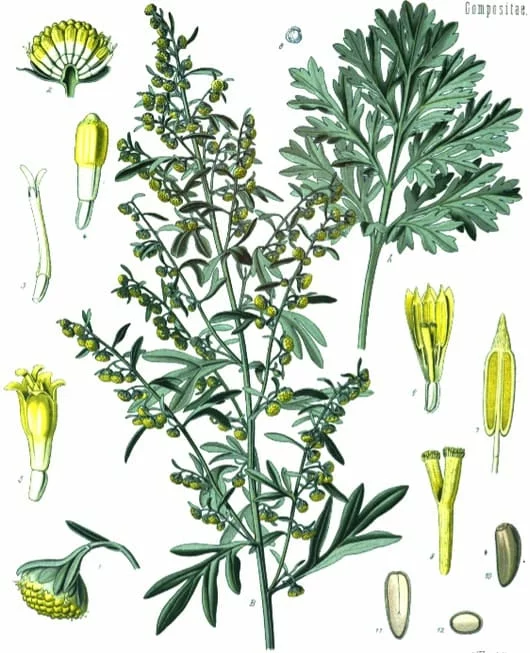
Koehler’s Medizinal Pflanzen, 1887

Botanical name:
Artemisia absinthium
Parts used:
Herb; flowering tops
Temperature & Taste:
Warm, dry. Bitter, pungent
Classification:
2A APERIENT MEDICINES. 2B ATTENUATERS. 2C INCIDERS. 2D ATTENUATERS OF CONGEALED BLOOD. 2F. PURIFYING.
2G. CLEANSING. 2Q. ANODYNE. 2S. STRENGTHENING
3B. FEBRIFUGE & ANTIPYRETIC. 3C. ALEXIPHARMICS. 3E. DIURETIC. 3G. EMMENAGOGUE
4b. OPTHALMICS. 4e. STOMACHIC. 4f. SPLENETIC. 4g. HEPATIC. 4i. UTERINE
Uses:
1. Clears Heat and Damp, Opens Obstructions of the Liver:
-Liver or Spleen Obstruction; Jaundice, Hepatitis
-Gall Stones; Cholecystitis
-resolves Swelling and inflammations
2. Strengthens the Stomach, Clears Heat and Damp:
-weakness of the Stomach, poor digestion, nausea, vomiting, seasickness
-acute and chronic Gastritis
-“It restores Appetite … Its syrup strengthens the Stomach”. (Avicenna)
3. Clears Damp-Heat, Promotes Urine:
-acute Urinary Tract Infections; Edema
-decoction in Wine, ashes steeped in white wine or the Salt of Wormwood may be used
-Leukorrhea
4. Clears Heat, Resists Poison:
-preservative in times of infection; used in Antidotes
-various types of Fever; especially Tertian Fever (West, Unani, Ayurveda)
5. Kills Worms:
-Roundworm, Tapeworm and Threadworm (West, Unani)
-BHP says Ascaris and Enterobius are specific indications
-topically for Lice, Fleas and other parasites
6. Moves the Blood, Promotes Menstruation:
-Amenorrhea; Dysmenorrhea
7. Benefits the Brain, Arouses the Spirit:
-Regarded as a Brain tonic and stimulant in mental weakness
-Unani regards it as an exhilarant
-regarded as strength-promoting in Ayurveda
8. Externally:
-washes, poultices, liniments for Sprains, Strains, Swellings, Bruises, Dislocations, Lumbago, Arthritic pain, Headache, Toothache etc.
-applied with Honey to bruises (Pliny)
-treats Boils, Acne, Carbuncles and Swellings
-Running Sores, liniment of Wormwood with Honey (Pliny)
-used for Prurigo and Itching
-“useful for Urticaria when applied after mixing it with the flour”. (Avicenna)
-the ashes are a good application to dry and heal chronic Ulcers
-boiled in salt water and used as a wash for Gangrene
-Tumors, beat the fresh plant with wine, vinegar and salt and apply
-externally to the temples and soles of the feet to promote Sleep
-externally to open obstructions of the Liver, Spleen and Stomach, and to benefit the Stomach and Digestion.
-Sore Throat, Tonsillitis, Wormwood
-the fumes or oil put into the ear benefits the Hearing; also for Earache
-‘The ashes of it with Rose Ointment, maketh Black Hair’. (Pliny)
-ashes mixed with olive oil are applied to Baldness and Alopecia
-strong infusion is used as a wash for falling or thinning hair, baldness;
-the ashes rubbed on with Olive or Almond oil also heals baldness (Avicenna)
-the infused oil helps growth of the beard (Avicenna)
-used to remove darkness under the eyes (Avicenna)
-preserves from moths and insects
-in pessaries to promote Menstruation (Pliny)
-Sciatica, as a plaster with Figs (Pliny)
Dose:
Substitute:
Correctives:

Main Combinations:
1. Wormwood is often combined with Aniseed to correct it and make it more pleasant to take. This was the original Spirit of Wormwood which was the forerunner to Absinthe. Used for obstruction of the Stomach, Liver and Spleen, for Worms, Jaundice and to benefit Eyesight.
2. To Opens the Liver, Spleen and Stomach, and for Jaundice, combine Wormwood with … available in PRO version
3. Jaundice, take Wormwood with … available in PRO version
4. Species Cholagoga: Wormwood with … available in PRO version
5. Aromatic Bitters: Wormwood with … available in PRO version
6. Bitter Powder (Species Amara): Wormwood with … available in PRO version
7. Gall stone, combine Wormwood with … available in PRO version
8. Stomach weakness
i. combine Wormwood with … available in PRO version
ii. combine Wormwood with … available in PRO version
iii. in cold and damp cases, Wormwood with … available in PRO version
iv. Wormwood with … available in PRO version
9. For Fibroids, combine Wormwood with … available in PRO version
10. Inflammations, combine Wormwood with … available in PRO version
11. Chronic Fever, combine Wormwood with … available in PRO version
12. To promote Menstruation, Wormwood with … available in PRO version
13. Worms:
i. combine Wormwood with … available in PRO version
ii. combine Wormwood with … available in PRO version
14. Flatulence, burping, insomnia, Wormwood with … available in PRO version
15. Toothache, decoct Wormwood with … available in PRO version
16. Sprains and Strains, powder Wormwood, mix … available in PRO version
Major Formulas:
Infusion for Jaundice (Riverius)
Decoction for the Gall Bladder
Decoction for the Gall Bladder (2)
Decoction Against Vomiting
Decoction to Promote Appetite
Decoction for Boils and Abscess
Opening Hepatic Decoction
Decoction for Chronic Heat-type Headache (Mesue)
Decoction of Thyme
Aromatic Bitter Decoction
Syrup of Wormwood
Syrup of Fumitory Lesser (Mesue)
Syrup of Fumitory Compound (Augustana)
Four Thieves Vinegar
Powder to Warm the Belly (Rondeletius)
Powder to Warm and Bind the Belly (Roneletius)
Powder to Purge in Ascites (Nicholas)
Powder of Musk Bitter (Diamoschu Amarum) (Mesue)
Powder for the Liver (Bononiense)
Troches for the Liver and Jaundice (Nicholas)
Troches of Agrimony
Troches of Rose (Rhasis)
Troches of Rhubarb Greater
Troches of Wormwood Greater (Mesue)
Troches of Wormwood Lesser (Mesue)
Troches of Wormwood Greater
Bitter Troches (Nicholas)
Antidote for Edema (Nicholas)
Electuarium Dianthu (Galen)
Pills of Agrimony Greater (Mesue)
Pills of Rhubarb (Mesue)
Green Oil
Cautions:
1. Not used during pregnancy.
2. Avoid overdose or long-term usage.
Main Preparations used:
Distilled water, Spirit, dehydrated Juice, Wine, Extract, Conserve, Syrup, Troches (compound), Oils both infused and Distilled, a Fixed and a Volatile Salt
-The Goddess Artemis is said to have chosen this plant to name after herself as she received so much benefit from its use. This led to Wormwood being commonly used for female complaints, including the use of it to ease labor pains. The Herbarium of Apuleius said ‘of these worts that we name Artemisia, it is said that Diana did find them and delivered their powers and leechdom to Chiron and Centaur, who first from these worts set forth a leechdom, and he named these worts from the name Diana, Artemis, that is–Artemisia’.
-The name ‘Wormwood’ has been said to come from the German ‘Wermut’, which was is supposed to come from the old German meaning ‘preserver of the mind’. However, various sources have stated that its name was derived from its use against Worms.
-Wormwood (A. absinthium) is said to have been used for at least 5 centuries before the birth of Christ. Hippocrates and the Greeks praised its use for disorders of the Head. It was bought to Europe by early Christian Monks, and was first mentioned in the 9th Century in Strabo’s Hortulus.
-‘It is the principle remedy for all ailments’. (Hildegard von Bingen)
–Schroeder listed 13 preparations of Wormwood which were commonly used in his time; these include a Distilled Water, Spirit, Oils (Distilled and Infused), Inpissated (evaporated) Juice, the Fixed Salt from the Plant ashes, as well as a Volatile Salt prepared from the Juice, Wormwood Wine, Conserve of the Tops, as well as Wormwood Compounds including Syrup, Troches, etc. The Wine was most commonly used, being the most common wine in use.
-St. John is said to have habitually worn a girdle of Wormwood, St. John’s Girdle being a traditional name for Wormwood.
-In Ancient times, Wormwood was used as a symbol of health, and Herbalists painted it on their doors to show their profession.
-Absinthe, a narcotic liqueur made using Wormwood was a popular beverage in Europe, but was banned due to its supposed addictive quality. This beverage is very potent, and was much used in Europe during the 19th and early 20th Centuries, especially by atrists, poets and writers, Van Gogh being one regular consumer. It has recently become popular again.
-The burnt herb was traditionally said to drive away snakes.
-The leaves boiled with Alum produce a fine lemon-yellow dye which was to dye fabric.
-Wormwood has long been used for various Worms, Pests and Parasites: ‘Laid amongst clothes, it driveth the Moths away. The smoke of it driveth away Gnats or Mydges. If the Ink be tempered with the juice, it maketh the Mice they will not eat the paper that is write with that Ink’. (Pliny, out of William Turner)
Another:
‘Whosoever would destroy fleas, let him steep wormwood in the sea for an hour, and afterwards dry it in the sun. When sufficiently dry, any fleas coming in contact therewith will die’. (The Physicians of Myddvai, translated by John Pughe esq., 1861)
Another:
‘When chamber is swept, and Wormwood is strown,
No Flea, for his life, dare abide to be known’.