Absinthum, Wormwood
Afsanteen, Afsantin (Unani)
Sihu or Samuseri (Akkadian)


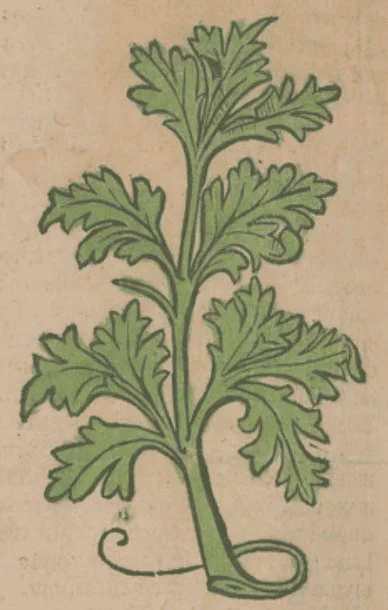
Ortus Sanitatis, Meydenbach, 1491
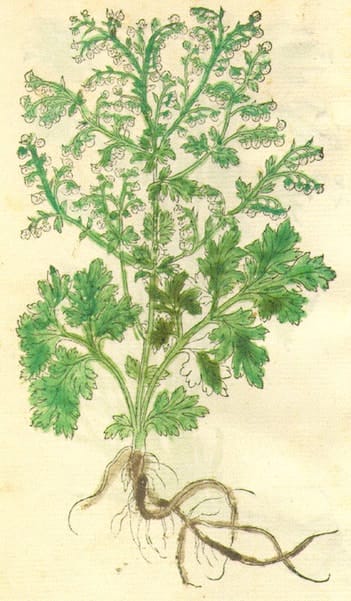
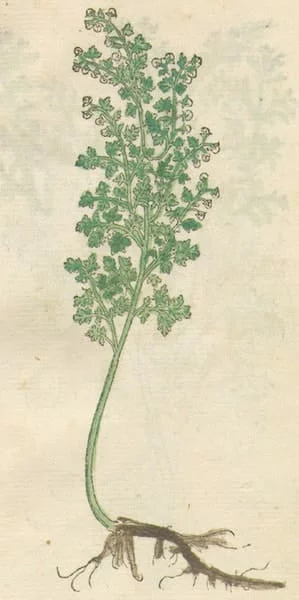
Wormwood (left), Pontiac Wormwood (Right)
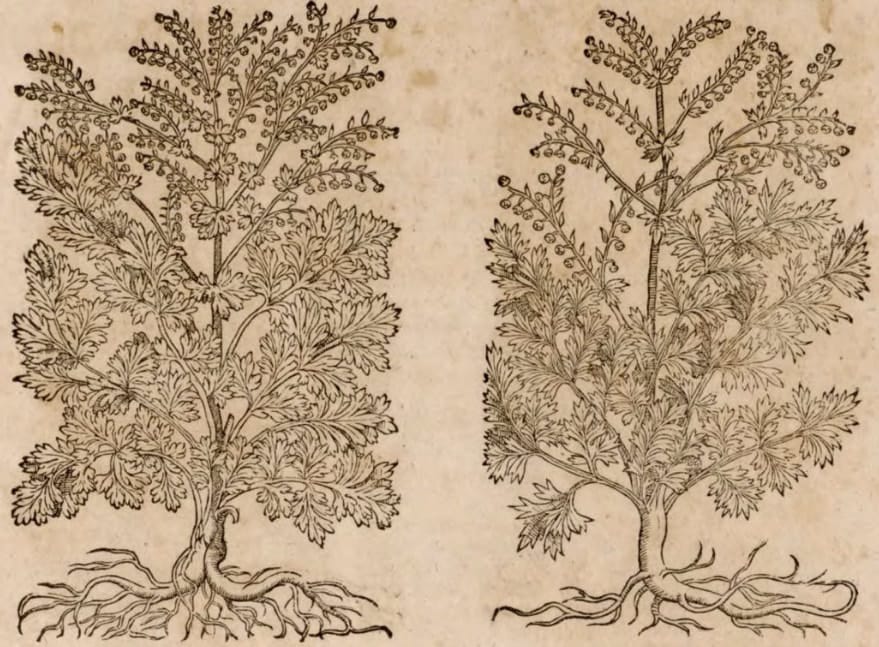
Common Wormwood Mountain or Roman Wormwood
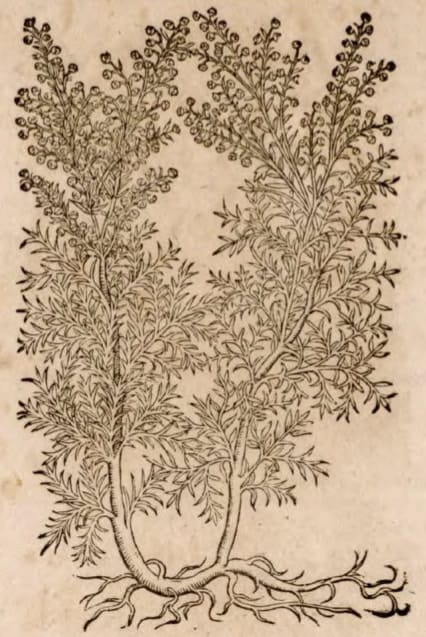
Pontic Wormwood of Galen
Eicones plantarum seu stirpium, Jacobus Theodorus, 1590
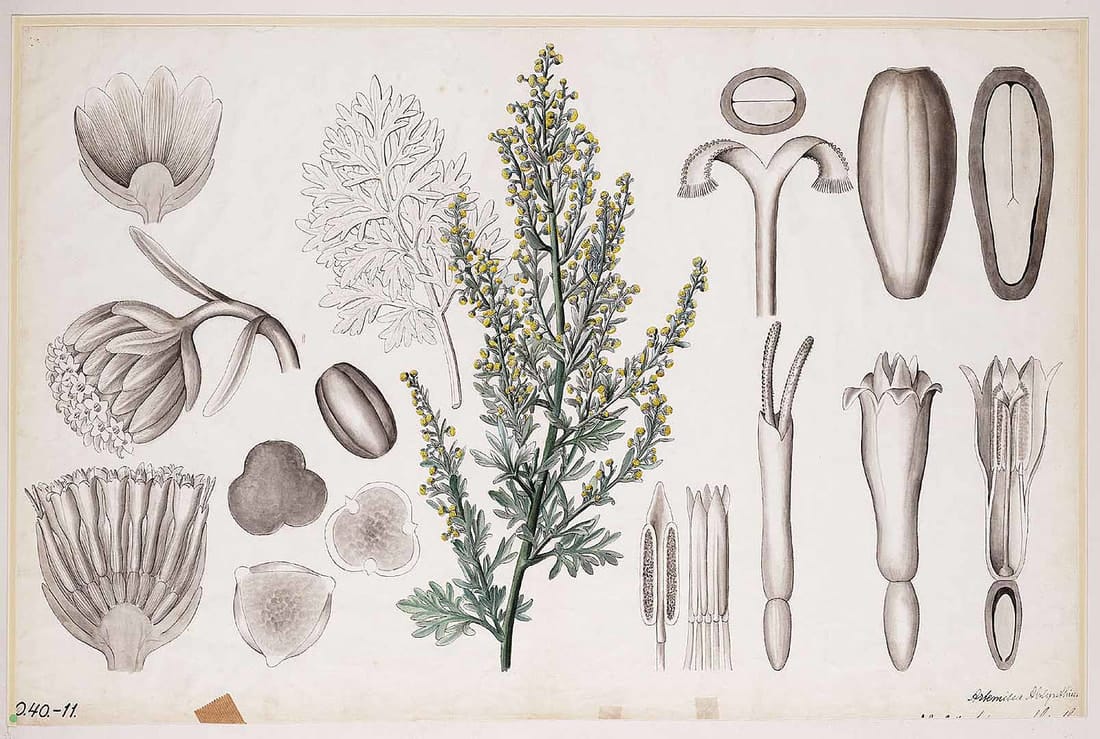
Botanische wandplaten, 1904–1914
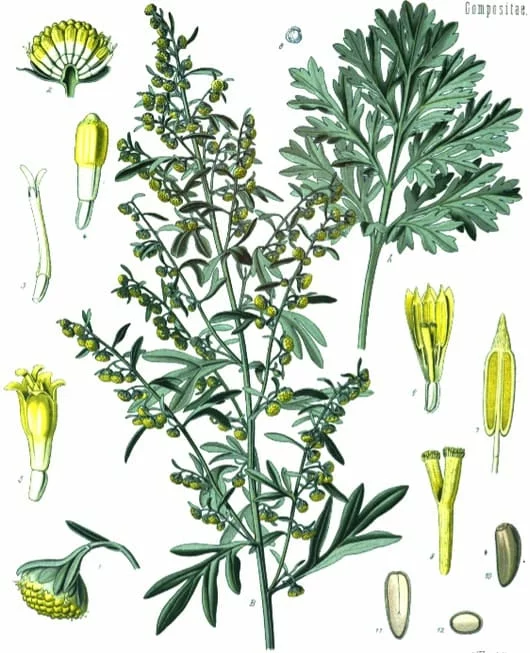
Koehler’s Medizinal Pflanzen, 1887
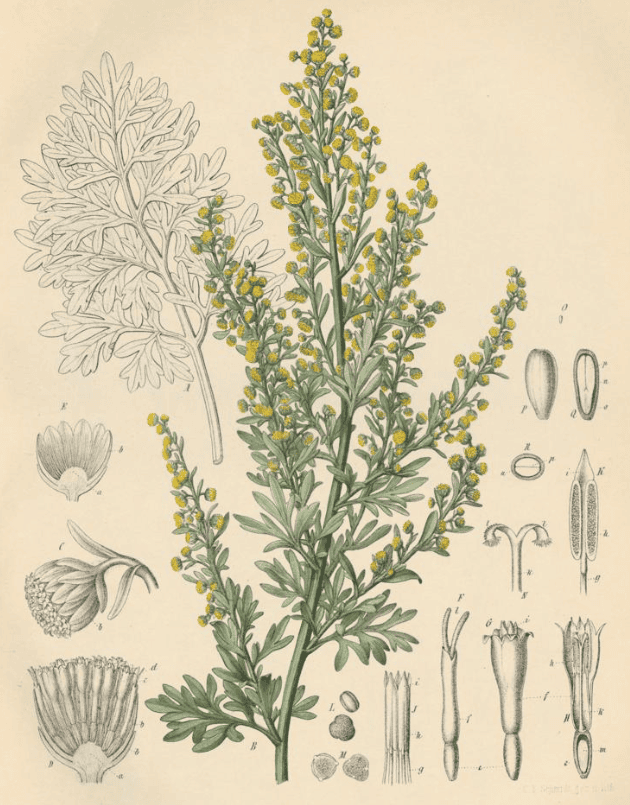
A. absinthum
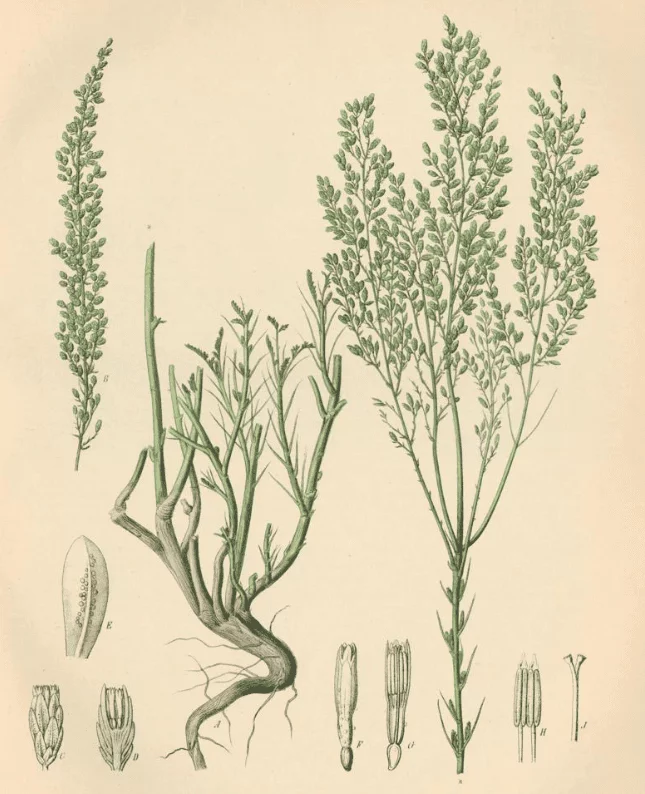
A. maritima
Atlas der Officinellen Pflanzen, Berg & Schmidt, Leipzig, 1893
Botanical name:
Artemisia absinthium
Pontic, Roman or Mountain Wormwood (A. pontica) was used similarly, and was often preferred for Liver disease;
Sea Wormwood (A. maritima) is also used similarly, but is weaker.
“According to Hunain, Wormwood is of many varieties”. (Avicenna)
Parts used:
Herb; flowering tops
Temperature & Taste:
Warm, dry. Bitter, pungent
“It is bitter, astringent and pungent” … “Hot in the First and Dry in the Second degree”. (Avicenna)
Classification:
2A APERIENT MEDICINES. 2B ATTENUATERS. 2C INCIDERS. 2D ATTENUATERS OF CONGEALED BLOOD. 2F. PURIFYING. 2G. CLEANSING. 2Q. ANODYNE. 2S. STRENGTHENING
3B. FEBRIFUGE & ANTIPYRETIC. 3C. ALEXIPHARMICS 3E. DIURETIC. 3G. EMMENAGOGUE
4b. OPTHALMICS. 4e. STOMACHIC. 4f. SPLENETIC. 4g. HEPATIC. 4i. UTERINE
TCM:
B. Clears Heat and Damp
B. Clears Deficient Heat
Uses:
1. Clears Heat and Damp, Opens Obstructions of the Liver:
-Liver or Spleen Obstruction; Jaundice, Hepatitis
-Gall Stones; Cholecystitis
-resolves Swelling and inflammations
-“useful for internal Hardness if applied as a plaster or taken orally”. (Avicenna)
-Hepatoprotective (See Research below)
-“Against drunkenness, Wormwood with honey is effective.”. (Dorsetn, 1540)
2. Strengthens the Stomach, Clears Heat and Damp:
-weakness of the Stomach, poor digestion, nausea, vomiting, seasickness
-acute and chronic Gastritis
-“It restores Appetite … Its syrup strengthens the Stomach”. (Avicenna)
-“It strengthens and Fortifies the Stomach, cleanseth and purgeth” (Salmon)
-Inflammatory Bowel Disease, Crohn’s Disease (See Research below)
3. Clears Damp-Heat, Promotes Urine:
-acute Urinary Tract Infections; Edema
-decoction in Wine, ashes steeped in white wine or the Salt of Wormwood may be used
-Leukorrhea
-Arthritis (See Research below)
-Nephropathy (See Research below)
4. Clears Heat, Resists Poison:
-preservative in times of infection; used in Antidotes
-various types of Fever; especially Tertian Fever (West, Unani, Ayurveda)
-with vinegar for Toadstool and mushroom poisoning (Pliny, Avicenna)
-with wine for Hemlock poisoning and venomous Bites including Scorpion bite (Pliny)
-Anti-Bacterial, Anti-Malarial, Anti-Pyretic (See Research below)
5. Kills Worms:
-various Worms and Parasites (See Research below)
-Roundworm, Tapeworm and Threadworm (West, Unani)
-BHP says Ascaris and Enterobius are specific indications
-topically for Lice, Fleas and other parasites
-“It kills worms in the stomach and expels them forcibly”. (Dorsetn, 1540)
6. Moves the Blood, Promotes Menstruation:
-Amenorrhea; Dysmenorrhea
-promotes Labor in long or difficult Labor (can be applied as a compress)
-it has been used for Threatened Miscarriage (not from deficiency)
-“It improves the Complexion”. (Avicenna)
7. Benefits the Brain, Arouses the Spirit:
-Regarded as a Brain tonic and stimulant in mental weakness
-Unani regards it as an exhilarant
-regarded as strength-promoting in Ayurveda
-Neuroprotective; enhances Memory and Learning (See Research below)
8. Clears Heat, Stops Cough:
-occasionally for Cough, Chronic Cough
-Antitussive (See Research below)
9. Externally:
-washes, poultices, liniments for Sprains, Strains, Swellings, Bruises, Dislocations, Lumbago, Arthritic pain, Headache, Toothache etc.
-applied with Honey to bruises (Pliny)
-treats Boils, Acne, Carbuncles and Swellings
-Running Sores, liniment of Wormwood with Honey (Pliny)
-used for Prurigo and Itching
-“useful for Urticaria when applied after mixing it with the flour”. (Avicenna)
-the ashes are a good application to dry and heal chronic Ulcers
-boiled in salt water and used as a wash for Gangrene
-Tumors, beat the fresh plant with wine, vinegar and salt and apply
-externally to the temples and soles of the feet to promote Sleep
-externally to open obstructions of the Liver, Spleen and Stomach, and to benefit the Stomach and Digestion.
-Sore Throat, Tonsillitis, as a gargle
-the fumes or oil put into the ear benefits the Hearing; also for Earache
-Red or Bloodshot eyes, Wormwood juice mixed with Egg white applied to the eyes. (The Treasury of Health, 1550)
-“The ashes of it with Rose Ointment, maketh Black Hair”. (Pliny)
-ashes mixed with olive oil are applied to Baldness and Alopecia
-strong infusion is used as a wash for falling or thinning hair, baldness;
-the ashes rubbed on with Olive or Almond oil also heals baldness (Avicenna)
-the infused oil helps growth of the beard (Avicenna)
-used to remove darkness under the eyes (Avicenna)
-in pessaries to promote Menstruation (Pliny)
-Sciatica, as a plaster with Figs (Pliny)
-preserves cloth from moths and insects
Dose:
In Wine to move the Blood, open obstructions and promote Urine.
Infused in Vinegar for Poison, Mushroom poisoning and against Epidemics.
Taken with Salt and Honey as a purgative.
In Infusion or Brief Decoction: 2–5 grams (up to 9 grams for Jaundice and severe obstruction);
For Intermittent Fever, quarter of a pint of the Decoction was taken every 2 hours between the return of the Fevers.
In Powder: 250mg–3 grams (up to 6 or 9 grams of the powder has been used). For Fever, 2 drams doses were given.
Of the Juice: 2 drams–half ounce (5–15 mls). 4 drams of the juice taken daily for 10 days was used for Leprosy.
Substitute:
1. Artemisia maritima
2. Southernwood (Unani)
3. Valeriana harwicki (Unani)
4. Teucrium polium
5. Agrimony and Gentian have also been used
6. Asarum (Unani)
7. Germander (Avicenna)
8. Half weight of Yellow Myrobalan
9. to strengthen the Stomach, same weight of Indian Valerian with half the amount of Chebulic Myrobalan (Avicenna)
10. Red (Armenian) Earth (Avicenna)
Correctives:
1. Pomegranate fruit or juice
2. Aniseed
3. Mastic
4. Water Lily
5. Honey
Preparation:
1. Dehydrated Juice or Juice Extract:
Traditionally, Wormwood was beaten, the jucie was extracted, then gently dried to the thickness of Honey. Or else, the herb was decocted to one-third, strained, then the decoction slowly boiled down to the thickness of Honey. (Galen)
Main Combinations:
Wormwood & Aniseed
Wormwood is often combined with Aniseed to correct it and make it more pleasant to take. This was the original Spirit of Wormwood which was the forerunner to Absinthe. Used for obstruction of the Stomach, Liver and Spleen, for Worms, Jaundice and to benefit Eyesight.
Liver, Gall Bladder:
1. To Open obstructions of the Liver, Spleen and Stomach:
i. decoction of Wormwood in water (Herbarium Horstianum, 1630)
ii. Liver obstruction, Wormwood with Roman (or Indian) Spikenard (as in Electuary of Roman Spikenard)
iii. Spleen obstruction, Wormwood with vinegar or Figs (Pliny)
iv. Wormwood with Celery seed, Bitter Almond, Aniseed, equal parts (Pastillus Amarus of Nicholas)
v. Wormwood, Asarum, Parsley seed, Aniseed, Bitter Almond (Syrian ‘Book of Medicine‘, Budge, 1913)
vi. Wormwood, Rhubarb, Costus, Rue, Mastic, Pepper, Raisins (Syrian ‘Book of Medicine‘, Budge, 1913)
vii. Wormwood with Rose, Aniseed, Agrimony, Rhubarb, Bitter Almond, Mastic (as in Troches of Wormwood)
viii. Wormwood, Gentian, Asarum, Costus, Agrimony, Madder, Rue, Mastic, Thyme, Fenugreek, Raisins (Syrian ‘Book of Medicine‘, Budge, 1913)
ix. Wormwood with Aloe, Aniseed, Agrimony, Bitter Almond, Celery seed, Asarum, Mastic, Spikenard (as in Troches of Aniseed)
x. Wormwood with Rose, Rhubarb, Tabasheer, Lacca, Agrimony, Sandalwood, Saffron (as in Pastillus ex Rhubarbi)
2. Jaundice:
i. Fresh Wormwood with Parsley or Maidenhair (Pliny)
ii. Wormwood, Bitter Almond, Aniseed, Spikenard (Pastillus adIctericos)
iii. Wormwood, Rosemary, Sloe (Prunus spinosa), Saffron (Pemell, 1652)
iv. Wormwood, Mugwort, Scolopendra (The Secrets of Alexis, 1615)
3. Gall stone, combine Wormwood with Peppermint and Camomile
4. Liver diseases:
i. Wormwood with Gentian, Amomum, Costus, Agrimony, Bitter Almond, Pepper, Aniseed (Hepatica Potio Mirabilis of Nicholas)
ii. Strengthen Liver, Cachexia, Edema, Jaundice, Wormwood with Liverwort, Chicory, Agrimony, Rose, Pimpernel root, Saffron, Sandalwood, Cinnamon (as in Species Hepatica)
5. Liver disease, Debility of Nature, chronic sickness, Wormwood with Sandalwood, Licorice, Rose, Spikenard, Mastic (as in Dianthu)
Stomach & Bowels
6. Stomach weakness
i. Wormwood with Rue, Pepper and Salt (Pliny)
ii. Wormwood with Calamus
iii. Wormwood with Aloe, Mastic (a version of Stomach Pills)
iv. in cold and damp cases, Wormwood with fresh Ginger and Orange peel
v. Wormwood with Blessed Thistle, Centaury
vi. atony of the digestive organs with disordered digestion, Wormwood, Gentian, Calamus (Sobernheim, 1840)
7. Digestive tonic to be taken before meals, Wormwood with Aloeswood, Zedoary, Spikenard, Saffron, Cardamon, Ginger, Calamus, Mint, Aniseed, Mastic (1 part each), Rhubarb (24 parts), Aloe (48 parts) (as in Pills Before Meals)
8. Stomach pain:
i. Wormwwod with Indian Spikenard (Avicenna)
ii. Syrup of Wormwood, Syrup of Rose
9. Melancholy, Stomach coldness and windiness Wormwood with Fumitory, Raisins (Pemell, 1652)
10. Nausea, Vomiting:
i. Wormwood with Mint
ii. Wormwood with Rose, Mint, Clove, Nutmeg, Cumin mixed with bread and vinegar as a plaster over the Stomach. (Herbarium Horstianum, 1630)
11. Flatulence, burping, insomnia, Wormwood with Camomile, Rue, Marjoram, in herbal sachets, heated, and placed on the Stomach (Wittich)
12. Inflammatory Bowel disease, Crohn’s disease, Wormwood, Agrimony, Camomile, Tormentil
Inflammation, Tumors
13. For Fibroids, combine Wormwood with Oregano, Hyssop, St. Johns wort, Rue, Dodder, Pennyroyal, Fennel seed.
14. Inflammations, combine Wormwood with Balm, Peppermint, Oregano, Camomile, Lavender, Elder flowers (Resolvent Powder)
15. Hardness of the Liver, Jaundice, Bloating, Wormwood, Aniseed, Celery seed, Bitter Almond, Asarum (equal parts, as in Troches of Alexander)
16. Hardness of the Spleen, Wormwood with Oregano, Hyssop, St. Johns wort, Rue, Dodder, Pennyroyal (form a tincture with wine of Squill to be used externally)
Fever
17. Fever:
i. Wormwood with Camomile
ii. Chronic Fever, Wormwood with Agrimony (Avicenna)
iii. Chronic Fever combine Wormwood with Borage and Centaury (Dorsetn, 1540)
iv. Tertian Fever, Wormwood, Calamint, decocted in water (Herbarium Horstianum, 1630)
v. Malarial Fever, Wormwood juice ½ oz., Venice Theriac ½ dram
vi. Quartan Fever, Wormwood, Calamus (Herbarium Horstianum, 1630)
18. Chronic Fever: “He who is suffering from a long fever, should use the decoction of Absinthium, tempered with sugar, and the fever will be relieved.”
18. Shivering of a Fever, Wormwood and Camomile
Worms & Parasites:
19. Worms:
i. “Wormwood when cooked along with Lentil or rice and eaten, kills the worms”. (Avicenna)
ii. Wormwood, Tansy, Feverfew
iii. Wormwood with Rue, Tansy, Senna and Licorice
iv. Wormwood with Tansy, Senna and Camomile (Meyer)
v. Wormwood with Horehound, Lupins equal parts, boil in wine, apply to navel (Botanicon Continens Herbarum, Dorsten, 1540)
vi. Worms with Cramps, Wormwood with Valerian and Orange peel
vii. Enema for Ascaris, Wormwood, Tansy, Rue (3 drams each), Water 12 oz., decoct to 8 oz., add Castor Oil ( oz.). (Sobernheim, 1840)
viii. “Take four ounces of Wormwood, an ounce of euphorbia, half ounce of burnt horn of deer, to these add one ounce of hare bile, and mix. From this, a plaster is made and applied to the stomach”. (Dorsetn, 1540)
Other:
20. Cough: Wormwood, Bitter Almond, Myrrh, Aniseed, Fenugreek, Honey (as in Antidote for the Liver and Chronic Cough)
21. Vulnerary (for Wounds):
i. Wormwood, Lavender flowers, Peppermint leaves, Rosemary leaves, Rue leaves, Sage leaves (1 part each), Diluted spirit (20 parts), Water (50 parts). Leave to stand 48 hours, then distil off 40 parts. (Ergänzb)
ii. Wormwood, Hyssop, Yarrow, Thyme, Ground Ivy, Lemon Balm, Sage, Coltsfoot, Arnica flower, equal parts (Swiss Tea)
22. To cleanse the chest, Wormwood with Orris (Pliny)
23. To promote Menstruation:
i. Wormwood with Pennyroyal
ii. Wormwood with Mugwort, Myrrh, made into a pessary with honey (Botanicon Continens Herbarum, Dorsten, 1540)
24. Suppressed Menstruation:
i. Wormwood with Cinnamon, Myrrh, Savin, Spikenard, Rhubarb, Saffron, Madder, Rue, Pennyroyal, Balm (as in Tincture for Suppressed Menstruation)
25. Chlorosis, Wormwood with Blessed Thistle, Balm, St. John’s wort, Black Hellebore prepared, Galangal, Myrrh (as in Tincture for Chlorosis)
26. Chronic Skin diseases, Wormwood with Dodder, Violet, Yellow Myrobalan decoted and made into a syrup with Fumitory juice and Sugar (Syrup of Fumitory Minor of Mesue)
27. Edema:
i. Conserve of Wormwood, half ounce (Herbarium Horstianum, 1630)
ii. Wormwood with Juniper (Weikard)
iii. Wormwood with Parsley seed, Fennel seed, Nettle
iv. to purge water, Wormwood with Blessed Thistle, Agrimony, Vervain, Fennel root, Parsley root, Asarum (Pemell, 1652)
v. Wormwood with Spikenard, Celery seed, Parsley seed with Troches of Rhubarb (Rondeletus)
28. Urinating Blood:
i. with Purulent matter, Wormwood with Poppy seed, Celery seed, Pine nut, Almonds, Winter Cherry, Frankincense, Tragacanth (as in Troches of Winter Cherry from Dispensatory of Ibn at Tilmid)
ii. Wormwood, Red Earth, Amber, Gum Arabic, Pomegranate flower, Henbane seed (Troches for Urinating Blood from Dispensatory of Ibn at Tilmid)
29. Ascites:
i. Wormwood with Fumitory, Agrimony, Spikenard, Yellow Myrobalan, Rhubarb (as in Potion for Ascites)
30. Clarify the Sight, Wormwood with Celandine, Violet, Eyebright, Triphala, Aloe (as in Pills to Clarify)
Externally:
31. Toothache, decoct Wormwood with Vervain and drink, apply the herbs as a fomentation over the jaw. (Hildegard)
32. Sprains and Strains, powder Wormwood, mix with egg white and bind on. (Wirtzung)
33. Bruising, Wormwood, Comfrey, Camomile, Saffron, Fenugreek meal, Butter
34. Headache:
i. throbbing, boil Wormwood in water and bind to the temples (The Secrets of Alexis, 1615)
ii. Wormwood, Camomile, Betony, Vervain, Marjoram, Rose, Stoechas, Rosemary. Beat and sew into a cap to be worn on the head.
35. Fomentation for Contusions, Dislocations, and local debility: Wormwood, Bay leaf, Rosemary (2 oz. each), Water (10 pounds). Boil down to 8 pounds after straining. (Pharmacopoeia medici practici universalis, Bruxelles, 1817)
36. Fractures, Wormwood, Tag Alder, White Chicken Dung; decoct them together, add Hog fat and simmer to an ointment (Madame Young’s Guide to Health, 1858)
37. Erysipelas, Wormwood (4 parts), Chalk powder (8 parts), Armenian Earth (2 parts), form a dusting powder. (Dispensarium Lippiacum, 1792)
38. Gangrene, Wormwood with Willow bark, Rue, Sage, St. John’s wort, Myrrh, Asafetida, Aloe (topically)
39. Externally for the Stomach:
i. Cinnamon, Nutmeg (½ oz. each), Mace, Clove (2 drams each), Spearmint (2 handfuls), Wormwood (½ handful). Sew into a bag; to use, warm it in a pan, sprinkle with a little wine and apply to the stomach to warm the Stomach and promote Appetite and Digestion. (Fuller)
ii. with Mint, Thyme, Rose, Angelica, Caraway seed, Nutmeg; beat, put into a bag and dip in hot wine and apply. (Fuller)
iii. “Cooked with olive oil, and anointed with the belly, it removes weakness of the stomach, and malice of the liver”. (Dorsten, 1540)
40. Poor Hearing, Tinnitus:
i. “Oil of wormwood, instilled into the ears, restores hearing.” (Dorsten, 1540)
ii. Wormwood, Rue, Camomile, Juniper, boil in 3 parts water and 1 part vinegar and allow the fumes to enter the ear.
41. Sciatica, Wormwood, Southernwood, Mugwort (as a fomentation)
42. Cystitis, Wormwood, Camomile, Hops (as a fomentation)
Major Formulas:
Infusion for Jaundice (Riverius)
Decoction for the Gall Bladder
Decoction for the Gall Bladder (2)
Decoction Against Vomiting
Decoction to Promote Appetite
Decoction for Boils and Abscess
Opening Hepatic Decoction
Decoction for Chronic Heat-type Headache (Mesue)
Decoction of Fumitory Compound
Decoction of Thyme
Aromatic Bitter Decoction
Syrup of Wormwood
Syrup of Fumitory Lesser (Mesue)
Syrup of Fumitory Compound (Augustana)
Tincture Against Schirrus of the Spleen
Four Thieves Vinegar
Powder to Warm the Belly (Rondeletius)
Powder to Warm and Bind the Belly (Roneletius)
Powder to Purge in Ascites (Nicholas)
Powder of Musk Bitter (Diamoschu Amarum) (Mesue)
Powder for the Liver
Powder for the Liver (Bononiense)
Troches for the Liver and Jaundice (Nicholas)
Troches of Agrimony
Troches of Rose (Rhasis)
Troches of Rhubarb Greater
Troches of Wormwood Greater (Mesue)
Troches of Wormwood Lesser (Mesue)
Troches of Wormwood Greater
Bitter Troches (Nicholas)
Pills for Cataracts
Pills for Asthma and Shortness of Breath (Unani)
Antidote for Edema (Nicholas)
Confection of Rhubarb (Mesue)
Electuarium Dianthu (Galen)
Pills of Agrimony Greater (Mesue)
Pills of Rhubarb (Mesue)
Green Oil
Cautions:
1. Not used during pregnancy.
2. Avoid overdose or long-term usage.
3. Pliny said it must never be administered in Fevers. It has been much used for Fever, especially Malarial Fevers.
Toxicity:
–LD50 2,000 mg/kg body weight (see here)
–Thirteen-week repeated dose toxicity study of wormwood (Artemisia absinthium) extract in rats.
Side Effects:
1. Persistent metabolic acidosis and severe diarrhoea due to Artemisia absinthium poisoning.
2. Gastrointestinal bleeding secondary to interaction of Artemisia absinthium with warfarin.
Main Preparations used:
Distilled water, Spirit, dehydrated Juice, Wine, Extract, Conserve, Syrup, Troches (compound), Oils both infused and Distilled, a Fixed and a Volatile Salt
DISTILLED SPIRIT and WATER of WORMWOOD.
Wormwood leaves 2 lbs.
Aniseed ½ lb.
Steep in 6 gallons of Small wine for 24 hours; then distil in an Alembic. The first 2 lbs. is Spirit, the rest, Water of Wormwood, the lesser composition; add to every pound of the distilled water 2 oz. of the best sugar.
‘It has the same virtues Wormwood hath, only fitter to be used by such whose bodies are chilled by age, and whose natural heat abates’; Used to Warm and strengthen the Stomach, help digestion, and prevent vomiting; it ‘takes away illness, rawness, loathing and vomiting, and making a good digestion’. Also to stop pain of the teeth.
Dose: ½ oz. of the Spirit; 1 oz. of the Water.
‘Water of Wormwood for the Stomach, Liver and Spleen, for Worms in the Body, for the Jaundice, drunkeness, and for the sight’.
It is interesting to note that this Spirit, in the form of Absinthe, was taken by French Soldiers in Algeria in the 1840’s as a Malaria preventative.
WORMWOOD WINE.
Wormwood 1 handful
Wine (white) 1 gallon
Steep in a sealed vessel. Many, but especially the Germans, preferred Roman Wormwood instead of the Common Wormwood, as it was more pleasant to take, and was generally regarded as being of similar strength.
‘Commended against diseases of the Stomach and Liver, especially proceeding from a Cold cause … it helps and increases the Appetite … helps concoction and distribution of nourishment’; it was used for wind and colic; also good to promote Menstruation and open obstructions of the Uterus; it is good for the Green Sickness. It also kills Worms. Take a draught of 2-4 ounces every morning.
‘Although that this wine hath a bitter and unpleasant taste, yet hath it nevertheless a marvellous great vertue … First of all it kills Worms, it withstands Poison, and it expels the hurtful Phlegm; and if one drink the same often, it cleanses and strengthens all inward parts that they cannot receive such matter; it dries the vapors of the Stomach, that they cannot ascend into the head, it makes Appetite, it opens all obstructions of the inward parts, viz. of the Liver and Spleen, and it takes away also the Yellow Jaundice which is caused thereby; it frees from the Palsy, the Falling Sickness, and all Lameness; it restores lost speech, it strengthens the weakened joints if the same be well rubbed and formented with it … If any one would go to sea, then is he to drink certain days before some of this wine, for that thereby shall he be freed of the Sea Sickness. Moreover, this wine is an especial preservative against the Plague, and against all venomous air, if one take a good draught thereof, before that such patients be visited; it brings also sleep with it, and takes away heavy dreams … This wine is meet for many other diseases’. (Salmon, Wirtzung)
WORMWOOD TINCTURE.
Wormwood tops 5 oz.
Brandy. 30 oz.
Digest in BM, or steep for 6 weeks, strain and keep. Traditionally, a like amount of Wormwood was added and steeped 2 more times, making it much stronger, and very bitter. If the infusion is done only once, 20 oz. of the Spirit is sufficient. Then filter. Also, 20-30 drops of the Oil of Wormwood makes it all the better.
A great Stomatic, strengthening the Stomach and digestion. It promotes Appetite, and causes a good digestion. Being constantly taken for some time after proper purging, it opens obstructions of the Liver, Spleen and Womb, and promotes Menstruation. Traditionally taken daily for gravel and Gout. It soothes nervous irritability and calms a nervous temperament. It is a superior nervine and mental restorative, especially when the cause is in the stomach.
Dose: from 4–6, to 10 or 20 drops of the triple-infused Tincture; to a teaspoonful of the single-infused Tincture, taken in Wine or some water.
SIMPLE SYRUP of WORMWOOD.
Wormwood juice depurated and clarified,
Sugar, equal parts
Boil gently to a Syrup according to Art. Very good for the Stomach; it has all the virtues of the herb, preserved for use. Dose: 1-2 spoonfuls.
DRY EXTRACT of WORMWOOD.
Take a sufficient amount of Wormwood juice and evaporate in a Water Bath to dryness; beat to a fine powder and keep.
The dry extract of other herbs may be prepared similarly.
ESSENTIAL OIL of WORMWOOD.
Dried Wormwood 1 lb.
Spring Water 20 lbs.
Digest 24 hours, and distil in an Alembic with its refrigeratory. (The first 2 or 3 pints may be kept for use as a distilled water.) This gives a water and an Oil which is to be separated with a funnel.
“This oil is a profitable medicine against all pains of the Stomach that is oppressed with hot choleric Humors, for it expels them partly by the Stool, and partly by Urine, and comforts the Stomach: likewise it purges all choleric humors gathered together in the Veins and Liver. The use thereof helps the Yellow Jaundice, and all obstructions of those parts. It is profitable against windiness and blastings of the belly, against pains and appetite to vomit, and the wamblings of the Stomach, if it be mixed with oil of Aniseed and eaten in lozenges or drink, it resists Venom, and kills Worms being drunk, and the belly annointed therewith, it helps digestion, purifies the Blood, provokes Sleep, and preserves them in good temperature that use it, either with wine or some other convenient thing, it is profitable against the Dropsy, comforts the Liver and Heart, and resolves the Milt, it ye mix it with it 2 or 3 drops of oil of Vitriol, it helps long sickness, being often used in the morning with convenient liquors, it is very profitable for those that are waxen lean and are evil colored in the face and body: Wormwood wine is very fit to drink it withall”. (A Brief Answer of Josephus Quercetanus Armeniacus, Doctor of Physick … By John
Hester, London, 1591.)
A great strengthener to the Stomach and Liver; it stops nausea, vomiting, and stomachache, and causes a good appetite and digestion. It expels wind and Melancholy, causes a good colour to the face. It also promotes urine and Menstruation, cures Cachexia and Green Sickness, and dries up the excess watery humours. Dose: 3-10 drops.
ESSENTIAL SALT of WORMWOOD.
Made as the Essential Salt of Mugwort.
‘This salt is given in manner in all diseases or sicknesses with profit: but especially in the Pestilence, it is profitable against all obstructions of the Liver and Kidneys, it provokes Urine, it helps the Dropsy and water between the skin and the flesh proceeding of a salt choleric humor, and is profitable against the Yellow Jaundice; it provokes Sweat, it helps and drives forth from the inward parts the Pox. It comforts the Stomach, purges waterish Blood gathered together in the veins and Liver, causes good digestion, and slakes the griping pains and blastings in the Belly, being used with convenient liquors or medicines; it mundefies all foul Sores, if it be strewn thereon, or mixed with convenient liquors or ungents’. (A Brief Answer of Josephus Quercetanus Armeniacus, Doctor of Physick … By John
Hester, London, 1591.)
It strengthens the Stomach and aids digestion; traditionally used for Scurvy.
Dose: 6 grains-1 scruple
FIXED SALT of WORMWOOD.
Made as Fixed salt of Mugwort.
The Salt of Wormwood is best prepared from Fresh, Green Wormwood, calcined to white ashes, dissolved in water then filtered and evaporated, then gently calcined to a blue color.
Used for Surfeits, Dropsy, Jaundice, and weakness of the Stomach. (Salmon)
It also appears in the Pills Against Fevers, under Blessed Thistle.
A strong tea of the herb with the fixed alkaline salt from the ashes of the same herb added powerfully promotes Urine in some cases of Edema.
Click the above Tabs for more information on this medicine
-The Goddess Artemis is said to have chosen this plant to name after herself as she received so much benefit from its use. This led to Wormwood being commonly used for female complaints, including the use of it to ease labor pains. The Herbarium of Apuleius said ‘of these worts that we name Artemisia, it is said that Diana did find them and delivered their powers and leechdom to Chiron and Centaur, who first from these worts set forth a leechdom, and he named these worts from the name Diana, Artemis, that is–Artemisia’.
-The name ‘Wormwood’ has been said to come from the German ‘Wermut’, which was is supposed to come from the old German meaning ‘preserver of the mind’. However, various sources have stated that its name was derived from its use against Worms.
-Wormwood (A. absinthium) is said to have been used for at least 5 centuries before the birth of Christ. Hippocrates and the Greeks praised its use for disorders of the Head. It was bought to Europe by early Christian Monks, and was first mentioned in the 9th Century in Strabo’s Hortulus.
-‘It is the principle remedy for all ailments’. (Hildegard von Bingen)
–Schroeder listed 13 preparations of Wormwood which were commonly used in his time; these include a Distilled Water, Spirit, Oils (Distilled and Infused), Inpissated (evaporated) Juice, the Fixed Salt from the Plant ashes, as well as a Volatile Salt prepared from the Juice, Wormwood Wine, Conserve of the Tops, as well as Wormwood Compounds including Syrup, Troches, etc. The Wine was most commonly used, being the most common wine in use.
-St. John is said to have habitually worn a girdle of Wormwood, St. John’s Girdle being a traditional name for Wormwood.
-In Ancient times, Wormwood was used as a symbol of health, and Herbalists painted it on their doors to show their profession.
-Absinthe, a narcotic liqueur made using Wormwood was a popular beverage in Europe, but was banned due to its supposed addictive quality. This beverage is very potent, and was much used in Europe during the 19th and early 20th Centuries, especially by atrists, poets and writers, Van Gogh being one regular consumer. It has recently become popular again.
-The burnt herb was traditionally said to drive away snakes.
-The leaves boiled with Alum produce a fine lemon-yellow dye which was to dye fabric.
-Wormwood has long been used for various Worms, Pests and Parasites: ‘Laid amongst clothes, it driveth the Moths away. The smoke of it driveth away Gnats or Mydges. If the Ink be tempered with the juice, it maketh the Mice they will not eat the paper that is write with that Ink’. (Pliny, out of William Turner)
Another:
‘Whosoever would destroy fleas, let him steep wormwood in the sea for an hour, and afterwards dry it in the sun. When sufficiently dry, any fleas coming in contact therewith will die’. (The Physicians of Myddvai, translated by John Pughe esq., 1861)
Another:
‘When chamber is swept, and Wormwood is strown,
No Flea, for his life, dare abide to be known’.
Herbarius, Arnold de Villanova, 1499
Wormwood is hot in the first degree and dry in the second, and has a very strong and very bitter taste. It should be gathered at the end of spring and dried in the shade, and kept for a year, and it is of great efficacy. Wormwood has opposing properties — namely laxative and constrictive. For it is laxative by virtue of its heat and bitterness, and it has a constrictive property because it constricts by reason of the roughness of its substance. And so wormwood works in contrary ways.
It must not be administered unless the matter is digested; by its heat it dissolves, and by its bitterness and constrictive action it evacuates. Wormwood powerfully removes obstructions of the liver and spleen, and therefore cures diseases arising from obstruction, such as jaundice and dropsy — notably when these arise from a cold cause, as Avicenna says, in Canon [Book II, chapter 103]. The juice of wormwood, drunk in the morning for ten consecutive days without interruption, greatly cures these ailments; but the drink appears repugnant, so it is good to mix into it sufficient sugar to sweeten it. Or let the wormwood boil in goat’s whey with a little sugar added. Or let a syrup be made in this manner:
Take: tips of wormwood [half a handful]; flowers of centaury, violet flowers, borage flowers, tamarisk flowers [each 2 drams]; roots of rhubarb, liquorice [each 1 dram]; raisins [half an ounce]. All crushed and boiled until a third part is consumed, then strained, sweetened with sufficient sugar, and a syrup made. Of this syrup, take by the Epidemia measure half a cup each time. First take pills of rhubarb and the restorative Diatodium from the physicians; afterwards take the wormwood.
Wormwood is also effective against baldness — that is, hair loss — and against ringworm. Take wormwood and Celtic spikenard, as much as pleases you, and boil with wine, and use it as a head wash. The juice of wormwood mixed with honey or barley flour is useful applied to bruises or contusions around the eyes or other places. The juice of wormwood mixed with powder of frankincense and honey is effective against worms. Item: the juice of wormwood applied to the eye is good against redness and film over the eye. The vapour of a decoction of wormwood in wine and rose water applied is good against filth and ringing of the ears. The juice of wormwood with oil of pine nuts, instilled into the ears, kills worms. Wine of a decoction of wormwood with oak bark is effective for foul breath arising from putrid matter causing trouble in the stomach. The juice of wormwood mixed with honey prevents drunkenness. Wormwood also works well with artemisia and common oil, cooked together to make a pessary for provoking menstruation.
The PROPERTIES of WORMWOOD from WILLIAM TURNER.
“… it driveth forth by the Stool and the Urine also Choleric and Gallish Humours out of the Stomach. But it avoideth most chiefly the Gall or Choler that is in the Urine … That broth that it is sodden or steeped in, drunken every day about 5 ounces, healeth the Jaundice … It provoketh Womans flours, either taken in, or laid to without with Honey; it remedies the strangling that comes of eating Toadstools, if it be drunk with Vinegar … it healeth the watering of sores in the corner of the Eyes. And so it is for the Ears, if matter run out of them: the Broth of Wormwood with his vapour that rises up from it, and smoketh up, healeth the pain of the Teeth and the Ears”.
Pliny on Wormwood:
‘There are numerous kinds of absinthium; the Santonic, for instance, so called from a city in Gaul, and the Pontic, which comes from Pontus, where the cattle are fattened upon it— a diet which causes them to be destitute of gall [Bile]. The Pontic Wormwood, we may remark, is of the finest quality, superior to that of Italy, and much more bitter; the pith, however, of the Pontic wormwood is sweet. As to its general utility, a plant so commonly found and applied to such numerous uses, people are universally agreed; but with the Romans more particularly it has been always held in the highest esteem, from the fact of its being employed in their religious ceremonials. Thus, for instance, upon the Latin Festival, it is the custom to have a race of four-horsed chariots in the Capital, and for the conqueror to be presented with a draught of wormwood; from the circumstance, no doubt, that our forefathers were of opinion that good health was the most valuable reward they could bestow upon his skill.
‘This plant is very strengthening to the stomach, and hence it is that wines are flavoured with it, as already stated. A decoction of it in water is also taken, the following being the method employed in preparing it. Six drachmae of the leaves are boiled, with the branches, in three sextarii of rain water, and the preparation is then left to cool in the open air a day and a night. Salt, too, should be added to it. When old, it is utterly useless. A dilution of wormwood steeped in water is also used, such being the name given to this method of preparing it. This dilution is made by leaving the vessel covered up for three days, any kind of water being used.
‘Pounded wormwood is but rarely employed, and the same with the extracted juice of the seed. In cases, however, where it is extracted, the seed is subjected to pressure as soon as it begins to swell, after which it is soaked for three days in water, if used fresh, and seven, if dry. It is then boiled in a copper vessel, in the proportion of ten heminae to forty-five sextarii of water, after which it is strained off and boiled gently to the consistency of honey, in the same way as the juice is extracted from the smaller centaury. The juice, however, of wormwood, thus extracted, is bad for the head and stomach; whereas the decoction, on the other hand, is wholesome in the highest degree, as it acts astringently upon the stomach, carries off bile, is a powerful diuretic, has a soothing effect upon the bowels, and assuages pains in the intestines. With the addition of sile, Gallic nard, and a little vinegar, it dispels nausea and flatulency, and expels intestinal worms. It removes qualmishness, promotes the digestion, and, with the addition of rue, pepper, and salt, disperses crudities of the stomach.
‘The, ancients were in the habit of giving wormwood as a purgative, the dose being six drachmae of the seed with three of salt and one cyathus of honey, in one sextarius of sea water kept for some time. This preparation, however, is rendered more efficacious by doubling the proportion of salt; the seed, too, must be bruised with the greatest care, as there is con siderable difficulty in pounding it. Some authorities have prescribed the dose above mentioned to be given in polenta, with the addition of pennyroyal; while others recommend the leaves to be given to children in a dried fig, to disguise their bitterness. Taken with iris, wormwood acts as a detergent upon the thoracic organs: for jaundice it is used raw, with parsley or adiantum. In cases of flatulency, it is sipped every now and then, wanned in water; for liver complaints it is taken with Gallic nard [Valeriana italica], and for diseases of the spleen, with vinegar, pap, or figs. Taken in vinegar it neutralizes the bad effects of fungi and of viscus: in wine it is an antidote to the poison of hemlock, and to the bite of the shrew-mouse, and is curative of wounds inflicted by the sea-dragon and the scorpion. It contributes also very greatly to the improvement of the sight, and is used as an external application, with raisin wine, for deflations of the eyes, and with honey, for bruises.
‘The steam of a decoction of wormwood is curative of affections of the ears; and when they are attacked with running sores, a liniment of wormwood bruised with honey is applied. Three or four sprigs of wormwood, with one root of Gallic nard, taken in six cyathi of water, act as a diuretic and as an emmenagogue; indeed, if taken with honey, or employed as a pessary with wool, it has especial virtues as an emmenagogue. In combination with honey and. nitre it is useful for quincy, and an infusion of it in water is good for epinyctis. A topical application is made of it for recent wounds, provided always they have not been touched with water: it is employed also for ulcers upon the head. In combination with Cyprian wax or figs, it is highly recommended as a plaster for the iliac regions: it is curative also of prurigo, but it must never be administered in fevers. Taken in drink, it is a preventive of sea sickness; and, worn attached to the body, beneath an apron, it arrests inguinal swellings. The smellof it induces sleep, a similar effect being produced by placing it under the pillow unknown to the party. Kept among clothes it preserves them from worms, and used as a liniment, with oil, or burnt as a fumigation, it has the effect of driving away gnats. Writing ink, mixed with an infusion of wormwood, effectually protects the writings from the attacks of mice. Ashes of wormwood, mixed with rose unguent, stain the hair black.’ (The Natural History of Pliny, trans. by Bostock and Riley, Vol. 5, 1856)
Last Updated 02/24
You must be logged in to view this content, please login. If you're not a member then Click this link to subscribe