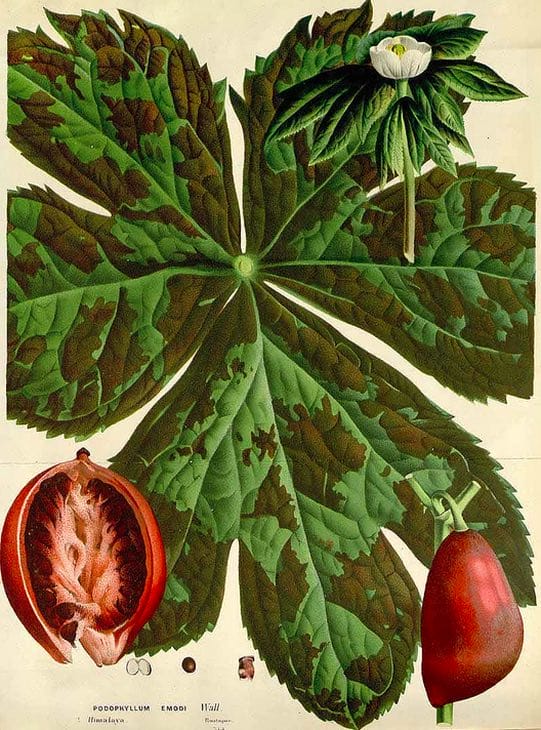
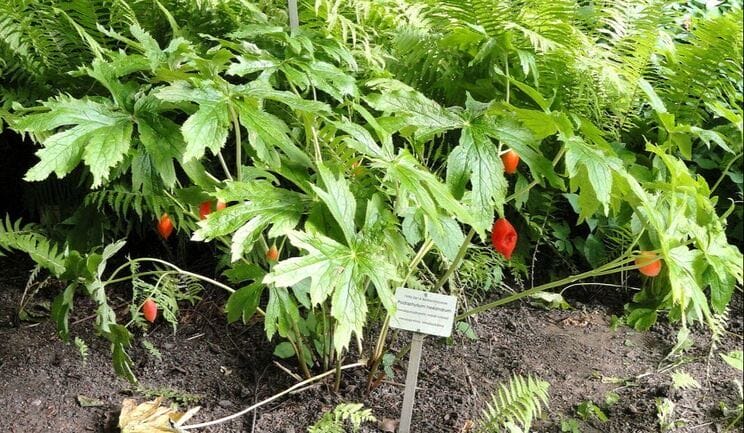
Podophyllum hexandrum, Indian Podophyllum
Ol mo se འོལ་མོ་སེ (Fruit, Tibetan Medicine)
Xiao Ye Lian 小叶莲 (Fruit, TCM)
Vanatrapusi (Root, Ayurveda)



Botanical name:
Podophyllum hexandrum (syn. P. emodi var. chinensis, Sinopodophyllum hexandrum)
Parts used:
Resin, Root powder (Ayurveda)
Mature Fruit (Tibetan Medicine)
Temperature & Taste:
Root, Resin: Hot, dry. Pungent. Toxic
Fruit: Neutral, Sweet (said to be non-toxic)
Uses:
ROOT
1. Clears Wind-Damp:
-Arthritic and Rheumatic disorders
-skin diseases from Wind and Damp with itching
2. Purges Phlegm and Damp:
-chronic constipation
-Tumors, Cancers
3. Clears Damp-Heat from the Liver:
-small doses used to stimulate the Liver
-Hardness, Tumors and Cancer of the Liver (Ayurveda)
4. Externally:
-Warts, Genital Warts (ointment or paste)
FRUIT:
1. Moves the Blood, Regulates Menstruation:
-Amenorrhea, Irregular Menstruation
-Difficult Labor, Retention of a Dead Fetus; Retention of Placenta (Tibetan Medicine, Chinese Pharmacopoeia)
-Uterine diseases associated with Blood stasis
-benefits Circulation
2. Regulates Qi:
-Nervous disorders, Paralysis
-improves circulation of Qi and Blood
3. Benefits Kidneys:
-Kidney disorders
4. Externally:
-topically to itchy and contagious skin diseases
-promotes suppuration of swellings
Dose:
RESIN: 125–250mg;
ROOT POWDER: 250–500mg
FRUIT:
In Pills or Powder: 1–3 grams (dosage form most commonly used)
Decoction: 3–9 grams
Comment:
1. The plant is endangered due to over-harvesting.
2. This is similar to the related P. peltatum of America. However, that species typically contains around 0.25% podophyllotoxin while the reported levels in Indian Podophyllum can be over 4%.
Substitutes:
1. Some Russian sources list fruit of Achyrantes bidenata for Ol mo se in Tibetan formulas
2. Podophyllum ‘Ol mo se has been used as a substitute for Abrus precatorius. This suggests the latter to be a viable substitute for Ol mo se.
Main Combinations:
1. Women’s diseases, Amenorrhea, Dysmenorrhea, Difficult labor, Postpartum bleeding, Postpartum disorders, the Podophyllum hexandrum fruit is used with Inula root, Chebula, Rhubarb, Sea Buckthorn and Crab shell (as in Pacific 11 of Tibetan Medicine)
2. To promote Menstruation, Podophyllum hexandrum fruit, Madder, Cinnamon, Inula racemosa
Major Formulas:
Auscpicious Conqueror (Bkra shis rnam rgyal)
Blood Breaking Diamond (Khrag bshig rdo rje pha lam)
Greater Universal Women’s Disease Conqueror (Mo nad spyi ‘joms chen mo)
Podophyllum 25 (‘Ol se nyer lnga)
Women’s Universal Decoction (Mo nad spyi thang)
Cautions:
1. Strongly irritant, avoid overdose
2. Avoid in Pregnancy (except sometimes used to promote Labor).
3. Not suitable for weak, Yin-deficient, or Heat-type individuals.
Main Preparations used:
Click the above Tabs for more information on this medicine
You must be logged in to view this content, please login. If you're not a member then Click this link to subscribe