Nigella, Gith, Black Cumin
Black Cumin, Fennel Flower, Melanthium
Kalonji (Unani)
Habat al-Baraka (Arabic)
Kalajira, Mugrela (Ayurveda)
Karuncirakam (Siddha)
Zi ra nag po ཟི་ར་ནག་པོ (Tibetan)
Hei Zhong Cao Zi 黑种草子 (TCM)
Tin tir gig (Sumerian)
Zibu (Akkadian)


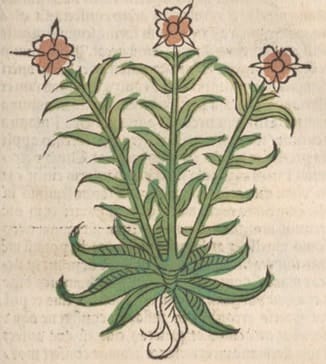
Herbarius latinus, Petri, 1485
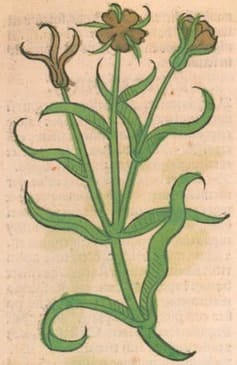
Ortus Sanitatis, Meydenbach, 1491
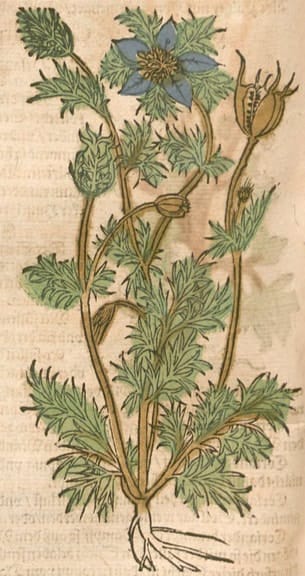
Krauterbuch, Lonitzer, 1578
Botanical name:
Nigella spp.
- N. sativa
- N. damascena
- N. glandulifera (syn. Nigella sativa var. hispidula)
Parts used:
Seed
“The seed of Nigella lasts for ten years”. (Dorsetn, 1540)
Temperature & Taste:
Warm, dry, Pungent
“Black Cumin is Hot and Dry in the Third degree” (Avicenna)
Classifications:
2H. CARMINATIVE. 2K. RESOLVENT
3F. LITHONTRIPTIC. 3H. LACTAGOGUE. 3P. MASTICATORIES & STERNUTATORIES 3Q. ANTHELMINTIC
Uses:
1. Warms the Stomach, Clears Damp, Moves Qi:
-cold and weak Stomach, Indigestion
-Colic, Bloating
-useful in Obesity
-as a spice and condiment to promote digestion
-“Nigella digests bad and congealed humors in man”. (Dorsetn, 1540)
2. Warms Kidneys, Clears Damp, Promote Urine:
-Edema, Fluid retention from Cold Kidneys
-Urinary infection, Stones (TCM)
-“Nigella taken in moderation is beneficial for those suffering from Stones; it relieves the difficulty swallowed with wine”. (Dorsetn, 1540)
3. Warms the Lungs, Clears Phlegm:
-clears thick and Cold Phlegm from the Lungs: Cough, Bronchitis, Asthma, Catarrh
-a bag of the seeds smelled relieves Catarrh (Dioscorides)
4. Moves Qi, Promotes Menstruation:
-Amenorrhea (TCM, Ayurveda, West)
-it has been regarded as a Contraceptive (Duke)
-Promotes Labor
-“Its prolonged intake for several days with honey promotes Menstruation” (Avicenna)
5. Promotes Milk
-promotes and enriches Breast Milk
6. Settles Wind, Clears Cold:
-Headache, Migraine
-Tinnitus, Forgetfulness (Uyghur)
-Hypotension
-“Removes Wind” (Lemery)
7. Resists Poison:
-cures venomous Bites; Dioscorides listed it for Spider Bite.
-Chronic Fever; specific in Quartan and Quotidian Fevers
-“If bitten by a poisonous animal, take a drachm of Nigella in wine”. (Dorsetn, 1540)
-“It is used as a Specific in Quotidian and Quartan Agues”.
8. Kills Worms:
-traditionally used for Worms
9. Externally:
-Headache (plaster topically, Dioscorides); “It soothes headaches when rubbed with vinegar and infused into the nostrils“. (Dorsetn, 1540)
-to dry Catarrh (by Sneezing, or as a Fume)
-“Nigella boiled with vinegar and gargled, is beneficial for Toothaches”. (Dorsetn, 1540)
-Lice and other Parasites
-Skin Spots and Birthmarks (applied with vinegar); “It kills Freckles and Spots on the face”. (Dorsetn, 1540)
-“It removes leprosy, freckles, calluses, and old tumors; washed with vinegar.”. (Dorsetn, 1540)
-Pityriasis, Leucoderma, Ringworm, Eczema, Freckles, applied with vinegar
-Leucoderma, apply essential oil topically
-“It cleanses and removes inverted Warts, Freckles, Pityriasis and specially the (patches of) Leukoderma” (Avicenna)
-“It removes the Scars applied with old wine”. (Dorsetn, 1540)
-Alopecia, applied with vinegar
-old swellings and hardness (applied with Vinegar, Dioscorides)
-Warts, applied with old urine after having been cut (Dioscorides)
-Essential oil is useful in Paralysis, Hemiplegia and Rheumatism
-“The smoke of Black Cuming drives out Insects” (Avicenna)
Dose:
“Nigella should be taken by weight of one drachm, not more”. (Dorsetn, 1540)
Powder: 1–3 grams
Decoction: 3–9 grams; up to 20 grams in decoction for Dysmenorrhea
Corrective:
Tragacanth
Substitute:
1, Cumin
2. Aniseed or Fennel seed
Preparation:
1 Stir-fried or Roasted Nigella seed:
The seed is parched to make it more drying in conditions such as Cold and Phlegm, Catarrh etc.
2. Vinegar-prepared Nigella seed
The seed is sometimes steeped in Vinegar, then dried for use.
This is more penetrating, and better for removing obstructions. Avicenna recommended this as a snuff for Chronic Headache and Facial Paralysis.
Comment:
The prophet Muhammad recommended Nigella as a ‘cure-all’; it continues to be much used throughout the Muslim world.
Main Combinations:
1. Colic, gastrointestinal spasm and pain:
i. Nigells, Camomile, Melilot
ii. Nigella with Cumin, Caraway
iii. Nigella, Fennel, Long Pepper
2. Indigestion from Cold:
i. Nigella, Black Pepper and Salt as a condiment
ii. Nigella, Cumin
iii. Nigella, Ginger, Cinnamon, Clove
iv. Nigella, Plumbago, Fennel, Nutmeg, Licorice
3. Obesity, Nigella with Fennel, Celery seed, Ginger
4. Diarrhea from Cold and Damp:
i. Nigella, Fennel seed, Nutmeg, Galangal
ii. Nigella with Madder, Holarrhena
5. Catarrh:
i. toasted Nigella seed, Tobacco, Storax (1 scruple each), Ambergris (2 grains); sew into a little bag to be smelled often. (Paulus)
ii. Marjoram (a pugil), Nigella seed (1 dram), infuse them in a glass of white wine; strain through cloth and sniff it up the nose.
6. Cough with thick phlegm, Nigella with Tylophora, Long Pepper, Adhatoda
7. Edema from Cold and Damp:
i. Nigella with seeds of Parsley, Fennel, Celery, and Licorice root
ii. Nigella, Celery seed, Cinnamon
8. Strangury, Dysuria, Nigella seed, Dill seed, Parsley seed, Nasturtium seed (Herbarius latinus, Petri, 1485)
9. To promote Menstruation:
i. Nigella with Fennel seed, Pennyroyal
ii. Nigella seed with Butcher’s Broom root, Madder, Couch grass, Carrot seed, Mugwort, Marjoram (as in Syrup of Mugwort Lesser)
10. Uterine pain from Blood stagnation, Nigella with Bdellium, Myrrh, Turmeric
11. To promote Labor:
i. Nigella with Madder, Myrrh (as in Powder to Promote Birth)
ii. Nigella, Cinnamon, Saffron
12. Promote Breast Milk, Nigella with Pueraria tuberosa, Fennel seed, Asparagus racemosa
13. To benefit the Brain and Memory:
i. Nigella with Calamus and Frankincense
ii. Nigella with Calamus, Marjoram, Thyme, Stoechas, Clove, Cardamon, Orris (as in Powder to Strengthen the Memory)
14. Chronic or Quartan Fever: “A dram of black cumin, crushed into powder, mixed with Celery seed, drives away a long fever, and especially a Quartan Fever”. (Dorsetn, 1540)
15. Worms:
i. plaster Nigella on the navel of children for Worms (Dioscorides)
ii. “It expels the Worms of the belly … Crushed with Honey, Bull’s Bile, and Aloes, and applied in to the Navel”. (Dorsetn, 1540)
iii. Plaster of Nigella seed powder mixed with Wormwood juice, applied to the Umbilicus. (Herbarius latinus, Petri, 1485)
iv. Nigella with Wormseed, Cannabis seed, Wormwood, Thyme (as in Electuary Against Worms)
16. Toothache:
i. Nigella, Pyrethum decocted in vinegar as a mouthwash
ii. decoct Nigella with Pine wood and vinegar and use as a mouthwash. (Dioscorides)
17. Scabies, Itchiness:
i. “The seed powder tempered with honey and applied to Scabies, is a remedy”. (Dorsetn, 1540)
ii. Nigella with Sulphur, mixed with vinegar and oil to an ungent. (Herbarius latinus, Petri, 1485)
iii. boil Nigella powder in vinegar until thick, add oil of Walnuts and apply. (Secrets of Alexis)
18. Loss of Smell: “To recover the lost Smell: Take a sufficient Quantity of Roman Nigella, reduce it to Powder, and pound it with old oil in a Mortar: Put of this Liquor into your Nose and snuff up the Spirit, holding up your Head in the mean while, and having your Mouth full of Water”. (The Compleat Herbal, Tournefort, 1719)
18. Boils, Pimples and Spots on the Face:
i. mix the powder with Sesame oil and apply.
ii. mix powdered Nigella with Flour and Honey, form a paste and apply. (Secrets of Alexis)
Major Fomulas:
Powder to Promote Birth (Alexander)
Powder to Strengthen the Memory
Troches for Hardness of the Liver
Syrup of Mugwort (Augustana)
Syrup of Mugwort Lesser (Bononiense)
Electuary of Bayberries (Electuarium de Baccis Lauri)
Electuary Against Worms
Pills for Difficulty Breathing and Asthma
Catechu 25 (Seng ldeng 25) (Tibetan)
Pearl 25 (Mu tig nyer lnga) (Tibetan)
Wish-fulfilling Jewel (Bsam phel nor bu) (Tibetan)
Cautions:
1. Not used in medicinal doses during Pregnancy
2. Not used in Fever
Main Preparations used:
Seeds prepared (steeped overnight in Vinegar), Distilled Water and Distilled Oil of the Seeds
Click the above Tabs for more information on this medicine
‘According to Birdwood, it is the Black Cummin of the Bible, the Melanthion of Hippocrates and Dioscorides, and the Gith of Pliny. Ainslie mentions its use as a carminative, also as an external application mixed with sesamum oil in skin eruptions; as a seasoning for food, and as a protection for linen against insects. Forskahl, in his Medicina Kaharina, says that it is a native of Egypt, where it is called Hab-es Souda. Roxburgh believes it to be a native of Hindostan. Anyhow, it must have been long known in India, as it has a Sanskrit name, Krishna jiraka. It is said to be cultivated in some parts of Gnzerat; but I have been unable to substantiate this statement. Nigella seed is extensively used as a spice and as a medicine.
The Hakeems describe it as heating, attenuant, suppurative, detergent and diuretic, and consider that it increases the menstrual flow and the secretion of milk; also that it stimulates uterine action. They give it, too, as a stimulant in a variety of disorders which are ascribed to cold humors, and credit it with anthelmintic properties, It is sprinkled over the surface of the bread made by Mahometan bakers along with Sesamum seed. M. Canolle has recently published the results of clinical investigations undertaken in the hospital at Karikol with black cummin seed. He has observed that after doses of 10 to 40 grams of the powdered seed the temperature of the body is raised, the pulse accelerated, and all the secretions stimulated, especially those of the kidneys and skin; in doses of 10 to 20 grams they possess a well marked emmenagogue action in dysmenorrhcea. (Journal de Medecine, 1883). (Vegetable Materia Medica of Western India, Dymock, 1885)
You must be logged in to view this content, please login. If you're not a member then Click this link to subscribe