Iris, Orris and Flower de Luce
Bekh e Sosan, Irsa (Unani)
Susan (Arabic)

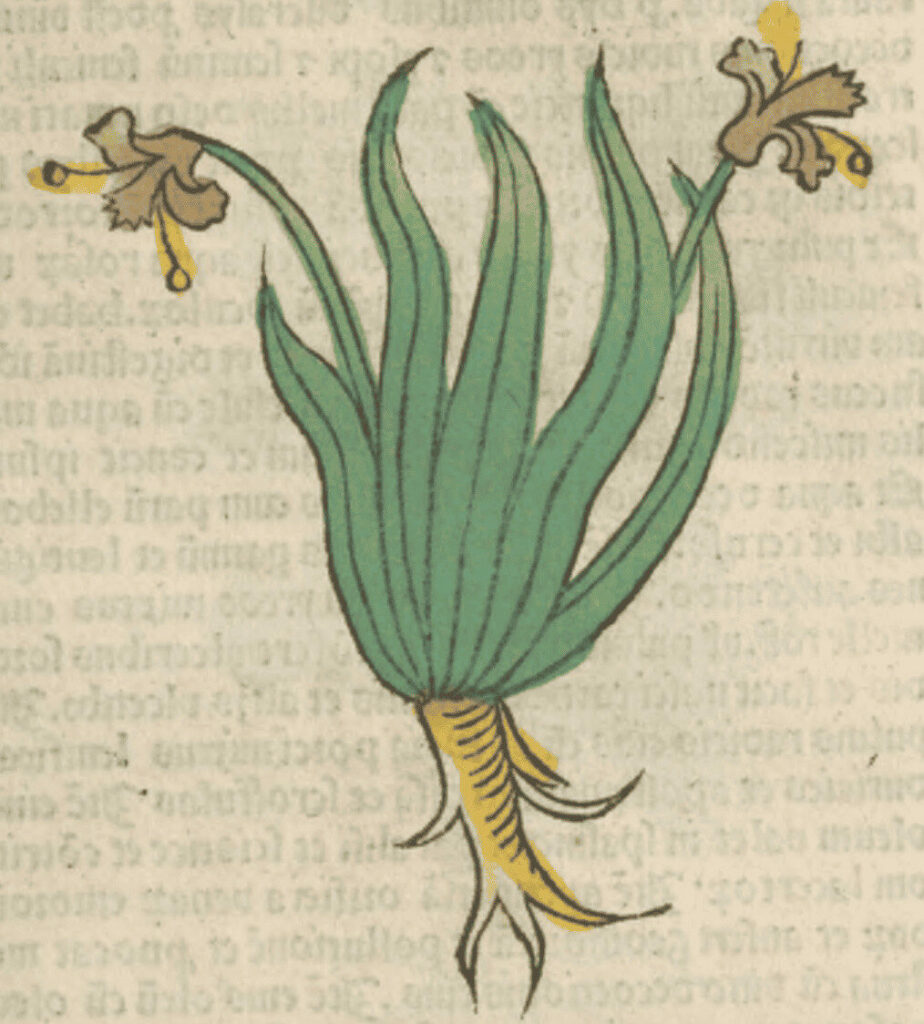
Herbarius latinus, Petri, 1485
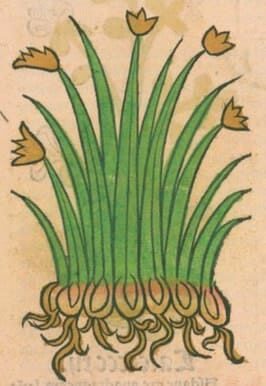
Ortus Sanitatis, Meydenbach, 1491
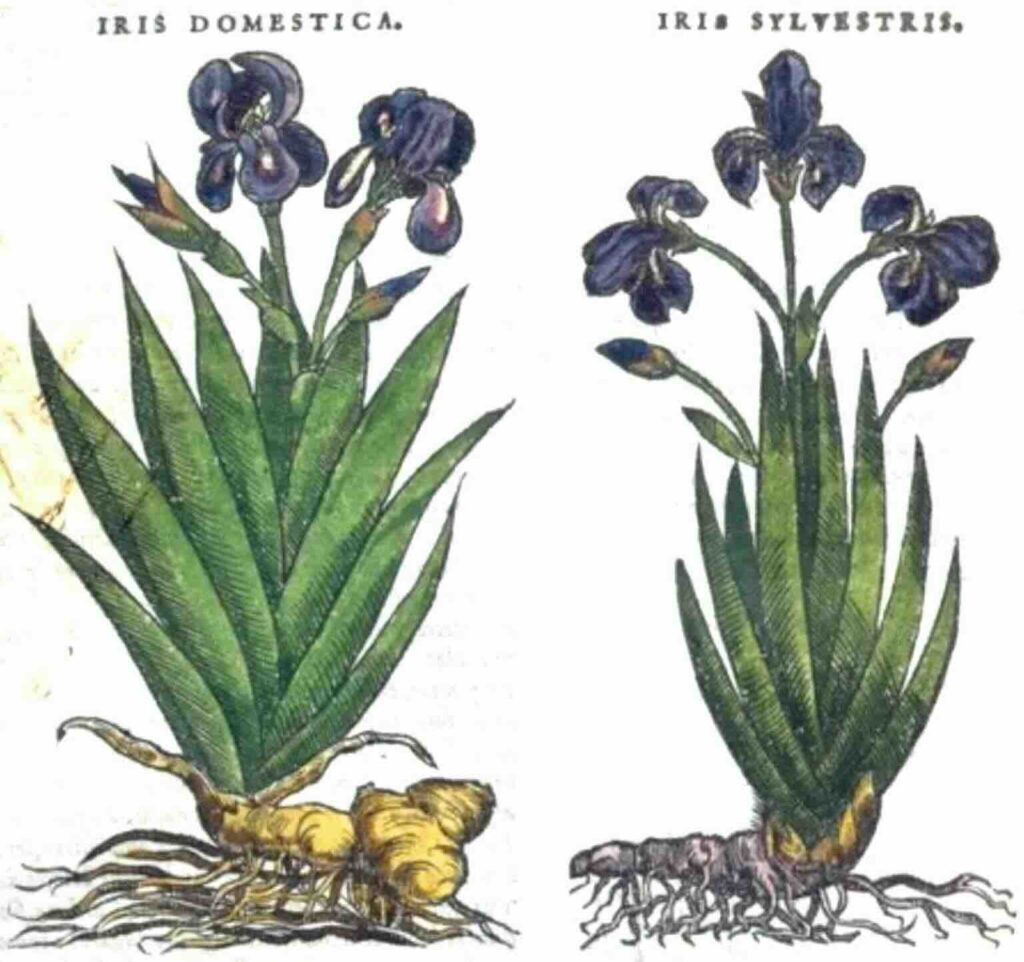
De Materia Medica, Andres de Laguna, 1555
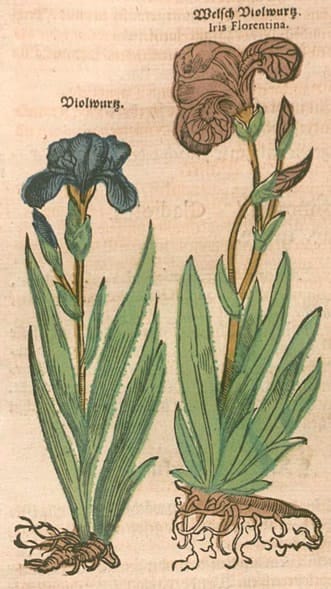
Left: Iris germanica; Right: I. florentina
Della Materia Medicinale, Andrea Valuassori, 1562 (left)
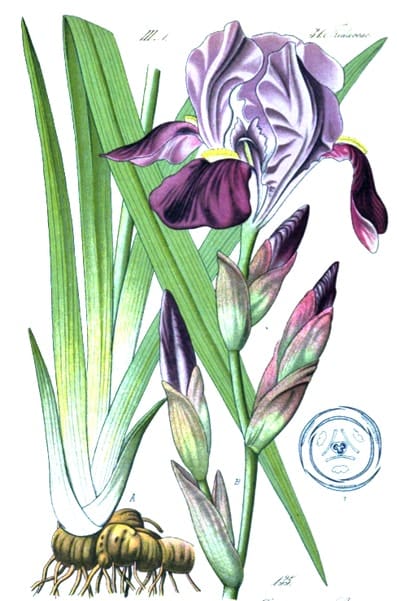
Iris germanica
Flora von Deutschland, Kohler, 1886
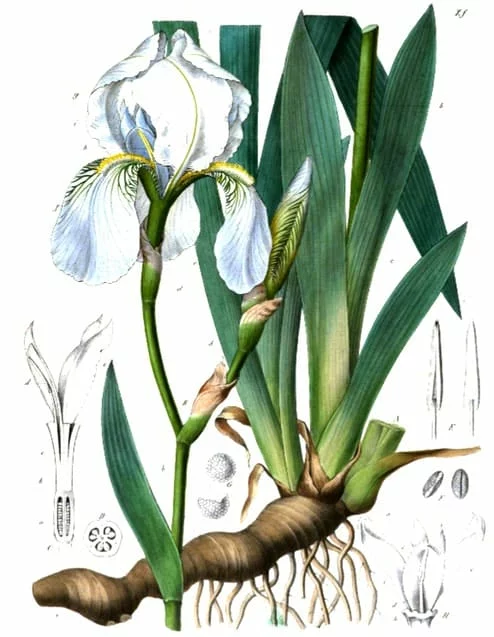
Iris florentina
Darstellung und Beschreibung sammtliche, Berg, 1858
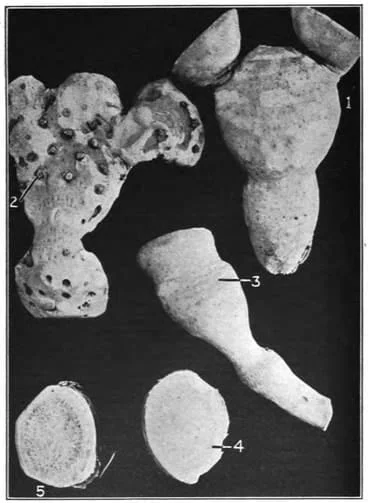
IRIS FLORENTINA
1, Branched rhizome. 2. Root scars on the under surface. 3. Indistinct annulations. 4. Transverse section showing thick cortex. 5. Section showing conducting tissue in masses.
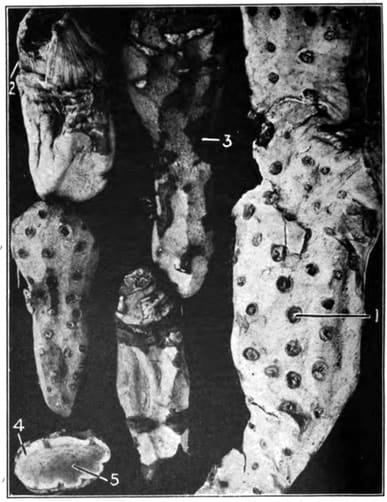
IRIS GERMANICA
1. Large rhizome showing under surface and numerous root scars. 2. Leaf bases. 3. Portion of unpeeled surface. 4. Cortex. 5. Large, frequently dark, central cylinder.
(Squibb’s Atlas of the Official Drugs, Mansfield, 1919)
Botanical name:
Iris spp.
- I. germanica (Blue/Purple Flag)
- I. florentina (White Flag or Florentine Orris)
- I. pallida (Blue Flag)
Parts used:
Root
Both the Blue (I. germanica) and White (I. florentina) are used as a source of Orris root. with the White being considered superior in smell and medicinal virtue. They require drying for up to five years to develop fragrance and to achieve its full potential as a medicine.
“Dioscorides gives seven Marks of the Flower-de-luce that is best in Physlck:
- That it be solid and compact
- That it be small and short, consisting of small and almost square Particles.
- That it be not easily broken, which depends on the First.
- That it have a very pure and unmixed smell: For the Plant being excrementious, it must be very well dried, to prevent its growing musty.
- That it be of a reddish colour.
- That it be of an acrid and burning taste.
- That it excite sneezing, or raise Pustules on the Skin. (Tournefort, 1730)
“Hard, dense, compact, reddish and free from stink resembling that of stagnant water constitutes the best quality of Orris. It irritates the tongue and forcefully causes Sneezing”. (Avicenna)
“It is necessary that after the roots have been collected they should be dried in shade and tied together with the thread of flax”. (Avicenna)
Temperature & Taste:
Warm, dry. Pungent
“Hot and Dry in the last of the Second degree”. (Avicenna)
Classifications:
2B. ATTENUATERS 2K. RESOLVENT 2L. EMOLLIENT
3F. LITHONTRIPTIC 3G. EMMENAGOGUE 3K. EXPECTORANT 3L. ANTI-TUSSIVE
3P. MASTICATORIES & STERNUTATORIES
4a. CEPHALIC 4d. PECTORAL
TCM:
P. Clear Phlegm
T. External Medicines
Uses:
1. Clears Cold Phlegm, Stops Cough:
-Cold Phlegm disorders of the Lung
-Cough, Asthma, shortness of Breath
-Cold-Phlegm and Damp conditions of the Brain and Nerves including dullness, poor memory etc
-“useful in convulsion and muscular contracture when used internally with vinegar or wine”. (Avicenna)
-“The decoction of Orris softens Hard and thick Swellings and Scrofula”. (Avicenna)
2. Clears Damp, Settles Wind:
-chronic Cold-Wind=Phlegm conditions of the Brain, Nerves and Joints
-Joint pain, Sciatica
-Chronic Headaches, Spasms, Convulsions, Epilepsy, Dizziness
-“It induces Sleep and removes chronic Headache”. (Avicenna)
-“Its enema is useful for Sciatica”. (Avicenna)
3. Clears Damp, Purges Water:
-in formula for Damp, Fluid retention, Edema
-the fresh juice or fresh root of Flower de Luce strongly purges Water; Edema
-internally and externally it is useful for Edema (Avicenna)
-“its chief use is in draining the Water in Dropsical Cases”. (Tournefort, 1730)
4. Moves the Blood, Promotes Menstruation:
-Amenorrhea, Dysmenorrhea (both)
-obstructions of the Uterus
-suppository made with Honey promotes Abortion. (Avicenna)
5. Opens Obstructions of the Liver:
-Liver inflammation and Hepatitis (Unani)
-cold pain of the Liver or Spleen (Avicenna)
-Jaundice, Biliary Fever
6. Resists Poison:
-Venomous bites and stings (decocted in water and vinegar and drunk)
–It acts as an Antidote for all poisons if taken with Vinegar (Avicenna)
7. Externally:
-externally to cleanse the skin, for Itch etc.
-applied to remove Freckles and Lentigo (Avicenna)
-“When mixed with Rose-oil and Vinegar (or wine) and then applied, it removes Headache”. (Avicenna)
-Errhine for the nose (causes sneezing), to cleanse the head
-the fresh root bruised and applied as a poultice for Bruising
-a pessary with Honey expels a Dead Child.
-juice or powder is applied to Hemorrhoids
-decoction is gargled for Toothache
-oil is applied for cold diseases of the Joints and Sinews, and to Cold Tumors
-as an enema for Sciatica (Avicenna)
-fresh or powdered root applied to Wounds and Ulcers to promote healthy flesh
-powder applied covers bones with flesh (Avicenna)
-decoction applied softens hard Tumors and Scrofula (Avicenna)
-fresh or powdered root also cleanses and heals Malignant Ulcers and Fistulas (Avicenna)
-sitting in the decoction for Uterine Fibroids and Cold Uterine pain (Avicenna)
Dose:
1. Taken with Honey to expel Yellow Bile, Black Bile and Phlegm. (Avicenna)
2. Taken with Oxymel to clear tough Phlegm
3. Spasms and convulsions, taken with Vinegar.
4. To move the Blood and promote Menstruation, take with Wine.
5. According to older texts, 5 grains is Alterative, 10 grains is Diuretic, 20 grains is Purgative
Powder: 500mg–3 grams
Decoction: 4–8 grams are alterative, 8–12 grams as a purgative
Fresh (unprepared) Juice: 1–2 drams
Prepared Juice: ½–1 oz, up to 3 oz. to purge water.
Fresh Root Tincture (1:10 in 45%): 10–30 drops are alterative, 50–100 drops as a Purgative
Correction:
1. Rhubarb, Agrimony juice, or Species Diarrhodon
2. In Unani it is corrected with Ginger and other spices
Main Combinations:
Lungs:
1. Cough, Wheezing from Cold Phlegm:
i. Powder Orris (1 part) and mix with Honey (3 parts) to form an Electuary; dose: 1 spoonful (Syrian ‘Book of Medicine‘, Budge, 1913)
ii. Orris with Licorice and Fennel seed
iii. Orris with Licorice and Elecampane
iv. Orris with Diatragacanth Frigidum.
v. Orris with Pennyroyal, Hyssop, Tragacanth, Bitter Almond, Pine nut, Ginger, Figs, Raisins (as in Electuary of Orris)
vi. Orris with Cinnamon, Hyssop, Licorice, Fig, Almond, Aniseed, Fennel seed (as in Confection for Cold Cough)
vii. Orris with Radish seed, Pellitory, Elecampane, Black Pepper (as in Powder Proven for Lung Defects and All Coughs of Galen)
viii. Orris with Licorice, Aniseed, Fennel seed, Saffron (Citrine Powder)
2. Asthma from Cold Phlegm:
i. Orris with Squill, Hyssop, Horehound, Myrrh, Saffron (as in Lohoch Effective for Asthma of Serapion)
ii. Orris with Agaric, Horehound, Turbith, Hiera Picra, Colocynth, Myrrh (as in Pills of Agaric of Mesue)
iii. Orris, Agaric, Hyssop, Thyme, decocted, straied with Honey added (Tractatus de materia medica, Geoffroy, 1741)
iv. Orris with Licorice juice, Hyssop, Maidenhair, Bitter Almond, Nettle seed, Saltpeter, Radish seed (as in Electuary for Asthma)
v. Orris with Hyssop, Agaric, Licorice, Peony, Asarum, Gum Ammoniac, Fennel seed, Horehound, Lacca (as in Decoction of Hyssop of Andrezeos)
vi. Orris with Licorice, Anseed, Sulphur, made into an Electuary with syrup of Horehound. (Tractatus de materia medica, Geoffroy, 1741)
Head, Brain, Nerves:
3. Cold Phlegm of the Head, Orris with Sandalwood, Lavender, Marjoram, Storax, Benzoin, Clove, Calamus
4. Epilepsy:
i. Orris with Peony (Herbarium Horstianum, 1630)
ii. Orris (half dram) with Peony (1 scruple), Saffron (half scruple) (Herbarium Horstianum, 1630)
iii. Orris, Peony, Pearl, Coral, Emerald
Other:
5. Colic, bloating and abdominal pain from Cold and Wind:
i. Orris with Calamus, Galangal, Zedoary (Herbarium Horstianum, 1630)
ii. Orris, Peony (2 oz. ea.), Fennel (2 drams), Saffron (3 drams), Sugar Candy (3 oz.). Powder, Dose: 1–2 scruples (Tractatus de materia medica, Geoffroy, 1741)
6. Edema:
i. Orris with Elecampane, Celery root, Fennel root, Wormwood, Cinnamon (as in Wine for Edema)
ii. Orris with Parsley seed, Fennel seed, Cinnamon
7. Ascites, Orris with Rhubarb, Turbith, Wormwood, Euphorbia, Celery, Mastic, Tragacanth, Calamus, Lacca, Asarum (as in Powder for Ascites)
Externally:
8. As an oil to Warm coldness of the Head, Nerves, Joints and Abdomen, with Cyperus, Elecampane, Cinnamon and Spikenard
9. Headache, Orris with Rose oil and Vinegar (Avicenna)
10. Errhine, Orris (3 parts), Betony, Marjoram (1 part each).
11. To promote Saliva: Orris (2 parts), Mustard seed, Stavesacre seed (½ part each). Tie in a cloth, hold in the mouth and chew for half an hour. (A Treatise on Foreign Drugs, Geoffroy and Thicknesse, 1749)
12. Poor Hearing, Powder of Orris, Aniseed, Galangal, Zedoary, sprinkled on warm bread and applied (Herbarium Horstianum, 1630)
13. Tinnitus, Orris with Vinegar put into the ear (Avicenna)
14. Freckles: “A mixture of Orris and Hellebore in equal quantity removes freckles and lentigo. Orris alone also produces the same effect”. (Avicenna)
15. As a cosmetic, combine with Almond meal, mix with Rose water and use as a scrub or mask.
Major Formulas
Decoction for Cough and Asthma (Dioscorides)
Syrup for the Memory
Electuary of Orris Root (Diaireos Salomonis) (Nicholas)
Cephalic Decoction (Charras)
Powder Proven for Lung Defects and All Coughs (Galen)
Powder to Clear Phlegm (Rhazes)
Pectoral Powder
Troches of Amber (Galen)
Electuary for Asthma (Rhazes)
Electuary of Rose (Unani)
Electuary of Pine Nuts (Looch de Pino) (Mesue)
Indian Electuary (Unani)
Theriac of Sealed Earth
A Sound and Experienced Electuary (Mesue)
Lohoch Effective for Asthma (Serapion)
Pills of Agaric (Mesue)
Pills to Purge Bile and Phlegm (2) (Mesue)
Tincture Against Asthma
1. Cephalic Powder:
i. Cyperus rotundus, Orris root (½ oz.), Lavender, Rosemary, Rose (6 drams each), Rhodium Wood, Yellow Sandalwood, Aloeswood (½ oz. each), Clove, Cinnamon, Nutmeg, Amber, Storax (3 drams each). (Dispensatorium Pharmaceuticum, 1777)
ii. Orris (3 oz.), Lavender, Marjoram (1 oz. each), Rhodium Wood, Sandalwood (6 drams), Cinnamon (2 drams), Orange peel (½ oz.), Lemon peel (1 ½ oz.), Clove (2 drams), Benzoin, Mastic, Storax, Amber (½ oz. each). (Pharmacopoeia Generalis, 1783)
iii. Orris (1 ½ oz.), Betony, Marjoram, Rosemary (½ oz. each), Sage (2 drams), Rose flower (1 oz.), Lavender, Clove Pink (2 drams each), Storax, Amber (3 drams each), Indian Spikenard, Sandalwood, Rhodium Wood, Aloeswood (2 drams each), Clove, Cyperus rotundus, Cinnamon, Benzoin (4 scruples each). (Dispensatorium medico pharmaceuticum Palatinatus, 1764)
2. Aromatic Vinegar:
i. Vinegar (6 lbs.), Orris, Rose, Clove-Pink flowers (1 oz. each), Cinnamon, Nutmeg, Clove, Orange peel, Storax, Benzoin (2 drams each), Marjoram, Mint, Thyme, Dittany of Crete (1 oz. each). Digest a month, then distil with a moderate heat.
Cautions:
1. Not used during Pregnancy
2. Very drying so not suitable in Yin deficiency
3. Fresh plant juice or root can cause severe irritation of the mouth, stomach pain, vomiting, and bloody diarrhea
“‘Tis very hurtful to the Stomach, and the other Viscera, and therefore must be corrected by Stomachics”. (Schroder)
Preparations:
Tincture, Oil, Magistery or Precipitate
1. Tincture of Blue Flag
Fresh Blue Flag 4 oz.
Alcohol (76%) ½ pint
Dose: 10–30 drops
2. Juice of Flower-de-Luce
The juice is expressed, clarified by digesting in a warmth, the sediment and froth are removed and it is considered clarified. In this same process may be prepared the Magistery or Precipitate, following.
Used principally to purge Water. Dose: ½ –1 oz., up to 3 oz.
3. Magistery or Precipitate of Orris (Faecula of Orris)
Take Orris roots, cut and bruise them, then strongly express the juice. Set in a cold place, and let it stand to settle. This will cause a white powder like starch to precipitate to the bottom. Pour off the juice, and dry the precipitate in the shade; keep for use.
Good against Coughs, Asthma, stinking Breath. It expels wind and water, promotes urine and Menstruation, and is good for obstructions of the Liver and Spleen; good for Cramps and Convulsions. Externally, it is good for Itch, Scabs and Scrofula; it is also a good cosmetic.
Dose: ½ dram in wine. (Salmon)
4. Oil of Orris
Florentine Orris 1 lb.
Purple Orris flowers ½ lb.
Olive oil 6 lbs.
Put all these in a double boiler with a sufficient quantity of the decoction of Orris. Boil together, then press out strongly and replace the old Root and Flowers with fresh. The more times this is repeated, the stronger it will be. The following may be added to the last when Boiling to form a Compound Oil if desired:
Cyperus roots 6 oz.
Elecampane 3oz.
Alkanet 2 oz.
Cinnamon, Spikenard, Benzoin 1 oz. ea.
It is Emollient, Discussive, Digestive, Maturative, and Anodyne; it eases pains of the Head, Stomach, Liver, Spleen, Womb, and Joints. It warms and comforts all cold joints and sinews, such as Gout, Sciatica and Rheumatism. It also softens and dissolves hard tumors and swellings, including those of the Uterus, and can be anointed over the Breast, Stomach or Uterus for cold and phlegm obstructing these organs; also onto the forehead and temples for the same in the head. It is a good application in Cramps and Convulsions. (Salmon)
Click the above Tabs for more information on this medicine
-Orris was used in Greek and Roman times, chiefly in perfumery. In the middle ages, Florentine Orris was an important source of the drug, the arms of that city traditionally being a white iris on a red shield.
-The sword shaped leaves gave the Signature of the plant being a good wound herb (ie. sword wounds).
-Iris germanica is now mostly used in the perfumery trades. Orris root is commonly used as a fixative for Pot Pourri etc.
GENERAL / REVIEW:
–A review on phytochemical and therapeutic potential of Iris germanica.
CHEMISTRY:
–[Chemical constituents from rhizomes of Iris germanica].
–Phytochemical investigations on Iris germanica.
ANTIBACTERIAL:
–UPLC-ESI-MS/MS profiling of the underground parts of common Iris species in relation to their anti-virulence activities against Staphylococcusaureus.
–Phytochemical Composition and In Vitro Biological Activity of Iris spp. (Iridaceae): A New Source of Bioactive Constituents for the Inhibition of Oral Bacterial Biofilms.
ANTIFUNGAL:
–Antiplasmodial and antifungal activities of iridal, a plant triterpenoid.
ANTIPLASMOIDAL:
–Antiplasmodial and antifungal activities of iridal, a plant triterpenoid.
ANTIOXIDANT:
–Antioxidant properties of the Lebanese plant Iris x germanica L. crude extracts and antagonism of chlorpromazine toxicity on Saccharomyces cerevisiae.
–8-Hydroxyirilone 5-methyl ether and 8-hydroxyirilone, new antioxidant and alpha-amylase inhibitors isoflavonoids from Iris germanica rhizomes.
ANTI-INFLAMMATORY:
–A review on phytochemical and therapeutic potential of Iris germanica.
–Anti-inflammatory isoflavonoids from the rhizomes of Iris germanica.
IMMUNOMODULATORY:
–A review on phytochemical and therapeutic potential of Iris germanica.
–Immunomodulatory activity of isoflavones isolated from Iris germanica (Iridaceae) on T-lymphocytes and cytokines.
ANTI-ULCER:
–[Studies on antiulcer agents. II. Synthesis and antiulcer activity of phenylpropanol derivatives].
HYPOGLYCEMIC / DIABETES:
–A review on phytochemical and therapeutic potential of Iris germanica.
–Protective effects of a standardized extract of Iris germanica on pancreas and liver in streptozotocin-induced diabetic rats.
–8-Hydroxyirilone 5-methyl ether and 8-hydroxyirilone, new antioxidant and alpha-amylase inhibitors isoflavonoids from Iris germanica rhizomes.
NEUROPROTECTIVE:
–A review on phytochemical and therapeutic potential of Iris germanica.
ANTICHOLINESTERASE:
–Phenolic, flavonoid contents, anticholinesterase and antioxidant evaluation of Iris germanica var; florentina.
ALZHEIMER’S DISEASE:
–PROTECTIVE EFFECT OF IRIS GERMANICA L. IN beta-AMYLOID-INDUCED ANIMAL MODEL OF ALZHEIMER’S DISEASE.
INHIBITS CYTOCHROME P450:
–Cancer chemopreventive in vitro activities of isoflavones isolated from Iris germanica.
CYTOTOXIC:
–A review on phytochemical and therapeutic potential of Iris germanica.
–New isoflavones with cytotoxic activity from the rhizomes of Iris germanica L.
–Cytotoxicity of iridals, triterpenoids from Iris, on human tumor cell lines A2780 and K562.
ANTIMUTAGENIC:
–A review on phytochemical and therapeutic potential of Iris germanica.
You must be logged in to view this content, please login. If you're not a member then Click this link to subscribe