Cinnamon leaf, Indian leaf, Tejapatra
Folium Indicum, Malabathrum
Tejapatra, Tamalapatra (Ayurveda)
Ilavankap Paththiri (Siddha)
Sadhaj (Unani)
San Tiao Jin (TCM)
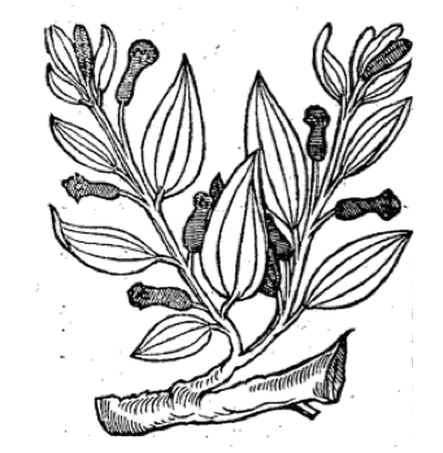
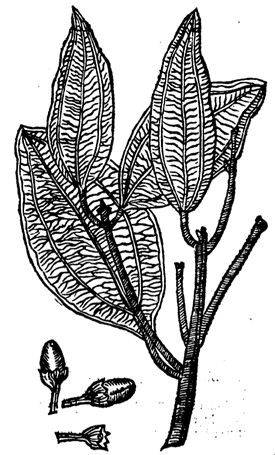
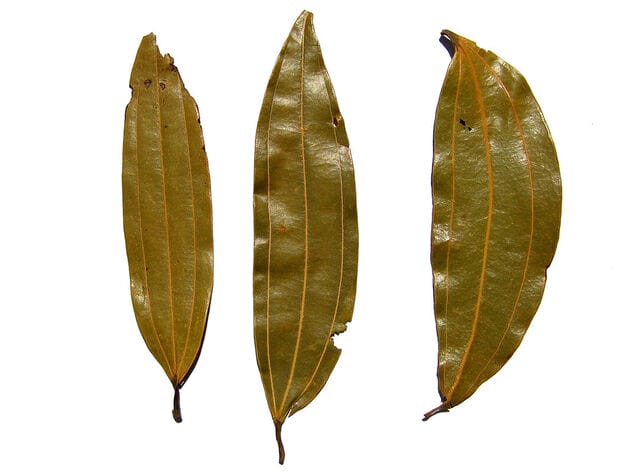
Botanical name:
Cinnamomum tamala
Cinnamomum zeylanica and C. malabathrum have been listed as alternate sources.
Parts used:
Leaf
Temperature & Taste:
Warm, dry. Pungent
“Hot and Dry in the Second degree”. (Avicenna)
Classifications:
Uses:
1. Clears Wind-Cold-Damp, Clears the Channels, Eases Pain:
-Wind-Cold-Damp pain; Rheumatism, Arthritis
-Cough, Cold, Sinusitis
-also for Edema and Ascites
2. Warms the Stomach, Moves Qi;
-poor appetite, indigestion, colic
-pain in the Stomach and abdomen
3. Moves the Blood, Clears Stasis:
-Amenorrhea, Dysmenorrhea
-Bruising and Trauma
-Cold-type Chest pain, Palpitation
-also in formula for Infertility
4. Benefits the Heart, Cheers the Spirit:
-Palpitation, Heart debility, Heart pain
-Mental disorders, Insanity, Melancholy (Unani)
-regarded as Exhilarant in Unani
5. Externally:
-paste with vinegar over the lower abdomen to promote Urine and menses.
-topically to cold pain and cold swellings
-chewed for bad breath
Dose:
Decoction: 2–4 grams
Powder: 500mg–2 grams
Substitute:
1. Cinnamon bark and Cassia bark has been used in place of Cinnamon leaf.
2. The Chinese use of Cinnamon twig is similar to the use of Cinnamon leaf in Ayurveda, and is probably a better substitute.
3. Mace and Clove in equal parts (Pharmacopoeia Augustana)
4. Valerian (Unani)
5. Spikenard (Galen); “The potency of Cassia leaves is likened to that of Nard but the latter is mild”. (Avicenna)
6. “The equal quantities of Abies webbiana, Nard or Cassia bark act as substitutes for Cassia leaf”. (Avicenna)
7. Bay leaf. Indian leaf is also known as “Indian Bay leaf”.
Correctives:
1. Mastic
2. Jujubes
3. Syrup of Quince
Main Combinations:
1. Liver obstruction, Indian leaf with Rhubarb, Cinnamon, Agrimony, Indian Spikenard
2. Liver disease, Indian leaf with Aniseed, Agrimony, Wormwood, Indian Spikenard (as in Troches of Ten Things and Syrup of Agrimony of Mesue)
3. Swelling and Tumors, Indian leaf with Agrimony, Indian Spikenard, Costus, Licorice, Asarum, Saffron (as in Antidotum Immortale)
4. Anxiety, Restlessness, Palpitations, Indian leaf with Tabasheer, Red Coral, Rose, Aloeswood, Mace (as in Powder to Strengthen the Head)
5. Epilepsy, Indian leaf with Peony, Licorice, Cinnamon, Nutmeg, Clove, Long Pepper, Spikenard, Saffron, Red Coral (as in Electuary of Peony)
6. Uterine pain, Dysmenorrhea, Indian leaf with Cinnamon, Indian Spikenard, Madder, Long Pepper, Clove, Aloeswood, Rhubarb, Thyme (Electuary of Indian leaf)
7. Infertility from Blood stagnation, Indian leaf with Siler, Peony, Cinnamon, Cyperus, Mugwort, Frankincense (as in Electuary of Seseli)
8. Edema, Ascites, Indian leaf with Rhubarb, Turbith, Wormwood, Celery seed (as in Powder for Ascites)
9. To strengthen the Head, Indian leaf with Red Coral, Tabasheer, Rose, Aloeswood (as in Powder to Strengthen the Head)
10. Increase strength and endurance, Indian leaf with Garcinia fruit (modern combination, researched: see below)
11. Diabetes, Indian leaf with Inula racemosa
12. Hot swellings, powder, decoct in Rose water and apply. (Avicenna)
Major Formulas:
Syrup of Agrimony Mesue
Powder to Strengthen the Head
Powder for Ascites (Isaac)
Troches of Coral (Diacorallium) (Nicholas)
Troches of Ten Things
Electuary of Gentian (Unani)
Electuary of Peony
Electuary of Indian leaf (Zenon)
Electuary of Lacca (Andrezeos)
Electuary of Rhubarb (Zenon)
Electuary of Aloeswood (Diaxyloaloes) (Mesue)
Electuary of Frankincense (Diaolibanum) (Nicholas)
Electuary of Seseli (Nicholas)
Electuary for a Duke (Electuarium Ducis) (Nicholas)
Electuary for Crass and Viscid Humors (Azaricon)
Electuary for Sadness and Worry
Antidotum Immortale
Triphera of the Saracens (Triphera Saracenica Magna)
Hiera Logadii
Nutmeg Powder (Jatiphaladi Churna) (Ayurveda)
Cautions:
1. Hot and dry. Not for Heat or Yin deficiency.
2. Overdose is said to harm Kidneys and Lung (Unani)
Main Preparations used:
GENERAL / REVIEW
–An overview on chemical composition, bioactivity and processing of leaves of Cinnamomum tamala.
–Chemical variability in the essential oil of Cinnamomum tamala L. leaves from India.
ANTIFUNGAL
–Antifungal and antioxidative potential of oil and extracts derived from leaves of Indian spice plant Cinnamomum tamala.
ANTIOXIDANT
–Antifungal and antioxidative potential of oil and extracts derived from leaves of Indian spice plant Cinnamomum tamala.
–Comparative chemical composition and in vitro antioxidant activities of essential oil isolated from the leaves of Cinnamomum tamala and Pimenta dioica.
–Chemical characterization of various fractions of leaves of Cinnamomum tamala Linn toward their antioxidant, hypoglycemic, and anti-inflammatory property.
ANTI-INFLAMMATORY
–Chemical characterization of various fractions of leaves of Cinnamomum tamala Linn toward their antioxidant, hypoglycemic, and anti-inflammatory property.
IMMUNOMODULATORY
–Immunomodulation property of hexane fraction of leaves of Cinnamomum tamala Linn. in rats.
ANTISPASMODIC
–Comparative spasmolytic effect between Cinnamomum tamala and Cinnamomum verum leaf essential oils and eugenol through in vitro and in silico approaches.
STRESS & ANXIETY
–Anxiolytic, antidepressant, and antistress activities of the aqueous extract of Cinnamomum tamala Nees and Eberm in rats.
ANTIDEPRESSANT
–Anxiolytic, antidepressant, and antistress activities of the aqueous extract of Cinnamomum tamala Nees and Eberm in rats.
GASTROPROTECTIVE
–Gastroprotective activity of Cinnamomum tamala leaves on experimental gastric ulcers in rats.
DIARRHEA
–Antidiarrhoeal activity of the standardised extract of Cinnamomum tamala in experimental rats.
PROSTATIC ENLARGEMENT
–Inhibitory effects by ayurvedic plants on prostate enlargement induced in rats.
INCREASE STRENGTH AND ENDURANCE
–Combined extracts of Garcinia mangostana fruit rind and Cinnamomum tamala leaf supplementation enhances muscle strength and endurance in resistance trained males.
DIABETES
–Combined potentiating action of phytochemical(s) from Cinnamomum tamala and Aloe vera for their anti-diabetic and insulinomimetic effect using in vivo rat and in vitro NIH/3T3 cell culture system.
–GC-MS analysis and screening of antidiabetic, antioxidant and hypolipidemic potential of Cinnamomum tamala oil in streptozotocin induced diabetes mellitus in rats.
–Assessment of antidiabetic potential of Cinnamomum tamala leaves extract in streptozotocin induced diabetic rats.
–Chemical characterization of various fractions of leaves of Cinnamomum tamala Linn toward their antioxidant, hypoglycemic, and anti-inflammatory property.
–Management of diabetes mellitus (prameha) with inula racemosa and cinnamomum tamala.
You must be logged in to view this content, please login. If you're not a member then Click this link to subscribe