Zhim thig (Galeopsis et al) ཞིམ་ཐིག།
Also Zhim this le (Tibetan)
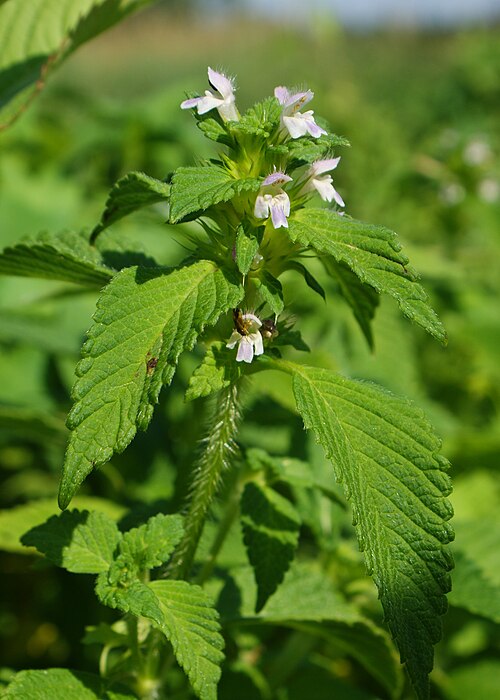
Galeopsis bifida, a primary source of Zhim thig
(Photo by Krzysztof Ziarnek, Kenraiz) (Wikimedia)
Botanical name:
A number of plants supply Zhim thig in Tibetan Medicine:
Zhim thig dkar po (White / Large variety):
- Galeopsis bifida: primary source of Zhim thig.
- Marrubium incisum (Cut-leaf Hoarhound): Frequently substituted in certain regions.
- Lagopsis supina: used in Eastern and Northern Tibetan regions
- Euphrasia (Eyebright / Euphrasia regellii)
Zhim thig nag po (Black variety)
- Rabdosia rugosa (syn. Isodon rugosus): standard source for the black type, highly prominent in Nepal and Bhutan.
- Isodon irroratus: regional variant in southern medical lineages
Zhim thig ser po (Yellow variety):
- Elsholtzia eriostachya
- Galeopsis spp. (Yellow-flowered variants
- Leonurus spp. (Yellow-flowered variants) where Elsholtzia is unavailable.
Zhim thig dmar po (Red variety):
- Lamium amplexicauleL. (Henbit Dead-nettle) – Extensively harvested in alpine pastures.
- Stachys kouyangensis (Chinese Betony): used in eastern Himalayan
- Salvia wardii (Blue/Pink Alpine Sage): local variant
- Geranium spp.: G. dahuricum, G. pratense;: substituted or used as a source in specific regions.
Zhim thig sngon po (Blue variety):
- Nepeta coerulescens (Alpine Catmint)
- Amethystea caerulea: a relative of the Mints, found in the North
Parts used:
Whole herb
Temperature & Taste:
Generally regarded as Neutral. Sweet, Bitter
Uses:
1. Clears Wind-Heat, Removes Films, Benefits the Eyes:
-cloudiness, film, or cataracts of the eyes (internally and topically)
-conjunctivitis, severe redness, burning, and bloodshot
-yellow mucus or discharge form the eyes or sinus (Yellow variety)
-white variety is most used for clothing; yellow types of Damp-Heat eye conditions
2. Clears Wind-Heat:
-acute and tension headaches from Wind-Heat
-Yellow is better for Bile; Red is best for Blood; Blue for Wind
3. Clears Stomach Heat:
-colic pain, stomach cramps, and digestive inflammation
-Black or Yellow varieties are best
4. Kills Worms:
-fresh juice is given for Worms
-mostly Black variety
5. Externally:
-topically to treat Wounds and dry pus
COMMENT:
Each variety has specific focuses, directly related to the color of their flowers (from which the varietal names are derived):
1. White variety is more gentle, milder in taste, helps clear Phlegm, and is primarily used for the Eyes, especially Corneal film, cataract clouding, and opacity of the lens. The white variety is also more suited to the young.
2. Black variety is stronger, more bitter, and is better to clear Heat from the internal organs (Stomach in particular), for internal Heat, and for Worms. It is used for internal infections and abscesses.
3. Yellow variety is better for Bile and Damp-Heat with yellow eye discharge and yellowing of the eyes
4. Red variety is better for the Blood, is more cooling, and better for blood heat and inflammations of the blood vessels such as red, inflamed eyes.
5. Blue variety is more appropriated to Wind, and is better for wind affecting the eyes, such as photophobia, twitching, itchiness of the eyes, as well as moving headaches, and headache behind the eyes.
Dose:
Decoction: 2–5 grams
Powder: 1–3 grams
Substitute:
In general, there are various species used as substitutes in various regions. For Western practitioners, when used for the Eyes, Eyebright is a suitable substitute. Marrubium, Betony or Geranium spp. can also be used.
Main Combinations:
Major Formulas:
Cautions:
None noted
Main Preparations used:
Click the above Tabs for more information on this medicine