Xanthium, Byi tsher བྱི་ཚེར
Cang Er Zi 苍耳子 (Fruit, TCM)
Cang Er Cao 苍耳草 (Leaf, TCM)
Cocklebur, Burweed
Byi tsher (Tibetan Medicine)
Shankheshwara (Ayurveda)
Maruloomatham (Siddha)
Cang Er Zi (Fruit); Cang Er Cao (Herb) (TCM)
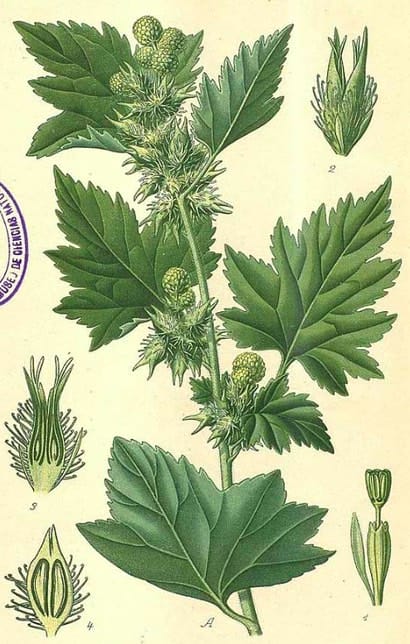
Xanthium sibiricum
(Illustration: Real Jardín Botánico, Madrid, Spain)
(BotanicalIllustration)
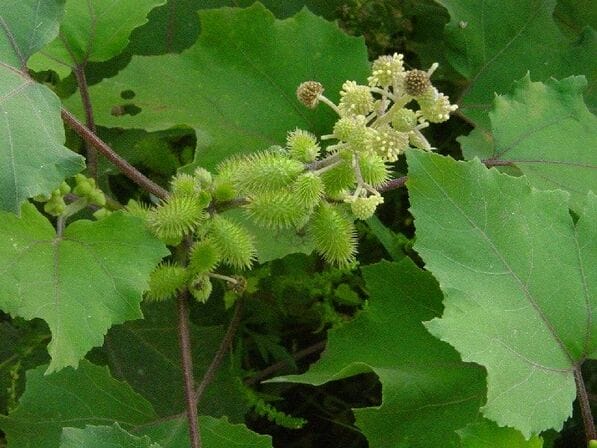
Xanthium sibericum
(Photo by Zhuwq) (Wikimedia)
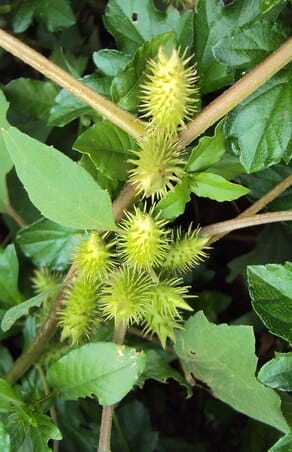
Xanthium indicum
(Photo by Vinayaraj) (Wikimedia)
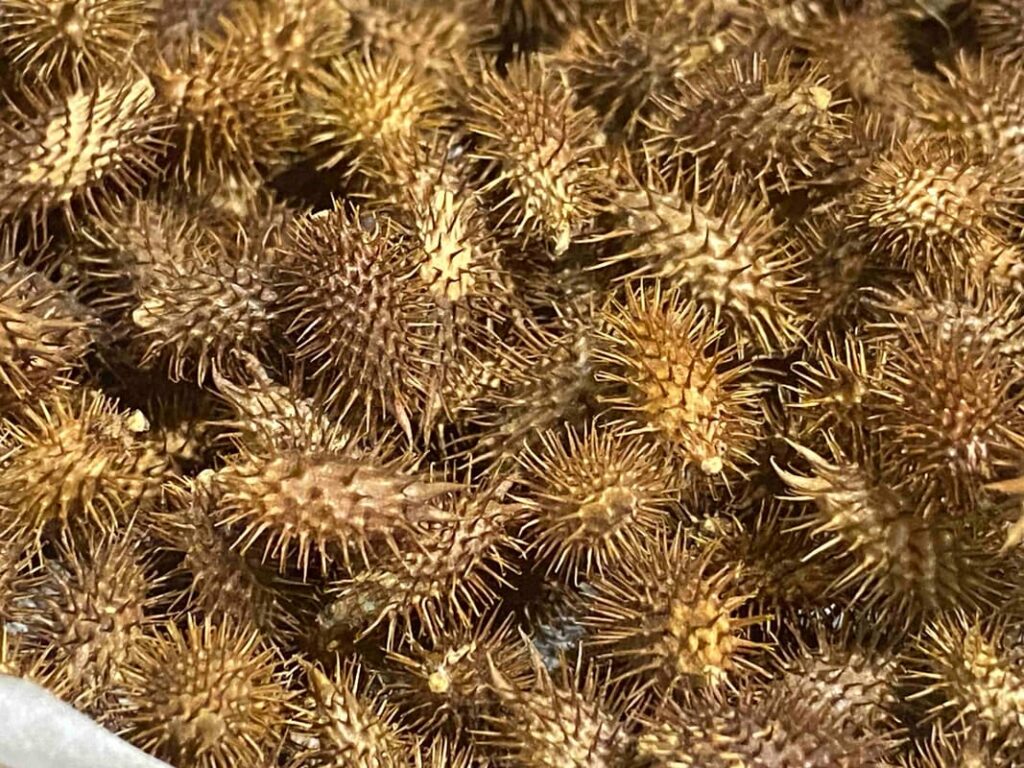
Xanthium, Cang Er Zi
(Adam, 2024)
Botanical name:
Xanthium sibiricum (syn. X. strumarium, X. indicum, X. japonicum–Bensky)
Parts used:
Whole plant or Leaf is used in Ayurveda and Tibetan Medicine
Fruit or Herb is used in TCM
Temperature & Taste:
HERB: Cool, dry. Bitter (Tibetan Medicine)
SEED: Warm, Bitter, Sweet, slightly Toxic (TCM)
Classification:
Uses:
1. Clears Wind-Damp, Opens the Nasal Passages:
-Sinusitis with thick mucus discharge
-Frontal Headache associated with sinus congestion
-Severe acute Wind Headache
-Loss of the sense of smell
-Earache (Ayurveda)
-Fruit is most used for these indications but the herb has also been used
2. Clears Wind, Resists Poison:
-Infectious Fever (Tibetan); Malarial Fevers (India)
-Poisoning
-Antidote for insect bites (Ayurveda)
-Scrofula, Tumors and Cancer (Ayurveda)
-skin disorders with itching; Wind Rashes; Urticaria; Leucoderma
3. Clears Wind-Damp, Promotes Urine:
-‘Kidney Fever’ (Tibetan Medicine)
-Urinary retention
-Leukorrhea (Ayurveda)
-Wind-Damp muscle and joint pain
4. Kills Worms:
-leaf has been used for Worms (Ayurveda)
5. Externally:
–Dioscorides recommended applying the fruit paste to swellings
-fruit paste is applied to Small Pox scars (India)
-seed oil is applied to skin infections
-leaf juice is applied to Scabies
-leaf poultice or paste is applied to stop bleeding from wounds
-root paste is applied to Eczema (India)
Dose:
Fruit in Decoction: 3–9 grams
Herb in Decoction: 6–15 grams
Fruit or Herb in Powder: 500mg–2 grams
Comment:
1. The whole herb or leaf is used in Ayurveda and Tibetan Medicine while the Fruit is most used in TCM. However, the indications are very similar. The primary indication in TCM is for Nasal congestion for which the fruit is more strongly indicated; however, the leaf has been used for this purpose also.
2. TCM considers the fruit Warm, while the Herb is considered cool in other systems. The major indication is against Wind, and it may be used for both Wind-Heat or Wind-Cold depending on the herbs it is combined with. Further, TCM practitioners often stir-fry the fruit which makes it more warming.
Preparation:
1. The fruit may be prepared by being stir-fried until the spines are scorched and the fruit it yellowish. Then sift to remove the spines. This reduces the toxicity and increase the Warming effect.
Substitute:
1. Fruits of Agriophyllum pungens has been used in Russia by Tibetan Medicine practitioners.
2. It has been claimed to have actions similar to Jaborandi
Main Combinations:
1. Nasal congestion:
i. with Headache, Xanthian Cang Er Zi with Angelica dahurica Bai Zhi, Magnolia flower (Xin Yi Hua)
–if there is acute Wind-Heat, to the above add Gypsum Shi Gao, Scutellaria Huang Qin
–chronic Wind-Heat, add Madder and Lonicera Jin Yin Hua
–Allergic Rhinitis, add Schisandra Wu Wei Zi, Cherokee Rosehip (Jin Ying Zi)
2. Wind-Cold Headache, Xanthian Cang Er Zi with Saposhnikovia Fang Feng, Angelica dahurica Bai Zhi, Ligusticum Gao Ben
3. Wind-Damp muscle and joint pain, numbness and cramping, Xanthian Cang Er Zi with Clematis Wei Ling Xian, Atractylodes Cang Zhu
4. Itching, or Wind-Rashes, Xanthian Cang Er Zi with Tribulus seed (Ci Ji Li), Cicada slough (Chan Tui)
Major Formulas:
Cang Er Zi San
Long Dan Bi Yuan Fang
Cautions:
1. Large doses are Emetic and may cause abdominal pain and diarrhea.
2. TCM texts advise not to eat Pork while taking this herb
Toxicity:
Toxic doses in adults are 30–100 grams; In children 15–60 grams
Main Preparations used:
Click the above Tabs for more information on this medicine
You must be logged in to view this content, please login. If you're not a member then Click this link to subscribe