Umbilicus Marinus
Umbilicus Veneris
Lapis Caimanum is a related type of stone
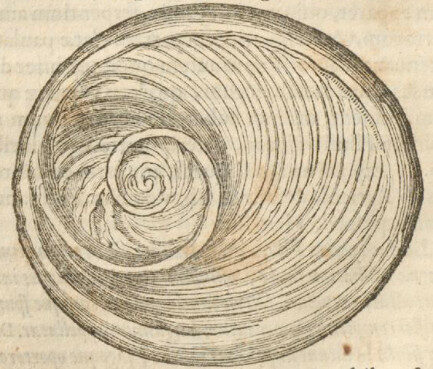
Gemmarum et Lapidum Historia, Tollius, 1647
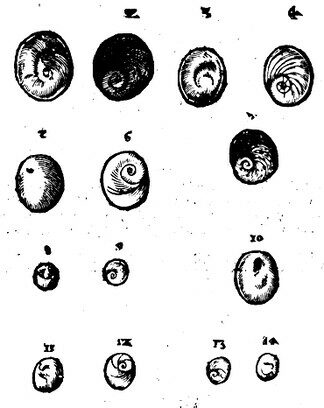
Aldrovandi, Musaeum metallicum, 1648
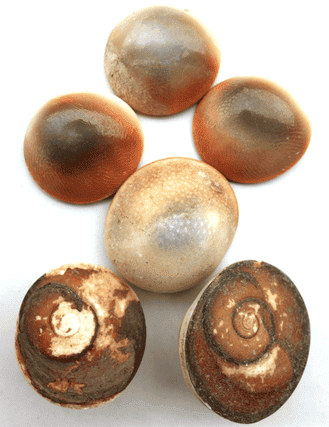
Umbilicus Marinus
(Chengdu Medicine Market, Adam 2016)
Regarded as a female ‘Yin‘ tonic, capable of strengthening Women, hindering excess Menstrual Bleeding and aiding Fertility. It appeared in the Citron Ungent for redness and pimples of the skin, to clear and whiten the complexion.
Gemmarum et Lapidum Historia, Tollius (1647):
For spitting of Blood, the powder can be taken with an equal amount of Burnt Deer Horn. (Gemmarum et Lapidum Historia, Tollius, 1647)
From the Lexicon of Alchemy (1612):
“a stone or gem, sometimes of a dull-red, sometimes white or purple. It is called the Navel of Venus, being flat on one side, while the other is rounded after the manner of the belly of a beautiful girl, and has lines like the snail shell encircling it… it is found among shells on the sea-shore. It is said to conciliate the favour of girls; it improves their figure, increases their beauty, wins love for them, and is serviceable in their special complaints”.
Vollständiges Materialien Lexicon, Lemery (1721):
“Is the lid of a sea snail, which is called Concha venerea by Rondelet and is common enough in the Middle Kingdom. This lid is like a mussel with a flat back, about the size of a denier and probably wider. There are different sizes: sometimes it is almost completely round or somewhat elongated, hollowed out as thick as a spoon and has a shape almost like a navel. It is smooth and shiny and soft to the touch, golden and white on top and dark and reddish underneath; sometimes completely white. It grows out and hangs on the snail at one end. When this sea worm wants to take in its food, it removes the lid and lets it go. Once it has satiated itself, it draws it back towards itself and closes its shell so tightly that nothing can penetrate it. This lid or stone is found on the shore of the sea.
It opens, divides, is alkaline, dries, expels urine, relieves sharp moisture in the body, stops bleeding. Half a scruple or a couple of drops is administered at once. It is also taken externally in various long-lasting ointments.
The name of this species of snail comes from its shape, which looks like a navel”.
Medical Lexicon, Dunglison (1842):
“Umbilicus Marinus, Cotyledon marina, Androsace, Acetabulum marinum, Androsace, Matthioli, Fungus petraeus marinus. A submarine production, found on rocks and the shells of fishes, in the south of France. It is reputed to be anthelmintic and diuretic”.
The Curious Lore of Precious Stones (Kunz):
“The umbilicus marinus, a fossil shell, which in form bore a great likeness to the human navel, was called “sea-bean” by sailors. Usually of a pale saffron hue, some specimens have a reddish or blackish tinge. In the sixteenth century it was believed to have astringent properties. We are also told that women used it as one of the ingredients of a cosmetic for whitening the complexion”.
You must be logged in to view this content, please login. If you're not a member then Click this link to subscribe