Thapsia, Scorching Fennel
Deadly Carrot


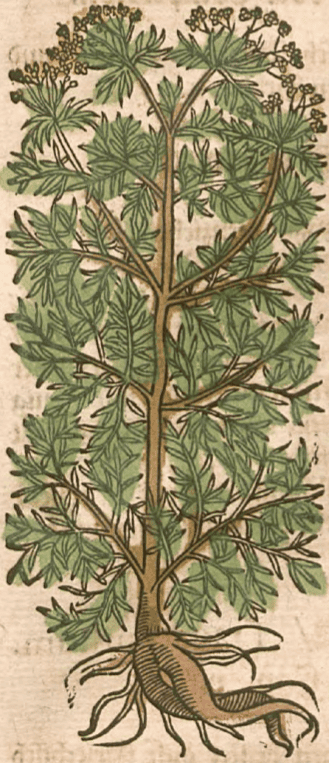
Krauterbuch, Lonitzer, 1578
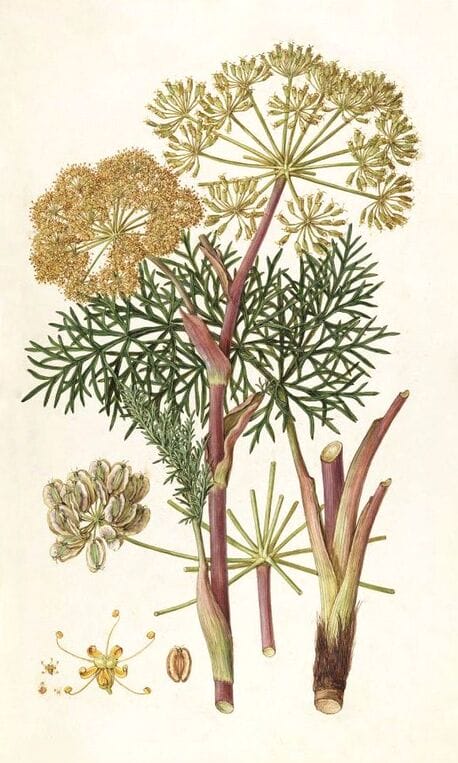
T. garganica
(Illustration by Ferdinand Bauer, 1787) (Wikimedia)
Botanical name:
Thapsia spp.
It appears several species have been used:
1. T. garganica
2. T. villosa (‘Deadly Carrot’ or ‘Scorching Fennel’)
3. T. ascelpium (‘Narrow-leaved Carrot’)
Varieties listed in Parkinson’s Herbal include, True Thapsia, Spanish Broad-leaved Thapsia, Greater Spanish Thapsia, Carrot-leaved Thapsia, Stinking Thapsia
Parts used:
1. Root-bark, prepared with Vinegar
2. Evaporated juice (Juice is extracted by cutting the root and collecting once dry, as for other Ferula.)
3. Dehydrated juice of the whole plant (A lesser type is collected by beating the whole herb including leaves and stalks, extracting the juice and evaporating. This was often dried into small bricks.)
4. Seeds are also sometimes used.
Temperature & Taste:
Hot, dry. Pungent, burning. Poison
Uses:
1. Clears Cold Phlegm:
-Cough with thick Phlegm
-Asthma
-“for those that are Asthmatic or Short-winded”. (Tournefort, 1730)
2. Settles Wind, Clears Damp:
-Wind-Phlegm nervous conditions including Epilepsy and Vertigo
-Wind-Damp muscle and joint pain, Rheumatism
-obstinate skin diseases including Leprosy
3. Opens Obstructions, Moves the Blood:
-chronic pain of the sides
-as an aid in Blood Stagnation
-Tumors and Cancers
4. Emetic:
-full doses are an irritant emetic but should not be used for this purpose
5. Externally:
-juice or fresh root rubbed topically cause hair to grow (Dioscorides)
-topically to resolve bruising, black eyes etc.
-juice removes Freckles
-“it has been found to take away all black and blue Spots, Bruises, Marks and Blemishes on the Skin; nay, the Morphew, Leprosy, Scabs, Scurfs, Wheals, Pushes or the like”. (Tournefort, 1730)
-“causes hair to grow apace where it is wanted, or where any part has been deprived of it”. (Tournefort, 1730)
-applied to Tumors and Leprosy
-in ointments for swelling and tumors of the Breast (Parkinson)
-applied to chronic Joint pain; pain of the feet
-roasted root applied to the hip was considered a specific for Sciatica by some physicians
-resin is used as a vesicant or irritant for Neuralgia and Rheumatic complaints
Dose:
1. Begin with lesser dose.
2. Root should be prepared from internal use and is gentler than the dehydrated juice.
Powdered Root-Bark: 100–300mg
Dehydrated Juice: 50–200mg
Infusion of the Prepared Root: 2 drams in 6 oz. water with a pugil (three-finger pinch) of Thyme.
Dioscorides said the maximum dose should be 500mg
To purge Bile “upwards a downwards” (ie. Vomit and Purge), “Two Scruples of the Bark of the loot, as well as half a Scruple of the juice drank with Mead or Honey-water”. (Tournefort, 1730)
Externally, it is useful for various skin complaints and bruising, but should not be left on too long (maximum 2 hours according to traditional sources), then washed off with salt water.
Corrective:
1. Dill seed (Dioscorides)
Substitute:
“It has the same Faculties as Spurge, Ranuncle and Euphorbium”. (Boerhaave)
1. Asafetida can replace Thapsia as a less irritant version
2. Euphorbium
3. Ferula communis has been substituted
4. To purge Phlegm, Turbith can substitute
Preparation:
The root is best infused in Vinegar for 24 hours, then dried. This lessens its irritant qualities while enhancing its Phlegm-clearing effect.
Main Combinations:
1. To purge Phlegm:
i. Thapsia root-bark (2 gram), Dill seed (9 grams) (Dioscorides)
ii. Thapsia, Ginger, Costus, Long pepper, Asafetida (as in Anacardium)
2. Wind-Phlegm conditions of the Brain and Nerves:
i. Aloe, Turbith, Thapsia, Gum Ammoniac, Bdellium, Agaric, Chebula, Cinnamon, Cardamon, Indian Spikenard (as in Foetid Pills of Galen)
ii. Aloe, Colocynth, Turbith, Opopanax, Sagapen, Gum Ammoniac, Bdellium, Agaric, Long and Black pepper, Ginger, Triphala (as in Pills of Opopanax)
3. Asthma or Short-windedness, Thapsia bark (2 scruple), of the dried Juice (½ scruple), mix and take with Mead or Hydromel. (Parkinson)
4. As an emetic: Thapsia root-bark (4 oz.), Asarabacca (2 oz.), Carthamus seed (1 oz.), Cinnamon (½ oz.) Bruise, then infuse in Wind Vinegar (4 pounds). Infuse in a sealed vessel for 1 month. It was distilled but could be used as an acid tincture. Regarded as purging Hot and Cold humors by vomit. Dose: 2–3 ounces, taken with Syrup of Vinegar for delicate bodies. (Thesaurus & armamentarium medico-chymicum, Mynsicht, 1682)
5. Bruising:
i. Thapsia, Hyssop, Cassia (equal parts) made into an ointment with Turpentine and Wax (Paulus)
ii. Thapsia root powder, Frankincense, Wax (equal parts), form an ointment (Dioscorides)
6. Oil of Rheumatism, Thapsia root, Rosemary, Red Wind (1 part each), Olive Oil (4 pounds). Digest 4 days, boil until the humidity has evaporated and strain. (Pharmacopoeia Universalis)
7. Leprosy, Thapsia juice mixed with Honey and applied (Dioscorides)
8. Tumors, Thapsia juice mixed with Sulphur and applied (Dioscorides)
Major Formulas:
Blanca (Nicholas)
Foetid Pills Major of Galen
Pills of Opopanax
Cautions:
1. Hot and irritant. Only use the prepared root. Avoid overdose. It was previously given in doses to cause vomiting and purging but is not safe to use in this dose.
2. Not used in the young, old, weak or pregnant.
3. Not used in Yin deficiency or Qi deficiency.
Main Preparations used:
Dehydrated Juice, Resin
1. Resin
‘The resin is obtained by extracting the dry root with alcohol, distilling the tincture, and washing the residue with water’. (King’s)
You must be logged in to view this content, please login. If you're not a member then Click this link to subscribe