
Thamnolia, Dngul skud mchog དངུལ་སྐུད་ མཆོག་
Snow Tea, White Snow Tea, Whiteworm Lichen
Dngul skud mchog (Tibet)
Bai Xue Cha 白雪茶 (‘White Snow Tea’) (TCM)
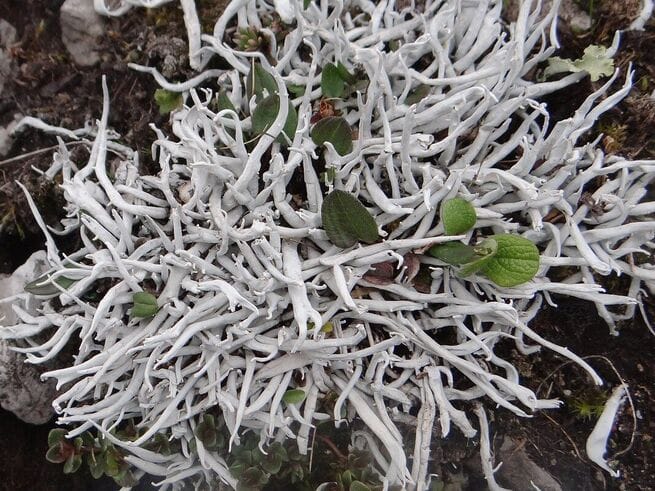
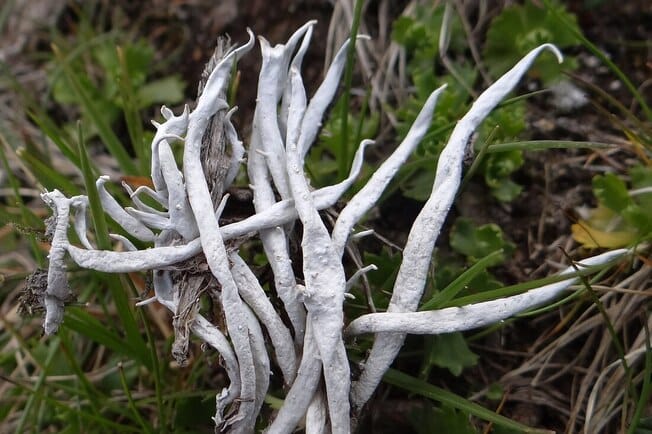
Botanical name:
Thamnolia vermicularis
T. subuliformis is classed as a source of Bai Xue Cha
Saussurea graminifolia is regarded as an inferior type in Tibetan Medicine.
Parts used:
Entire plant (lichen)
Temperature & Taste:
Cool, slightly moist. Bitter, Sweet
Uses:
1. Clears Heat, Moistens Dryness:
-Fever, Fever with Thirst
-Yin deficient (Hectic) Fever
-Summer-heat (TCM)
-Lung-heat Cough, Hoarseness (Tibet, TCM)
-Burning sensation (Tibet)
-sharp pain in upper back from Heat and Blood stagnation (Tibet)
-Wind-Heat eye disorders (TCM)
-Heat disorder from Toxin
2. Clears Heat, Settles Wind, Refresh the Spirit:
-Insomnia, Restlessness, Neurasthenia
-Tremors, Convulsions, Epilepsy
3. Clears Heat, Stops Bleeding:
-any type of Bleeding associated with Heat (Tibet)
Dose:
Powder: 1–3 grams
Infusion: 3–5 grams (as a health tea)
Decoction: 9–15 grams
Main Combinations:
1. Heat of the Eye:
i. Thamnolia, Swertia, Chebula
ii. Thamnolia, Self Heal (Xia Ku Cao), Horsetail (Mu Zei)
2. Epilepsy, take Cinnabar (Zhu Sha) with Thamnolia tea
3. Lung Heat Cough, Thamnolia with Oroxylum Mu Hu Die.
Major Formulas:
Cautions:
None noted
Main Preparations used:
Click the above Tabs for more information on this medicine
You must be logged in to view this content, please login. If you're not a member then Click this link to subscribe

The dried Lichen is sold as a health tea in the Himalayas.