Smyrnium, Alexander
Black Lovage, Hipposelinum, Smyrnium, Zirnabum, Olus Atrum
Xiao Mei Wei Qin (TCM)
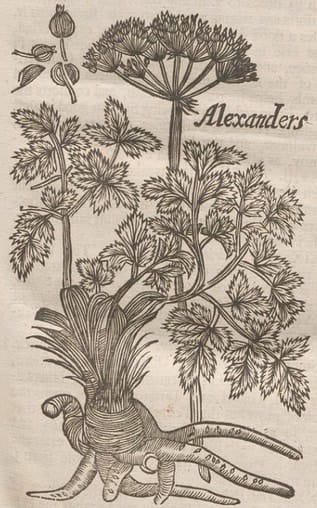
Salmon, Botanologia, 1710
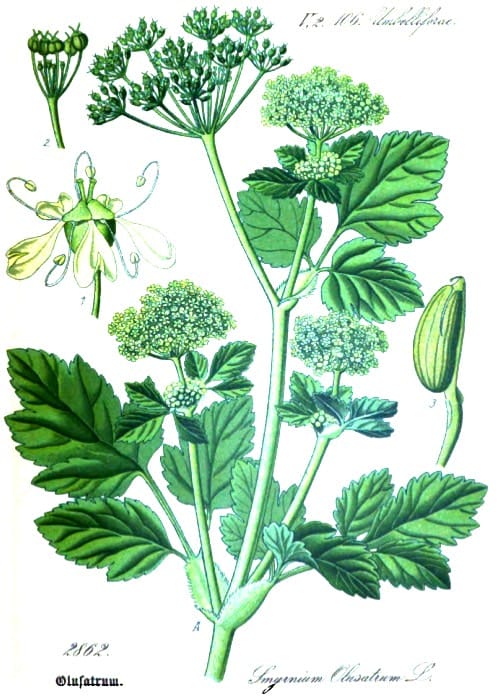
Smyrnium olusatrum
Flora von Deutschland (27), Kohler, 1886
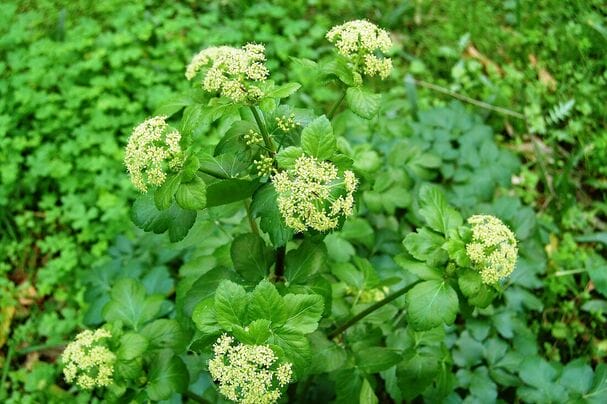
Smyrnium olusatrum
(Photo by tato grasso) (Wikimedia)
Botanical name:
Smyrnium olusatrum
Other related species used include S. perfoliatum, S. rotundifolium (Alexander of Candy)
Parts used:
Seeds; sometimes the root. The herb was eaten as a vegetable.
Temperature & Taste:
Warm, dry. Pungent, Bitter. (Root is more bitter)
Classifications:
Attenuating, Alterative, Carminative, Diuretic, Lithontriptic
Stomatic, Hysteric, Nephritic
Uses:
1. Warms the Kidneys, Promotes Urine:
-Edema
-Strangury
-Gravel, Stones
-Sciatica
2. Moves the Blood, Promotes Menstruation:
-Amenorrhea, Dysmenorrhea from Cold
-Promotes Labor
3. Resists Poison:
-Snake Bite, Rabid Dog Bite
4. Warms the Stomach:
-Colic
-Candied Roots were used to strengthen the Stomach, promote Appetite and Digestion
Dose:
Powder of the Seeds: 2–4 grams;
Salt: 650-1200mg (10 grains–1 scruple)
Comment:
1. Seeds are carminative, stomachic and aperient; Root is diuretic and emmenagogue.
2. “It is frequently put into Broth in this Country, in the Spring-Season, to purify and cleanse the Blood”. (Tournefort, 1730)
Substitutes:
1. ‘This plant is nearly similar in quality to smallage (celery), but somewhat stronger both in smell and taste’ (An Experimental History of the Materia Materia, Lewis, 1784). It was formerly eaten as a pot herb like Celery which eventually replaced it.
2. Parsley seed; “produces the same Effects that Parsley does, but more effectually”. (Tournefort, 1730)
3. Culpeper said in his time the seeds of Alexander (Smyrnium olisatrum) was usually sold as Macedonian Parsley seed by the Apothecaries
Main Combinations:
1. To promote Menstruation, with (Ethiopian) Carrot seed (Hippocrates)
2. Stomach pain, Colic, Alexander seed with Black Pepper, Spikenard, Cinnamon, Aniseed, Celery seed, Clove. If the pain is strong Opium and Henbane seed are added (Nicholas)
3. To benefit the Brain and strengthen the Memory, Alexander seed with Mace, Calamus, Red Coral and Pearl (as in Powder for the Memory)
Major Formulas:
Electuary for a Duke (Electuarium Ducis) (Nicholas)
Cautions:
None noted
Main Preparations used:
Distill Water of the Whole Plant, Salt of the Plant
You must be logged in to view this content, please login. If you're not a member then Click this link to subscribe