
Scilla, Squill
Isqeel (Unani)
Vana-Pataandu, Korikanda (Ayurveda, S. indica)
Kattu Velvengayam (Siddha, S. indica)
Se Sikil Sar (Sumerian)
Bisru or Sikillum (Akkadian)


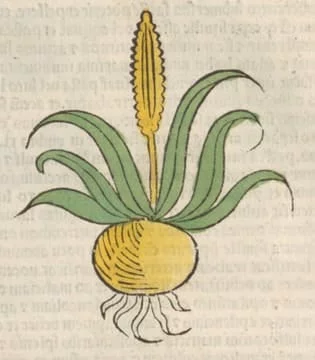
Herbarius latinus, Petri, 1485
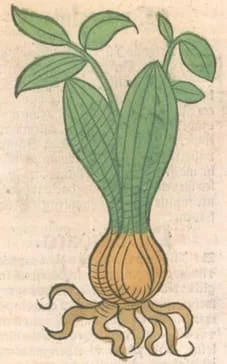
Ortus Sanitatis, Meydenbach, 1491
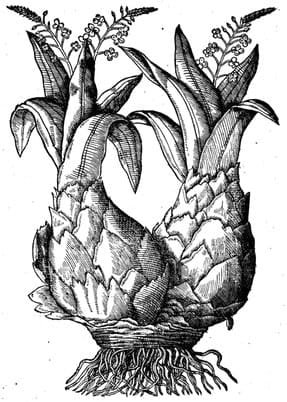
New Kreuterbuch, Matthiolus, 1563
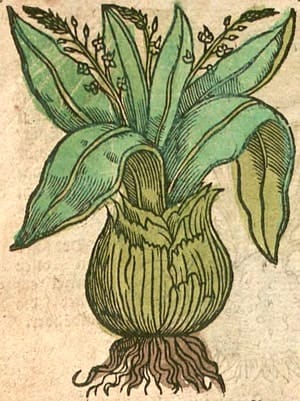
Kurtzes Handtbuchlein, Ryff, 1599
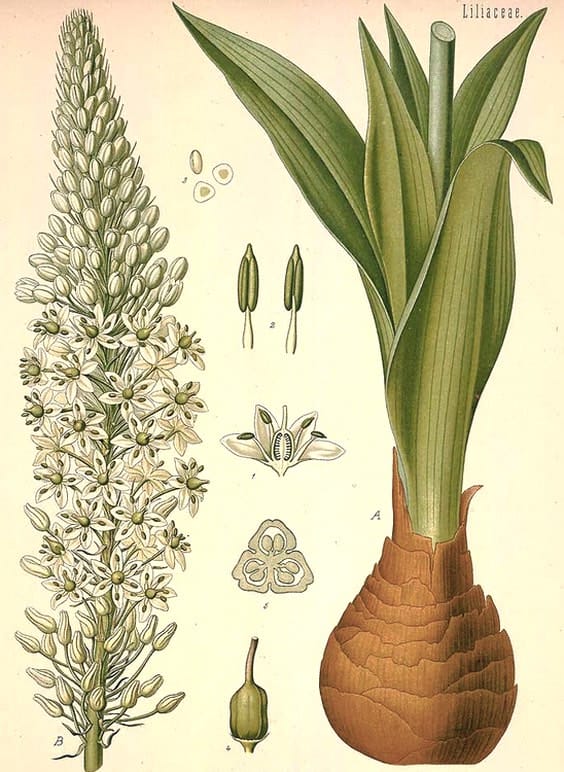
Koehler, Medizinal Pflanzen, 1890
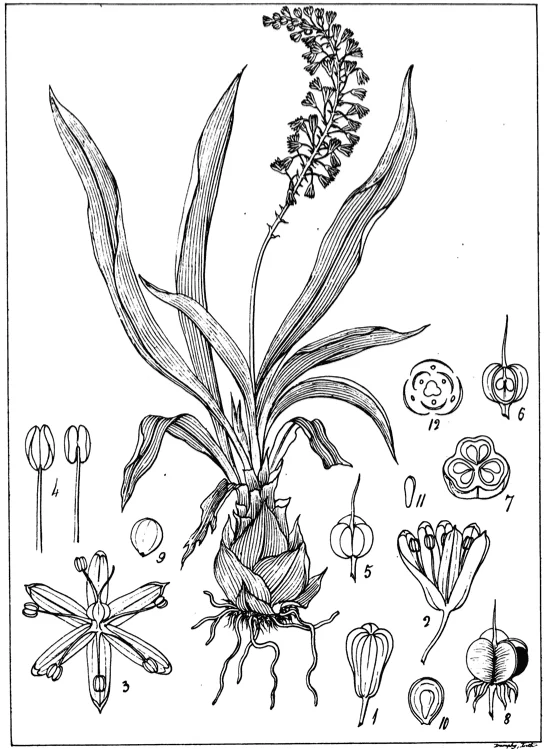
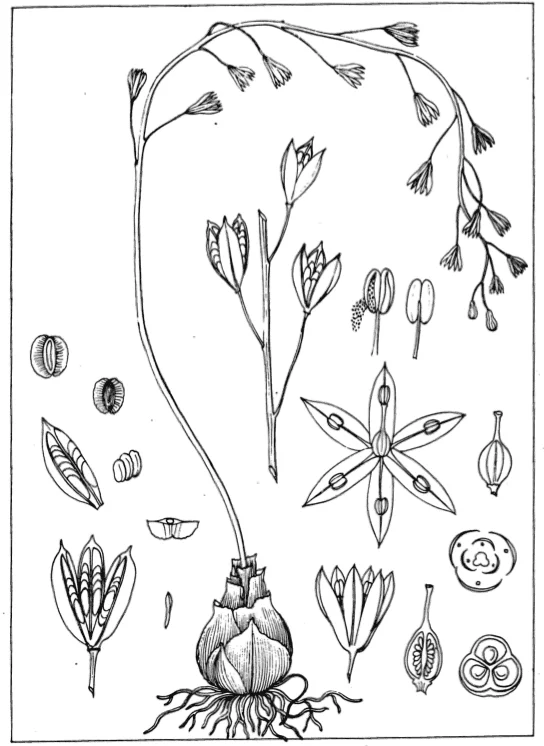
Left: South Indian Squill, S. indica; Right: Indian Squill, Urginea indica
Figures of Indian Plants, Wight, 1853
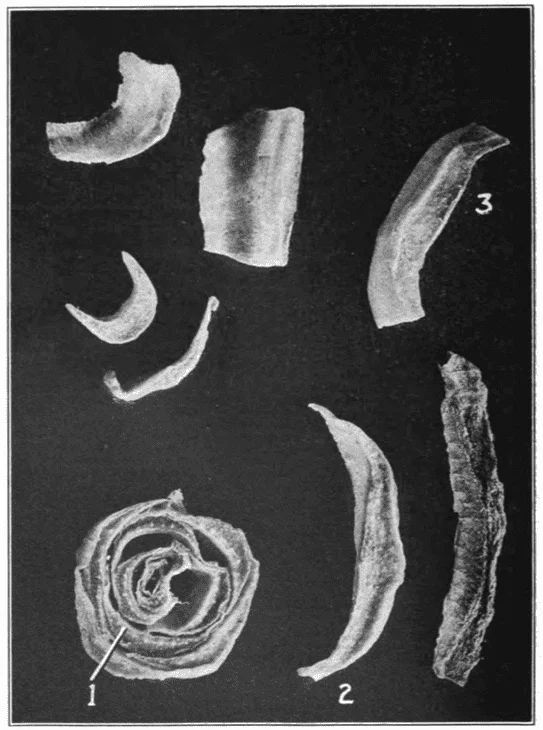
SQUILL
1. Concentric slices of Squill bulb. 2. Typical curved
pieces. 3. Irregular pieces of the bulb.
Squibb’s Atlas of the Official Drugs, Mansfield, 1919
Botanical name:
Scilla maritima (syn. Urginea maritima, Drimia maritima)
S. indica (South Indian Squill) and Urginea indica (Red Squill) have been used similarly and as substitutes for Scilla maritima.
Parts used:
Prepared Root
Temperature & Taste:
Very Warm, dry. Pungent, Bitter, Sweet
“Squill is Hot and Dry in the third degree”. (Villanova)
“It is composed of fiery parts in its surface giving it vehement sharpness, and of burnt earthy parts giving it bitterness, and of airy parts giving it a little sweetness”. (Villanova)
Classifications:
attenuates, cuts, discusses
3K. EXPECTORANT
2C INCIDERS. 2D ATTENUATERS OF CONGEALED BLOOD. 2F. PURIFYING. 2L. EMOLLIENT
3A. SUDORIFICS & DIAPHORETICS. 3E. DIURETIC. 3F. LITHONTRIPTIC. 3I. APHRODISIACS. 3K. EXPECTORANT. 3L. ANTI-TUSSIVE
4d. PECTORAL. 4e. STOMACHIC. 4g. HEPATIC. 4k. ARTHRITIC
Uses:
1. Warms and Tonifies the Kidneys, Clears Cold and Damp, Promotes Urine:
-Edema of the Kidneys or Heart (ie. in chronic Heart disease)
-‘one of the most certain diuretics in Dropsical cases’ (Culpeper)
-for conditions associated with cold and dampness, or cold and weak Kidneys.
-internally and externally for cold Joint pain, Paralysis, cold Headache etc.
-opens obstructions the Liver and Spleen, Damp-type Jaundice etc.
-“Squill is very beneficial against Apoplexy, and the disease of Epilepsy”. (Dorsetn, 1540)
2. Clears Cold Phlegm, Stops Coughs:
-Cough, chronic Bronchitis, Asthma, Catarrh, Whooping Cough, and Emphysema;
-‘the Lungs or Stomach are oppressed by tough viscid Phlegm’ (Culpeper).
3. Moves the Blood, Regulates the Heart:
-slows and strengthens the Pulse. Used as a weaker substitute for Digitalis.
-promotes Menstruation
4. Resists Poison:
-traditionally used for the bites of Venomous Beasts, poisonous Insects, venomous Sea Creatures, and various other Poisons;
-‘Fortifies the body against all manner of Malign and Pestilential diseases’ (Salmon).
-used for ‘imprudent use of Opium’. (Culpeper)
-‘It is said to drive away Witchcraft and Incantations’. (Schroder)
5. Clears the Sight.
-regarded as clearing the Sight (Salmon)
6. Emetic:
-Large doses are Emetic, and sometimes Purgative.
7. Kills Worms:
-“it driveth forth Long and Round Worms if it be given with Honey and Oil”. (Gerard)
8. Externally:
-powder or roasted bulb can be applied to Corns and Warts
-good to dry Running Sores.
-Oil was applied to Chilblains
-used externally, infused in oil, for sore heads
-“Squill oil, tempered with honey, and applied to the hairless skin, makes the hair grow back.”. (Dorsetn, 1540)
Dose:
1–2 grains (65-130mg) was the common dose, up to 4 grains (250mg).
From 65–200mg is the standard dose (which may be used in long-term Heart treatment); 50–100mg as an expectorant; 100–300mg is diuretic; 400–600mg, and sometimes up to 800mg has been used as an Emetic or Purgative;
Maximum single dose: 500mg, maximum daily dose: 1 ½ grams
Of the TINCTURE or VINEGAR of SQUILL (1:10): ¼–2 mls (or 5–30 drops); Maximum daily dose: 5mls.
Of the FLUID EXTRACT (1:1): 1–3 drops.
Preparation:
“It is rectified by roasting and prepared with vinegar so that it may easily expel gross and adherent submerged matters”. (Villanova)
1. Baked Squill:
One method of preparation was to wrap it in Barley dough, then to bake until the dough is dry. It was also simply buried in hot embers. Then the outer crust of dough is removed, any burnt parts rejected, then the soft Squill is beaten, and then one-third its weight of the powder of White Lupin meal (or White Dittany) is added and these are beaten together to form a paste, from which the Troches of Squills (for Theriac) can be made.
When prepared like this ‘the vehemencie of it is taken away … not being so baked or roasted it is very hurtful to the inner parts’. (Dioscorides, Galen, Salmon)
2. Roasted Squill
Squill can be roasted in hot embers until lightly scorched.
“and thus the strength and sharpness of its virtue will be diminished — and roasted it has many and great benefits”. (Villanova)
3. Dried Squill:
Otherwise, it is cut in thin slices, threaded onto cotton and hung to dry in the shade for 40 days; or else in a warm oven; “the drying of the slices was only intended to correct any ill quality which may be in them; for as much as all that is dissipated by the Sun is only a superfluous moisture”. (Charras)
Correctives:
1. Honey, Oxymel
2. Sugar Candy (Unani)
3. Licorice
Substitutes:
1. Caraway seed (Avicenna)
2. Calamus (one-third of the weight of Squill) (Avicenna)
3. Cardamon (Avicenna)
Main Combinations:
Squill was often combined with Juniper as a Diuretic.
Squill and Wormwood:
“Decocted with Wormwood, in water and vinegar, and sweetened with sugar, it is effective for the obstruction of the liver, cures Scrofula and Dropsy, powerfully stimulates Urine, draws out the menstrual flow of women, expels a Dead Fetus”. (Dorsetn, 1540)
1. Cold-Phlegm-Wind conditions: Epilepsy, Apoplexy, Migraine, Headache, Vertigo, and to cleanse the Stomach and Lungs of Phlegm, Squill with Oregano, Hyssop, Thyme, Lovage, Cardamon, Stoechas (as in Compound Oxymel of Squill)
2. Cold Phlegm of the Lungs:
i. Myrrh (1 ½ drams), Squill (½ dram), Extract of Henbane (2 scruples), Water (sufficient). Make 30 pills. Dose: 2 pills.
ii. Squill, Orris, Elecampane (1 oz. each), Benzoin (6 drams), Licorice, Aniseed, Myrrh (½ oz.), Gum Ammoniac (2 drams), Saffron (1 dram) (Dispensatorium Pharmaceuticum, 1777)
3. Asthma:
i “Take fresh extract of Squills, pour on it a like quantity of Honey, put on the fire and boil until it becometh thick. Take one spoonful of it, and administer to the patient before and after meals.”. (Syrian Book of Medicine)
ii. Juice of Squill, clarified Honey (equal parts). (Memorial Pharmaceutique, 1824)
iii. Squill powder (8 grains), Gum Ammoniac (20 grains), Syrup of Marshmallow, Oxymel of Squill (1 oz. each) (Memorial Pharmaceutique, 1824)
iv. Squill (½ oz.), Orris (2 drams), Horehound, Hyssop (1 dram each), Myrrh, Saffron (½ dram each), Honey (6 oz.). (Dispensatorium Pharmaceuticum, 1777)
4. Bronchitis:
i. Squill, Coltsfoot, Licorice
ii. Squill with Fig and Aniseed
5. To promote Urine:
i. Squill (2 grains), Juniper (18 grains). Mix for a dose. (Pharmacopoeia extemporanea, Augustin, 1822)
ii. Squill (2 grains), Cinnamon (12 grains). Powder, mix for a dose. Give twice per day.
iii. Squill with Broom and Juniper
iv. Squill with Dandelion, Licorice
v. Squill with Cinnamon, Elecampane (Saunders)
vi. Squill with Cinnamon, Angelica, Juniper
vii. Squill with Wormwood, Balm, Juniper
viii. Squill (1 part), Potassium nitrate (4 parts) (Nouveau Formulaire Medicale et Pharmaceutique, 1820)
ix. Squill (1 dram), Potassium nitrate (2 drams), Cinnamon (1 scruple). (Pharmacopoeia Herbipolitania, 1796)
x. Squill (1 part), Swallow-wort (6 parts), Potassium nitrate (8 parts) (Pharmacia Rationalis, 1806)
xi. Squill, Ginger (12 grains each), Potassium Sulphate (2 drams), form a Powder. Dose: 10–20 grains, 2–3 times daily. (Fulder)
xii. Squill, Digitalis (1 grain each), Oil of Juniper (2 drops), Licorice (1 scruple), Cinnamon (2 grains). (Niemann)
xiii. Squill (20 grains), Digitalis (18 grains), Rob of Juniper berry (sufficient). Make 10 pills, one pill every 2 hours. (Picettario Clinico, 1825)
6. To promote Urine in Heart disease, Cardiac Edema: Squill (3 parts), Digitalis powder (1 part), make pills. (Marfori-Bachem)
7. Heart disease:
i. Squill with Hawthorn and Valerian
ii. Squill, Digitalis
Major Formulas:
Troches of Squill
Lohoch Effective for Asthma (Serapion)
Electuarium Acharistum (Nicholas)
Tincture for Vertigo
Wine for Edema
Hiera Logadii
Theriac
‘Plaster of the Jew of Steten’
1. ‘Pills of Squill‘
Cold-Phlegm Cough and Asthma, and to promote Urine.
i. Squill (1 ½ oz.), Gum Ammoniac (½ oz.), Oxymel of Squill, sufficient. (Pharmacopoeia Gallica, 1818)
ii. Squill (½ dram), Gum Ammoniac (3 drams), Potassium nitrate (1 dram), Simple Syrup (sufficient to make a pills mass; make pills of 4 grains each.
iii. Squill (2 drams), Gum Ammoniac (6 drams), Orris (½ oz.),
Cautions:
1. Toxic in overdose. The Vinegar and Oxymel are the best preparations for singular use, otherwise in compounds.
2. Not used during Pregnancy
3. Not used in Heat and Inflammation, or Yin deficiency.
4. Applied topically when fresh ’causes tremendous and unbearable itching’. (Galen)
Toxicity:
1. Contains cardiac glycosides (up to 3%), including unique bufadienolides such as glucoscillaren A, proscillaridine A, scillaren A, scilliglaucoside, scilliphaeoside. Toxic effects resemble Digoxin toxicity.
2. Oral LD50 of scilliroside is 0.7 mg/kg in male rats, 0.43 mg/kg in female rats.
3. Despite its toxicity, only 2 fatalities have been reported since 1966. (PubMed)
4. Bulbous Plants Drimia: “A Thin Line between Poisonous and Healing Compounds” with Biological Activities.
5. Contact dermatitis as a result of Urginea maritima.
6. Effects of Urginea sanguinea, a traditional asthma remedy, on embryo neuronal development.
Main Preparations used:
Prepared Root, Troches of Squill, Syrup, Wine of Squill, Vinegar of Squill, Oxymel of Squill, Honey of Squill, Compound Oxymel, Lohoch, Fecula and an Extract
1. Honey of Squill.
i. Squill (2 oz.), Water (3 lbs.). Boil a few minutes, digest for 2 days; express and add Honey (1 ½ lbs.). Clarify, boil to the consistency of a syrup. (Pharmacopoeia Gallica, 1818)
2. Wine of Squill:
i. Dried Squill (1 oz.), Malaga Wine (1 pound). Macerate 12 hours, strain, filter. (Pharmacopoeia Gallica, 1818)
ii. Squill (1 dram), Orange peel (1 oz.), White Wine (2 lbs.). Digest 24 hours, strain. (Pharmacopoeia Pauperum Hamburgensis, 1804)
iii. fresh Squill (6 drams), Cinnamon (3 drams), Wine (1 ½ lbs.). Infuse without heat for 12 hours. (Pharmacopoeia Herbipolitania, 1796)
iv. Squill (1 dram), Juniper (1 oz.), Lesser Cardamon (½ dram), White Wine (½ lb.). Digest 3 days. (Niemann)
Click the above Tabs for more information on this medicine
“Squill is one of the most ancient of medicines. Epimenides, a Greek who lived in the 30th Olympiad, is said to have made much use of it, from which circumstance it came to be called Epimenidea. It is also mentioned by Theophrastus, and was probably well known to all the ancient Greek physicians. Pliny was not only acquainted with it, but had noticed its two varieties.
“Dioscorides describes the method of making vinegar of squills and a similar preparation, as well as compounds of squill with honey, were administered by the Arabian physicians, and still remain in use. The medical school of Salerno preferred the red variety of the drug, which on the whole is not frequently met with in mediaeval literature”. (Pharmacographia, Fluckiger & Hanbury, 1879)
GENERAL / REVIEW
–Therapeutic Aspects of Squill; An Evidence-Based Review.
–Drimia indica: A Plant Used in Traditional Medicine and Its Potential for Clinical Uses.
–Traditional medical uses of Drimia species in terms of phytochemistry, pharmacology and toxicology.
–Metabolic fate of cardiac glycosides and flavonoids upon fermentation of aqueous sea squill (Drimia maritima L.) extracts.
ANTIBACTERIAL
–Phytochemical Screening, Antifungal, and Anticancer Activities of Medicinal Plants Thymelaea Hirsuta, Urginea Maritima, and Plantago Albicans.
–Antimicrobial Activity, Antioxidant Potential, Cytotoxicity and Phytochemical Profiling of Four Plants Locally Used against Skin Diseases.
–Therapeutic Aspects of Squill; An Evidence-Based Review.
–Chromatographic fractionation, antioxidant and antibacterial activities of Urginea maritima methanolic extract.
ANTI-FUNGAL
–Phytochemical Screening, Antifungal, and Anticancer Activities of Medicinal Plants Thymelaea Hirsuta, Urginea Maritima, and Plantago Albicans.
–Major antifungal activity from the bulbs of Indian squill Urginea indica is a chitinase.
ANTIOXIDANT
–Assessment of Drimia delagoensis (Jessop) Baker Total Phenol, Flavonoids Content and Antioxidant Activity of Both Bulb and Leaves.
–Chromatographic fractionation, antioxidant and antibacterial activities of Urginea maritima methanolic extract.
ANTI-INFLAMMATORY
–Urginea indica attenuated rheumatoid arthritis and inflammatory paw edema in diverse animal models of acute and chronic inflammation.
ASTHMA
–Squill Oxymel, a traditional formulation from Drimia Maritima (L.) Stearn, as an add-on treatment in patients with moderate to severe persistent asthma: A pilot, triple-blind, randomized clinical trial.
COPD
–An Add-On Treatment for Moderate COPD with Squill-Oxymel (a Traditional Formulation from Drimia maritima (L.) Stearn): A Pilot Randomized Triple-Blinded Placebo-Controlled Clinical Trial.
GASTROINTESTINAL STIMULANT
–Gastrointestinal stimulant effect of Urginea indica Kunth. and involvement of muscarinic receptors.
RHEUMATOID ARTHRITIS
–Urginea indica attenuated rheumatoid arthritis and inflammatory paw edema in diverse animal models of acute and chronic inflammation.
CANCER
–Phytochemical Screening, Antifungal, and Anticancer Activities of Medicinal Plants Thymelaea Hirsuta, Urginea Maritima, and Plantago Albicans.
–C-glycosyl flavone from Urginea indica inhibits proliferation & angiogenesis & induces apoptosis via cyclin-dependent kinase 6 in human breast, hepatic & colon cancer cell lines.
ASCITES TUMOR
–Antiangiogenic and proapoptotic activity of a novel glycoprotein from U. indica is mediated by NF-kappaB and Caspase activated DNase in ascites tumor model.
BREAST
–Cytotoxic effect of Drimia maritima bulb extract and induction of mitochondrial apoptotic signaling in human breast cancer cells, MCF-7 and MDA-MB-468.
COLORECTAL
–Phytochemical Analysis and Anticancer Properties of Drimia maritima Bulb Extracts on Colorectal Cancer Cells.
–Selective in vitro cytotoxicity effect of Drimia calcarata bulb extracts against p53 mutant HT-29 and p53 wild-type Caco-2 colorectal cancer cells through STAT5B regulation.
LUNG
–P53-Related Anticancer Activities of Drimia calcarata Bulb Extracts Against Lung Cancer.
LYMPHOMA
–The traditional medical uses and cytotoxic activities of sixty-one Egyptian plants: discovery of an active cardiac glycoside from Urginea maritima.
TRAUMA HEALING
–New alkylresorcinols from a lipophilic extract of Urginea indica L. bulbs showing experimental trauma healing activity.
You must be logged in to view this content, please login. If you're not a member then Click this link to subscribe

“Squill soaked overnight in water, if mice drink from it, they die”. (Dorsetn, 1540)