
Schoenanthum, Squinanth
Sweet-smelling Rush, Aromatic Rush, Camel’s Hay; Camel Grass
Flos Junci, Juncus odoratus
Idhkhir (Unani)

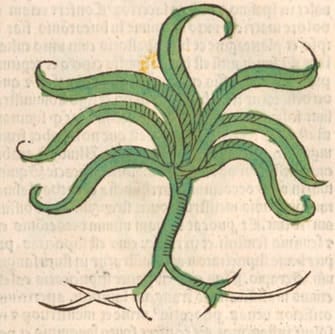
Squinanth
Herbarius latinus, Petri, 1485
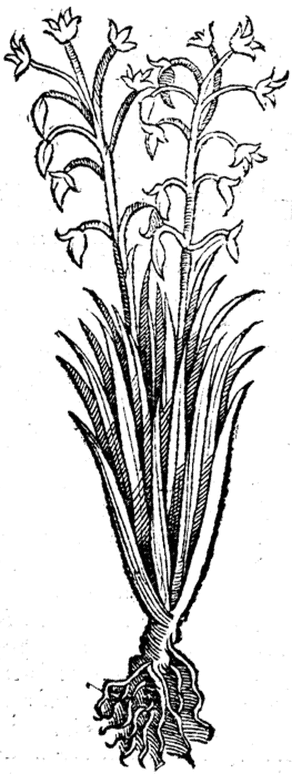
Dioscorides Materia Medica, Mathias, 1563
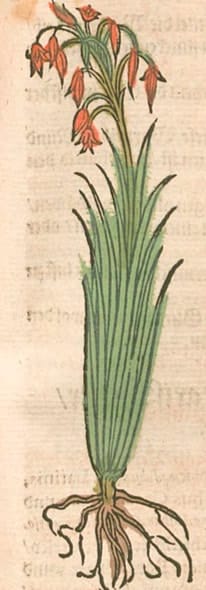
Krauterbuch, Lonitzer, 1578
Botanical name:
Cymbopogon schoenanthus (syn. Andropogon schoenanthus, A. laniger; formerly Juncus odoratus)
“Avicenna says Squinanth is of two species. One of them has no black fruit but appears like a horse’s tail. Another is Arabic and is of good odour and of greater efficacy”. (Villanova)
Parts used:
Herb; also the Root and Seed are sometimes used.
“The best is the Arabian variety which is red and fragrant'” (Avicenna)
Temperature & Taste:
Warm, dry. Pungent, aromatic
“the Arabian variety is Hot and Dry in the second degree”. (Avicenna)
Classifications:
Uses:
1. Moves Blood and Qi, Promotes Menstruation:
-Amenorrhea, Dysmenorrhea
-clears obstruction of the womb; eases pain of the Womb
-Infertility from obstruction
-to promote Labor; After-pains following childbirth
-in Sitz baths for Uterine disorders
-‘opens the orifices of the Veins’ (Avicenna)
-flowers stop bleeding and are used for Hemoptysis and pain in the Lungs (Avicenna)
2. Moves Qi, Resolves Phlegm, Opens Obstructions:
-“It has the virtue of purging phlegm”. (Villanova)
-opens obstructions of the Liver and Spleen
-hardness of the internal organs and cold swellings (Avicenna)
-distention of the Hypochondria
-aromatically revives the senses when blocked by Phlegm and Damp
-Spasms, Cramps, Convulsions (Avicenna)
-“good against spasm and pain of the muscles”. (Villanova)
3. Benefits the Stomach, Guides Qi down:
-Wind of the Stomach, Vomiting and Hiccups
-also relaxes breathing due to its downward effect
-root strengthens the Stomach, promotes Appetite, eases Nausea (Avicenna)
4. Clears Damp, Promotes Urine:
-Edema; stopped Urine, pain of the Kidneys and Bladder.
-also for Stones (Avicenna)
5. Resists Poison:
-added to Antidotes against Poison (Galen)
6. Externally:
-essential oil is used externally in rheumatism and neuralgia
-‘The decoction or plaster of Idhkhir is useful in hot swellings, hardness of internal organs and cold swellings of the viscera’. (Avicenna)
-as a gargle for bad breath and swollen sore throat
-strengthens the Gums. (Avicenna)
-cataplasm on the stomach to strengthen it.
-as a wash to strengthen the Head
-‘The seeds are anaesthetic’ (Avicenna)
-topically to promote hair and beard growth
-in douches or pessaries for prolapse of the Uterus
-oil eases Itching (Avicenna)
Dose:
Powder: 500mg–3 grams
Decoction: 3–6 grams
Substitutes:
1. Cardamon (Galen)
2. Indian Spikenard (Unani)
3. “Squinanth is an herb similar to Cyperus”. (Villanova)
Main Combinations:
1. To promote Menstruation:
i. Squinanth, Pennyroyal
ii. Squinanth, Marjoram, Savin
iii. Squinanth decocted with Mugwort in wine and applied as a poultice to the genitals. (Villanova)
2. To promote Labor when difficult:
i. Squinanth with Savin, Marjoram, Indian Spikenard, Lavender (as in Decoction for Difficult Childbirth)
ii. Squinanth, Myrrh, Cinnamon
3. After-pains following Childbirth, Squinanth with Spikenard, both decocted in Mugwort water
4. To promote Conception, Squinanth with Madder, Mugwort, Mint, Wormwood, Fennel root, Marjoram, Aniseed, Cinnamon, Raisins; decoct and form a syrup with Honey (Wirtzung)
5. Hardness of the Spleen, Squinanth with Agrimony, Wormwood, Agnus Castus, Gum Ammoniac
6. Strengthen the Stomach, Squinanth root with Black Pepper (Avicenna)
7. Stomach Abscess from Cold, Squinanth with Cassia wood, Rhubarb, Calamus, Bdellium, Mastic (Wirtzung)
8. Liver obstruction from Heat, Squinanth with Rose, White Sandalwood, Wormwood, Indian Spikenard
9. Hardness of the Spleen or abdominal organs, and for chronic Cough and shortness of Breath, Squinanth with Mint, Lovage seed, Pimpernel and Raisins
10. Cramps, Convulsions, Pain and spasms of the muscles, Squinanth with Pepper (Avicenna, Villanova)
11. Edema:
i. take 1 dram with an equal amount of Pepper (Dioscorides)
ii. Decocted with Fennel seed in wine. (Villanova)
iii. “Dropsy of a Cold nature”: Squinanth, Polypody, Fumitory, decocted in wine. (Villanova)
12. Prolapse of the Uterus, Squinanth with Cypress nuts, Oak leaf, Camomile, Rose; powder, seal in a bag the length and breadth of a finger, then steep in warm wine in which Camomile has been decocted and insert into the Vagina. (Wirtzung)
Classifications:
Decoction for Difficult Childbirth (Barbette)
Decoction of Dodder of Thyme (Mesue)
Troches of Gum Lacca (Trochisci de Lacca) (Unani)
Troches of Rose Greater (Mesue)
Electuary Against Sterility (Nicholas)
Electuary of Pearl (Galen)
Electuary of Turbith (Zenon)
Electuary of Frankincense (Zenon)
Powder for Edema (Nicholas)
Pills of Spikenard
Cautions:
Best avoided during Pregnancy.
Main Preparations used:
Click the above Tabs for more information on this medicine
Galen:
“Its flower is a little heating, a little astringent and diuretic. When applied in compresses it is an emmenagogue and useful for the swellings (tumours) of the liver and the stomach. Its root is more astringent and its flower more heating”.
‘This grass is described in the Nighantas under the Sanskrit name of Lamajjaka, with the synonyms Dirgha-mulaka *’long-rooted,” Jalasaya “aquatic,” Sevya, Amrinala, Ishta-kapatha, &c, as cooling, useful in fever, and tridosha or derangement of the three humors. It is particularly mentioned by Arrian in his account of Alexander’s journey through the Punjab and Sind, and was gathered in Lus by the Phoenician followers of the army, who called it spikenard. Dioscorides (i., 16) describes it under the name of [?] and says that the best kind grows in Arabia, has an odour like roses when rubbed between the hands, and a pungent taste. It has carminative and stimulant properties, and is useful as an emmenagogue. This latter use of the plant is noticed by Hippocrates in his treatise on the diseases of women (Lib. ii., Sec. 5). The same plant was known to the Romans as Schoenus or Juncus odoratus, and was used to flavour wine (Cato, R. R. 105, 2; 113, 1. Col. 12, 20, 53), and from Plantus [Pan. 1, 2, 5o) we learn that it was used to prepare a perfume in favour with the Roman meretrices whom he speaks of as Schoeniculae or Schceno delibutae. Scribonius Largus (Comp., 167) mentions Schoenus, i.e., Junci odorati flores, as an ingredient in a theriace used as an antidote to snake-bites, and Pliny also mentions it (12, 48) in his chapter on the sweet-scented Calamus. We are of opinion that the whole of this chapter refers to this grass, and that the substance like a cobweb, which is generally known by the name of the “flower,” and which he calls the pith, is really the cottony calyx of the plant which the Arabs call (fukkah el idkhir) or the “flower of the Idkhir,” and use as an haemostatic. Other Arabic names for A. laniger are Kilal-el-Mamun, Ma-mun’s toothpick,”Tibn-el-makah “, Mecca grass, and Tibn-el-Arab “the Arab’s perfume.” In Persia it is known as Gur-giyah, and the author of the Burhan states that it bears this name because the onager or wild ass (Gur) is particularly fond of it; he describes it as a grass, which, when chewed, has a taste of cloves and masticb, and which is called by the Arabs Idkhir.
Abu-Hanifeh Ed-Dinawarf, author of the Book of Plants, has the following description of the plant :— “It has a root hidden in the ground, slender, pungent in odour, and is like the straight stalks of the [?] (Kaulan or papyrus plant), save that it is wider, and smaller in the [?] (ku’oub, internodal spaces), and it has a fruit resembling the blooms of reeds, but more slender, and smaller; it is ground, and is an ingredient in perfumes; it grows in rugged and in smooth grounds; but seldom does more than one grow in the same spot ; when it dries becomes white.”
The Arabian and Persian physicians describe Idkhir as hot and dry, lithontriptic, diuretic, emmenagogue, and carminative; they recommend it to be boiled in wine as a diuretic; ground into a paste it is said to be a good application to abdominal swellings; added to purgatives it is administered in rheumatism; the flowers (calyxes) are used as an haemostatic. They identify it with the Sehoenus of the Greeks.
In medieval Europe it was officinal under the names of Schoenanthus, Squinauthus, and Juncus odoratus, and was also known as Foeuum vel stramen camelonirn “camel’s hay or straw,” from its being the principle food of camels in the deserts between Syria and Egypt. In Arabia, under the name of ghusul, the powdered grass is still used as a perfume for the bath. (Pharmacographia Indica, Dymock, 1893)
GENERAL / REVIEW
–Chemical composition and biological activities of essential oils from Cymbopogon schoenanthus (L.) Spreng.: a Saharan plant from Ghardaia region (Algeria).
–Composition, Chemical Variability and Biological Activity of Cymbopogon schoenanthus Essential Oil from Central Algeria.
–Biological activity of Cymbopogon schoenanthus essential oil.
–Ethnopharmacological use of Cymbopogon citratus (DC.) Stapf and Cymbopogon schoenanthus (L.) Spreng.: Anti-inflammatory potential of phenol-rich extracts: PS129.
ANTIBACTERIAL
–Antimicrobial and synergistic effects of lemongrass and geranium essential oils against Streptococcus mutans, Staphylococcus aureus, and Candida spp.
–Antibacterial activity of Cymbopogon species essential oils against Xanthomonas citri and their use in post-harvest treatment for citrus canker management.
–Phytochemical Screening and Antimicrobial Activity of Methanolic Extract of Cymbopogon schoenanthus (L.) (azkhar) Collected from Afif City, Saudi Arabia.
–Composition, Anti-MRSA Activity and Toxicity of Essential Oils from Cymbopogon Species.
–Review of Antimicrobial and Other Health Effects in 5 Essential Oil Producing Grass Species.
–Chemical composition, antiproliferative, antioxidant and antibacterial activities of essential oils from aromatic plants growing in Sudan.
ANTIFUNGAL
–Antifungal Properties of Essential Oils Derived from the Genus Cymbopogon: A Systematic Review.
–Antifungal and antimycotoxic activities of 3 essential oils against 3 mycotoxinogenic fungi.
–Antifungal and Antiaflatoxinogenic Effects of Cymbopogon citratus, Cymbopogon nardus, and Cymbopogon schoenanthus Essential Oils Alone and in Combination.
ANTI-INFLAMMATORY
–Camel Grass Phenolic Compounds: Targeting Inflammation and Neurologically Related Conditions.
–Ethnopharmacological use of Cymbopogon citratus (DC.) Stapf and Cymbopogon schoenanthus (L.) Spreng.: Anti-inflammatory potential of phenol-rich extracts: PS129.
ANTIOXIDANT
–Chemical profile, antiproliferative, antioxidant, and enzyme inhibition activities and docking studies of Cymbopogon schoenanthus (L.) Spreng. and Cymbopogon nervatus (Hochst.) Chiov. from Sudan.
–Chemical composition, antiproliferative, antioxidant and antibacterial activities of essential oils from aromatic plants growing in Sudan.
ANTI-STRESS
–Antistress Effects of the Ethanolic Extract from Cymbopogon schoenanthus Growing Wild in Tunisia.
ANTI-TYROSINASE
–Citral-Containing Essential Oils as Potential Tyrosinase Inhibitors: A Bio-Guided Fractionation Approach.
OBESITY
–Cymbopogon schoenanthus (L) extract ameliorates high fat diet-induced obesity and dyslipidemia via reducing expression of lipogenic and thermogenic proteins.
RENOPROTECTIVE
–Inhibition of calcium oxalate nephrotoxicity with Cymbopogon schoenanthus (Al-Ethkher).
ANTIPROLIFERATIVE
–Chemical profile, antiproliferative, antioxidant, and enzyme inhibition activities and docking studies of Cymbopogon schoenanthus (L.) Spreng. and Cymbopogon nervatus (Hochst.) Chiov. from Sudan.
CANCER
–Chemical Composition of Essential Oil of Cymbopogon schoenanthus (L.) Spreng from Burkina Faso, and Effects against Prostate and Cervical Cancer Cell Lines.
–Phytochemical constituents, in-vitro anticancer activity and computational studies of Cymbopogon schoenanthus.
ANTHELMINTIC
–Anthelmintic activity of Cymbopogon martinii, Cymbopogon schoenanthus and Mentha piperita essential oils evaluated in four different in vitro tests.
You must be logged in to view this content, please login. If you're not a member then Click this link to subscribe


“Squinantum is called camel straw, for camels eat this herb”. (Villanova)