Salmalia, Silk Cotton tree
Salmali (Stem-bark), Mocha (Ayurveda)
Chevvilavu (Siddha)
Na ga se sar (Tibetan, stamen)
Padma ge sar (Tibetan, petals)
Utpal ge sar (Tibetan, middle flower)
Mu Mian Hua (TCM, flower)
Mochras (Unani)
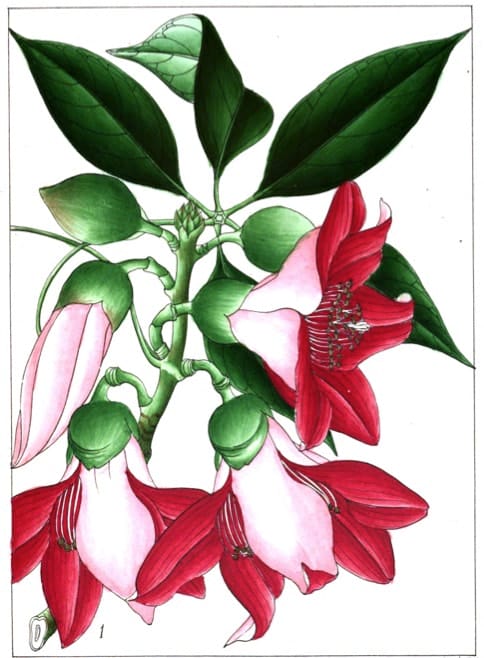
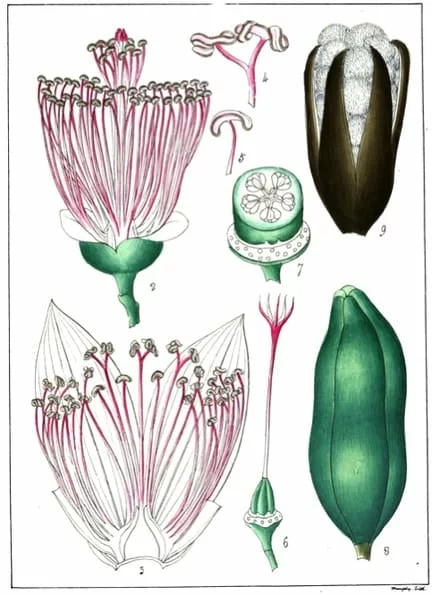
Salmalia malabarica
Illustrations of Indian Botany, Wight, 1840
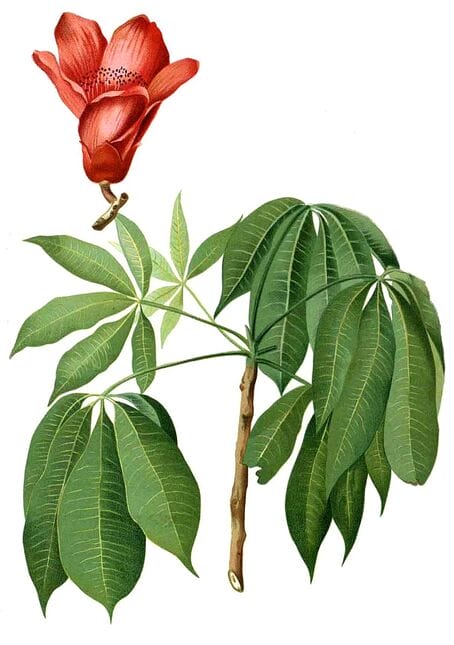
Bombax ceiba
Blanco, Flora de Filipinas. (1875)
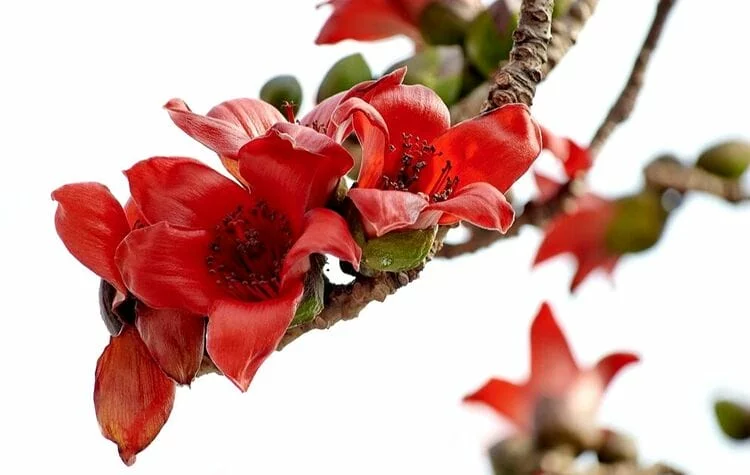
Fresh flower of Salmalia malabarica
(Photo by Tlong Zhuhai, edited) (Wikimedia)
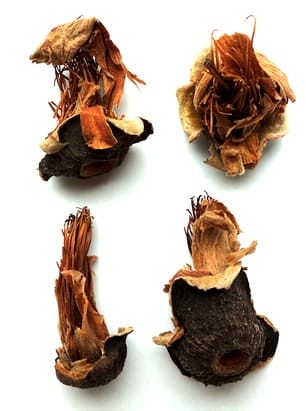
Dried Flower of Salmalia (Adam, 2017)
Botanical name:
Salmalia malabarica (syn. Bombax ceiba, B. malabaricum, Gossampinus malabarica)
The Three Ge sar (flowers) in Tibetan Medicine:
Multiple sources state that Na ga ge sar is derived from Mesua ferrea, and yet other sources state that Na ga ge sar is from Bombax ceiba (syn. Salmalia malabarica). Several sources have also stated that the three Ge sar (flowers) of Tibetan medicine are complex, and vary according to source. The fact that the Sanskrit Nagakesara appears to be the root of Na ge ge sar in Tibetan Medicine, it would appear that at least for some sources, Mesua ferrea was intended.
The Tibetan text Shel Phreng says all three Ge sar come from Bombax ceiba and states “… past scholars have described the three ge sars [flowers] as:
- outer Pad ma ge sar
- inner Na ga ge sar
- middle Utpal ge sar“
Likewise, according to Encyclopaedia of Myriad Herbs (Norbu):
- Na ga ge sar: stamens of the flower of Bombax ceiba (
- Padma ge sar: petals of Bombax ceiba
- Utpal ge sar: calyx of Bombax ceiba
According to Sde srid rin po che:
- Na ga puspa: unopened flower buds of Bombax ceiba
- Na ga ge sar: internal; stamens of Bombax ceiba resembling horse’s tail
- Padma ge sar: outer red petals of Bombax ceiba
Some sources have suggested one flower is Bombax ceiba, one is Mesua ferrea, and the third is Lotus pistil.
Parts used:
Root, Bark, Fruit, Flower, Bark
Temperature & Taste:
Cool, dry
Uses:
FLOWER
1. Clears Heat, Stops Bleeding: (Ayurveda, TCM, Unani)
-Hemoptysis (TCM)
-Metrorrhagia, Flooding
-Wounds, Internal Bleeding
2. Clears Heat and Damp: (Ayurveda, TCM, Tibet)
-Diarrhea, Dysentery
-Rectal Prolapse; Leukorrhea,
-all Hot disorders of the Lungs, Heart, Liver, Bile disorders (Tibet)
3. Clears Heat, Resists Poison: (Ayurveda, TCM)
-Toxic Sores, Skin Rashes, Eczema
-applied to skin conditions
LEAF:
-clears Heat and Inflammation
FRUIT
-chronic inflammations of the Kidneys and Bladder
-Kidney stones
STEM BARK:
-Clears Heat, Stops Bleeding; Heat-type bleeding, Dysentery with Blood
-Burning feeling
-Ulcers
-promotes urine
-paste is applied to skin conditions: acne, boils, eruptions
SEED:
-Chicken Pox, Small Pox
-chronic Cystitis and Heat diseases of the Urinary system
-Stops Bleeding (Unani)
GUM:
-Stops Leakage: Spermatorrhea, Premature Ejaculation, Diarrhea, Dysentery
-Stops Bleeding: Hemoptysis, Bleeding Piles, Uterine Bleeding, Menorrhagia
-in tooth powders to strengthen the gums
-Often used as a single medicine for these complaints
ROOT:
-increases Qi: low vitality, debility
-aphrodisiac (with cow milk) (Ayurveda, Unani).
Flowers:
Caraway flowers (Tibetans in Buryat)
Dose:
Gum in Powder: 3–5 grams
Stem Bark Powder: 5–10 grams in powder;
Flower or Root-bark in Powder: 3–5 grams
Correctives:
Gum: Cinnamon
Substitutes:
Gum:
1. Catechu; Gum Arabic
2. Gum of Eriodendron anfractosum or Bombax pentandrum
3. The leaf can be used for the gum (Siddha)
Flower:
1. Flower of Sapria himalayana is used for Na ga ge sar (in Bhutan)
Main Combinations:
1. Diarrhea:
i. Salmalia Gum, with Licorice (Ayurveda; Charaka, Sushruta)
ii. Salmalia Gum, Woodfordia, root of Mimosa, filaments of Lotus, Rice
2. Dysentery, Salmalia gum, Bael fruit, Mango stem, Opium
3. Hemorrhage from Heat, Salmalia Gum, with White Sandalwood. (Ayurveda, Charaka)
4. Seminal Debility, Premature Ejaculation, Salmalia Gum with Poppy seed, Asparagus root, Mastic (Unani)
Major Formulas:
Pushyanuga Churna (Ayurveda)
Aloeswood 8 (Tibetan)
Aloeswood 31 (Tibetan)
Aloeswood 35 (Tibetan)
Chebula 7 (A ru bdun pa) (Tibetan)
Eleven Holders of Life (Srog dzin dcu gcig) (Tibetan)
Life Holding Jewel (Srog ‘dzin nor bu) (Tibetan)
Cautions:
1. None noted
2. Excessive use of the Gum is said to induce a contraceptive effect.
Main Preparations used:
Click the above Tabs for more information on this medicine
You must be logged in to view this content, please login. If you're not a member then Click this link to subscribe