Prunus domestica, Plumtree, Prune
Aalu Bukhara (Unani)
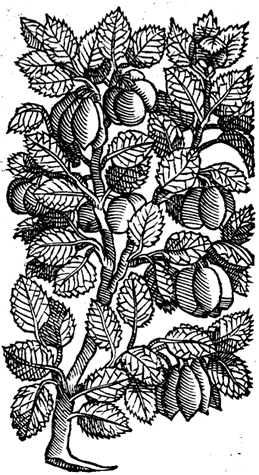
P. domestica
Dioscorides Materia Medica, Mathias, 1563
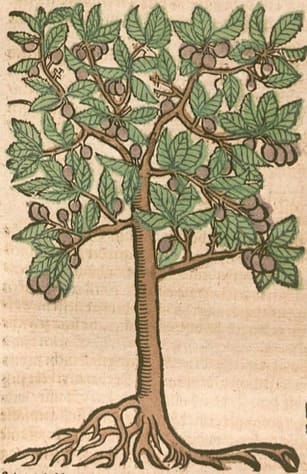
P. sylvestris
Krauterbuch, Lonitzer, 1578
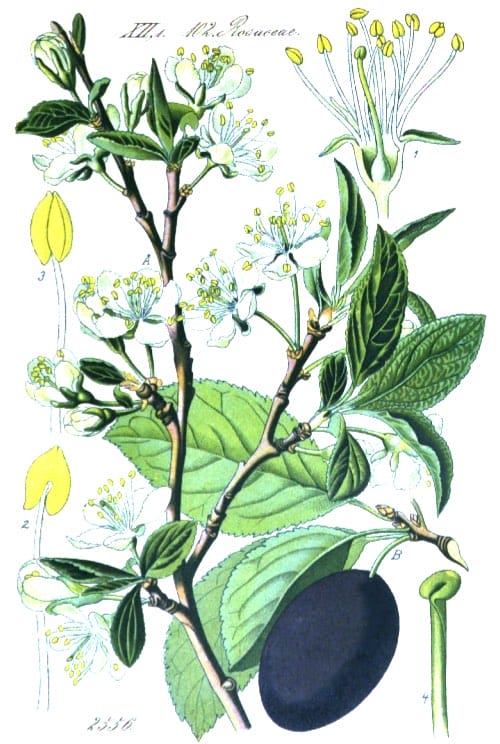
Flora von Deutschland (25), Kohler, 1886
Botanical name:
Prunus domestica
Many types of Plums were used: Garden or Wild (Sloes); great, small, long, round, white, red, yellow, purple, black; sweet or sour Damascens (with a long kernel) were regarded as best
Parts used:
Fruit; Dried fruit is Prune
Temperature & Taste:
Cool, moist. Sweet, Sour
Classifications:
2F. PURIFYING 2G. CLEANSING
3B. FEBRIFUGE & ANTIPYRETIC
4e. STOMACHIC
E. Laxative, Purgatives and Cathartics
Preparers and Purgers of Bile
Preparers and Purgers of Melancholy
TCM:
B. Clear Heat
Uses:
1. Clears Heat, Opens the Bowels:
-good to clear Heat and open the Bowels in Fever and Heat disease
-allay sharp Humors (Damascens are best)
-‘They cool excellently in Fevers’. (especially Prunellaes)
-Steep in water and the water drunk, they quench Thirst
Dose:
3–5 fruits as a normal dose; 7 taken at night work as a laxative; 10–15 act as a purgative
Comment:
Various types of Prunes were known and applied to different disorders. Damask Prunes (Damascens) from Syria were generally most used and were regarded as best. The Prunellaes are most cooling, best to clear Heat, but don’t open the Bowels.
Correctives:
1. Jujube
2. Mastic
3. Rose
Substitutes:
Tamarind
Main Combinations:
1. To clear Heat and open the belly,
i. Prune with Tamarind pulp and Cassia Fistula
ii. Prune, Senna, Fennel seed
iii. Prunes, Licorice, Currant, Aniseed, Fennel seed, Borage (as in Common Decoction)
iv. Figs with Tamarind, Cinnamon, Senna, Prune, Coriander seed, Licorice
2. To clear Heat in Fevers, Prune, Tamarind pulp, Sandalwood, Rhubarb, Violet, Purslane, Barberry, Tragacanth (as in Diaprunis)
3. To purge Bile:
i. Prune, Tamarind, Raisin, Barley, Violet (as in Decoction to Cool)
ii. Prune, Chicory, Agrimony, Borage, Violet, Tamarind, Licorice (as in Decoction to Expel Bile of Andernacus)
iii. Purge Bile and Phlegm, Prune, Yellow Myrobalan, Chebulic Myrobalan, Black Myrobalan, Tamarind, Fumitory, Wormwood (as in Decoction of Myrobalan of Mesue)
4. To purge Melancholy, Prune, Senna, Polypody, Borage (as in Decoction of Senna)
5. Heart Fire with Insomnia and Palpitations, Prune, Raisin, Jujube, Borage flower, Violet flower, Balm, Maidenhair, Basil seed, Licorice (as in Cordial Decoction of Florentini)
Major Formulas:
Common Decoction
Decoction of Fruit
Decoction of Fruit and Flowers
Decoction of Myrobalan (Mesue)
Decoction to Cool
Cordial Decoction (Florentini)
Decoction of Senna
Decoction to Expel Bile (Andernacus)
Syrup of Dodder of Thyme (Mesue)
Electuary of Prunes (Diaprunis lenitiva) (Nicholas)
Arabian Confect Purging Melancholy (Confectio Hamech) (Mesue)
Triphera Persica (Mesue)
1. Confection of Senna:
i. Senna leaf in powder (4 oz.), Pulp of Prunes (1 lb.), Pulp of Tamarinds (2 oz.), Molasses (1 ½ pints), Essential oil of Caraway (2 drams). (Dublin Pharmacopoeia)
ii. Pulp of Prunes (1 ½ oz.), Senna powder, Cream of Tartar (1 ½ drams each), Simple Syrup (sufficient). (Niemann)
iii. Prune pulp, Tamarind pulp (1 oz. each), Senna powder (2 drams), Fennel powder (½ oz.)
iv. Prune pulp (1 lb.), Cassia pulp, Tamarind pulp (2 ½ oz.), Senna powder (4 oz.), Coriander powder (½ oz.), Simple Syrup (1 pound). (Pharmacopoeia Amstelodamensis, 1792)
v. Figs (6 oz.), Licorice root (2 oz.), Water (4 pounds); boil to half, press and add White Sugar (16 oz.). Boil to a syrup and add: Tamarind pulp, Prune pulp (5 oz. each), Powdered Senna leaf (4 ½ oz.), Aniseed powder (½ oz.). (Pharmacopoeia Oldenburgica, 1801)
Cautions:
1. Not suitable for those with Cold and weak digestion.
-‘The fresh and crude loosen the Belly, but they easily putrify, and therefore are not to be eaten much, especially after meat’. (Schroder)
Main Preparations used:
Preserved Plums, Pulp of Plums, Electuary Diaprunus, Diaprunum compound
1. Pulp of Prunes:
i. Take Prunes, soften in hot water; pour off the liquor, remove the stones and force the pulp through a sieve, pressing it with a wooden spoon. (Dispensarium Lippiacum, 1792)
You must be logged in to view this content, please login. If you're not a member then Click this link to subscribe