Polygala Senega
Senega Snake root


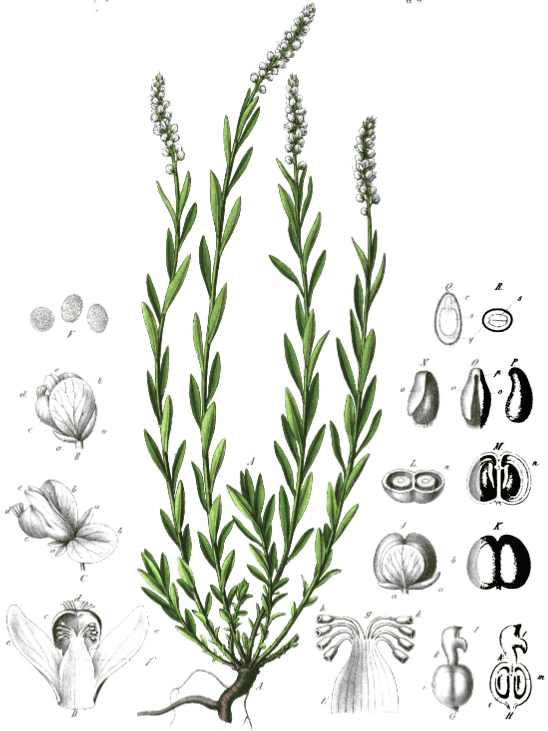
Polygala senega
Darstellung und Beschreibung sammtliche, Berg, 1858
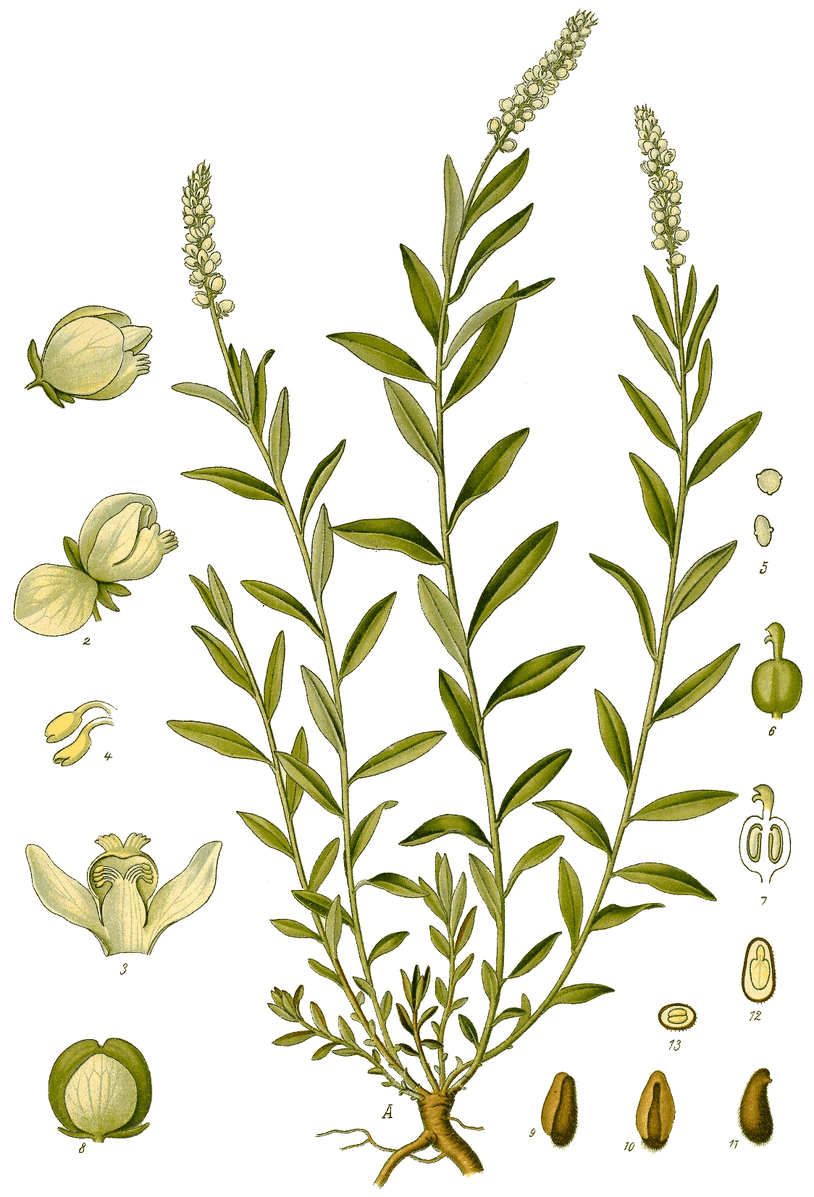
Medizinal Pflanzen, Kohler, 1883
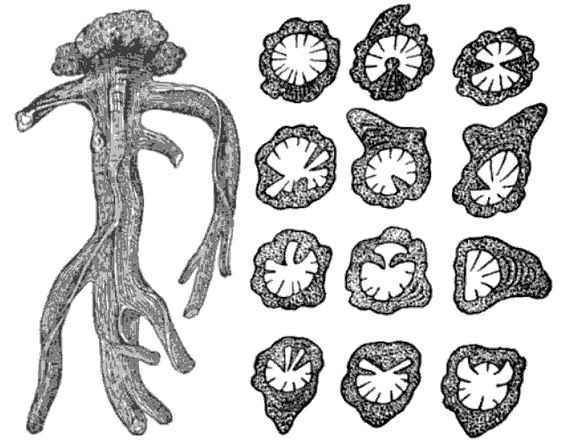
Whole Senega root and cross-sections of the root.
(Notes on Pharmacognosy, Otto Augustus Wall, 1902)
Botanical name:
Polygala senega
TCM uses P. tenuifolia and P. sibirica; see Polygala Yuan Zhi
Parts used:
Root
Temperature & Taste:
Warm, dry. Bitter, Pungent.
Uses:
1. Clears Phlegm, Stops Cough:
-Cough, Wheezing with copious sputum that is hard to clear
-chronic Bronchitis, Bronchial Asthma
-Croup, Whooping Cough
-Emphysema with moist, labored breathing
2. Moves Qi, Opens Obstructions:
-promotes Menstruation; Amenorrhea, Dysmenorrhea
-obstructions of the abdominal organs
3. Clears Damp, Promotes Urine:
-Edema, Water retention from Damp
-as an aid in Rheumatism
4. Resists Poison:
-Fever
-Small Pox, Typhoid, Syphilis
-Snake Bite
5. Emetic and Purgative:
-full doses are emetic and purgative
Dose:
Powder: half–1 or 2 grams (traditionally 10 grains–half Dram); 1 gram or 15 grains is a common dose.
Tincture (1:5): 2–5 mls; Tincture (1:6 with proof spirit): 15–30 drops, three or more times daily.
Fluid Extract (1:1): 1–3 grams
Comment::
The Chinese and Western species of Polygala appear quite similar in composition and appearance.
Substitute:
The Chinese Senega (Yuan Zhi) has reportedly been used as a Substitute for American Senega.
Main Combinations:
1. Cough with excess phlegm:
i. Senega with Almond and Licorice
ii. Senega with Squill
iii. Senega with Coltsfoot
iv. irritating Cough, Senega with Licorice
v. with thick, hard-to-clear mucus, Senega with Gum Ammoniac and Licorice
2. To Open obstructions:
i. Senega with Potassium nitrate
ii. Senega with Gum Tragacanth
3. to promote Menstruation, Senega with Orange peel
Cautions:
COMMISSION E decided the root was not safe for oral administration.
If used internally, avoid overdose, and don’t use for more than 2–3 weeks without break.
1, Warm and drying, so not suitable for use in Yin deficiency
2. Not used during Pregnancy
3. It can irritate the gastric mucosa. Not used in Peptic ulcers or Gastritis.
4. Large doses are emetic and cause diarrhea and gastritis.
Main Preparations used:
Click the above Tabs for more information on this medicine
You must be logged in to view this content, please login. If you're not a member then Click this link to subscribe