Physochlaina infundibularis, Hua Shan Shen 华山参
Hua Shan Shen, Lou Dou Pao Nang Cao (TCM)
Thang phrom (Tibetan, one type of)


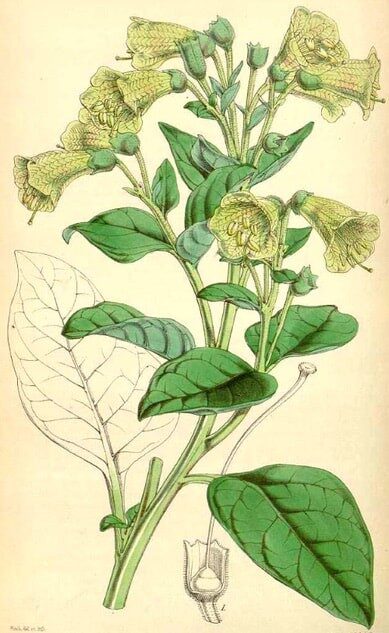
Physochlaina orientalis
Curtis’s Botanical Magazine, 1823
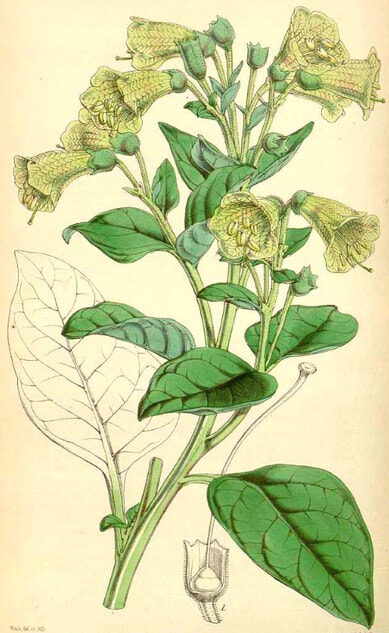
Physochlaina praealta
Curtis’s Botanical Magazine, 1851
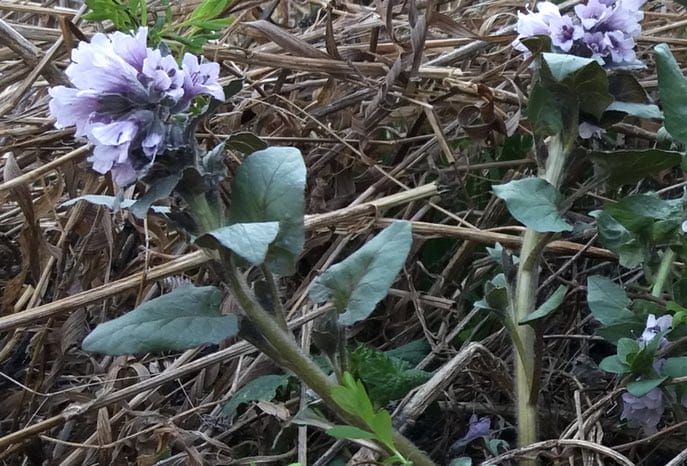
Physochlaina physoloides
(Photo by Nina Filippova, edited) (Wikimedia)
Botanical name:
Physochlaina spp.
- P. infundibularis (China);
- P. physoloides (syn. P. dahurica, P. lanosa, Hyoscyamus physaloides) (Mongolia)
- Physochlaina praealta is used similarly in India
Physochlaina physaloides is used in some parts as a source of the Tibetan Mediicne Thang phrom, of which there are a number of varieties and which includes Datura and Henbane.
Parts used:
Root
Temperature & Taste:
Cool, dry. Bitter. Toxic
Uses:
1. Stops Cough and Wheezing:
-Cough, Wheezing, Asthma
2. Calms the Mind, Eases Pain:
-Palpitations, Insomnia (Chinese Pharmacopoeia)
-Sexual dysfunction related to nervousness or stress
-used as a narcotic to ease pain
3. Clears Heat and Poison:
-Anthrax, Encephalitis (Mongolian Medicine)
-Tumors
Dose:
100–200mg
Comment:
Contains atropine and hyoscyamine
Substitute:
1. Henbane
2. Datura (Russian sources give Physochlaina physaliodes as a substitute for Thang phrom, usually equated with Datura)
Main Combinations:
1. Cough, Physochlaina with Licorice
Cautions:
1. Toxic in overdose. Overdose may cause intoxication due to hyoscyamine content.
2. Contraindicated in Glaucoma
3. Not used in Pregnancy
4. Not used in patients with marked Prostatomegaly.
Main Preparations used:
Click the above Tabs for more information on this medicine
You must be logged in to view this content, please login. If you're not a member then Click this link to subscribe