Petasites, Butterbur
Petasites, Butterbur Tussilago major

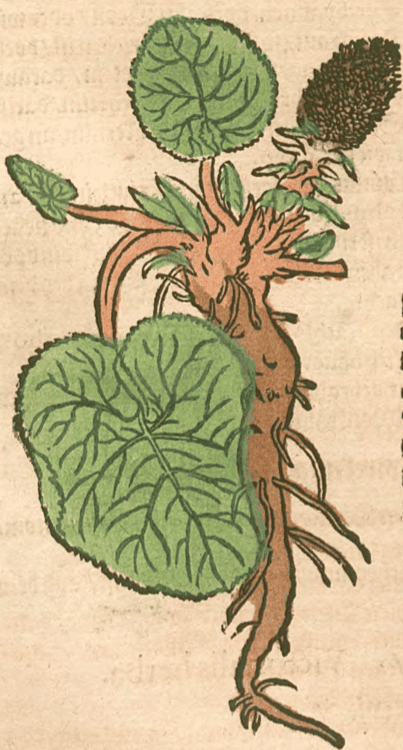
Krauterbuch, Lonitzer, 1578
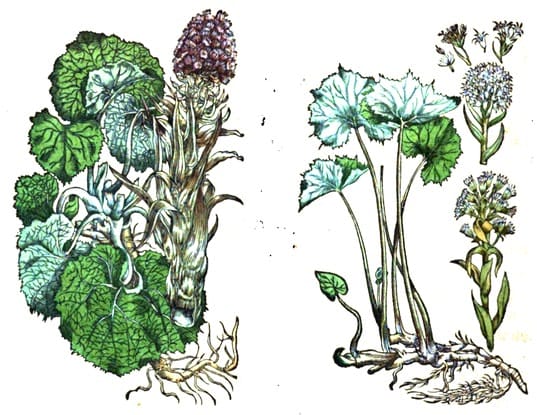
Left: Petasites; Right: White-flowered Petasites
Kreutterbuch, Matthiolus, 1586
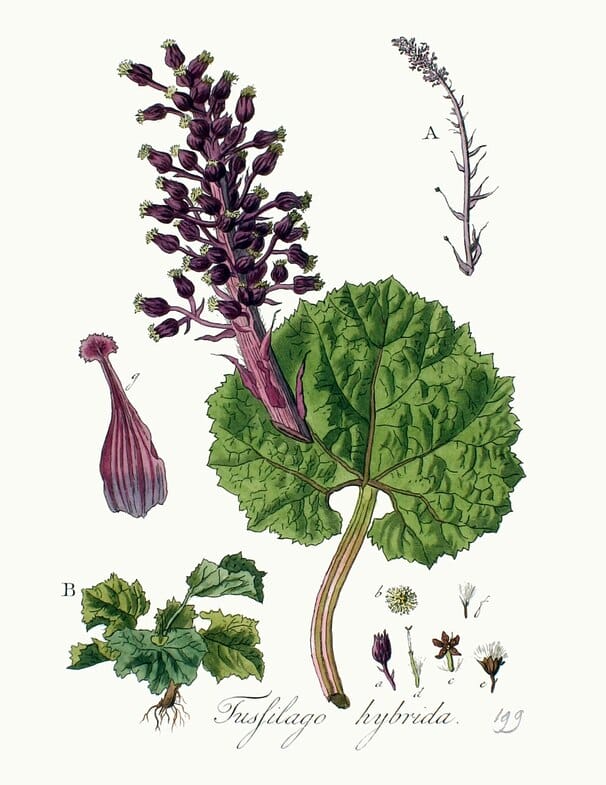
Flora Batava, Kops, 1812 (Wikimedia)
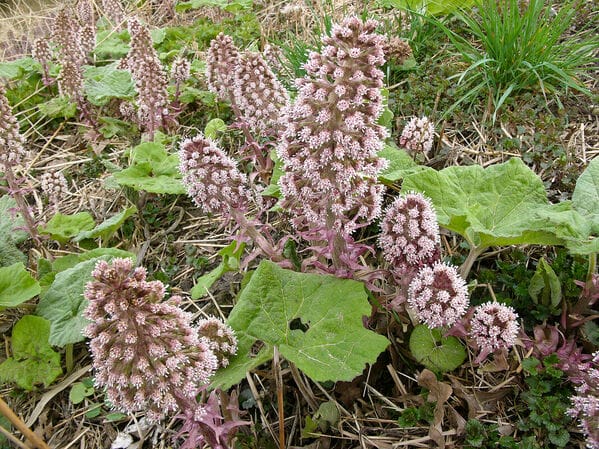
Petasites hybridus
(Photo by Hannes Grobe) (Wikimedia)
Botanical name:
Petasites hybridus (syn. Petasites vulgaris, Cineraria hybrida, Tussilago hybrida, T. petasites)
Parts used:
Root
Temperature & Taste:
Warm, dry. Bitter
attenuates, opens, cleanses
Classifications:
3A. SUDORIFICS & DIAPHORETICS. 3D. CORDIALS & CARDIACS
4c. CARDIAC
Uses:
1. Clears Wind-Cold, Resists Poison:
-Alexipharmic, Sudorific,
-Plague, Pestilential Fevers
-all Poison and Venom, such as the bitings of Rabid Dogs etc.
2. Moves Blood, Regulates Qi, Calms the Mind:
-promotes Menstruation (Lonicerus)
-suffocation of the Uterus, ‘Faintings from the Mother [Uterus]’ (Schroder)
-Cephalic; used for Fainting
-benefits the Heart
3. Clears Phlegm, Stops Cough and Wheezing:
-clears thick Phlegm, good for Cough, Asthma
-used similarly to Coltsfoot in these respects.
4. Kills Worms (Lonicerus)
5. Externally:
-Plague Buboes and Malignant Ulcers
-used to cleanse the skin
Dose:
Usually, dosage should begin small, and be increased as needed.
ROOT in POWDER: 300mg–3 grams, taken in wine against poison;
ROOT DECOCTION: 3–9 grams (to 15 grams); occasionally, up to 1 oz. was used in decoction to clear poison (this being taken in 2–3 doses over the day);
ROOT in TINCTURE (1:10): ½–4 mls. Some recommend adding 1 drop of the Tincture to a glass of water to be taken throughout the day as a starting dose, this being repeated for the first week. Then one or two drops can be added every second day until a moderate to strong dose is being given. This method of administering is especially good for toxic conditions, tumors, and cancer, as well as those with chronic Lung disease.
LEAF in INFUSION: 1–3 grams per cup of water;
Comment:
Although Butterbur is used for some similar respiratory diseases to its close relative Coltsfoot, they work in quite different ways. Coltsfoot is more of a mucilaginous antitussive which soothes the membranes to stop Coughs, while the action of Butterbur is more strongly Spasmolytic, thereby stopping spasm of the smooth muscles of the airways, associated with both Coughing and Wheezing. The two may be combined for spasmodic coughs, but the combined pyrrolizidine content means that half to two-thirds of a normal dose of each should be used.
Substitute:
‘it has the vertues of Costus, and may be used instead thereof’ (Salmon). This suggests Costus could be used.
Main Combinations
1. Asthma, with Elecampane, Licorice and Coltsfoot
2. Fevers and Epidemic diseases, with Angelica, Zedoary, Rue, Balm, Calendula
Major Formulas:
Anti-Asthmatic Syrup (D’Aquin)
Cautions:
1. Avoid overdose or long-term use. Contains Pyrrolizidine alkaloids.
Main Preparations used:
Distilled Water, Distilled Oil (seldom), and an Extract
Click the above Tabs for more information on this medicine
You must be logged in to view this content, please login. If you're not a member then Click this link to subscribe