Myricaria, ‘Om bu
Myricaria, ‘Om bu འོམ་བུ
False Tamarisk
‘Om bu (Tibetan)
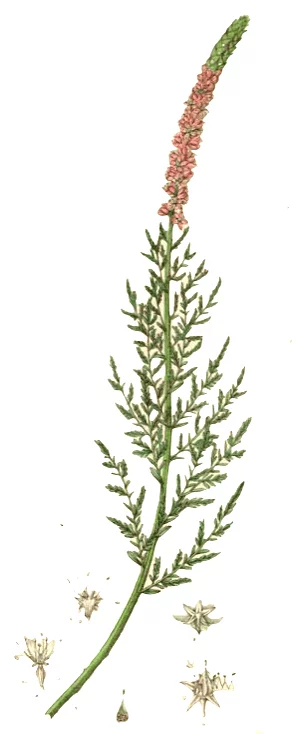
Myricaria bracteata
J.F. Royle, Illustrations of the botany and other branches of the natural
history of the Himalayan Mountains and of the flora of Cashmere, vol. 2 (1839)
Botanical name:
Myricaria spp.
Several species are used:
1. M. bracteata
2. M. squamosa
3. M. elegans (syn. M. hoffmeisteri)
4. M. longifolia (syn. M. linearifolia, Tamarix germanica, T. decandra, T. longifolia)
Other species have been listed including M. germanica, M. prostrata, M. dahurica
Parts used:
Shoot, aerial parts
Temperature & Taste:
Cold, dry. Bitter, Sour, Sweet
Uses:
1. Clears Heat, Resists Poison:
-Fever
-various types of Poisoning including Meat (Food) Poisoning
-Acne, Pimples, especially those that don’t ripen
-applied topically to Sores and Pimples
2. Clears Heat and Damp:
-Bile diseases
-dries serous humors
-accumulation of fluid in the Joints
3. Clears Heat, Stops Cough:
-Heat type Cough with yellow phlegm
Dose:
Comment:
The leaves are also used in religious rituals.
Substitute:
Meadowsweet is used by Tibetans in Buryat region for Om bu.
Main Combinations:
1. To clear Poison and detoxify the Liver, Myricaria, Inula racemosa, Tinospora, Rubus spp.
2. Damp affecting the Spleen, Myricaria with Amomum and Costus
Major Formulas:
Amomum 19 (Ko la 19) (Tibetan Medicine)
Great Decoction 25 (Thang Chen Nyer Inga) (Tibetan Medicine)
Rinchen Danjor (Precious Pill)
Cautions:
None noted
Main Preparations used:
Click the above Tabs for more information on this medicine
You must be logged in to view this content, please login. If you're not a member then Click this link to subscribe