Malva, Mallow
Khubbazi (Unani)
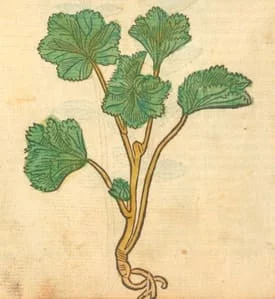
Gart der Gesundheit, Cuba, 1485
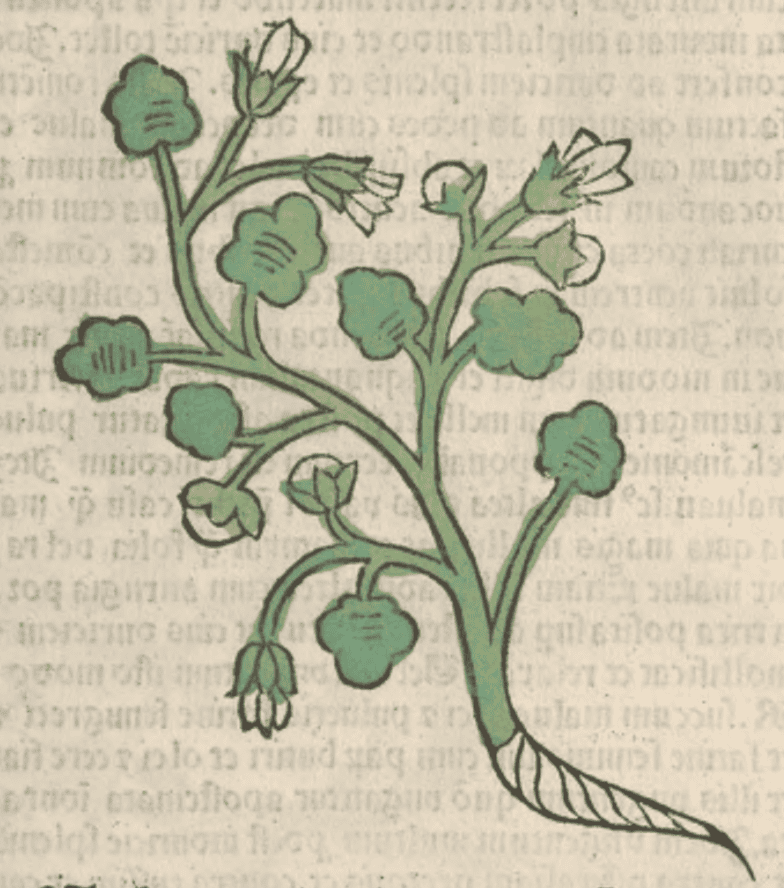
Herbarius latinus, Petri, 1485
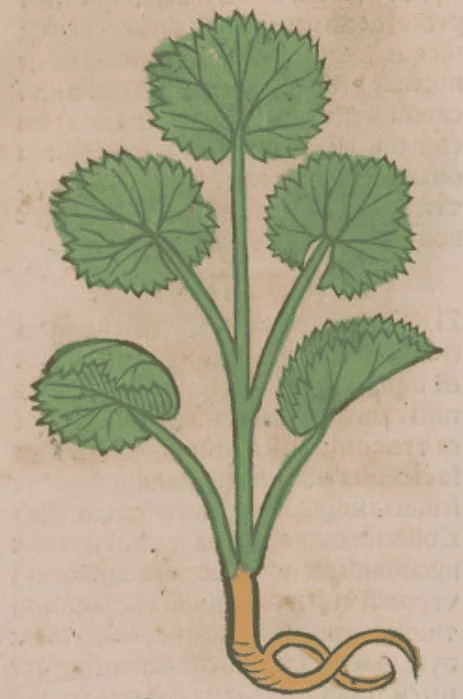
Ortus Sanitatis, Meydenbach, 1491
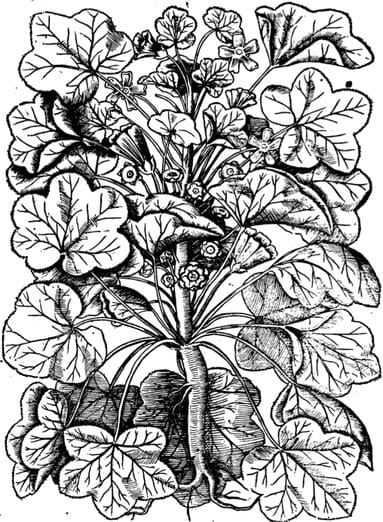
New Kreuterbuch, Matthiolus, 1563
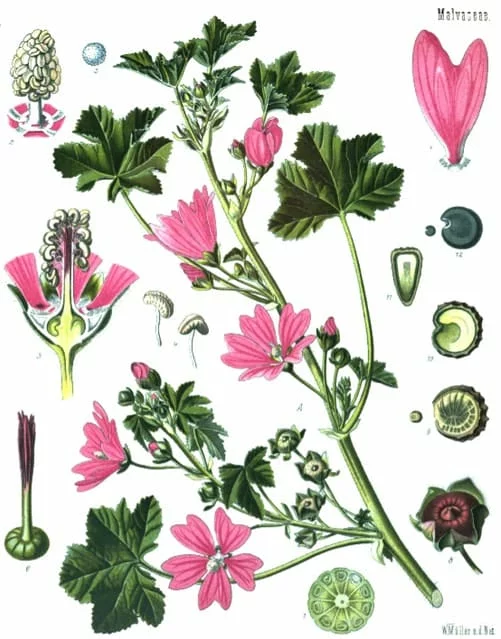
Malva sylvestris
Koehler’s Medizinal Pflanzen, 1887
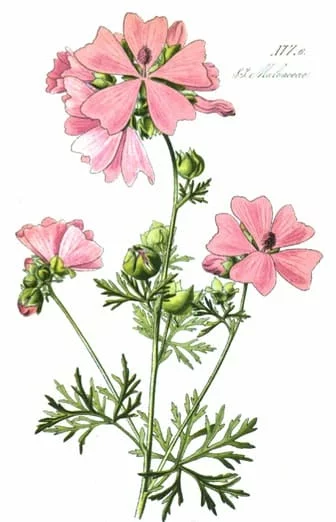
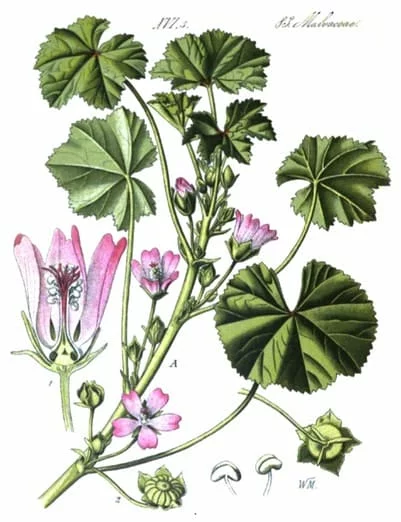
Left: Musk Mallow Right: Low Mallow
Flora von Deutschland (21), Kohler, 1885
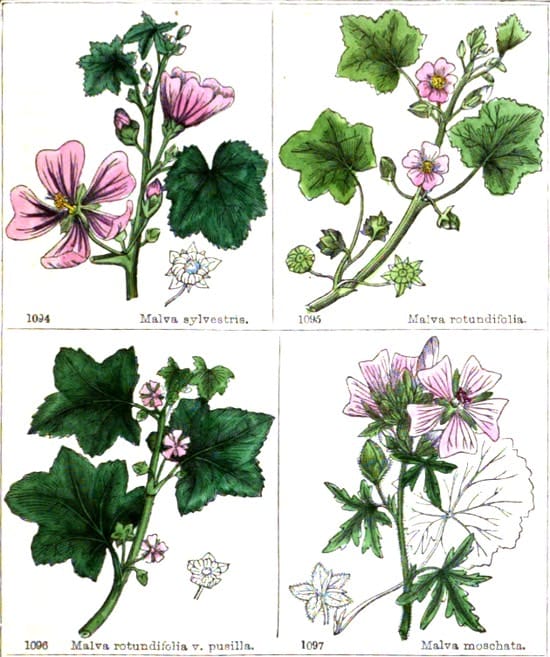
1. Malva sylvestris; 2 M. rotundifolia
3. M. rotundifolia var. pusilla; 4. M. moschata
Florigraphia Britannica, Deakin, 1857
Botanical name:
Malva sylvestris (syn. M. vulgaris)
A number of related Malva species are used similarly:
- Musk Mallow (M. verticillata syn. M. moschata, M. pulchella) is used the same, but is weaker
- M. neglecta (Dwarf Mallow) is also used, and is said to be stronger.
- M. rotundifolia (Low Mallow)
The seed of M. verticillata (Musk Mallow) is used in TCM and Tibetan Medicine.
Parts used:
Leaf, flower,, Root
See also Mallow Seed
Temperature & Taste:
Cool, moist. Sweet. Leaf is Warmer, Seed is more Moist.
“The Seed and Root have the same vertues”. (Schroder)
“The root is more effective than the green leaves when dry.” (Dorsetn, 1540)
Classifications:
2A APERIENT. 2E LENITIVE. 2J. RAREFYING. 2L. EMOLLIENT. 2Q. ANODYNE. 2T. GLUTINATE. 2U. SUPPURATIVE
3H. LACTAGOGUE. 3K. EXPECTORANT. 3L. ANTI-TUSSIVE. 3M. ARTHRITICS.
4d. PECTORAL. 4f. SPLENETIC. 4h. NEPHRITIC
Preparers and Purgers of Bile
TCM:
C. Clear Damp, Promote Urine
Uses:
1. Clears Heat, Soothes the Stomach and Bowels:
-gnawing pain, Ulcers and corrosion of the Stomach and Bowels
-Loosens the Belly, benefits the Bowels, good for corrosion of them, eases Pain
-seed is used for Constipation from dryness of the Bowels
2. Clears Heat, Moistens the Lungs, Stops Cough:
-benefits the Lungs
-Cough, Bronchitis, Hoarseness, Consumption
3. Clears Heat, Promotes Urine:
-corrects sharp or burning Urine (Mallow seed is also used for this purposes)
-eases corrosion or Ulcers of the Bladder
4. Moves the Blood, Resolves Masses:
-Softens hard Tumors internally and externally
-Good for the Uterus; hardness and obstruction of the Uterus
-‘good for a pregnant woman to ensure an easy delivery’. (Su Song, Musk mallow herb)
-ashes taken stop bleeding from a wound. (Zhen Quan)
5. Resists Poison:
-Poisons
-stinging of Scorpions, Bees and Wasps (Dioscorides)
-also to heal Wounds
-“The decoction of its root helps against all Poisons”. (Dorsetn, 1540)
-“This herb is effective against all stinging Bites, especially from Scorpions, Wasps, Bees, Mice, and Spiders”. (Dorsetn, 1540)
-good for the negative effects of taking mineral and stone drugs (Meng Xian)
6. Promotes Breast Milk:
-used to increase Milk
7. Externally:
-for Scald Head, Abscesses, Eczema, dry or rough skin conditions
-boiled with Urine to a lixivium to ripen Tumors, eases Pain
-topically to hard Tumors, red and hot swellings and inflammations
-often in enemas
-eases pain of Stones (in Enemas);
-decoction of the root is used for Dandruff
-applied to Gout and hot joint pains (poultice, oil)
-“Malva leaves are effective against hot and hard abscesses, crushed and applied”. (Dorsetn, 1540)
-“The flowers, boiled in honey water or wine, and then crushed, heal hard tubercles, such as ulcers and scrofulas (struma)”.
-“Fresh leaves of Malva, decocted and applied to wounds, heal them”. (Dorsetn, 1540)
-“The seed, tempered with wine and olive oil, drives away all blemishes of the face, when anointed”. (Dorsetn, 1540)
-“Malva, decocted with human urine, cures oozing head ulcers and dandruff, if the head is washed with it”. (Dorsetn, 1540)
-“decoction is also beneficial for erosions of the bladder, and of the intestines, of the vulva, of the rectum, used as an enema”. (Dorsetn, 1540)
Dose:
Herb or Root in Decoction: 3–9 grams
Seed in Decoction: 9–15 grams
Herb or Root in Powder: 2–4 grams
Flower is used in Conserves. In a tea, a teaspoonful can be used
Comment:
1. Mallow is one of the Five Emollient Herbs
2. Mallow herb and seed are used similarly
3. “It is said that a person will be free from all diseases if he drinks the juice of Mallow every day”. (Dorsetn, 1540)
Correctives:
1. Honey;
2. Fennel seed
3. Garlic (Li Shi Zhen), when eaten as a food)
Substitutes:
1. Various Malva species can be used similarly.
2. Marshmallow
Main Combinations:
Combined with the Emollient herbs Marshmallow, Beet, Mercury, Pellitory of the Wall, and Violet leaf. This combination is useful in any case that needs cooling, soothing and softening.
1. Cough:
i. “For coughs, boiled in milk and taken as a gargle, it improves in five days”. (Dorsetn, 1540)
ii. Mallow flower, Ribwort Plantain, Balm, Raspberry
iii. Mallow flower, Amaranth flower, Coltsfoot flower, Red Poppy flower (equal parts) (Pharmacopoeia Gallica, 1818)
2. Constipation, Mallow leaf or seed with Agrimony
3. Heat of the Urine, combine Mallow, Marshmallow and Parsley
4. Bladder Abscess, Mallow, Marshmallow, Purslane seed, 4 Cold Seeds (as in Powder for Bladder Abscess of Alexander Benedictus)
4. Water retention, Edema, Mallow seed with Tribulus seed (Tibetan Medicine)
6. “Mallow, boiled with Fennel and drunk, brings an abundance of milk to women”. (Dorsetn, 1540)
7. Enemas:
i. Mallow leaf, Camomile, Fennel
ii. Mallow leaf, Violet, Camomile, Fennel seed, Linseed, Fenugreek
8. Fomentation for Hemorrhoids: Mallow, Mullein (equal parts) (Memorial Pharmaceutique, 1824)
9. Fomentation for Pleurisy, boil Wild Mallow leaf in oil, then put them in linen cloth and apply warm to the part. (The Secrets of Alexis, 1615)
10. Abscesses:
i. “The herb boiled with the root, slowly to consumption of the water, will appear a certain viscosity: which when placed on top ripens the abscess, relaxes the hardness and softens it”. (Dorsetn, 1540)
ii. “The water in which Malva has been boiled, with the addition of wax and oil, is the best ointment for anointing abscesses”. (Dorsetn, 1540)
11. Scrofula: “Mallow, crushed with Sage, and applied daily, heals scrofulas (strumas), parotid glands, and phlegmons”. (Dorsetn, 1540)
Major Formulas
Infusion of Seven Flowers
Decoction to Cool the Blood (Wirtzung)
Syrup of Marshmallow (Fernel)
Powder for Bladder Abscess of Alexander Benedictus
1. Emollient Powder:
i. Mallow leaf (12 parts), Camomile (6 parts), Linseed (3 parts). (Dispensatorium Fuldense, 1791)
2. Decoction of Mallow:
i. dried Mallow leaf (1 oz.), Camomile flowers (half oz.), Water (1 pint). Boil for 15 minutes, strain. Used in fomentations and enemas.
Cautions:
Generally Safe.
Main Preparations used:
Distilled Water of the Leaves, less commonly a Conserve of the Flowers
1. Conserve of Mallow flower:
i. Mallow flower (1 part), White Sugar (2 parts). Beat to a paste. (Pharmacopoeia Herbipolitania, 1796)
2. Distilled Water of Mallow:
i. Fresh Mallow (1 part), Water (2 parts). Distil two-thirds. (Pharmacopoeia Sardoa, 1773)
3. Ointment of Mallow:
i. fresh mallow (1 ½ lbs.), Butter (2 lbs.). Boil slowly to the consumption of the humidity. (Pharmacopee Usuelle, Louvain, 1821)
4. Mallow Oil
The Juice of Mallows is boiled in Oil. This is used as a local application to skin roughness, dandruff, scabs of the head; also for scalds and burns and other hot, red, and painful swellings. It can also be used as a hair oil to prevent the hair from falling out. (Culpeper)
Click the above Tabs for more information on this medicine
-“Pliny saith, that whosoever take a spoonful of any of the Mallows, shall that day be free from all diseases that may come unto him; and that it is specially good for the Falling Sickness”. (Culpeper)
-From the School of Salerno (taken from the English version by Sir John Harington):
In Physic Mallows have much reputation,
The very name of Mallows seems to found,
The root thereof will give a kind purgation,
By them both men and women good have found,
To womens monthly flowers they give laxation,
They make men soluble that have been bound.
And lest we seem in Mallows praises partial,
Long since hath Horace praised them and Martial.
You must be logged in to view this content, please login. If you're not a member then Click this link to subscribe