Linum, Linseed
Flaxseed
Tukhm e Katan (Unani)
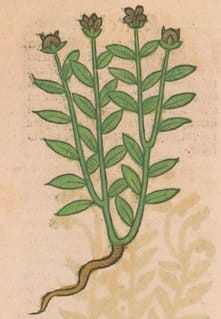
Ortus Sanitatis, Meydenbach, 1491
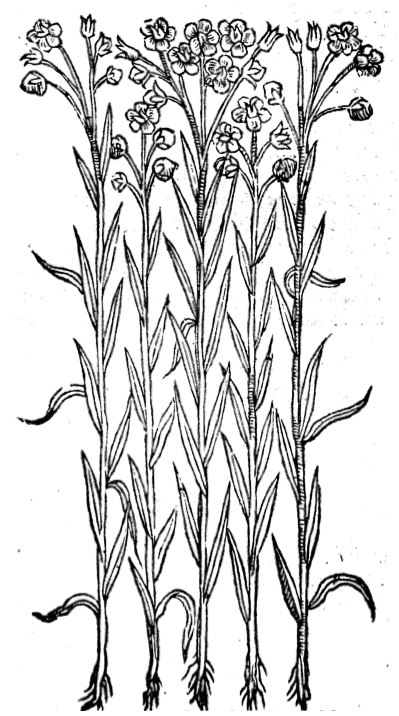
Della Materia Medicinale, Andrea Valuassori, 1562

Herbarum Vivae Eicones, Otto Brunfels, 1530
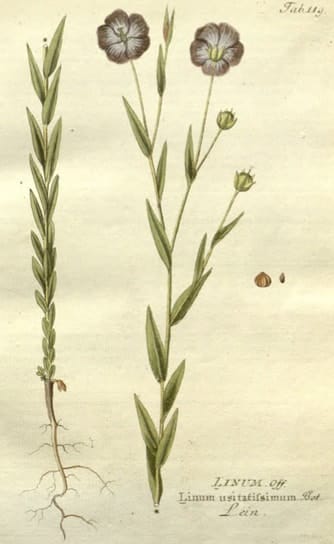
Icones Plantarum Medcio-oeconomico, Vietz, 1804
Botanical name:
Linium usitatissimum
Parts used:
Seed; expressed Oil
Temperature & Taste:
Neutral (slightly Warm). Pungent
“It is Hot in the First degree and moderate in Moistness and Dryness. Some people state that decoction of Linseed is Moist and possesses superfluous humidity”. (Avicenna)
Classifications:
2B ATTENUATERS. 2F. PURIFYING. 2G. CLEANSING. 2J. RAREFYING. 2K. RESOLVENT. 2L. EMOLLIENT
3J. INCREASE SEMEN. 3L. ANTI-TUSSIVE
4d. PECTORAL. 4g. HEPATIC
Laxative, Purgatives and Cathartics
Uses:
1. Nourishes Yin, Clears Phlegm and Heat, Stops Coughs:
-“of great service in diseases of the Lungs, as Pleurisy, Peri-pneumonia, Coughs, Asthma and Consumption”. (Culpeper)
-“It draweth forth of the chest corrupted Phlegm and other slimy humours”.
-“The seeds, particularly when parched, are useful in Phlegmatic Cough”. (Avicenna)
-decoction is likewise used in Ayurveda as a demulcent expectorant.
2. Nourishes Yin, Clears Heat, Benefits Kidneys:
-traditionally for weakness and deficiency, to strengthen the Body and enrich the Blood
-Consumption (Matthiolus)
-Immune Stimulant and Yin Tonic in the treatment of Tumors, Cancer, AIDS
-Prostatitis, Psoriasis and Migraines
-Osteo-Arthritis, Rheumatoid Arthritis
-in Tibetan formulas for pain in the bones and joints, pain of the Hips, Kidneys and Lower Back, as well as Deafness.
-mildly Aphrodisiac (Bock, Kreutterbuch, 1565; Gerard)
3. Nourishes Yin, Regulates Menstruation:
-Linseed is used in Tibetan formulas for Menstrual disorders, Female diseases, Pelvic Inflammation and Uterus and Vaginal Pain, as well as for pain during and after Delivery.
-tonic in pregnancy, helping gently to keep the bowels open also.
-in modern times for Menopausal disorders and to help regulate Hormones in various Female diseases
4. Soothes and Heals the Stomach and Bowels:
-mild Laxative for which it may be used as an enema.
-Colic, Diarrhea, Dysentery.
-Seed is used for chronic dry type Constipation and Diverticulitis.
-Taken internally and injected for piles.
-Stomach Ulcers, Crohn’s disease and Ulcerative Colitis.
5. Soothes the Bladder, Promotes Urine:
-irritation and inflammation of the urinary organs
-Gravel and Stones
-Nephritis, Cystitis and Gonorrhea.
6. Benefits the Heart, Moves the Blood:
-The Oil is used for Arteriosclerosis, High Cholesterol, Heart Disease.
-help prevent Heart Attacks, Strokes and Embolisms.
7. Externally:
i. The crushed seed makes a good drawing poultice in Inflammations, Abscesses, Boils, Tumors and Ulcers of the Flesh or Joints.
ii. The seeds or Oil are used externally for Pleurisy, Bronchitis and other chest complaints.
iii. The Cold Pressed Linseed Oil is a good application to hard swellings, and tight or shrunken sinews
iv. the oil by itself or with Lime-water (Carron Oil) is a good application to Burns and Scalds.
v. Much used in Enemas and Douches for its soothing demulcent effect, to ease pain and soothe inflammation.
vi. in enemas for Gall and Kidney Stones
vii. the inhaled smoke of the seed was recommended for Catarrh and Colds (Avicenna, Matthiolus)
Dose:
5–10 grams
Correctives:
1. Coriander, Caraway
2. Sugar Syrup with Lemon juice
3. “The unroasted Seeds mixed with Figs become moderate”. (Avicenna)
Substitutes:
1. Fenugreek; “In potency it matches Fenugreek”. (Avicenna)
2. Plantain seed, Psyllium seed
3. Sesame seed
Preparation:
Roasted Linseed:
Sometimes Linseed are roasted or scorched for use. This makes them more warming and less moistening in nature. It corrects the windiness and griping that it may cause in some people, but it also tends to cause Constipation. It is also best for Phlegm Cough. (Avicenna)
Main Combinations:
Linseed and Fenugreek
Linseed is often combined with Fenugreek, especially in Enemas and external compounds.
1. Cough, Bronchitis:
i. decoct Linseed and add Lemon juice and Honey
ii. Linseed with Aniseed, Fennel seed, Licorice
iii. in children: “Take Linseed which is beaten, mollify it in clear Honey, give it to the child to lick thereof: it drives out the slime, it separates it, opens the Breast, and purges mildly, whereof give him 5 or 6 times, according as it purges much or little”. (Wirtzung)
2. Cough and bringing up pus:
i. Linseed roasted, Pine nut, Sweet Almond, Pepper, powder and with Honey form a Linctus. (Syrian ‘Book of Medicine‘, Budge, 1913)
ii. Linseed roasted, Sweet Almonds, Pine nuts, Gum Arabic, Tragacanth, Dates, made into an electuary with Honey. (Syrian ‘Book of Medicine‘, Budge, 1913)
3. Loss of Voice, burnt Linseed, Pine kernels, Walnuts, Raisins stoned, equal parts, beat, mix with Honey and hold under the tongue. (The Secrets of Alexis, 1615)
4. As a laxative:
i. Linseed decocted with Figs
ii. Linseed with Senna and Fennel seed
5. Urinary irritations, Linseed with Broom and Juniper berry (Kroeber)
6. Stomach and Intestinal Inflammations, Linseed with Yarrow, Camomile, Wormwood, Juniper berry (Tschirner)
7. Crohn’s disease and Ulcerative Colitis, Linseed, Camomile, Agrimony
8. Aphrodisiac: “The seeds serve as an aphrodisiac when used with Honey and Pepper”. (Avicenna)
9. Deranged Mind, make a gruel of Linseed, and sprinkle on powders of Aniseed, Fennel seed, Aloeswood and Betony. (Physicians of Myddvai)
Externally:
10. Ulcers of the Uterus, Linseed with Marshmallow root, Fenugreek, Poppy seed, Dill seed, Barley, decoct to from a douche.
11. Enema for Colic and Intestinal Pain, Linseed with Camomile, Marshmallow leaf
12. Enema for painful inguinal hernia, Linseed with Fenugreek and White Sesame seed, decoct and add butter and oil of Violets. (Wirtzung)
13. Sitz Bath: “Sitting in the decoction is also useful for the irritation and swelling of the uterus as well as of intestines”. (Avicenna)
14. Burns and Scalds:
i. “Whoever is burned anywhere on the body should cook Linseeds vigorously in water, soak a sterile linen cloth in this water, place it warm on the burned spot, and it will draw out the burn”. (Hildegard von Bingen)
ii. mix equal parts of Linseed oil and Lime water. This is called Carron oil.
15. Inflammations, Ulcers and Tumors, Linseed with Fenugreek and Herb Robert as a Cataplasm
Major Formulas:
Syrup of Horehound
Powder for Hardness of the Kidneys
Powder for Hardness of the Kidneys (Nicolas)
Troches for Abscess and Ulcer of the Kidneys
Troches for Pleurisy when not from Vehement Heat
A Sound and Experienced Electuary (Mesue)
Antidotum Asthmaticus (Nicholas)
Electuarium Acharistum (Nicholas)
Antidote for Cold Lumbar, for Venery, and Defect of Semen (Nicholas)
Diachilon Plaster (Emplastrum Diachilon)
1. Emollient Powder for Cataplasms:
i. Linseed meal, Fenugreek meal (equal parts). (Pharmacopoeia Generalis, 1783)
ii. Meals of Linseed, Rye, Barley (equal parts). (Pharmacopoeia Gallica, 1818)
iii. Wheat Bran, Bruised Linseed (equal parts). (Pharmacopoeia Castrensis Borussica, 1823)
2. Emollient Cataplasm:
i. Linseed meal (any quantity), Decoction of Marshmallow (sufficient to make.a cataplasm).
ii. Linseed meal, boiling Cows milk (equal parts) (Dispensarium Lippiacum, 1792)
3. Emollient Fomentation:
i. Linseed (2 drams), Mallow leaf (2 oz.), Water (2 pounds). Boil and strain. (Ratier)
4. Demulcent Lohoch:
i. bruised Linseed (½ oz.), Water (1 pound); boil to the consistency of a syrup, strain and add Honey of Roses (2 oz.). Mix. (Nouveau Formulaire Medicale et Pharmaceutique, 1820)
5. Mucilaginous Oil:
i. Fenugreek seed, Linseed (1 part), Olive oil (8 parts). bruise the seeds, infuse 2 days in the oil with gentle heat; the strain, set aside, then decant. (Pharmacopee Usuelle, Louvain, 1821)
ii. Fenugreek, Linseed, Marshmallow root (1 pound each), Hot Water (10 pounds). Digest 24 hours, stirring occasionally; then express strongly and add Olive oil (2 lbs.). Boil to the consumption of the Humidity, then strain without expression.
iii. Fresh Marshmallow root (2 ½ oz.), fresh Squill (½ oz.), Linseed, Fenugreek seed (2 oz. each), Water (sufficient). Boil and add: infused oils of Dill, Camomile, Lily (each 16 oz.). Boil to the consumption of the humidity, strain. (Pharmacopoeia Generalis, 1783)
Cautions:
1. Commission E listed Ileus (painful obstruction of the bowel) as a contraindication.
2. “It is hurtful to the stomach and hard of digestion”. (Galen)
3. Young seeds have high levels of cyanogens. Avoid overdose.
Main Preparations used:
Linseed oil, Mucilage
1. Mucilage of Linseed:
i. Linseed (2 drams), Warm Water (1 ½ oz.). Digest in warm ashes for 24 hours, stirring occasionally, then express. (Pharmacopoeia Gallica, 1818)
2. Infusion of Linseed:
i. Bruised Linseed (1 oz.), Licorice (2 drams), Boiling Water (2 pints). Macerate 3 hours in a gentle warmth, strain. (Edinborough).
ii. The London and Dublin Pharmacopoeias prescribed ½ oz. (4 drams) of Licorice.
3. Linseed oil:
i. Linseed (any quantity), bruised and press the oil without heat.
ii. Linseed (any quantity), steam with boiling water for 8 minutes before pressing. (Pharmacopoeia Gallica, 1818)
iii. some heated the press with boiling water before pressing the seeds.
4. Oil from Flax Paper
i. “Take paper, and light it, and put it upon Plates of Jupiter or Tin, that it may be burnt, so will the Oil adhere to the Tin-plates, which gather and keep for use. It wonderfully prevails against an Alopecia, or Fox-like falling of the Hair, Herpes, Impetigo, &c. It is Anodyne, and eases the pain of the Teeth”. (Pharmacopoeia Bateana)
ii. “Of Flax is made our white paper, the Flax being first made into cloth: Of which Paper comes an Oil, thus: set the Paper on fire, and lay it on a plate of Tin; so will the Oil stick to it; it is of an Anodyne and healing property, and a Specific in the Toothache”. (Salmon)
5. Carron Oil
Linseed Oil, Lime Water
Equal parts are mixed as an external application to burns and scalds. It was later made with the addition of 1-2% Phenol.
Click the above Tabs for more information on this medicine
You must be logged in to view this content, please login. If you're not a member then Click this link to subscribe