Ligusticum chuanxiong, Chuan Xiong 川芎
Sichuan Lovage
Chuan Xiong (TCM)
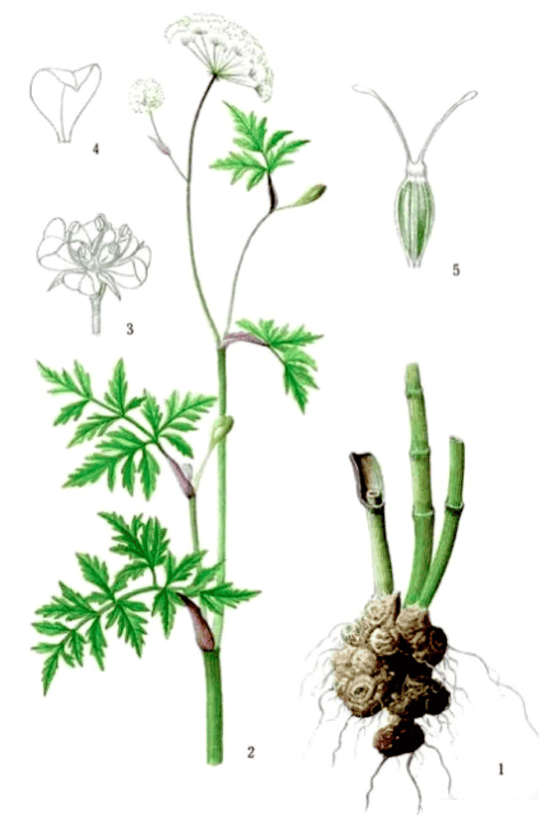
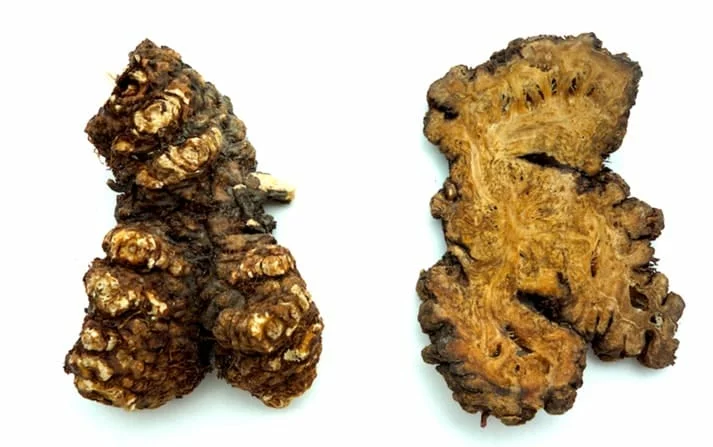
Sichuan Lovage Chuan Xiong whole and sliced root (Adam 2017)
Botanical name:
Ligusticum chuanxiong (syn. L. wallichi, L. striatum, Conioselinum anthriscoides)
Parts used:
Root
Temperature & Taste:
Warm, dry. Pungent
Classifications:
Uses:
1. Moves Blood and Qi, Eases Pain:
-Amenorrhea, Dysmenorrhea
-difficult Labor; retained Lochia
-pain in the Chest, Flank or Hypochondria
-as an aid in Arthralgia, and muscular pain.
“blood disorders of all types”. (Da Ming)
-“amenorrhea with sterility in woman”. (Shen Nong Ben Cao)
-“disperses a retained placenta”. (Zhen Quan)
-“treats arthralgia with contraction of the tendons due to attack of pathogenic Cold”. (Shen Nong Ben Cao)
-“relieves abdominal distention and pain due to attack of pathogenic Cold”. (Ming Yi Bie Lu)
2. Moves the Blood, Settles Wind, Eases Pain:
-special herb for Headache from Wind, Cold, Damp or Blood stagnation (depending on the herbs it is used with)
-Dizziness
-various types of pain associated with Wind and Blood stagnation (fixed, sharp stabbing pain)
-skin conditions associated with Wind; itchiness, dryness
-“good for treating headache due to invasion of pathogenic Wind”. (Shen Nong Ben Cao)
-“good for treating diseases due to all sorts of invasion of pathogenic Wind”. (Da Ming)
-“regulates all the Channels and blood vessels, removes blood stasis and hard mass”. (Da Ming)
-“treats hemiplegia and debilitated waist and feet”. (Zhen Quan)
-“eliminates Scrofula and Goiter”. (Da Ming
3. Benefits Liver, Nourishes Blood:
-“helps germinate new blood”. (Da Ming)
-“tones the five overstrains, reinforces the tendons and bones”. (Da Ming)
-“It regulates the Qi in the Liver, tones the blood in the Liver, moistens the dryness in the Liver and tones an overall deficient condition due to attack of pathogenic Wind.” (Wang Hao Gu)
-“good to treat Melancholy”. (Li Shi Zhen)
4. Externally:
-“Hold the drug in the mouth to stop gum bleeding”. (Tao Hong Jing)
Dose:
Decoction: 3–9 grams
Powder: 1–2 grams, taken with wine to move the Blood
Comments:
1. It has the tendency of floating and ascending, a drug of Yang”. (Zhang Yuan Su)
2. “Chuan Xiong has the following four therapeutic functions”:
i. One, to act as the guiding drug to the Lesser Yang Channel (Shao Yang);
ii. Two, to treat Headaches of all the Channels;
iii. Three, to assist the clear Yang Vital Energy (Yang Qi);
iv. Four, to disperse pathogenic Damp in the head (Zhang Yuan Su)
3. “When melancholy accumulates in the middle portion, Chaun Xiong should be adopted to open up the blocked up condition and bring the Vital Energy to ascend. When Vital Energy ascends, melancholy will be brought down and dispersed. Therefore, Fuxiong is a drug capable of treating all kinds of melancholy. It facilitates the Vital Energy, blood, Yin and Yang to deploy evenly in the three portions of body cavity”. (Zhu Zheng Heng)
Preparation:
1. The root is usually steamed with alcohol, then dried. This makes it stronger to move the Blood.
Main Combinations:
Ligusticum Chuan Xiong and Dang Gui
Ligusticum Chuan Xiong is often used with Dang Gui to nourish and move the Blood. This combination is very useful for Menstrual and Gynecological disorders, as well as Headache, Anemia etc. Also for Rheumatic pain from Cold-Wind-Damp and Blood deficiency. In addition they are used for chronic wounds or ulcers from Qi and Blood stagnation with Blood stasis.
Ligusticum Chuan Xiong and Salvia Dan Shen
This combination strongly promotes Circulation and resolves stasis, especially of the Heart and Brain. This combination is widely used for Cardiovascular disease and Cerebral Ischemia, and also prevents Fibrosis. (See Research below)
Ligusticum Chuan Xiong and Cyperus rotundus Xiang Fu
Cyperus Xiang Fu potently moves Qi and resolves Qi stasis. When combined with Ligusticum Chaun Xiong, this pair harmonises the Qi and Blood. It is good for mild anxiety or depression, tension, tension headaches, mild PMS or menstrual cramping etc.
Blood, Blood Stasis
1. Nourish the Liver and Blood, and regulate Menstruation, Ligusticum Chuan Xiong with Dang Gui, Paeonia Bai Shao and Rehmannia Shu Di Huang (as in Si Wu Tang). This is a foundation formula used in many gynecological disorders and disorders associated with Blood stasis.
2. To clear Blood stasis, to the preceding (Si Wu Tang) add Peach kernel (Tao Ren) and Safflower (Hong Hua). This moves the Blood, clears stasis, and eases pain from Blood stasis. Used for menstrual pain with clotting, and for chronic pain of a fixed, stabbing nature (blood stasis).
Obstetrics:
3. Abdominal pain during Pregnancy, Ligusticum Chuan Xiong with Dang Gui, Paeonia Bai Shao, Rehmannia Shu Di Huang, Artemisia Ai Ye (Chinese Mugwort), Licorice, Donkey-hide Glue (E Jiao). (as in Jiao Ai Tang is from Jin Gui Yao Lue [Essential Prescriptions of the Golden Coffer])
4. Threatened Miscarriage with abdominal pain and vaginal discharge, Astragalus Huang Qi, Ligusticum Chuan Xiong cooked with glutinous rice (Ben Cao Gang Mu)
5. Postpartum stasis, with pain, combine Ligusticum Chuan Xiong with Leonurus Yi Mu Cao and Peach kernel (Tao Ren).
6. Postpartum retention of Lochia, and to restore the Uterus following Childbirth, Ligusticum Chuan Xiong with Dang Gui, Peach kernel (Tao Ren), Stir-fried Ginger (Pao Jiang), Honey-fried Licorice root (Zhi Gan Cao) (as in Sheng Hua Tang)
Head
7. Headache:
i. general combination for Headache, Ligusticum Chuan Xiong with Angelica Bai Zhi. (Angelica Bai Zhi was regarded as the guiding drug of Chuan Xiong, especially for Headaches)
ii. Acute Wind, Ligusticum Chuan Xiong with Saposhnikovia Fang Feng
iii. Acute Wind, with Vertigo, running nose, hoarse voice, Ligusticum Chuan Xiong with Schizonepeta Jing Jie, Peppermint (Bo He), Cyperus rotundus (Xiang Fu), Saposhnikovia Fang Feng and Green Tea (as in Chuan Xiong Cha Tiao San)
iv. Acute Wind-Cold, Ligusticum Chuan Xiong with Ligusticum sinense Gao Ben, Angelica Bai Zhi
v. Acute Wind-Heat, Chrysanthemum Ju Hua with Ligusticum Chuan Xiong.
vi. from Liver Heat, with Paeonia Bai Shao, Scutellaria Huang Qin, Chrysanthemum Jua Hua
vii. from Blood stagnation, Ligusticum Chuan Xiong with Dang Gui, Salvia Dan Shen, Safflower (Hong Hua)
viii. severe intermittent headache with vomiting and dyspnoea, Ligusticum Chuan Xiong with Oyster shell (Mu Li). (Xu Zhi Cai)
8. Headaches of the different channels:
i. Initial Yang (Tai Yang): Ligusticum Chuan Xiong with Notopterygium Qiang Huo
ii. Greater Yang (Yang Ming): Ligusticum Chuan Xiong with Angelica dahurica Bai Zhi
iii. Lesser Yang (Shao Yang): Ligusticum Chuan Xiong with Bupleurum Chai Hu.
iv. Initial Yin (Tai Yin): Ligusticum Chuan Xiong with Atractylodes Cang Zhu
v. Greater Yin (Shan Yin): Ligusticum Chuan Xiong with Evodia Wu Zhu Yu
vi. Lesser Yin (Jue Yin): Ligusticum Chuan Xiong with Asarum Xi Xin.
9. Dizziness, Vertigo, Migraine:
i. Gastrodia Tian Ma with equal parts Ligusticum Chuan Xiong (as in Tian Ma Wan from Prescriptions of Universal Relief).
ii. Gastrodia Tian Ma, Ligusticum Chuan Xiong, Paeonia Bai Shao, Mistletoe (Sang Ji Sheng)
10. Cerebral Ischemia:
i. Ligusticum Chuan Xiong with Astragalus Huang Qi (see research below)
ii. For Phlegm-Damp: Ligusticum Chuan Xiong with Dang Gui, Gastrodia Tian Ma, Poria Fu Ling, Calamus (Shi Chang Pu).
iii. Blood Stasis: Ligusticum Chuan Xiong with Astragalus Huang Qi, Safflower (Hong Hua), Peach kernal (Tao Ren), Leech (Shui Zhi), Borneo Camphor (Bing Pian)
11. Stroke with Hemiplegia, Numbness, loss of Speech, Ligusticum Chuan Xiong with Dang Gui, Peach kernel (Tao Ren), Safflower (Hong Hua), Earthworm (Di Long), Scorpion (Quan Xie) (as in Zhong Feng Hui Chu Wan)
12. Insomnia with Irritability:
i. Ligusticum Chuan Xiong with Zizyphus Suan Zao Ren with Anemarrhena Zhui Mu, Poria Fu Ling, Licorice
13. Mild Depression, Ligusticum Chuan Xiong with Cyperus rotundus Xiang Fu, Paeonia Bai Shao
Other:
14. Wind-Damp joint pain:
i. Ligusticum Chuan Xiong with Gentiana macrophylla Qin Jiao, Gastrodia Tian Ma, Notopterygium Qian Huo, Dang Gui (as in Qin Jiao Tian Ma Tang)
ii. Ligusticum Chuan Xiong with Saposhnikovia Fang Feng, Cinnamon twig (Gui Zhi),
15. To more strongly ease pain:
i. Ligusticum Chuan Xiong with Asarum Xi Xin (Xu Zhi Cai)
ii. Ligusticum Chuan Xiong with Corydalis Yan Hu Suo
16. “Accumulation of Phlegm due to attack of Wind”: make a bolus of Ligusticum Chuan Xiong with Honey. “It is very effective”. (Su Song)
Major Formulas:
Bu Gan Tang
Bu Yang Huan Wu Tang
Chai Hu Shu Gan San
Chuan Xiong Cha Tiao San
Dang Gui Shao Yan San
Dang Gui Yin Zi
Die Da Wan
Fang Feng Tong Sheng San
Ge Xia Zhu Yu Tang
Qin Jiao Tian Ma Tang
Qu Feng Zhi Bao Dan
Shao Fu Zhu Yu Tang
Shang Zhong Xia Tong Yong Tong Feng Wan
Shen Tong Zhu Yu Tang
Sheng Hua Tang
Shi Quan Da Bu Tang
Si Wu Tang
Suan Zao Ren Tang
Tai Shan Pan Shi San
Tong Qiao Huo Xue Tang
Wen Jing Tang
Xue Fu Zhu Yu Tang
Yue Ju Wan (Escape Restraint Pill)
Zai Zao San
Cautions:
1. Use with caution during Pregnancy, generally not more than 3 grams in decoction.
2. Bleeding disorders; heavy Menstrual Bleeding
3. Yin deficient Fire; red tongue with dry mouth.
Drug Interactions:
1. Antagonizes Cornus Shan Zhu Yu and Astragalus Huang Qi; Counteracts Coptis Huang Lian; Incompatible with Veratrum Li Lu.
2. Use with care in people taking Warfarin and other Blood thinners. Dosage should be reduced if used with Blood thinning medicine.
Main Preparations used:
Click the above Tabs for more information on this medicine
GENERAL / REVIEW:
–Ligusticum chuanxiong: a chemical, pharmacological and clinical review.
–Ethnobotanical usages, phytochemistry, pharmacology, and quality control of chuanxiong rhizoma: A review.
–Evaluation of the Pharmaceutical Activities of Chuanxiong, a Key Medicinal Material in Traditional Chinese Medicine.
–Ligusticum chuanxiong Hort.: a review of its phytochemistry, pharmacology, and toxicology.
–Structurally diverse phthalides from fibrous roots of Ligusticum chuanxiong Hort. and their biological activities.
–Ligusticum chuanxiong Hort as a medicinal and edible plant foods: Antioxidant, anti-aging and neuroprotective properties in Caenorhabditis elegans.
–The isolation, structural features and biological activities of polysaccharide from Ligusticum chuanxiong: A review.
–A comprehensive investigation on the chemical diversity and efficacy of different parts of Ligusticum chuanxiong.
–[Herbal textual research on Chuanxiong Rhizoma in Chinese classical prescriptions].
–Total alkaloids from the rhizomes of Ligusticum striatum: a review of chemical analysis and pharmacological activities.
–A systematic review on the rhizome of Ligusticum chuanxiong Hort. (Chuanxiong).
–[Research progress of chemical constituents and pharmacological activities of essential oil of Ligusticum chuanxiong].
COMBINATIONS:
DANG GUI
–Comparative analysis of chemical profiles and intelligent sensory data for Angelica sinensis-Ligusticum chuanxiong decoctions.
–Antioxidant and anti-inflammatory effects of different ratios and preparations of Angelica sinensis and chuanxiong rhizoma extracts.
–Enhancement of the functionality of attenuating acute lung injury by a microemulsion formulation with volatile oil of Angelicae Sinensis Radix and Ligusticum Chuanxiong Rhizoma encapsulated.
–Network Pharmacology-Based Investigation on Therapeutic Mechanisms of the Angelica dahurica Radix and Ligusticum chuanxiong Rhizoma Herb Pair for Anti-Migraine Effect.
ASTRAGALUS HUANG QI
–The mechanism of action of the combination of Astragalus membranaceus and Ligusticum chuanxiong in the treatment of ischemic stroke based on network pharmacology and molecular docking.
CYPERUS ROTUNDUS
–Identification of antidepressant constituents from Xiangfu-chuanxiong herbal medicine pair via spectrum-effect relationship analyses, molecular docking and corticosterone-induced PC12 cells.
GASTRODIA TIAN MA
–Studies on the mechanism of energy metabolism via AMPK/PGC-1alpha signaling pathway induced by compatibility of Ligusticum chuanxiong Hort and Gastrodia.
BORNEOL
–Synergistic amelioration between Ligusticum striatum DC and borneol against cerebral ischemia by promoting astrocytes-mediated neurogenesis.
SALVIA DAN SHEN
–Elucidating the chemical interaction effects of herb pair Danshen-Chuanxiong and its anti-ischemic stroke activities evaluation.
–Expanding potential targets of herbal chemicals by node2vec based on herb-drug interactions.
–Guanxining injection alleviates fibrosis in heart failure mice and regulates SLC7A11/GPX4 axis.
PROCESSING:
–[Wine-processed Chuanxiong Rhizoma enhances efficacy of aumolertinib against EGFRmutant non-small cell lung cancer xenografts in nude mouse brain].
–The variation in the major constituents of the dried rhizome of Ligusticum chuanxiong (Chuanxiong) after herbal processing.
ANTIBACTERIAL:
–HPTLC-Bioautography-MS-Guided Strategy for the Detection of Phthalides With Antimicrobial and Antioxidant Activities From Ligusticum chuanxiong Essential Oil.
ANTI-FUNGAL:
–Antifungal activity of Ligusticum chuanxiong essential oil and its active composition butylidenephthalide against Sclerotium rolfsii.
–Antifungal Effects and Active Components of Ligusticum chuanxiong.
ANTI-INFLAMMATORY:
–Six pairs of enantiomeric phthalide dimers from the rhizomes of Ligusticum chuanxiong and their absolute configurations and anti-inflammatory activities.
–The Protective Effects and Potential Mechanisms of Ligusticum chuanxiong: Focus on Anti-Inflammatory, Antioxidant, and Antiapoptotic Activities.
–Three new compounds from the rhizome of Ligusticum chuanxiong and their anti-inflammation activities.
–Chemical constituents of Ligusticum chuanxiong and their anti-inflammation and hepatoprotective activities.
ANTIOXIDANT:
–HPTLC-Bioautography-MS-Guided Strategy for the Detection of Phthalides With Antimicrobial and Antioxidant Activities From Ligusticum chuanxiong Essential Oil.
–Water extract from Ligusticum chuanxiong delays the aging of Saccharomyces cerevisiae via improving antioxidant activity.
–The Protective Effects and Potential Mechanisms of Ligusticum chuanxiong: Focus on Anti-Inflammatory, Antioxidant, and Antiapoptotic Activities.
IMMUNOMODULATORY
–Structural elucidation of an immunological arabinan from the rhizomes of Ligusticum chuanxiong, a traditional Chinese medicine.
ANTICOAGULANT:
–Screening of anti-thrombin active components from Ligusticum chuanxiong by affinity-ultrafiltration coupled with HPLC-Q-Orbitrap-MS(n).
HEADACHE / MIGRAINE:
–Metabolomic profiling integrated with molecular exploring delineates the action of Ligusticum chuanxiong hort. on migraine.
–Dopamine D2 Receptor Activation Blocks GluA2/ROS Positive Feedback Loop to Alienate Chronic-Migraine-Associated Pain Sensitization.
–Exploring the pharmacological action mechanism of Ligusticum Chuanxiong-Piper Longum couplet medicines on the treatment of migraine based on network pharmacology.
–Network Pharmacology-Based Investigation on Therapeutic Mechanisms of the Angelica dahurica Radix and Ligusticum chuanxiong Rhizoma Herb Pair for Anti-Migraine Effect.
–Alkaloids from the rhizomes of Ligusticum striatum exert antimigraine effects through regulating 5-HT(1B) receptor and c-Jun.
ANTIDIARRHEAL:
–Antidiarrheal properties of Ligusticum chuanxiong Hort’s ethanol extract in mice and its impact on the contraction of rabbits’ isolated jejunal smooth muscles.
RELIEVES ITCH:
–Association and mechanism of Ligusticum chuanxiong alleviating itch: A combination of experimental and network pharmacology study.
ALLERGIC RHINITIS:
–Senkyunolide I alleviates allergic rhinitis by inhibiting JAK1/3-STAT3/6 and JNK signalings.
VASODILATOR
–Chuanxiongdiolides R4 and R5, phthalide dimers with a complex polycyclic skeleton from the aerial parts of Ligusticum chuanxiong and their vasodilator activity.
HYPERLIPIDEMIA:
–Integrating Network Pharmacology and Experimental Validation to Elucidate the Mechanism Underlying Ligusticum chuanxiong’s Alleviation of Hyperlipidemia.
CORONARY HEART DISEASE:
–Unveiling differential mechanisms of chuanxiong cortex and pith in the treatment of coronary heart disease using SPME-GCGC-MS and network pharmacology.
ATHEROSCLEROSIS:
–Potential mechanistic linkages of Naoluotong granules on the remission of atherosclerosis by multidimensional analysis.
CEREBROVASCULAR DISEASE:
–Z-Ligustilide: A Potential Therapeutic Agent for Atherosclerosis Complicating Cerebrovascular Disease.
–Research Advances in Cardio-Cerebrovascular Diseases of Ligusticum chuanxiong Hort.
CEREBRAL ISCHEMIA:
–Beta-asarone alleviated cerebral ischemia/reperfusion injury by targeting PINK1/Parkin-dependent mitophagy.
–Preparation, characterization and safety evaluation of Ligusticum chuanxiong essential oils liposomes for treatment of cerebral ischemia-reperfusion injury.
ISCHEMIC STROKE:
–[Mechanism and compatibility efficacy of Astragali Radix-Chuanxiong Rhizoma drug pair in treating ischemic stroke based on network regulation].
–Neuroprotective effects of methanolic extract from Chuanxiong Rhizoma in mice with middle cerebral artery occlusion-induced ischemic stroke: suppression of astrocyte- and microglia-related inflammatory response.
NEUROPROTECTIVE:
–Ligusticum chuanxiong exerts neuroprotection by promoting adult neurogenesis and inhibiting inflammation in the hippocampus of ME cerebral ischemia rats.
–Neuroprotective effect of Da Chuanxiong Formula against cognitive and motor deficits in a rat controlled cortical impact model of traumatic brain injury.
BLOOD-BRAIN BARRIER DAMAGE:
–Ligustrazine Alleviates Blood-Brain Barrier Damage by Downregulating Expression of miR-297c-5p.
DOPAMINE RECEPTOR ACTIVITY:
–Dopamine D2 Receptor Activation Blocks GluA2/ROS Positive Feedback Loop to Alienate Chronic-Migraine-Associated Pain Sensitization.
COGNITIVE IMPAIRMENT:
–Traditional Chinese Medicinal Herbs for Treating Post-Ischemic Stroke Cognitive Impairment Insights From Frequency and Association Analysis.
–Methanol extract of Ligusticum chuanxiong Hort. Rhizome ameliorates bilateral common carotid artery stenosis-induced cognitive deficit in mice by altering microglia and astrocyte activation.
VASCULAR DEMENTIA:
–A novel phthalein component ameliorates neuroinflammation and cognitive dysfunction by suppressing the CXCL12/CXCR4 axis in rats with vascular dementia.
ALZHEIMER’S DISEASE:
–Tetramethylpyrazine Improves Cognitive Impairment and Modifies the Hippocampal Proteome in Two Mouse Models of Alzheimer’s Disease.
PARKINSON’S DISEASE:
–Meeting the Challenge 2: Identification of Potential Chemical Probes for Parkinson’s Disease from Ligusticum chuanxiong Hort Using Cytological Profiling.
DEPRESSION:
–Identification of antidepressant constituents from Xiangfu-chuanxiong herbal medicine pair via spectrum-effect relationship analyses, molecular docking and corticosterone-induced PC12 cells.
NERVE DISEASE:
–[Research progress on mechanisms of ligustilide in treatment of nervous system diseases].
LOCOMOTOR SYSTEM DISEASE:
–[Research progress on mechanisms and pharmacokinetics of ligustilide in treatment of locomotor system diseases].
PAIN:
–Ligusticum chuanxiong Hort. Ameliorates Neuropathic Pain by Regulating Microglial M1 Polarization: A Study Based on Network Pharmacology.
–Ligustilide covalently binds to Cys703 in the pre-S1 helix of TRPA1, blocking the opening of channel and relieving pain in rats with acute soft tissue injury.
–Ligustrazine mitigates chronic venous disease-induced pain hyperalgesia through desensitization of inflammation-associated TRPA1 activity in DRG
UTERINE RELAXANT:
–Isoindolines and phthalides from the rhizomes of Ligusticum chuanxiong and their relaxant effects on the uterine smooth muscle.
HEPATOPROTECTIVE:
–Research on the effectiveness and material basis of Ligusticum chuanxiong in alleviating acute liver injury.
–Recent insights into the hepatoprotective potential of medicinal plants and plant-derived compounds.
–Chemical constituents of Ligusticum chuanxiong and their anti-inflammation and hepatoprotective activities.
LIVER FIBROSIS:
–Senkyunolide I targets CXCR4 to attenuate liver fibrosis via suppression of the NLRP3/GSDMD pathway.
–Chuanxiong Rhizoma extracts prevent liver fibrosis via targeting CTCF-c-MYC-H19 pathway.
RENOPROTECTIVE:
–Chuanxiong Rhizoma extracts alleviate hyperuricaemia-induced renal injury by reducing serum UA levels and renoprotection.
–Levistolide a Attenuates Acute Kidney Injury in Mice by Inhibiting the TLR-4/NF-κB Pathway.
DIABETIC NEPHROPATHY:
–Phthalides from the rhizome of Ligusticum chuanxiong Hort. attenuate diabetic nephropathy in mice.
–Protective effect of the ethanol extract from Ligusticum chuanxiong rhizome against streptozotocin-induced diabetic nephropathy in mice.
OSTEOARTHRITIS:
–Network Pharmacology and Molecular Docking to Elucidate the Potential Mechanism of Ligusticum Chuanxiong Against Osteoarthritis.
–Senkyunolide A inhibits the progression of osteoarthritis by inhibiting the NLRP3 signalling pathway.
CANCER:
–Physicochemical properties of polysaccharides from Ligusticum chuanxiong and analysis of their anti-tumor potential through immunoregulation.
COLORECTAL
–Ligustrazine induces the colorectal cancer cells apoptosis via p53-dependent mitochondrial pathway and cell cycle arrest at the G0/G1 phase.
–Levistolide A Induces Apoptosis via ROS-Mediated ER Stress Pathway in Colon Cancer Cells.
LUNG:
–[Wine-processed Chuanxiong Rhizoma enhances efficacy of aumolertinib against EGFRmutant non-small cell lung cancer xenografts in nude mouse brain].
THYROID
–Mechanistic insights into the anticancer effects of Pinellia ternata (Thunb.) Ten. ex Breitenb. and Ligusticum chuanxiong Hort. ex S. H. Qiu & al. on papillary thyroid carcinoma: A network pharmacology approach.
You must be logged in to view this content, please login. If you're not a member then Click this link to subscribe