Iris, Dres ma དྲེས་མ
Dres ma (Root, Tibetan)
Dres ma’i ‘bru (Iris seed, Tibetan)
Cherachi (Ayurveda)
Ku Men Yuan Wei (TCM)
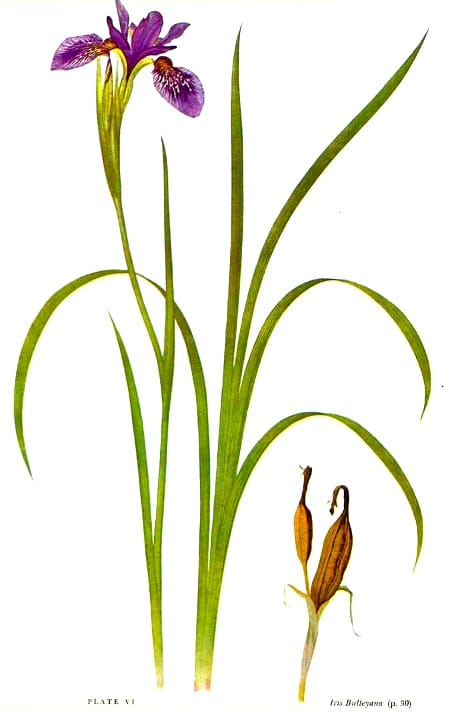
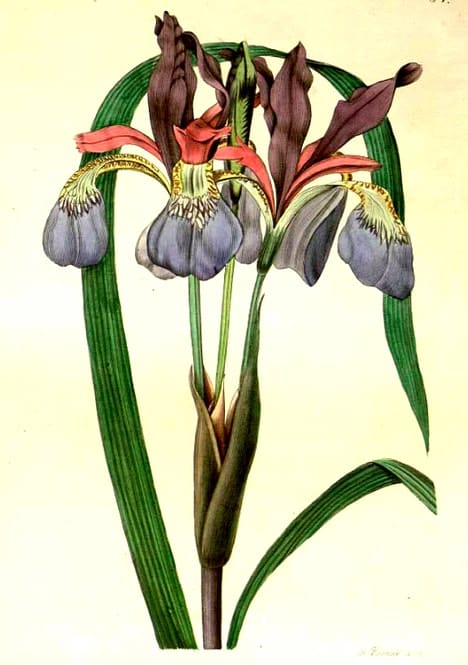
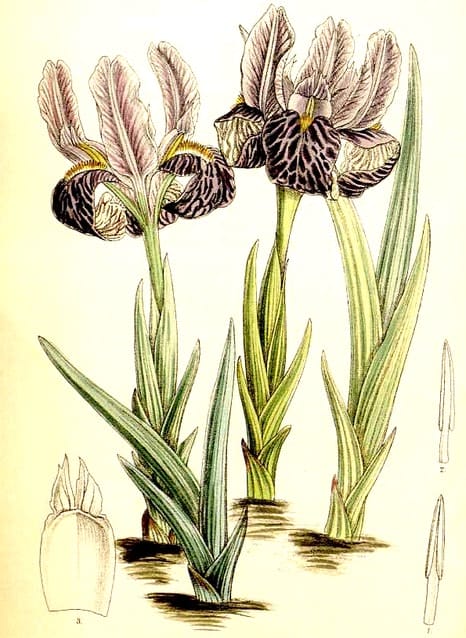
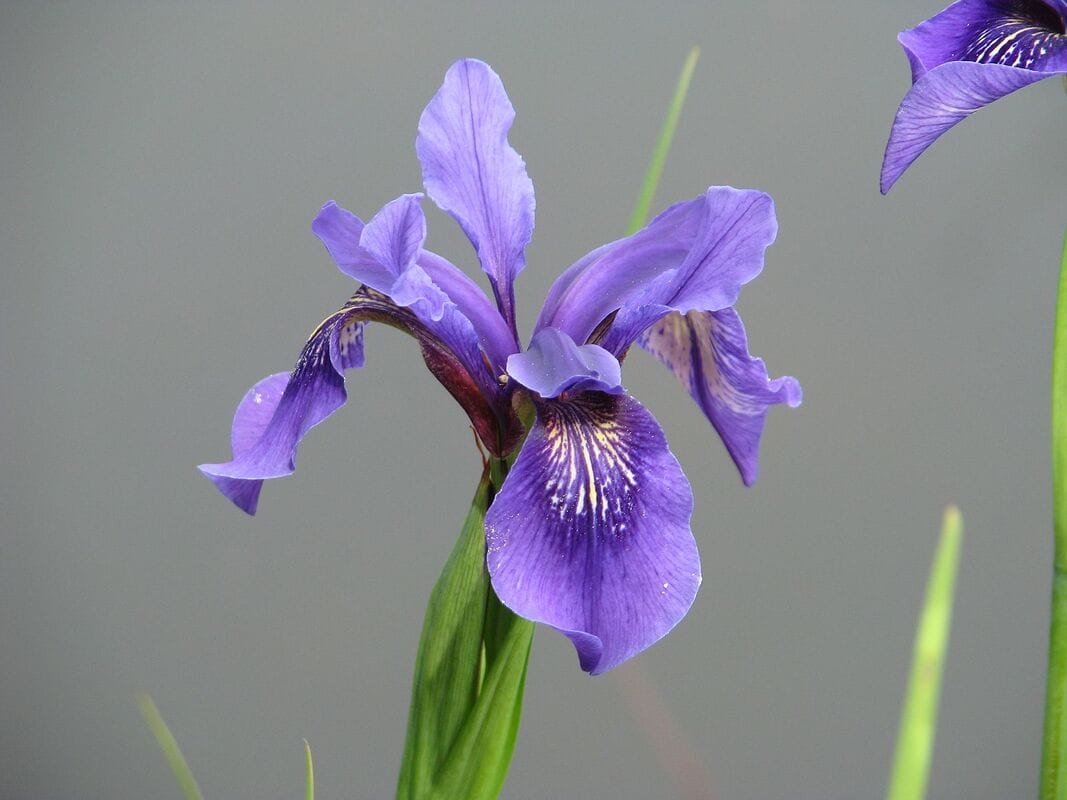
Botanical name:
Iris spp.
There are four types recognised in Tibetan Medicine:
- Mo dres མོ་དྲེས ‘Male’: Iris bulleyana, I. ensata (Xi Nan Yuan Wei, TCM)
- Pho dres: ‘Female’ Iris lactea (syn. I. triflora), I. kemaonensis (I. kingiana)
- Ma ning dres ma མ་ནིང་དྲེས་མ ‘Neuter’ Iris goniocarpa, I. lactea var. chinensis, I. potanini
- Dres mai ge sar དྲེས་མའི་གེ་སར་: Iris collettii
Iris decora, I. humilis and others are also listed for this medicine.
Parts used:
Root; whole plant (also flower and seed)
Dres ma (Root, Tibetan)
Dres ma’i ‘bru (Iris seed, Tibetan)
Temperature & Taste:
Neutral, Sweet, Pungent, Bitter
Uses:
ROOT, WHOLE PLANT:
1. Clears Wind-Heat, Resists Poison:
-disorders from microorganisms
-general for Poison
-Wounds
-has also been used for Tinnitus
2. Clears Damp, Promote Urine:
-disorders due to Serous fluids (Damp)
-root and leaf are diuretic, used for Edema
-Urinary and Kidney disorders
3. Clears Phlegm, Stops Cough:
-Cough, Bronchitis
-Catarrhal deafness
4. Purges Phlegm:
-gently purges phlegm and damp
5. Externally:
-Powder is applied to Acne, Sores
-root powder with honey is applied to freckles and dark spots
-root ashes applied with fat turns white hair black
-ashes applied to wounds dries up pus and serum
-Scabies, Urticaria
SEED:
1. Kills Worms:
-used for Worms (Seed)
-Colic pain due to Worms
2. Moves Qi, Resolves Stasis:
-used for Hot and Cold disorders of the Stomach
-Colic
-pain in the Chest
-also for Tumors
3. Clears Wind-Heat, Resists Poison:
-Cough and Cold, Fever
-antidote to Opium addiction (Ayurveda)
FLOWERS:
1. Tinnitus
2. Poor or failing Eyesight.
3. Relieves pain
Dose:
Powder: 1–3 grams
Substitute:
1. Iris humilis (syn. I. flavissima, I. arenaria)
2. Orris root in some instances
Main Combinations:
1. Sudden deafness or Tinnitus, Iris Dres ma with Incarvillea, Safflower, Caraway
Major Formulas:
Tumor Curing Thunderbolt (Skrangs sel bde byed)
Sixteen Channels Pill (Rtsa thag bcu drug)
Cautions:
None noted
Main Preparations used:
You must be logged in to view this content, please login. If you're not a member then Click this link to subscribe