Incarvillea, Ug chos ཨུག་ཆོས
Ug chos (Tibetan)
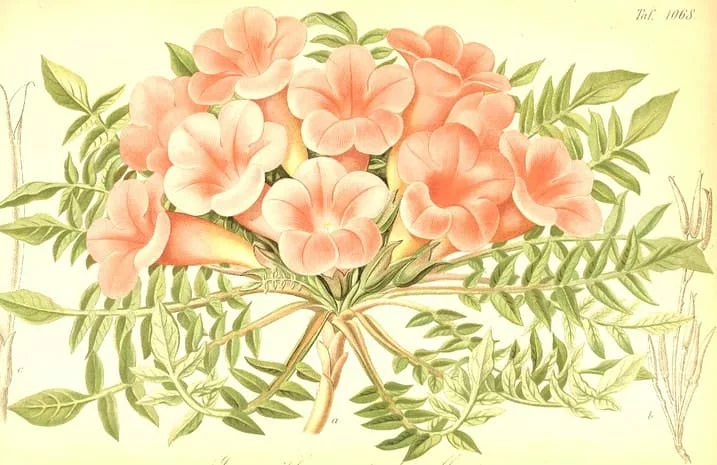
Incarvillea compacta
Gartenflora [E. von Regel] (1882)
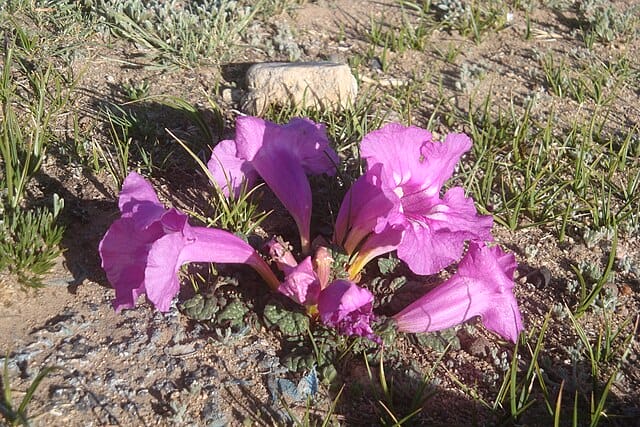
Incarvillea younghusbandii
(Photo by Chao Shi [Chao7]) (Inaturalist) (Wikimedia)
Botanical name:
Incarvillea spp.
There are 3 types of Incarvillea used:
- White variety: Ug chos dkar po ཨུག་ཆོས་དཀར་པོ : Incarvillea compacta
- Red variety: Ug chos dmar po ཨུག་ཆོས་དམར་པོ : Incarvillea younghusbandii; I. diffusa and I. mairei (in Nepal)
- Yellow variety: Ug chos ser po: Incarvillea lutea
Parts used:
Roots, flowers, seeds
Temperature & Taste:
Cool. Bitter, Sweet
Uses:
1. Moves the Qi, Clears Stagnation:
-distention from Qi obstruction
-Cramps, spasms of the Sinews
-Constipation from Qi stagnation
2. Clears Lung Heat, Stops Cough:
-Cough, Bronchitis from Lung heat
-Fever associated with the Lung
3. Clears Heat, Resists Poison:
-pain and pus coming from the ears
Dose:
Substitute:
1. Root, flowers and seed of the Cotton plant (Gossypium), especially the seeds (used in Buryat).
2. Burnet is used by Tibetans in Buryat region
Main Combinations:
1. Sudden deafness or Tinnitus, Incarvillea with Safflower, Caraway, Orris (Iris spp.)
2. Ear pain or pus coming from the ears, Incarvillea, Costus and Garlic are heated in Ghee to be taken orally. (as in Incarvillea 5)
Major Formulas:
Removal of Hindrances 8 (Gag sel brgyad pa)
Sandalwood Lung Medicine 15 (Glo sman tsan dan bco lnga)
Sandalwood 17 (Tsan dan bcu bdun)
Tabasheer 25 (Cu gang nyer lnga)
Cautions:
None noted
Main Preparations used:
Click the above Tabs for more information on this medicine
You must be logged in to view this content, please login. If you're not a member then Click this link to subscribe