
Hemerocallis, Xuan Cao 萱草
Day Lily
Lilium Agreste
Xuan Cao (TCM)
Imaruqalis (Unani)
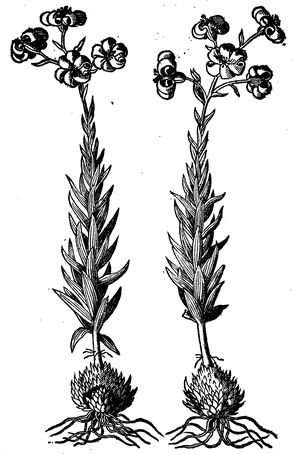
Hemerocallis
New Kreüterbuch, Matthiolus, 1563
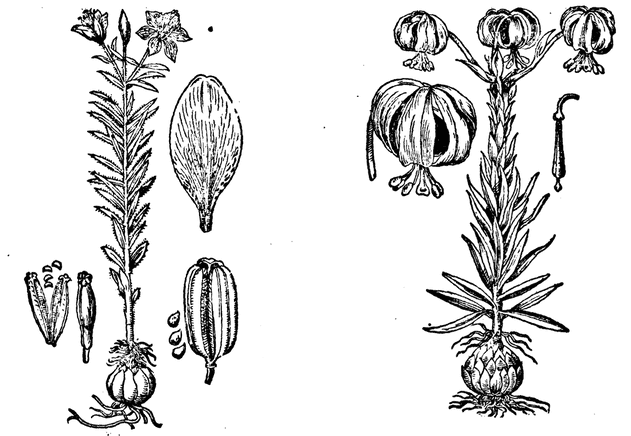
Two varieties of Hemerocallis
(Herbarium, Matthioli (Polish), 1596)
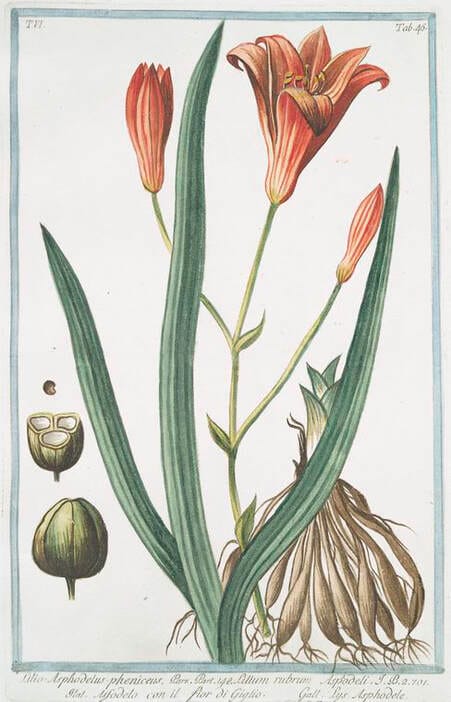
Hemerocallis fulva
Bonelli, G., Hortus Romanus juxta Systema Tournefortianum (1772-1793)
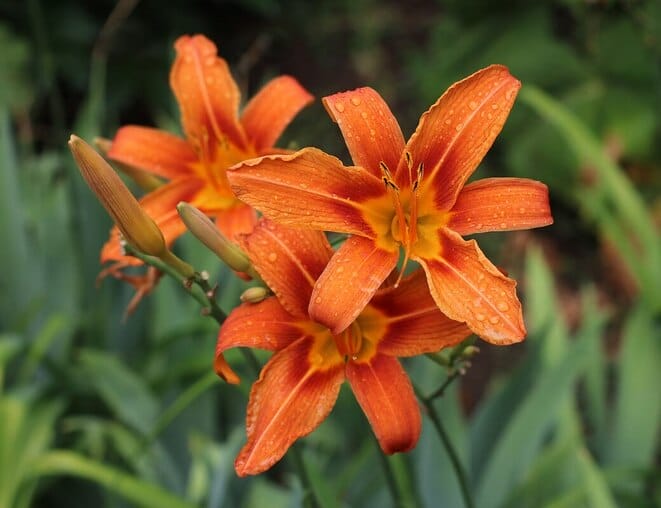
Hemerocallis fulva
(Photo b y George Chernilevsky) (Wikimedia)
Botanical name:
Hemerocallis spp.
- H. fulva, H. flava
- H. minor
- H. lilio-asphodelus
H. citrina is used very similarly.
Parts used:
Root and Rhizome
Temperature & Taste:
Cool, dry.
Uses:
1. Clears Heat and Toxin, Resolves Swelling:
–Scrofula, Lymphatic Swelling
-Mastitis, Breast Abscess (internally and topically)
2. Clears Heat and Damp:
–Edema, Strangury, Dysuria
-Urinary Stones
-Leukorrhea
-Jaundice
3. Calms the Mind:
–Nervousness, Anxiety, Insomnia
-traditionally to ‘forget Melancholy’
-Depression-flower always has this effect
4. Cool the Blood, Stops Bleeding:
–Epistaxis, Hemoptysis
-Excess Menstrual Bleeding and Spotting
5. Kills Worms and Parasites:
–Schistosomiasis–
6. Externally:
-Toothache
–Toxic Sores and Swellings
-applied to swollen breast (leaf or root paste) (since Dioscorides)
-Inflammation of the eyes
-Burns and Scalds (Dioscorides)
-as a pessary to promote menstruation
Dose:
The root juice was traditionally pressed with wine and the liquid taken
Decoction: 3–9 grams
Powder: 1–3 grams
The root or leaf can be crushed for topical application.
Substitute:
1. Virtues … are said to be the same with our common Asphodel’. (Salmon)
2. Of the Flower: ‘Their medicinal effects are understood to be the same as those of the Lilium candidum‘. (Porter Smith, 1871)
Main Combinations:
1. Epistaxis, mix the root juice with half part of Ginger juice and sip the juice. (Ben Cao Gang Mu)
2. All Bile diseases, Hemerocallis, Chebula, Rose. This is called “Absolute Winner of Bile” (Tibetan)
3. Breast Swelling and Tumor: root and leaf are beaten to a paste and applied (TCM, West)
4. To promote menstruation, form a pessary with the root, honey and wool, and insert. (Salmon)
Cautions:
1. Avoid overdose
Toxicity:
1. Contains the neurotoxin Hemerocallin.
2. Large doses are hallucinogenic
Main Preparations used:
Click the above Tabs for more information on this medicine
Galen:
“Its root is like that of the Lily as to appearance and faculty. Its use is to cause hot swellings of the eye and breast (mamma) to subside. It is also used for burns in the form of applications”.
GENERAL / REVIEW:
–[Chemical constituents in root of Hemerocallis fulva].
ANTIOXIDANT:
–Antioxidative caffeoylquinic acids and flavonoids from Hemerocallis fulva flowers.
–Study on Extraction and Antioxidant Activity of Flavonoids from Hemerocallis fulva (Daylily) Leaves.
–In vitro and vivo antioxidant activities of daylily flowers and the involvement of phenolic compounds.
ANTI-INFLAMMATORY:
–An Exploration of Traditional Chinese Medicinal Plants with Anti-Inflammatory Activities.
SLEEP QUALITY:
–Daylily (Hemerocallis fulva Linn.) flowers improve sleep quality in human and reduce nitric oxide and interleukin-6 production in macrophages.
–Effects of Hemerocallis on sleep in mice.
DEPRESSION:
–A Combined Network Pharmacology and Molecular Docking Approach to Investigate Candidate Active Components and Multitarget Mechanisms of Hemerocallis Flowers on Antidepressant Effect.
–Reveals of New Candidate Active Components in Hemerocallis Radix and Its Anti-Depression Action of Mechanism Based on Network Pharmacology Approach.
–Recent Studies on Anti-Depressant Bioactive Substances in Selected Species from the Genera Hemerocallis and Gladiolus: A Systematic Review.
.–The Antidepressant-like Effect of Ethanol Extract of Daylily Flowers ( Jīn Zhēn Huā) in Rats.
HEPATOPROTECTIVE:
–An evaluation of novel biological activity in a crude extract from Hemerocallis fulva L. var. sempervirens M. Hotta.
CANCER
–Growth inhibitory activities of crude extracts obtained from herbal plants in the Ryukyu Islands on several human colon carcinoma cell lines.
–Inhibition of human tumor cell proliferation by novel anthraquinones from daylilies.
You must be logged in to view this content, please login. If you're not a member then Click this link to subscribe

1. The flowers are eaten as food and used in teas in China. Medicinally, the flowers have similar effects, though milder.
2. Wearing the flower during pregnancy was said to produce a male child in China.