Gnetum, Mai Ma Teng 买麻藤
Joint Fir
Mai Ma Teng (TCM)
Anapendu (Siddha)

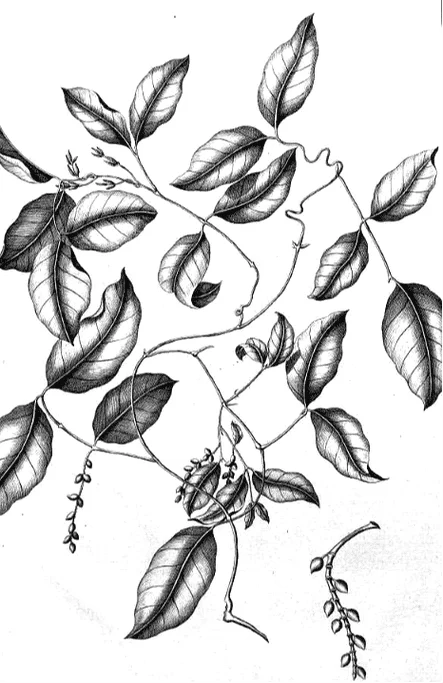
Gnetum parvifolium
Rumphius (Rumpf), G.E., Herbarium amboinense (1741-1750)
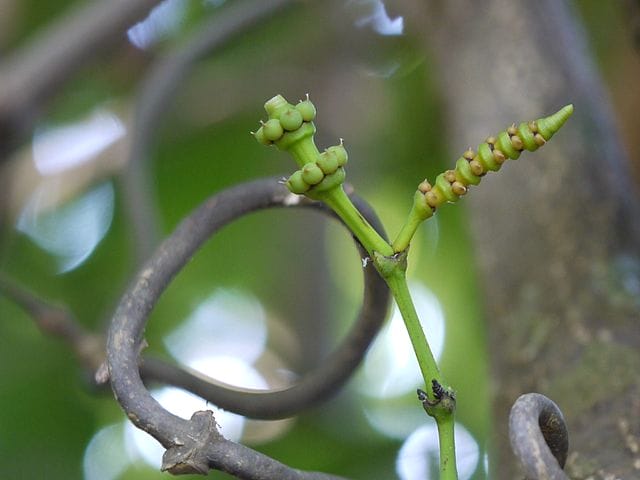
Gnetum scandens
(Photo by Dinesh Valke) (Wikimedia)
Botanical name:
Gnetum parvifolium, G. montanum (syn. G. scandens)
Parts used:
Stem with Leaf; also the Root;
Temperature & Taste:
Warm, dry. Bitter
Uses:
1. Clears Wind and Damp:
-Wind-Cold-Damp muscle and joint pain (topically and internally)
-Rheumatic Arthralgia, Rheumatism
-Lumbago, Lower back strain, Bone pain
-Flaccidity of the extremities
-Seed oil is also used as an anti-rheumatic
2. Stops Bleeding, Resolves Stasis:
-Bleeding from Ulcers
-Pancreatitis
-Trauma, Bruising, Fractures
3. Stops Cough, Clears Phlegm:
-Cough, Bronchitis, Upper Respiratory Tract Infection
-chronic Trachitis
-best for Cold-Phlegm type
Dose:
Decoction: 6–9 grams
Main Combinations:
1. Pain and weakness of the muscles and bones, Gnetum with Acanthopanax Wu Jia Pi (9 grams each), decoct and take daily.
2. Acute Respiratory Infections, Gnetum decocted in water with Rock Sugar added. Usually controlled in 1–2 days.
3. Acute Pancreatitis: concentrated decoction taken alone for 2–9 days cured a number of cases
4. Fractures, the fresh leaves are sauteed in wine and made into a compress to be applied.
Cautions:
None noted
Main Preparations used:
Click the above Tabs for more information on this medicine
1. Antibacterial
2. Cardiotonic
3. Antitussive
4. Antiasthmatic
5. Antispasmodic
You must be logged in to view this content, please login. If you're not a member then Click this link to subscribe