Gloriosa, Glory Lily
Superb Lily, Flame Lily, Climbing Lily, Tiger’s Claw
Langali, Langalaki, Kalihari, Visalya, Shakrapushpi (Ayurveda)
Akinichalam, Kalappankizhangu (Siddha)
Kanol (Unani)
Jia Lan (TCM)


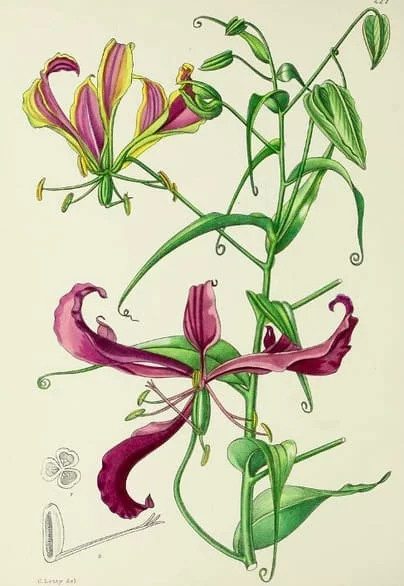
Gloriosa supbera
Pole Evans, I.B., Flowering plants of (South) Africa, 1931
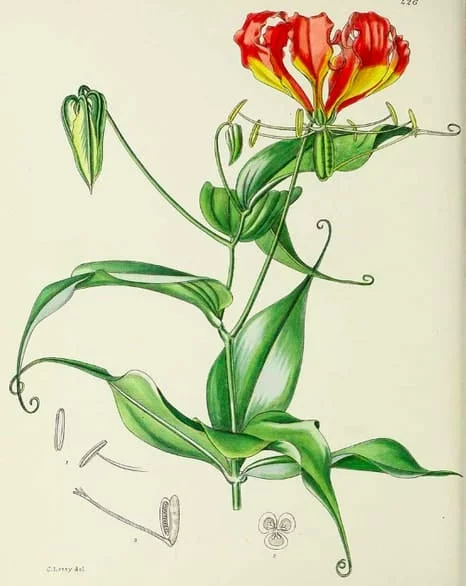
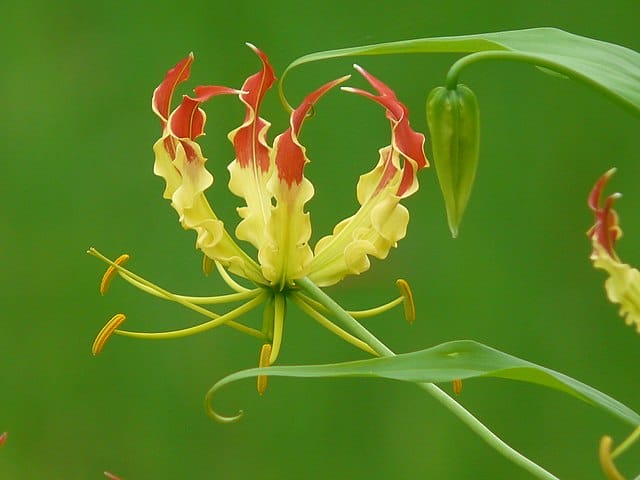
Gloriosa superba
(Photo by Dinesh Valke) (Wikimedia)
Botanical name:
Gloriosa superba
Synonyms include Clinostylis speciosa., Gloriosa abyssinica, G. homble, G. hybrid, G. rothschildiana, G. simplex, G. speciosa, G. virescens
Parts used:
Prepared Root
Temperature & Taste:
Hot, dry. Toxic
Uses:
1. Clears Wind-Damp, Eases Pain:
-swollen, painful joints; gout; arthritis; rheumatism
-obstinate skin diseases from Wind-Damp/Phlegm including Leprosy
-used similarly to Colchicum and is used as a source of colchicine.
-adjunct for Ulcers
2. Warm and Strengthen the Kidneys:
-impotence, infertility
-traditionally used to aid conception. Larger doses hinder conception and cause miscarriage
-Spermatorrhea
-Bright’s Disease
-Edema
-Swelling of the whole body (TCM)
3. Settles Wind, Clears Damp, Stops Spasm:
-Hemiplegia, Paralysis
-convulsions associated with High Fever (TCM)
4. Moves the Blood, clears Stasis:
-Bruises, Trauma
-strongly promotes Menstruation; Abortifacient
-stimulates Childbirth; Sushruta used it for retention of the Placenta.
-Malposition of the Fetus
-Postnatal disorders
-has been used as a Contraceptive
-Tumors and Cancer
5. Kills Worms
-incl. Guinea Worm
6. Resists Poison:
-venomous bites, especially. Snake Bite and Scorpion Sting
-Syphilis, Gonorrhea
-obstinate skin diseases including Leprosy
-Malaria
7. Externally:
-parasitic diseases of the skin; incl. Lice, Scabies
-paste was applied to hemorrhoids, boils, scrofula (Ayurveda, Ashtanga Hridaya)
-used topically as an oil for obstinate skin diseases including Leprosy in Siddha and Ayurveda.
-cataplasm for Neuralgia (Ayurveda)
-topically for Baldness (oil).
-topically for ear diseases including Pain and Tinnitus (oil)
-tuber is crushed to a paste and applied warm to Rheumatism
Dose:
Prepared root: 125–250mg (1–2 ratti) (Ayurvedic Pharmacopoeia of India)
Adulterants:
Costus speciosus
Substitutes:
1. Costus has been used as a substitute
2. Form Arthritic and Rheumatic diseases, Colchicum can be considered
Preparations:
1. Prepared with Cow Urine
The root is soaked in Cow Urine for 24 hours, then washed in water, dried well and kept for use. (Ayurveda)
2. Prepared with Buttermilk
The root is soaked in Buttermilk and Rock Salt for 5 days, changing the Buttermilk every day. They are then removed and washed in hot water, then dried and kept for use. (Ayurveda)
Main Combinations:
1. Fistula-in-Ano, Gloriosa with Nerium bark, Plumbago, Turpeth, Calamus, Gloriosa, Alstonia (equal parts), decocted in Sesame oil (as in Citrakadi Taila of Ayurveda)
2. To promote Labor, apply infused oil to hands and feet (Ayurveda)
Cautions:
1. Toxic in overdose. It irritates gastrointestinal system. Overdose induces vomiting, purging and burning sensation and can be fatal. The whole plant contains colchicine (0.2–0.3% in the root)
2. Avoid in those with Liver or Kidney disease
3. Not used during Pregnancy or during Breastfeeding.
Toxicity:
Fatal dose is in the range of 2.5–5 grams of the tubers
Main Preparations used:
An oil is prepared for external use
GENERAL / REVIEW
–The genus Gloriosa (Colchicaceae) – ethnobotany, phylogeny and taxonomy
–A REVIEW ON PHYTOCHEMICAL AND PHARMACOLOGICAL PROFILE OF GLORIOSA SUPERBA LINN
–A REVIEW ARTICLE ON STHAVARA VISHA (PLANT POISON) LANGALI (GLORIOSA SUPERBA)
ANTIBACTERIAL
–A REVIEW ON PHYTOCHEMICAL AND PHARMACOLOGICAL PROFILE OF GLORIOSA SUPERBA LINN
ANTIFUNGAL
–A REVIEW ON PHYTOCHEMICAL AND PHARMACOLOGICAL PROFILE OF GLORIOSA SUPERBA LINN
ANTI-INFLAMMATORY
–A REVIEW ON PHYTOCHEMICAL AND PHARMACOLOGICAL PROFILE OF GLORIOSA SUPERBA LINN
ANTI-FUNGAL
–A REVIEW ON PHYTOCHEMICAL AND PHARMACOLOGICAL PROFILE OF GLORIOSA SUPERBA LINN
NEUROPROTECTIVE
–A REVIEW ON PHYTOCHEMICAL AND PHARMACOLOGICAL PROFILE OF GLORIOSA SUPERBA LINN
ARTHRITIS
–A REVIEW ON PHYTOCHEMICAL AND PHARMACOLOGICAL PROFILE OF GLORIOSA SUPERBA LINN
DIABETES
–Evaluation of a Hydroalcoholic Extract of the Leaves from the Endangered Medicinal Plant gloriosa superba linn. (colchicaceae) for its Potential Anti-diabetic Effect
CANCER
–A REVIEW ON PHYTOCHEMICAL AND PHARMACOLOGICAL PROFILE OF GLORIOSA SUPERBA LINN
You must be logged in to view this content, please login. If you're not a member then Click this link to subscribe