
Ganoderma applanatum, Artist’s Conk
Artist’s Bracket
Shu She Ling Zhi 樹舌靈芝 (TCM)
Phansomba (Ayurveda, used for Phellinus and Ganoderma species)
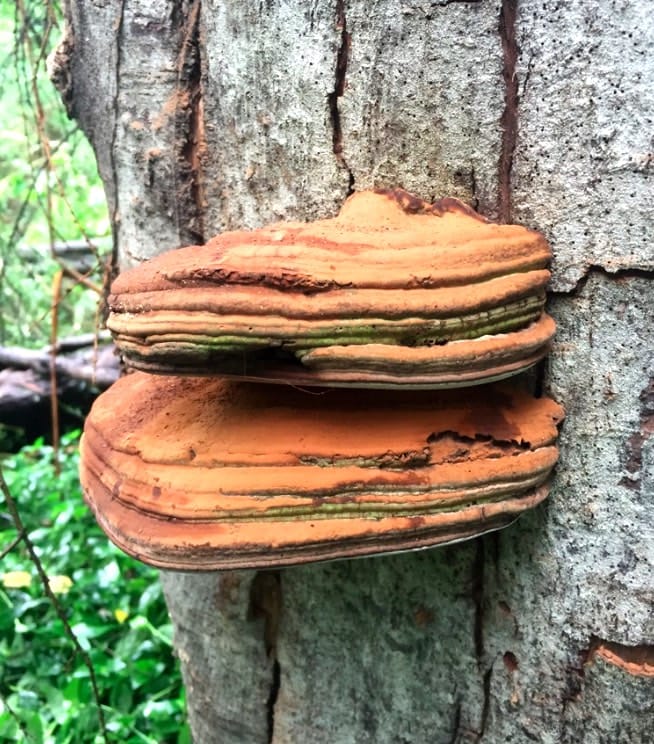
A local examples of Ganoderma (Adam, Victoria, 2019)
Botanical name:
Ganoderma applanatum (syn. Elfvingia applanata, Polyporous applanatus)
Several other Gandoerma spp. including Ganoderma australe (Southern Bracket Fungus) and G brownii of the U.S. are very similar in appearance and appear to be used indiscriminately and are probably synonymous in effect.
Parts used:
Dried fruiting body
Temperature & Taste:
Neutral. Sweet
Uses:
1. Clears Heat and Phlegm, Stops Cough:
–Pharyngitis, Laryngitis
–Chronic Bronchitis, Asthma, Breathlessness
2. Clears Damp, Moves the Blood, Resolves Masses:
–Anti-Tumor and Anti-Cancer
–various Cancers inc. Nasopharyngeal, Esophageal Cancer
–clears Atherosclerosis and Thrombus
3. Benefits the Heart, Calms the Mind and Spirit:
–lower cholesterol, regulates Blood pressure
–Coronary Heart Disease
–Neurasthenia; regulates nervous system
4. Nourishes Qi and Blood:
–fatigue, poor appetite
–increases immunity
Dose:
Powder: 1–3 grams
Decoction: 3–15 grams
10 grams in decoction daily for 1–3 months generally represents a course of treatment, often used as a single herb but may be added to other herbs.
Main Combinations:
1. To enhance Immunity, Ganoderma applanatum with Astragalus Huang Qi
2. Cancer:
i. Ganoderma applanatum with Poria Fu Ling, Trametes (Turkey Tail), Phellinus igniarius, Inonotus obliqus, Astragalus Huang Qi
ii. Ganoderma applanatum with Black Nightshade, Agrimony
iii. Ganoderma applanatum with White Agaric, Dodder
iv. Lung Cancer, Ganoderma applanatum with Comfrey, Elecampane, Asparagus root, Licorice, Bitter Almond
3. To benefit the Heart:
i. Ganoderma applanatum with Notoginseng San Qi
ii. Ganoderma applanatum with Salvia Dan Shen
4. Chronic Bronchitis, Ganoderma applanatum with Licorice, Scutellaria Huang Qin, Almond kernel
5. To strengthen the Qi, reduce fatigue and as a long-term tonic, Ganoderma applanatum with Ginseng
Cautions:
None noted
The Ganoderma species can accumulate heavy metals in toxic environments.
Main Preparations used:
Extract of Ganoderma
Decoct the dried, cleansed and sliced Ganoderma in water for 3 hours, let the strained decoction settle for 6-8 hours, filter, then concentrate the filtrate to a specific gravity of 1.26- 1.28. Add excipient to form a suitable consistency, dry into granules then form tablets, each tablet equal to 1 gram of Mushroom, and coat with sugar.
Dose: 3 tablets three times daily.
Click the above Tabs for more information on this medicine
REVIEW / GENERAL:
–Ethanol extract of G. applanatum showed stronger antioxidant and cytotoxic effects when compared to G. lucium (Ling Zhi). See a summary here
–Constituents from the fruiting bodies of Ganoderma applanatum and their aldose reductase inhibitory activity
–Two Ganoderma species compared
–Bitter triterpenoids from the fungus Ganoderma applanatum
–Highly oxygenated lanostane triterpenoids from the fungus Ganoderma applanatum
–Chemical constituents of Ganoderma applanatum of British Columbia forests
ANTIBACTERIAL
–Antibacterial Activity of Steroidal Compounds Isolated from Ganoderma applanatum (Pers.) Pat. (Aphyllophoromycetideae) Fruit Body
–Exopolysaccharide from Ganoderma applanatum as a Promising Bioactive Compound with Cytostatic and Antibacterial Properties
–Investigation of potential antibacterial properties of methanol extracts from fungus Ganoderma applanatum
–Investigation of Antimicrobial Fatty Acids from Medicinal Artist Conk Mushroom Ganoderma applanatum
–Antibacterial and antifungal potential of wild basidiomycete mushroom Ganoderma applanatum
ANTIOXIDANT:
–Liquid Fermentation of Ganoderma applanatum and Antioxidant Activity of Exopolysaccharides
–Antioxidant and nitric oxide synthase activation properties of Ganoderma applanatum
–Ganoderma applanatum terpenes protect mouse liver against benzo (α) pyren-induced oxidative stress and inflammation
–Antioxidative activities of wild macro fungi Ganoderma applanatum (Pers.) Pat
–Study on antioxidant activity of Ganoderma applanatum intracellular polysaccharides
ANALGESIC, ANTI-INFLAMMATORY:
–Analgesic and anti inflammatory activities of the ethanolic extract of the mushroom Ganoderma applanatum
HYPERURICEMIA:
–Hypouricemic Effect of 2,5-Dihydroxyacetophenone, a Computational Screened Bioactive Compound from Ganoderma applanatum, on Hyperuricemic Mice
HEPATO-PROTECTIVE:
–The ameliorations of Ganoderma applanatum residue polysaccharides against CCl4 induced liver injury
ANTI-FIBROTIC:
–Applanatumin A, a New Dimeric Meroterpenoid from Ganoderma applanatum That Displays Potent Antifibrotic Activity
IMMUNOMODULATORY/IMMUNOSTIMULANT:
–Effect of Polysaccharides from Ganoderma applanatum on Immune Responses
–Effects of Ganoderma applanatum polysaccharide on cellular and humoral immunity in normal and sarcoma 180 transplanted mice
ANTI-TUMOR, ANTI-CANCER:
–Exopolysaccharide from Ganoderma applanatum as a Promising Bioactive Compound with Cytostatic and Antibacterial Properties
–Anti-tumor Effects of Exo- and Endo-biopolymers Produced from Submerged Cultures of Three Different Mushrooms
–Antitumor polysaccharides from some polyporaceae, Ganoderma applanatum (Pers.) Pat and Phellinus linteus (Berk. et Curt) Aoshima
–Ganoderma applanatum secondary metabolites induced apoptosis through different pathways: in vivo and in vitro anticancer studies
–Carboxylate groups play a major role in antitumor activity of Ganoderma applanatum polysaccharide
–Cellular and molecular mechanisms of the Ganoderma applanatum extracts induces apoptosis on SGC‐7901 gastric cancer cells
–Effect of Ganoderma applanatum polysaccharides on MAPK/ERK pathway affecting autophagy in breast cancer MCF-7 cells
–Chemical composition and anti-proliferative effect of Oman’s Ganoderma applanatum on breast cancer and cervical cancer cells
–Ganoderma applanatum: a promising mushroom for antitumor and immunomodulating activity
You must be logged in to view this content, please login. If you're not a member then Click this link to subscribe

Ganoderma applanatum has been shown to have stronger effects in some respects when compared to its more popular cousin Ganoderma lucidum (Ling Zhi). It has a stronger cytotoxic effect against cancer cells, stronger anti-oxidant effect, and higher inhibition of lipid peroxidation. Despite the fact that Ganoderma Ling Zhi has been so widely researched,
Ganoderma applanatum looks highly promosing as a contender of equal or greater medicinal worth. In addition, it has been found to be an adulterant or admixture in a number of products sold as ‘Ling Zhi‘.