Fucus, Kelp, Kun Bu 昆布
Bladderwrack
Kun Bu (TCM)
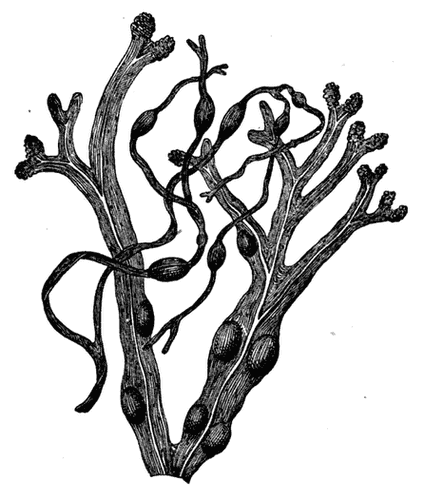
Fucus spp.
Notes on Pharmacognosy, Otto Augustus Wall, 1902
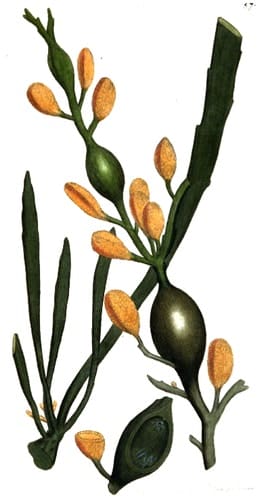
Fucus nodosa
English Botany, Sowerby, 1799
Botanical name:
Fucus spp;
F. vesiculosis, F. serratus, F. nodosus; also Macrocysts, Laminaria, and Ascophyllum spp
Laminaria japonica (Hai Dai 海带), Ecklonia kurome, Undaria pinnatifida and others are used in TCM
Parts used:
Thallus (whole plant); Carbonised Plant
Temperature & Taste:
Cold, dry. Salty
Classification:
Uses:
1. Clears Phlegm, Reduces Nodes and Masses: (TCM, West)
–Goiter, Scrofula, Lymphatic swellings, and other phlegm Tumors
–traditionally for the “12 kinds of Edema, Goiter and Fistula”; “Goiter as hard as a rock can only be cured with this herb” (TCM).
–charcoal obtained from Kelp was used in 1750 by Dr. Russelfor these purposes and was called ‘Vegetable Ethiops’.
–beneficial for Mastitis, Breast Cancer and other types of Cancer.
–swellings and pain of the Testes
2. Promotes Urine, Clears Damp: (TCM, West)
–Edema, Fluid retention
–remedy for Obesity and in diet drinks
–“The best remedy for Obesity” but is usually only effective if the Thyroid is involved. (Ellingwood)
–wine of Fucus has been used for joint diseases including those of the back and hip
3. Benefits the Kidneys: (West)
–Impotence, Infertility (auxiliary medicine)
–Kidney disorders, bladder weakness, Prostatitis, Desquamative Nephritis
–irritation and inflammation of the Bladder.
–Uterine and Ovarian diseases, for Menstrual disorders associated with ‘general muscular relaxation’ (Ellingwood)
4. Benefits the Heart:
–Hypertension, High Cholesterol, Heart Disease and fatty Degeneration of the Heart
5. Nutritive Tonic:
–rich in Minerals and Trace Minerals
6. Clears Heat and Toxin:
–acute Sore Throat.
–Psoriasis and Rheumatic pains (expressed juice, concentrated decoction or dried Extract)
–helps remove Heavy Metals and Radioactive Toxins from the body.
7. Externally:
–a wash of the decoction is used for Strains, Sprains and Bruising.
–the mucilage from the swollen vesicles is an old folk remedy applied to Rheumatism, Bruises, Sprains and ‘weak feet’. (It may be boiled down to a lotion or added to a salt-water bath)
–the mucilage is applied to Glandular Swellings.
–“Corrosive ulcers and all kinds of gatherings are treated with sea-weed, used before it has dried” (Pliny)
Dose:
Infusion: 1–3 teaspoonfuls per cup of water
Decoction: 6–9 grams, up to 15 grams
One ounce of cut, dried Kelp may be covered with 1 pint of cold water, steeped an hour, then bring to the boil, simmer 10 minutes, then strain. Dose is 1 tablespoonful to a wineglassful
Powder: 2–4 grams
Kelp Charcoal: 1–5 grams
Dry Extract: 200–650mg in Pills
Fluid Extract (1:1 in 25% alcohol): 4–8 mls.
Substitute:
1. Sponge can be used in place of Kelp, and calcined Sponge may be used for carbonised Kelp.
2. A number of seaweeds have been used similarly. In TCM, Laminaria and Sargassum are used very similarly.
Main Combinations:
1. Scrofula and Neck Swellings:
i. Kelp with Figwort and Self Heal
ii. Kelp with Dandelion and Cleaversiii. Kelp with Pumice
2. Goiter:
i. ‘Tincture fucus vesiculosishas cured cases of this disease. Be careful that you procure a reliable tincture. If it is a recent case give thirty drops of tincture fucus three times a day after each meal in two tablespoonfuls of water. If the case is chronic give one teaspoonful of the tincture three times a day, after each meal’. (Definite Medication, Eli Jones, 1911)
ii. Kelp, Pumice, Self Heal
3. Rheumatoid Arthritis, Kelp has been combined internally and externally with Wintergreen
4. Obesity:
i. Kelp with Licorice
ii. Kelp with Fennel seed, Ginger
iii. Kelp with Licorice and Aniseed
iv. Kelp with Juniper, Parsley seed
v. with Constipation: Kelp, Juniper berries, Cleavers, Butternut bark (½ oz. ea.); Cover with 3 pints, bring to the boil, then simmer to 2 pints.
Dose: take a wineglassful, 3 or 4 times daily. (Wonders in Weeds, W. Smith)
vi. “From our study of the drug we do not believe Fucus to be a reducer of the adipose tissue of healthy subjects. It is mostly on those cold, torpid individuals with a cold, clammy skin, loose and flabby rolls of fat, with relaxed pendulous abdomen, that Fucus will display its powers to the best advantage. In this class of cases fat is a morbid condition, a result of vitiated function. With such, the remedy acts beneficially by overcoming this torpid and morbid tendancy, thus reducing the size by toning up the vascular and sympathetic systems. Possibly it also acts upon the starchy matters of the food in some manner, so as to prevent their easy change into fat when introduced into the human economy”. (Ellingwood, taken from ‘New Preparations’, 1878)
v. Kelp with Dandelion, Fennel seed, Rosemary
5. Fluid Retention, Kelp with Juniper and Parsley seed
6. Prostatitis, Kelp with Cleavers, Corn Silk, Horsetail, Saw Palmetto (Wonders in Weeds, W. Smith)
7. Hyperthyroidism:
i. Kelp with Horsetail
ii. Kelp with Self Heal and Lemon Balm
iii. Kelp with Gentian, Rhubarb and Peppermint
Major Formulas:
Decoction of Self Heal and Kelp
Cautions:
1. Use cautiously during pregnancy
2. When treating Thyroid conditions, watch for aggravation when treatment is initiated. It is not suitable in all cases.
Toxicity
1. Iodine-Induced Thyrotoxicosis After Ingestion of Kelp-Containing Tea
Main Preparations used:
Extract of Kelp, Carbonised plant or ashes
1. Extract of Kelp:
Dried and powdered Kelp (Fucus) is percolated with Alcohol (45%), and evaporated to a stiff extract.
Dose: 200–650mg (3–10 grains) (Squires)
2. Carbonised Kelp, Aethiops Vegetabilis, Pulvis Quercus marinae
Kelp in flower or seed; cleanse, wash and dry in the sun. Expose to heat in an iron vessel in a crucible with a perforated cover added. Continue heating until there are no more Vapors and it has acquired an “obscure red heat”. Cool, powder and keep.
Primarily for Scrofula, Goiter and lymphatic swellings.
Dose: 1 scruple or more (Pharmacopoeia Herbipolitania, 1796)
Click the above Tabs for more information on this medicine
-“Smelling fresh seaweed is said to relieve hay-asthma”. (Squires)
-It is a valuable fertiliser, and has long been regarded as especially useful in potatoe crops. The ashes have been added to livestock feed with good results.
You must be logged in to view this content, please login. If you're not a member then Click this link to subscribe