Foeniculum, Fennel, Xiao Hui Xiang 小茴香
Traditionally called Maratrum
Xiao Hui Xiang (TCM)
Saunf (Ayurveda)
Combu (Siddha)
La la phud ལ་ལ་ཕུད (Tibetan)
Badiyan (Seed, Unnai); Bekh e Badiyan (Root, Unani)
Pi Pi (Sumerian)
Simru orSamranu (Akkadian)

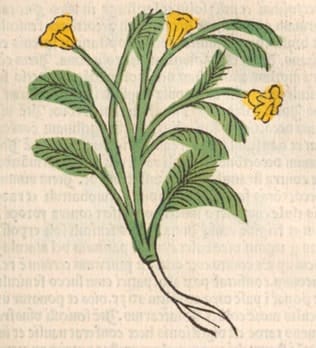
Herbarius latinus, Petri, 1485
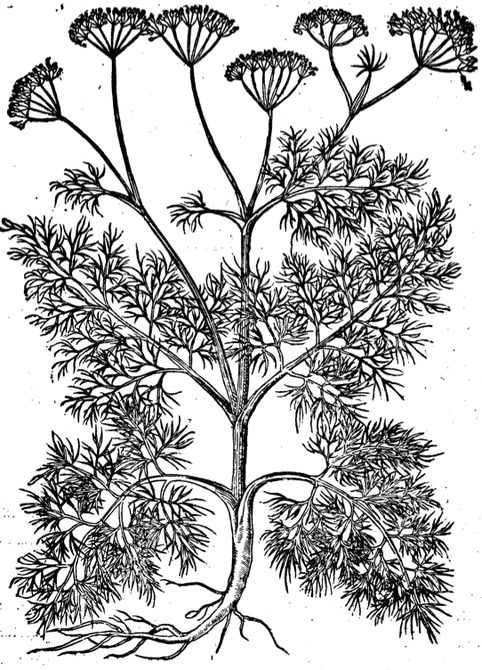
New Kreuterbuch, Matthiolus, 1563
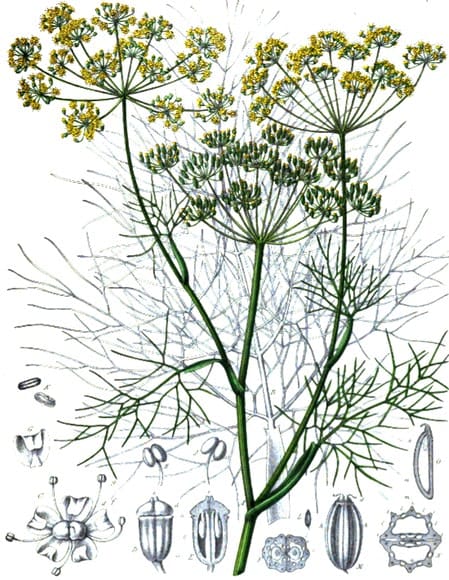
Atlas der officinellen pflanzen (2), Felix, 1899
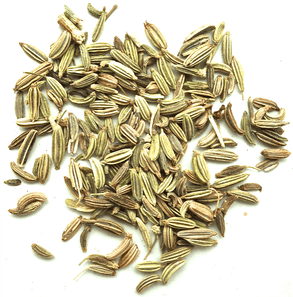
Fennel seed (Adam, 2016)
Botanical name:
Foeniculum vulgare
Parts used:
Root, Seed; sometimes the herb
Sweet and Bitter (or “Common”) varieties of Fennel seed are used.
Temperature & Taste:
Very Warm, dry. Pungent open, resolve, discuss
Classifications:
2B ATTENUATER. 2J. RAREFYING. 2H. CARMINATIVE 2K. RESOLVENT
3C. ALEXIPHARMIC. 3G. EMMENAGOGUE. 3H. LACTAGOGUE 3K. EXPECTORANT. 3L. ANTI-TUSSIVE
4a. CEPHALIC. 4b. OPTHALMIC. 4e. STOMACHIC. 4f. SPLENETIC 4g. HEPATIC. 4h. NEPHRITIC. 4i. UTERINE
TCM:
M. Warm to Expel Cold
Uses:
1. Root is one of the Opening Roots
-obstructions of the Liver, Spleen;
-Cholecystitis, Gall Stones, Jaundice (seed)
2. Seed is one of the Warming Seeds:
-cold in the Stomach, Kidneys, Bladder, Uterus or lower abdomen
-helps clear Cold, Phlegm and Damp diseases
3. Warms the Kidneys, Promotes Urine (Leaf, Root, Seed)
-obstructed Urine, Edema
-lower back pain (roots, seed)
-traditionally regarded as Aphrodisiac; helps Fertility
-gives strength, courage and longevity (Greeks)
-“good against Sand, Gravel or Tartarous Mucilage of the Reins”. (Seed; Salmon)
-“The Decoction of Fennel drunken often will make old men to seem long young”. (Macer’s Herbal, 13th Century)
-“tonifies the deficiency of the Ming Men (Gate of Life). (Seed; Li Gao)
-“It warms the Dan Tian”. (Seed; Wu Shao)
4. Moves the Blood, Promotes Menstruation (Root, Seed):
-Amenorrhea
-helps promote Labor, cleanses after Delivery
5. Warms the Lungs, clears Phlegm, Stops Cough (Root, Seed):
-Strengthens the Lungs (root);
-Cough, shortness of Breath, Wheezing (Leaf, seed, root)
-“ease an old Cough, open Obstruction of the Lungs and cause free Breathing”. (Seed, Salmon)
6. Warms the Stomach, clears Wind, benefits Digestion (Root, Seed):
-Clears Wind; carminative, strengthens the Stomach (Leaf, Root, Seed)
-‘Discusses Wind and Humors’ (Root, Seed)
-Corrects Purgatives and medicines which create Wind (Seed)
-Prolapse, Hernia (Seed; West, TCM)
-much used for Obesity
-“regulates the flow of Qi and whets the appetite”. (Li Shi Zhen)
-“Stops vomiting and nausea”. (Seed, Ma Zhi)
7. Promotes Milk: (Seed)
-increases Breast Milk, improves Milk quality
8. Benefits the Eyesight (Seed):
-poor or deteriorating vision, spots in front of the Eyes
-“the powder of the seed of Fennel drunk for certain days together preserveth the eyesight”. (Gerard)
9. Resists Poison (Seed):
-“It also treats cholera and snakebite”. (Tang Ben Cao)
10. Externally:
-compress makes a good eye wash for Conjunctivitis, Blepharitis and other topical inflammations
-Long used in Europe as a wash to restore the hair.
Dose:
Seed and Root can generally be used in similar doses.
Decoction: 6–9 grams;
Powder: 300mg–3 grams
Tincture of the Seed (1 in 5): 1–3 drams
Fluid Extract (1:1 in 70% alcohol): ½–3 mls
Root Juice: 50–100 mls.
Comment:
All parts are warm, dry, pungent and aromatic, and share similar functions. They all move Qi, settle wind and colic, and warm the stomach and kidneys.
1. The root was regarded as warmer, and is more strengthening to the Kidneys. The root “cleanses the blood, opens all obstructions in the
Liver … and amend the ill color in the face after sickness, and to cause a good habit through the body”. (Culpeper)
2. The seed is more often used, and has a slight mollifying effect due to its oil and mucilage content.
3. The herb has been used similarly, but is generally weaker and is not commonly used.
Correctives:
1. Coriander
2. White Sandalwood
Preparation:
SEED:
1. It can be stir-fried until yellow for internal use.
2. “It functions better after being processed with wine”. (Zhen Quan)
3. Confected to increase its tonifying effect. (West)
ROOT:
1. Candied or Confected to increase its tonifying effect.
Substitutes:
1. Fennel root and Seed may replace one another.
2. Celery seed or Aniseed (Unani)
3. Bishop’s Weed seed (Tibetan)
Main Combinations:
Fennel seed is often combined with Aniseed, and the other Warming Seeds.
Fennel root is often combined with Parsley root (as in Syrup of Two Opening Roots), and other Opening Roots.
Abdomen, Liver:
1. Carminative, for Colic, Bloating:
i. Fennel seed with Aniseed, Caraway
ii. Fennel seed with Ginger, Peppermint, Dill, Licorice
iii. Fennel seed with Aniseed, Caraway, Cumin, Camomile (as inCarminative Decoction)
iv. Fennel seed, Orange peel, Rhubarb (Sobernheim, 1840)
v. Colic in children, Fennel, Camomile, Balm
2. Digestive weakness:
i. Fennel seed, Orange peel, Elecampane, Licorice
ii. Fennel seed (2 parts), fresh Ginger (4 parts). Soak in water for 24 hours, then stir-fry on a low heat, add Salt (1 part) and form pills. (TCM, Ben Cao Gang Mu)
3. Hernia:
i. Fennel seed and Aniseed (or Star Anise)
ii. Fennel seed, Caraway seed, Comfrey root
4. Diarrhea:
i. Fennel seed with Ginger (Ayurveda)
ii. Fennel seed, Nigella, Nutmeg, Galngal
iii. Fennel seed, Chebula
5. Jaundice:
i. Syrup of Two Opening roots for infants and delicate woman
ii. Syrup of Five Opening roots is stronger for Jaundice (Herbarium Horstianum, 1630)
6. Liver obstruction:
i. Syrup of Opening Roots with Decoction of Chicory root (Herbarium Horstianum, 1630)
ii. Fennel seed, Wormwood
iii. Fennel seed (200 drams), Rock Parsley seed, Aniseed, Bitter Almond, Spikenard, Wormwood (6 drams each), Honey sufficient to form an Electuary. Dose: 2 drams. (Syrian ‘Book of Medicine‘, Budge, 1913)
7. Obesity:
i. “Whosoever is over fat, let him drink of the juice of the Fennel, and it will reduce him”. (The Physicians of Myddvai, translated by John Pughe esq., 1861)
ii. A good quantity of Fennel is boiled in water and the juice is pressed out. This is taken first and last thing for someone who is overweight, and is effective for man or woman. (The Good Housewifes Jewell, T. Dawson, 1596)
iii. “Both the seeds, leaves and root of Fennel are much used in drinks and broths for those that are grown fat, to abate their unwieldiness and cause them to grow more gaunt and lank”. (Nature’s Paradise, William Coles, 1650)
iv. “Some men are so gross and fat, that they can hardly walk or do any business; let such eat 3 or 4 Cloves of Garlic every morning with Bread and Butter, and fast 2 hours after it, and let their drink be water wherein Fennel hath been boiled, it will in a very small time ease them’. (Culpeper)
Lungs:
8. Catarrh and Lung diseases, especially in children, Fennel seed with Licorice (Sobernheim, 1840)
9. Cough:
i. Fennel seed with Bitter Almond (as in Powder to Warm the Lungs of Mesue)
ii. Fennel seed, Lungwort, Lance-leaf Plantain, Coltsfoot (Kroeber)
iii. Cold Phlegm of the Lungs, Fennel seed with Hyssop, Cinnamon, Licorice (Hildegard)
iv. Fennel seed with Celery seed, Licorice juice, Maidenhair, Sweet Almond (as in Troches for Cough of Wirtzung)
v. Fennel seed with Fennel root with Thyme, Hyssop, Celery root, Aniseed, Raisin, Licorice (as in Decoction of Thyme of Andernacus)
10. Cleanse the Brain and strengthen the Eyes, Fennel seed with Triphala, Coriander and Rose (Unani)
Urinary:
11. Promote Urine, Edema:
i. Fennel seed, Celery seed
ii. Fennel root, Asparagus root, Celery root, Parsley root, Butcher’s Broom root
iii. Fennel root with Cinnamon, Asarum, Wormwood, Aniseed, Rhubarb, Indian Spikenard, Parsley, Clove, Cardamon (as in Antidote for Edema of Nicholas)
iv. Fennel root with Asarum, Madder, Costus (as in Pills to Provoke Urine)
12. Bladder Stones;
i. Fennel seed, Madder
ii. Fennel root, Betony, Rosemary, Sage, Bay berry, Juniper berry, Licorice
Gynecology & Obstetrics:
13. Promote Menstruation:
i. Fennel seed, Licorice and Senna (Schenk)
ii. Fennel seed, Pennyroyal, Balm
iii. Fennel seed, Motherwort
iv. Fennel seed, Cyperus rotundus, Pennyroyal
14. Leukorrhea from Damp, Fennel seed with Agnus Castus, Rue, Cinnamon (as in Powder for Leukorrhea)
15. Promote Milk:
i. Fennel fresh leaves or seed eaten
ii. Fennel; root and seed (equal parts) decocted
iii. Fennel seed with Barley decoction (Herbarium Horstianum, 1630)
iv. Fennel seed with Orange peel
v. Fennel seed with Aniseed, Parsley root, Licorice
vi. Fennel juice drunk with wine and water
vii. Fennel seed with Red Clover, Aniseed, Sesame seed (as in Powder for Defect of Milk)
16. Threatened Miscarriage, Fennel seed with Balm, Motherwort (as in Decoction for Threatened Miscarriage of Gabelhover)
17. Pain during Childbirth;
i. Fennel seed, Cinnamon, Myrrh
ii. decoct Fennel and Asarum together and use as a wash over the lower back and thighs. (Hildegard)
18. To calm children:
i. Fennel seed, Balm, Raspberry leaf
ii. Fennel seed with Camomile, Marshmallow and Licorice
Head, Brain, Eyes:
19. Headache, Fennel seed with Rue, Lovage, Black Pepper (as in Potion for Headache of Galen)
20. Vertigo, Dizziness:
i. Fennel seed with Lavender, Horehound, Asparagus root, Cinnamon (as in Decoction for Vertigo)
ii. Fennel seed with Stoechas, Thyme, Marjoram, Betony, Rosemary, Lavender, Aniseed, Peony root (as in Tincture for Vertigo)
21. To strengthen the Eyesight:
i. Fennel seed with Eyebright
ii. Fennel seed with Lycium Gou Qi Zi (“Goji”)
iii. Fennel seed Tincture 5 parts, Distilled Water of Eyebright 25 parts, use as eye drops
iv. Fennel seed, Eyebright, Clove, Cinnamon, Long Pepper, Rue, Celandine (as in Confection of Eyebright of Mesue)
v. Fennel seed with Caraway seed, Aniseed, Parsley seed, Celery seed, Celandine root (as in Electuary for the Eyes of Grulingus)
vi. Fennel seed with Betony, Rosemary, Elecampane, Fennel root, Chebulic Myrobalan, Rue, Lovage (as in Electuary to Strengthen the Sight)
vii. to cleanse the Sight, Fennel seed with Senna, Betony, Eyebright, Vervain, Rosemary, Licorice (as in Powder to Cleanse the Sight)
viii. to cleanse the Sight, Fennel seed with Sarsaparilla, Orris, Elecampane, Betony, Balm, Eyebright, Vervain, Celandine, Licorice, Aniseed, Fennel seed, Senna, Turbith, Agaric (as in Decoction to Cleanse the Sight of Riverius)
ix. Eyebright Drops of Kneipp: Aloe (0.2), Fennel seed, Eyebright (10 each), Spirit (20), Distilled Water (80); digest, filter. Take a teaspoonful 3 times daily.
Major Formula:
Common Decoction
Carminative Decoction (Pharm. Dogmaticum)
Decoction to Cleanse the Sight (Riverius)
Decoction for Vertigo (Culpeper)
Decoction of Thyme of Andernacus
Decoction for Threatened Miscarriage (Gabelhover)
Potion for Headache (Galen)
Syrup of Two Opening Roots
Wine of Eyebright and Fennel
Tincture for Vertigo
Powder for Leukorrhea
Troches for Cough (Wirtzung)
Confection of Eyebright (Confectio Humain) (Mesue)
Electuary for the Eyes (Grulingus)
Triphala Electuary of Fennel Seeds (Unani)
Cautions:
1. Generally not used in Heat conditions, or Deficient Heat (Heat from Yin deficiency)
2. “Overdosing will damage the eye”. (Seed; Li Shi Zhen)
3. Adverse effect from the internal use of the Oil include various respiratory problems, pulmonary edema, seizures, and hallucinations.
Toxicity:
The LD50 for sweet fennel oil was 3.8g/kg (orally in rats) compared to 4.5g/kg for the bitter variety.
Main Preparations used:
Confected Seed, Distilled Water of both the whole Plant and the Seed, Distilled Oil, Salt of the Ashes
1. Confected Fennel Seed
“Good against all Poison, and especially against the venom of Snakes, it moves Womens terms, it warms the back, it assuages the pain of the same, it breaks the Stone, it expels Urine, the Stone, Gravel, and the Slime whereof the Gravel is engendered, it increases Womens Milk, it cures sour belchings of the Stomach, it is good against all wambling and vomiting, it allays the cough, and all hoarseness of the Throat. But above all is this Fennel seed commended against the darkness of the eyes, for it preserves people from all films on the Eyes, it sharpens the sight if one take the same morning and evening, to wit, after meals, and chews the same long”. (Wirtzung)
2. Distilled Water of Fennel Seed
Fennel seed (1 part), Water (20 parts)
Distil off half.
Strengthens the Heart and Brain. Good for the Lungs, so therefore good for coughs, and to increase milk in nursing mothers. It also promotes menstruation. Used as an eye wash to clear the sight.
Dose: 20-55 mls.
3. Spirit of Fennel
Made as Spirit of Aniseed.
“It breeds Milk in Nurses, is good against the Colic, gripings at Stomach, and Oppression of Wind in the Bowels; It is also a singular good Pectoral and Stomachic, opening Obstructions of the Lungs, causing Free Breathing, and to take away Coughs, Colds, Wheezing, Hoarseness &c.”.
Dose: 1–4 drams. (Pharmacopoeia Bateana)
4. Essential Oil of Fennel
Made as Distilled Oil of Aniseed. (500kg seed yields 1 kg of oil.)
“It comforts the affects of the Head. It sharpens the sight, it helps the straighness of the breast, and hoarseness of the voice, it helps concoction and dissolves wind; it breaks the Gravel and provokes Urine and the Menstrual Flux. It opens obstructions of the Liver and Milt, and profits greatly against the Dropsy and Yellow Jaundice being used with convenient liquors or medicines”. (A Brief Answer of Josephus Quercetanus Armeniacus, Doctor of Physick, 1591)
It warms the Head and Womb, increases milk in nursing mothers, and can be given to the mother to help griping in the infant. It strengthens the stomach, good for colic. Also used to Strengthen the Nerves, and is dropped into the Ear for hardness of hearing and deafness.
Dose: 2-6, and up to 12 drops on sugar. (Salmon)
5. Sugared Oil of Fennel
Chemical Oil of Fennel 40 drops
Refined Sugar 12 oz.
Mix together. “Scarcely a better thing in the World against the Colic and Gripings of the Guts, especially in new born children, for, and in which case I commend it as a Jewel, to sweeten their Milk and Pap withall. It is also Pectoral and opens all sorts of Obstructions in the Breast and Lungs, being specifically good against Colds, Coughs, Asthmas, Wheezing, Hoarseness &c.”
Dose: ½–1 oz. for an adult. (Pharmacopoeia Bateana)
Click the above Tabs for more information on this medicine
-The name Fennel is derived from the Latin for Hay, Foenum.
–Marathon, the Greek name for the plant means ‘to grow thin’ in reference to its long history of use in overweight and obese people. The Ancient Greek Olympiads would eat Fennel seed often, both for strength, and to help control their weight.
-Much used by the Ancient Egyptians, Greeks, Romans, Indians and Chinese both in food and medicine. Pliny listed 22 remedies under Fennel.
–Pliny noticed that after Snakes shed their skin, they sometimes rubbed up against the Fennel plant, which seemed to correspond to the clearing of their eyes. This was taken as a Signature that Fennel could clear the sight.
-“Serpents have caused Fennel to be very famous, for as soon as they taste of it, they become young again, and with the juice thereof repair their sight, whence it is observed, that the same is good to repair a mans sight that is dim”.
-Long associated with Longevity, Fennel has been said to be the drug of immortality of the Prometheus legend. “Authors write that Serpents wax young again by tasting and eating of this herb, wherefore some think that the use of the herb therefore is very meet [good] for aged folk”. (Turner)
-From the School of Salerno (taken from the English version by Sir John Harington):
In Fennel seed, this vertue you shall find,
Forth of your lower parts to drive the Wind …
Of Fennel vertues four they do recite,
First, it hath power some poisons to expel,
Next, burning Agues it will put to flight,
The stomach it doth cleanse, and comfort well:
And forthly, it doth keep and cleanse the sight.
And thus the seed and herb doth both excell.
-From Gerard (taken from the writings of the School of Salerno):
Of Fennel, Roses, Vervain, Rue and Celandine,
is made a water good to cleer the sight of eine.
–Hildegard von Bingen, the Medieval German female Saint and healer loved Fennel: she said it “makes us happy, with Good digestion”. She also told of how Fennel was steeped in the water of sick Sheep in her time.
-Records of King Edwards palace in 1281 showed the household to consume 8-10 lbs. of Fennel seed per month. During this time, it was consumed in large quantities by both rich and poor. The wealthy ate it to avoid obesity, and to build their strength. The peasants ate the seed to feel full and to keep their strength up, while the overweight ate it as a type of diet.
-Anglo-Saxons hung Fennel over the door to protect from Evil and Witchcraft. Often other herbs such as St. John’s Wort were added. The seed was put into keyholes to prevent evil ghosts from entering the house.
-There is some antipathy between Fennel and Coriander; for if the latter grows near Fennel, the Fennel will not fruit. The Ancients would say this is because of the Cold property of the Coriander.
You must be logged in to view this content, please login. If you're not a member then Click this link to subscribe