Filipendula, Meadowsweet
Dropwort, Red Saxifrage, Oenantha, Ulmaria
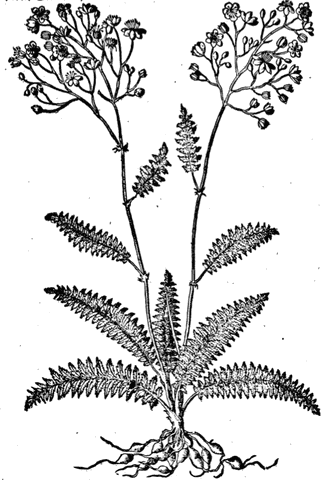
New Kreuterbuch, Matthiolus, 1563
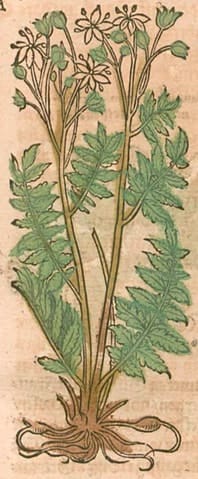
Krauterbuch, Lonitzer, 1578
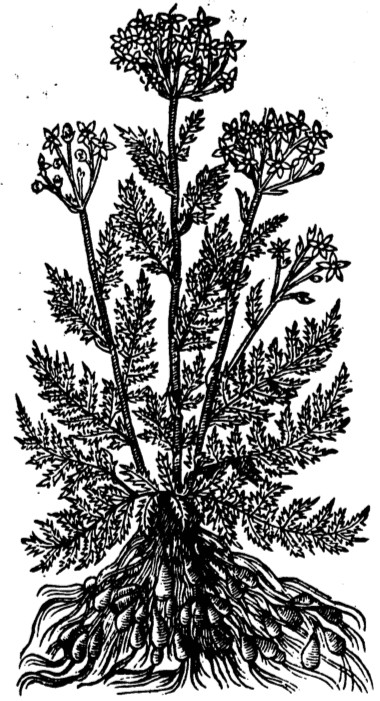
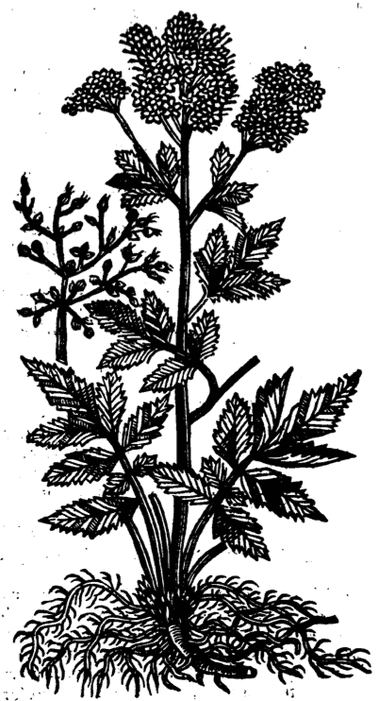
Two varieties of Meadowsweet
Parkinson, Theatrum Botanicum, 1640
Botanical name:
Filipendula ulmaria (syn. Spiraea filipendula)
Parts used:
Herb, Root
Temperature & Taste:
Cool, dry. Sweet, Bitter
“Hot and Dry in the Third Degree” according to some.
attenuates, binds, discusses
Uses:
1. Clears Stomach Heat:
-Indigestion, Colic
-Hyperacidity, Heartburn, Peptic Ulcer
-Diarrhea in children
2. Clears Wind-Heat:
-Fever, Cold, Flu
-Quartan and Malignant Fevers
-preservative against Epilepsy and Vertigo
3. Clears Damp-Heat, Opens Obstructions:
-Pain and obstruction of the Bladder and Kidneys; Acute cystitis; Edema
-helps expels Stone (Root)
-clears thick Phlegm and ‘tartarous mucilage’ of the Lungs, Reins and Bladder
-Arthritis, Rheumatism, Gout
-Leukorrhea
-adjunct for Tumors and Cancer
4. Astringes, Stops Bleeding:
-Spitting Blood, Diarrhea with Blood
-Excess Menstruation, Uterine Bleeding, Leukorrhea
-“The Infusion of the Root.of Meadow sweet in Wine is good against Spitting of Blood, the Dysentery, the Lask [Diarrhea], and too abundant Courses [excess Menstruation]. But then the use of it must be continued”. (Tournefort, 1719)
5. Kills Worms:
-has been used for Tapeworm
6. Externally:
-Externally for Hemorrhoids
-eye drops for burning and itching eyes
-a favourite Wound herb of some older herbalists, used for Trauma, Bruises, Fractures
-“Meadow Sweet produced notable Effects on a deadly Wound in the Bladder of a young Maid, and in an almost incurable Fracture of the Arm”. (Plaster applied) (The Compleat Herbal, Tournefort, 1719)
Dose:
Infusion: 1 teaspoonful (4–6 grams), 3 times daily
Tincture (1:5 in 45%): 2–4mls
Comment:
-“Makes the Heart cheerful; for which Purpose some use the Flowers and some the Leaves”. (The Compleat Herbal, Tournefort, 1719)

Main Combinations:
1. Cystitis:
i. Filipendula with Barley, Couch grass
ii. Filipendula with Violet
2. Stomach Pain, Filipendula with Fennel seed
3. Gastrointestinal Ulcers:
i. Filipendula with Licorice
ii. Filipendula, Calendula, Yarrow, Licorice
4. Stones, Filipendula, Acorus root, Saxifrage with roots (The Practise of the New and old Phisicke, Gesner, 1599)
5. Gout, Filipendula with Burdock root
6. Leukorrhea, Filipendula root in powder taken with Carrot seed.decoction. (Tournefort, 1730)
7. Phthisis, Filipendula with Gentian (The Secrets of Alexis, 1615)
8. Scrofula and Tumors:
i. Filipendula with Figwort, Cinquefoil, Agrimony, Pilosella (as in Electuary of Figwort of Avicenna)
ii. Filipendula with Guaiacum, Walnut rind, Dock root, Hound’s Tongue, Raisins (Ale Against Scrofula, Fullers)
9. Tumors:
i. Filipendula with Elecampane
ii. Filipedula, Hyssop, Agrimony, Figwort
10. Cancer:
i. Filipendula with Angelica, Burdock, Elecampane, Gentian, Herb Robert, Sage (as in Cancer Ale 1, Fullers)
ii. Filipendula with Guaiacum, Sarsaparilla, Walnut bark, Herb Robert (as in Cancer Ale 2, Fullers)
11. Ulcerated Cancer, Filipendula with Black Nightshade, Sorrel, Figwort, Agrimony with Alum and Camphor topically (as in Drying Water)
Cautions:
Avoid overdose
Main Preparations used:
Click the above Tabs for more information on this medicine
You must be logged in to view this content, please login. If you're not a member then Click this link to subscribe