Euphrasia, Eyebright
Zhim thig sang rgyas chu ‘jib ཞིམ་ཐིག་ཐིག་སང་རྒྱས་ཆུ་ཇིབ་ (Tibet)
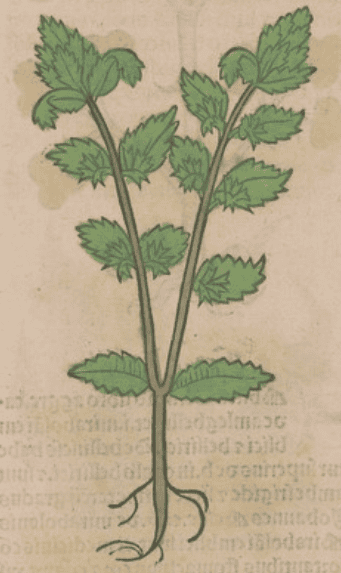
Ortus Sanitatis, Meydenbach, 1491
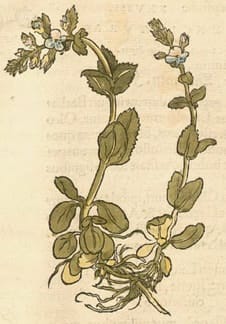
Herbarum Vivae Eicones, Otto Brunfels, 1530
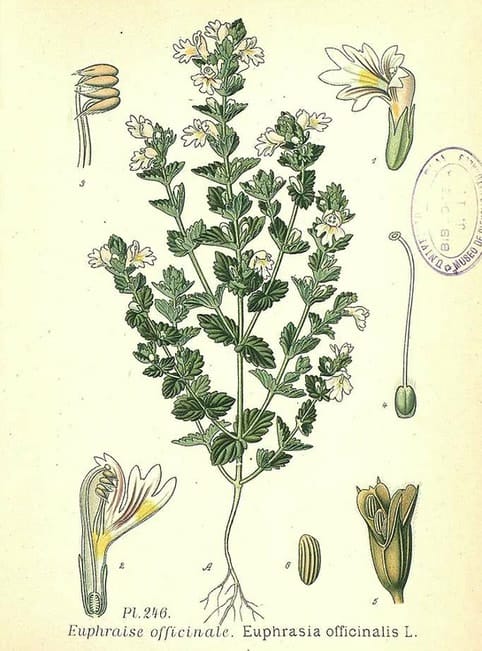
Masclef, Atlas des plantes de France, 1893
Botanical name:
Euphrasia officinalis (syn. E. rostkoviana)
In Tibet, E. himalayica is used similarly.
Parts used:
Herb in flower
Temperature & Taste:
Cool (Warm in the west), dry. Bitter, Pungent
astringes, discusses
Classifications:
Uses:
1. Clears Wind-Heat, Benefits the Eyesight: (West, Tibet)
-sore, red, inflamed eyes; conjunctivitis
-poor eyesight from straining or old age.
-Tearing Eyes, Ophthalmia
-also Constant Winking or Paralysis of the Eyes (The medical genius – a guide to the cure, Jones, 1887)
–A number of writers including Hildamus claimed it to have cured the sight of many people over the age of 70 years.
-topically for “Clouds, Mists, Pearls, Suffusionsof the Eyes” (Salmon)
-“It appears to specifically influence the nasal membranes and lachrymal apparatus. In acute catarrh (fluent coryza), in which there is a profuse watery flow, it exerts its most specific action”. (King’s)
-“Secretion of acrid mucus from eyes and nose with heat and pain in frontal sinus”. (Scudder)
2. Benefits Brain and Memory, Settles Wind:
-traditionally regarded as being strengthening to the Brain, Memory and other senses.
-Epilepsy, Dizziness, Vertigo, Headache, Migraine
3. Clears Phlegm and Heat, Resists Poison:
-Head colds, Influenza
-sinusitis, allergic rhinitis, catarrhal deafness
-Poisons, including excess use of alcohol and tobacco (Kranichfeld, cited in Clarus, Handbuch Der Arzneimittelmeditl., 1860)
4. Clears Stomach and Liver Heat:
-“Tragus found the Decoction of it in Wine drunk warm, to be a Sovereign Remedy in the Jaundice”. (The Compleat Herbal, Tournefort, 1719)
–Kneipp praised it as a stomach-bitter
5. Externally:
-as an eye wash (decoction), or the juice or distilled water for red, sore, swollen and itchy eyes, conjunctivitis, styes, blepharitis etc.
-Cataract is treated by touching the eye repeatedly with the chopper fresh herb, or else by placing a seed in the eye and closing the eye for a prolonged time. The seed was said to get bigger, the cataract, smaller. (Tibet)
-skin conditions including weeping Eczema and Herpes.
Dose:
Decoction (brief): 3–6, up to 9 grams
Powder: 500mg–3 grams
Tincture (1:5 in 45% alcohol): 2–4 mls, up to 6 or 8mls.
Fluid Extract (1:1 in 25% zlcohol): 2–4 mls.
The warm strained decoction or distilled water is used as a eyes wash.
As an eye wash to benefit the eyes, decoct or steep briefy in boiling water, strain, and use warm as an eye wash. As a wash to clear heat and mucous from the eyes, infuse in hot water until cold, and use cold.
Main Combinations:
1. Poor Eyesight:
i. Eyebright with Mace (as in Eyebright Powder) for poor Eyesight and to strengthen the Memory.
2. To strengthen the Brain and Eyes and quicken the Sight, Eyebright with Fennel seed, Clove, Cinnamon, Long Pepper, formed into an Electuary with Honey in which juices of Fennel, Rue and Celandine have been boiled
3. Red, Sore and inflamed Eyes:
i. Eyebright tincture (12 drops), mixed into water (half ounce) to be used as eyedrops or an eye wash.
ii. Eyebright tincture (20 drops) mixed into a wineglassful of Rosewater, used as eyedrops.
iii. Eye water; Rose water, Eyebright water (60 parts each), Aloe (4 parts), Sugar (1.25), used topically
iv. Eyebright with Elder flower
v. Eyebright, Self Heal, Balm
vi. Eyebright, Chrysanthemum, Peppermint
vii. Liver Heat, Eyebright, Blessed Thistle
viii. Eyebirght, Ground Ivy, Cleavers
4. Catarrh:
i. Eyebright with Angelica, Yarrow, Cinnamon
ii. Eyebright, Fennel seed, Mace
iii. Eyebright, Nettle, Elder flower
iv. Eyebright, Yarrow, Elder flower, Rosehip
5. Allergic Rhinitis,
i. Eyebright, Nettle, Golden Rod, Blessed Thistle
ii. Eyebright, Nettle, Echinacea, Elder flower, Licorice
iii. Eyebright, Ephedra, Licorice
6. As an eye wash, Eyebright with Fennel, Rue, Celandine, Vervain, Betony, Rosemary, Fennel seed, Calamus, prepared as a distilled water.
7. A steam bath for the Eyes, Eyebright with Valerian, Camomile, Vervain, Elder flowers in white wine (Treben)
8. Eye water; Rose water, Eyebright water (60 parts each), Aloe (4 parts), Sugar (1.25)
9. Eyebright Drops of Kneipp: Aloe (0.2), Fennel seed, Eyebright (10 each), Spirit (20), Distilled Water (80); digest, filter. Take a teaspoonful 3 times daily.
11. Headache, Migraine, Eyebright with Betony, Rue, Rosemary, Sage (as in Syrup of Betony)
Major Formulas
Eyebright Powder
Confection of Eyebright (Confectio Humain) (Mesue)
Powder to Clarify the Eyes (Nicholas)
Powder for the Eyes
Powder for Weakness of Sight
Powder to Cleanse the Sight (Wirtzung)
Powder to Benefit Eyesight (Riverius)
Syrup of Betony (Bononiense)
Eyebright Wine
Wine of Eyebright and Fennel
Tincture for Vertigo
Water for Cancer
Electuary to Strengthen the Sight (Wirtzung)
Pills to Clarify Pilulae Lucis Majores Mesue
Secret Pills
Water of Emperor Frederick for the Sight
Cautions:
Generally Safe.
Main Preparations used:
Conserve of the whole Herb in Flower, Distilled Water of the Herb, and a Wine
1. Conserve of Eyebright
Stamp 1 lb. of fresh Eyebright leaves and flowers (stripped from their stalks), with 2 ½ lbs. of sugar. Set in the Sun, stirring it about often.
This is very good for the Eyes and Brains, removing all cold humors, and strengthens the Memory. It strengthens the Liver, expels the Yellow Jaundice and Fevers coming from an unclean Stomach.
Typically, as with most conserves, the dose was as much as a Walnut.
2. Distilled Water of Eyebright
Used for heat and phlegm in the head. Also dropped into the eyes for dimness of sight, and to clear and strengthen the Eyesight.
3. Eyebright Wine
Eyebright 1 handful
Wine 1 gallon.
It was said to clarify and restore the sight. “A cup of it in the morning is worth a pair of spectacles”. (Culpeper)
Click the above Tabs for more information on this medicine
-Euphrasia comes from the Greek word for “Good Cheer”..
-It has been said that Eyebright has been used for around 2000 years to clear and strengthen the Eyesight; this originating from its Doctrine: “the purple and yellow spots and stripes which are upon the flowers of the Eyebright doth very much resemble the diseases of the eye, as bloodshot, etc., by which signature it hath been found out that this herb is effectual for the curing of the same”.
-“If the herb was but as much used as it is neglected, it would half spoil the spectacle makers trade; and a man would think, that reason should teach people to prefer the preservation of their natural before artificial spectacles”. (Culpeper)
–Parkinson, quoting Arnoldus de Villa nova says he “commendeth the wine made with Eyebright put into it when it is new made and before it works … to help the dimness of sight, and saith that the use thereof restored old men’s sight to read small letters without spectacles that could hardly read great ones with their spectacles before … “.
-It was called “Little Light” in relation to its ability to brighten the eyesight.
“Hildanus, a celebrated Author of great Credit, says, that the Virtue and Efficacy of Eye-bright is so great in Weakness of Sight, that he has observed some Men Seventy Years of Age, to have recovered their Sight in that decrepit Age by the Use of this, after they had lost it by much Study and Watching”. (The Compleat Herbal, Tournefort, 1719)
“Caspar Hoffman says, that the Uncertainty of the Plant, makes the use of it despicable; and that Arnoldus and others, restrain the useof it to such as are fat and full of gross Humours. And with respect to Wine, Pena says, it had very ill Success with his Companion and Fellow-Labourer. Nor is this to be wondered at, says he, for it does not cure any fort of Dimness indifferently, but that which is caused by Coldness; and not all that neither, but only such as proceeds solely from Phlegm, or Rheum: For the very Taste continues he, which has a certain Bitterness in it, demonstrates the Plant to be hot and dry”.
“But if it conduces to remove the Dimness of the Eyes, it does not effect this by its Heat and Dryness (for many things that are hot and dry are of no Service to the Eyes) but by a Subtlety of Parts, and a certain specific Property”. (The Compleat Herbal, Tournefort, 1719)
You must be logged in to view this content, please login. If you're not a member then Click this link to subscribe