Elsholtzia, Byi rug བྱི་རུག
Byi rug, Phur nag (Tibet)
Xiang Ru (E. splendens); Ban Bian Su (E. ciliata) (TCM)
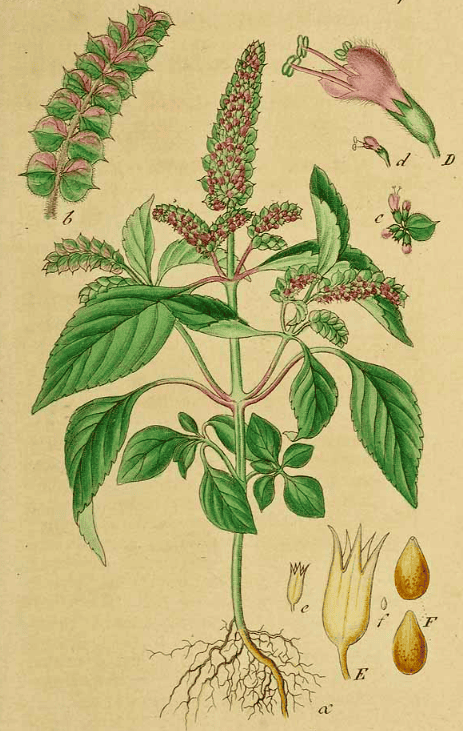
Elsholtzia ciliata
Sturm, J., Sturm, J.W., Deutschlands flora, 1845-1849
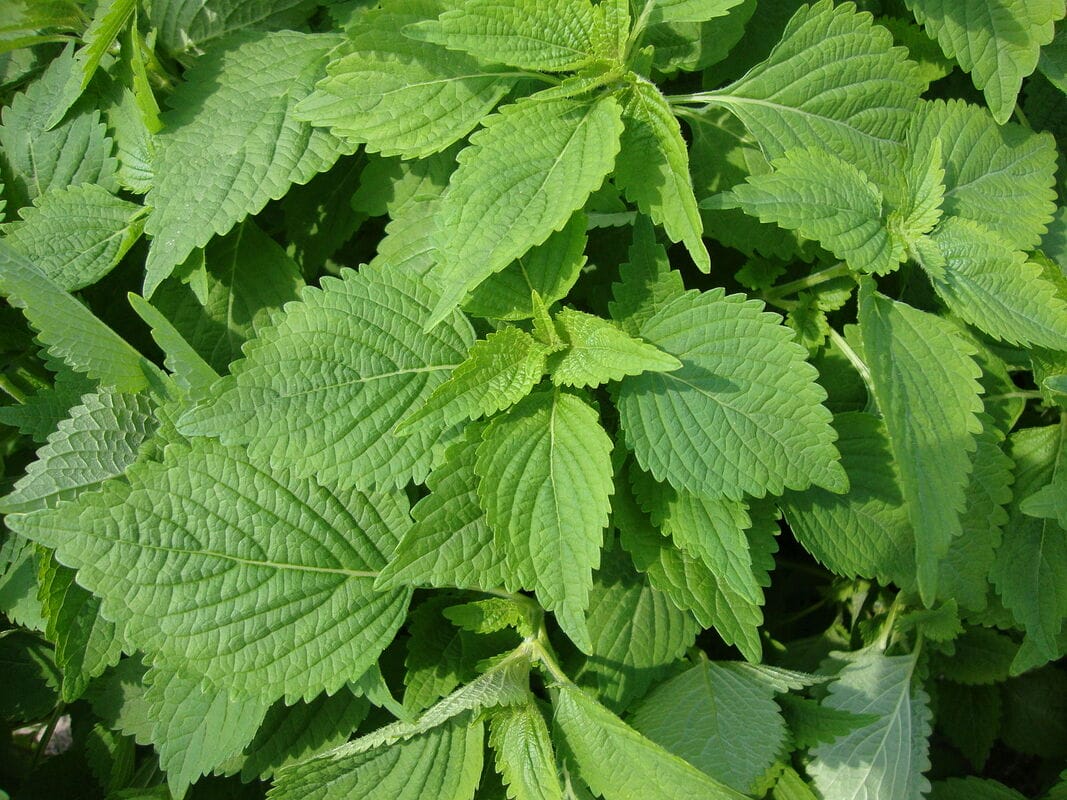
Elsholtzia ciliata
(Photo by Leslie J. Mehrhoff) (Wikimedia)
Botanical name:
Elsholtzia spp.
Several types are used in Tibetan Medicine, mostly based on the color of their flower:
- Black (Byi rug nag po བྱི་རུག་ནག་པོ ): E. ciliata
- Yellow (Byi rug ser po བྱི་རུག་སེར་པོ): E. eriostachya
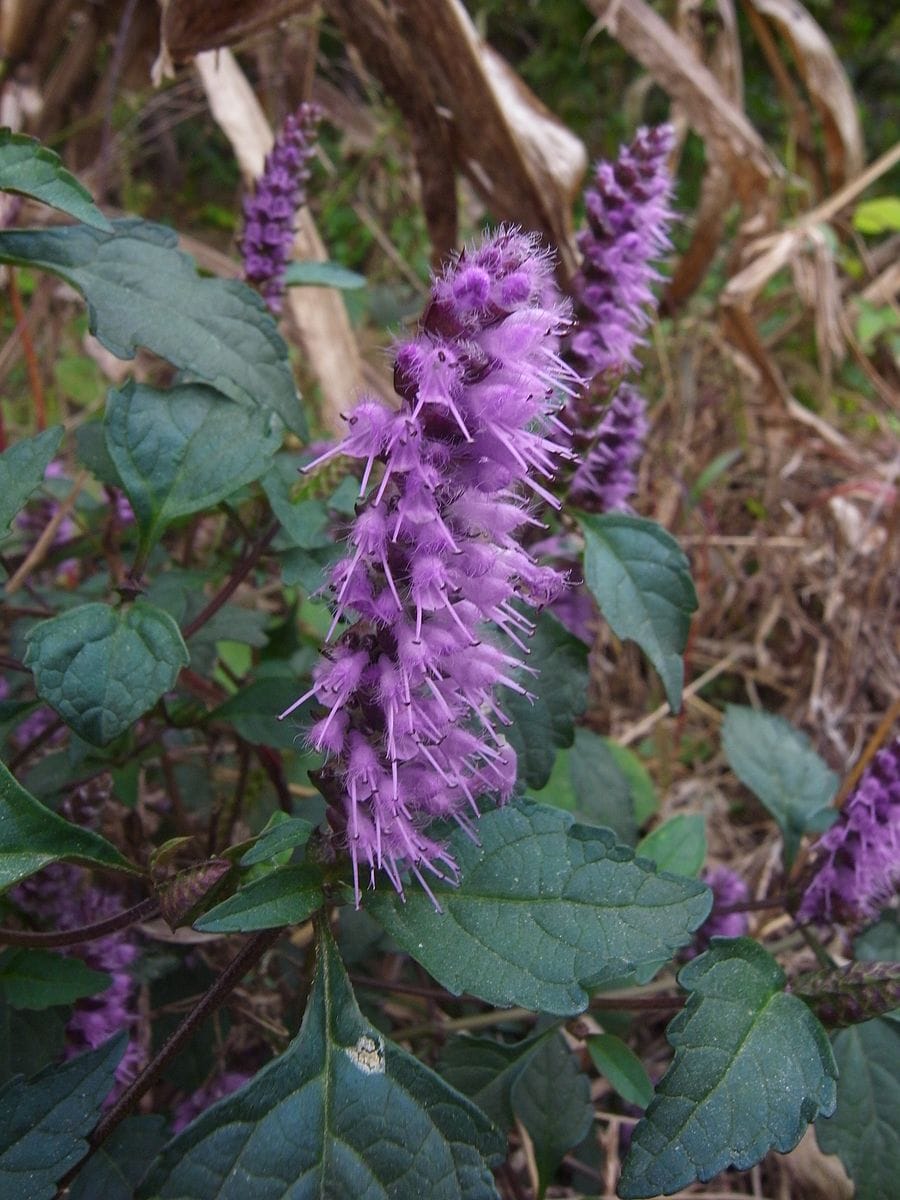
- Purple (Byi rug smug po བྱི་རུག་སྨུག་པོ་): E. calycocarpa (syn. Elsholtzia densa); E. wallichii in Nepal.
- Wild (Byi rug rgod pa བྱི་རུག་ རྒོད་པ་): E. fruticosa
Some sources have given different species for the several varieties.
In TCM, E. splendens and E. ciliata are principally used (Xiang Ru)
Parts used:
Above-ground herb
Temperature & Taste:
Mildly Warm, dry. Pungent
Uses:
1. Clears Wind-Cold, Promotes Sweat: (TCM)
-chills, fever, body aches, headache, with absence of sweating
-Summer-heat conditions; exposure to Cold or Drafts during the Summer, especially if there is internal Damp
2. Clears Damp, Promotes Urine: (TCM, Tibet)
-difficult Urination, Edema, Ascites (TCM)
-especially useful for urinary disturbances occurring during an acute (exterior) attack (ie. Cold or Flu)
-used in Tibetan Medicine for Phlegm-Damp disorders (Bad-Kan)
3. Warms the Stomach: (TCM, Tibet)
-gnawing abdominal pain, acute stomachache, abdominal pain, colic
-harmonises Stomach (especially after cold food or drinks)
4. Resists Poison: (Tibet)
-Rashes, Abscess (Tibet)
-Hangover, after-effects of intoxication (India)
-especially effective for Meat (Food) poisoning (Tibet)
-prevents infection of Wounds (Tibet)
-internally and externally for diseases from micro-organisms (Tibet)
Dose:
Taken Cool or Cold for Summer-heat conditions
Taken hot to promote Sweat to clear Wind-Cold, but may induce nausea or vomiting in some people.
Decoction: 3–6 grams (up to 9 grams), added towards the end.
Comment:
As can be seen, the same species is used in both Chinese and Tibetan Medicine. However, Tibetan Medicine uses 2 varieties, each being used similarly.
In TCM, the focus is on Damp, promoting Sweat and clearing Summer-Heat.
In Tibetan Medicine, it is used for pathogens (micro-organisms) affecting internally or externally, partuicularly the gastro-intestinal system and Uterus. It is also used for Skin diseases.
Corrective:
Coptis Huang Lian or Scutellaria Huang Qin can be added to correct the nauseating quality when drunk warm.
Substitutes:
1. Nepeta cataria
2. Mint
3. Schizonepeta multifida
4. Mosla chinensis (Xiang Ru) is used synonymouslly with E. splendens and E. ciliata.
Main Combinations:
1. Exterior (acute) Wind-Cold with interior Damp, Elsholtzia with Magnolia Hou Po. (TCM)
2. Summer Heat and Damp with Fever and Chills, Elsholtzia with Pogostemonis (Agastaches) Huo Xiang. (TCM)
3. To harmonise the Stomach after Cold Food or Drink, Elsholtzia with fresh Ginger and Red Date (Da Zao) (TCM)
4. Spleen dampness with exterior Wind-Cold, or Edema from Cold-Damp, Elsholtzia with Atractylodes Bai Zhu (TCM)
5. Edema with Fever and dark urine, Elsholtzia with Imperata Bai Mao Gen and Leonurus Yi Mu Cao (Chinese Motherwort) (TCM)
Cautions:
1. Not used when there is already profuse sweating
2. Taken hot will induce vomiting in some people.
Main Preparations used:
You must be logged in to view this content, please login. If you're not a member then Click this link to subscribe