Cytisus, Broom
Scotch Broom; Genista, Genesta, Genestra, Scoparius, Spartium


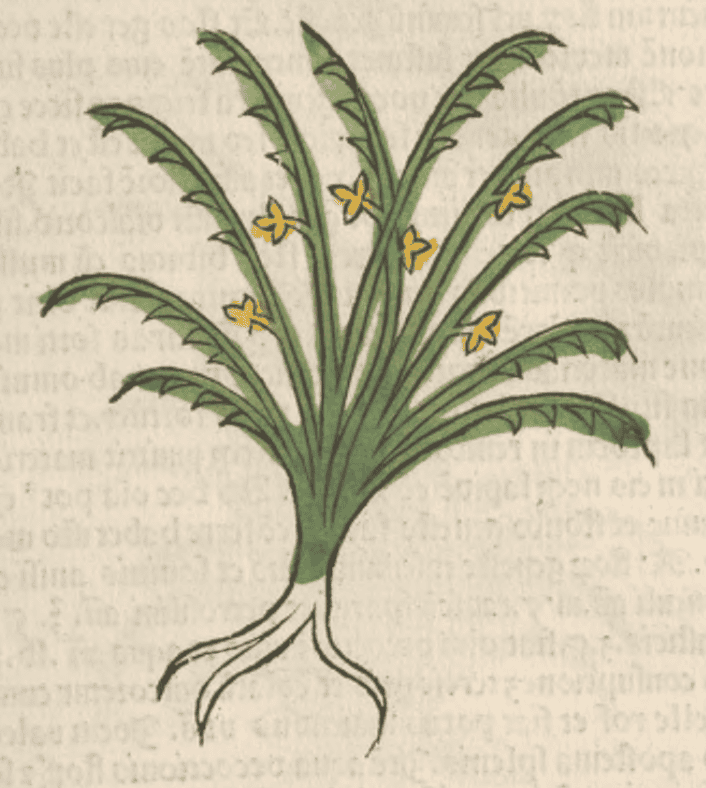
Herbarius latinus, Petri, 1485
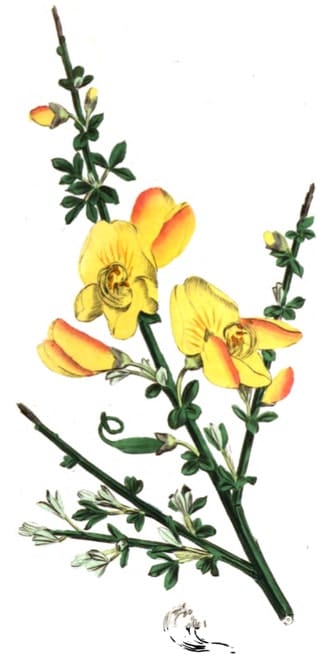
Medical Botany, Woodville, Hooker, Vol. 3, 1832
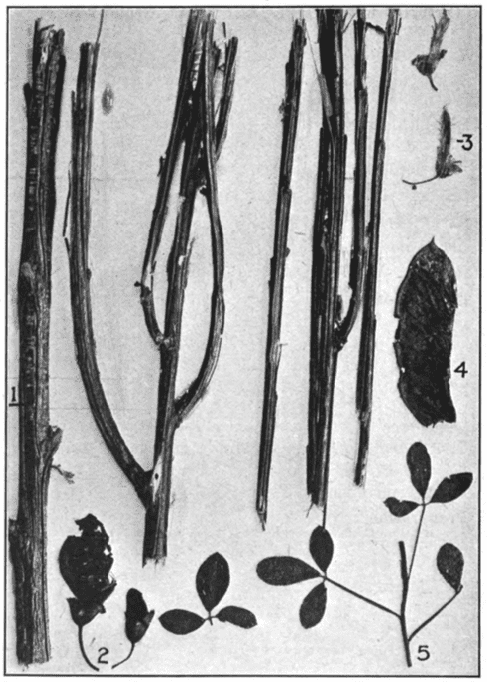
BROOM TOPS
1. Stem showing the two wings ending in a node. 2. A large flower and a
flower bud. 3. The hairy pistil.. 4. Fruit. 5. Three foliate leaves.
Squibb’s Atlas of the Official Drugs, Mansfield, 1919
Botanical name:
Cytisus scoparius (syn. Spartium scoparium; Genista scoparius, Sarothamnus scoparius)
Parts used:
Flowering tops
Temperature & Taste:
Neutral (slightly Warm), Dry. Sweet, Bitter
Classifications:
Uses:
1. Clears Damp, Opens Obstructions:
-Jaundice; constant use of the herb and seed in powder cures Black Jaundice (Pemell, 1652)
-Swelling or Hardness of the Liver, Spleen or Abdominal Organs
-Scrofula, Tumors
2. Clears Damp, Promotes Urine, clears Stones:
-Nephritic, good for Edema, fluid retention;
-‘purges water by vomit, stool and urine’. (Schroder)
-Prostatitis, dribbling Urine
-Gravel and Stones of the Kidney, Bladder and Gall Bladder
3. Moves the Blood, Regulates the Heart:
-Cardiac Arrhythmia’s (specific); used for Atrial and Ventricular Fibrillation.
-Extrasystoles likewise respond well to long-term treatment.
-post-infectious Myocarditis with Arrhythmia (Weiss).
-Hypotension
-Blood stagnation
4. Moves the Blood, clears Wind and Damp:
–Rheumatism, Sciatica, Lower Back and Hip Pain, Arthritis, Gout
5. Stops Bleeding, Regulates the Uterus:
-excess Menstruation, Postpartum Hemorrhage
-stimulates Contractions
6. Emetic:
-full doses were traditionally used as an Emetic to purge Phlegm, Damp and Watery humors
–Lonicerus (1564) said the flowers were emetic
7. Externally:
-The liquid extracted from the ends of the storks of the heated herb was applied to the tooth for Toothache.
-Sores or Abscesses of the Mouth are helped by gargling the decoction.
-For Pain in the Sides and Stitches the juice was made into an ointment or oil was anointed on.
-the seed paste was applied to Nodes and Scrofula; flowers beaten with Honey and applied to Scrofula
-the juice (or herb) boiled in oil “is the safest and surest medicines to kill Lice in the Head or Body of any’” (Culpeper)
-the juice or fresh herb boiled in oil is also “an especial remedy for Joint aches, and swollen knees”. (Culpeper)
-Juice boiled in oil is applied to Sciatica (Pemell, 1652)
-oil distilled from roots and seeds takes away spots, freckles and skin deformities (Pemell, 1652)
Dose:
Seeds: 2–4, or 6 grams (1–1 ½ or 2 drams)
Powder of the Flowers: 2–4 grams (1–2 drams)
Powder of the Root: 4–9 grams (2–4 drams)
infusion (2 ½ grams steeped in 180 mls of boiling water for 15 minutes, strain): 1 tablespoon, 3–4 times daily
Juice of the Herb: 3–5mls, up to 10mls (1–2 or 3 drams)
Juice of the Root: 3–10mls (traditionally 1–4 drams) with Hydromel or Water and Honey.
Tincture (1:5 in 45% alcohol): ½–2, 3, or 4mls.;
Fluid Extract (1:1): 10–30 drops
Correctives:
1. Rose
2. Mastic
3. Fennel
4. Honey of Roses
Main Combinations:
1. To Promote Urine, Edema:
i. Broom with Juniper berry
ii. Broom with Cleavers
iii. Broom with Dandelion and Juniper berry
iv. Broom with Juniper berry, lily of the Valley
v. Broom with Squill and Juniper
vi. Broom ashes with Horseradish, Orris, Calamus, Elecampane, Juniper berry, Mustard seed
vii. Broom with Horsetail, Knotgrass, Birch leaf
2. Urinary Irritation, Broom with Juniper berry and Linseed
3. Arthritis:
i. and Rheumatism Broom with Ash leaf, Nettle leaf, Primula leaf (Kroeber)
ii. Broom with Mastic, Rose, Cinnamon (equal parts) (Pemell, 1652)
4. Infertility, Broom flower with Celery seed, Parsley seed, Cumin, Mugwort, Feverfew, Aloe, Saffron (as in Pills Against Barrenness of Turner)
5. Uterine Fibroids, Broom with Rue
6. Liver disorders, Broom with Agrimony and Dandelion
7. Scrofula, Broom flowers with Honey (Pemell, 1652)
8. Fever, Broom with Centuary
9. Cardiac arrhythmia:
i. Broom with Motherwort
ii. Broom with Hawthorn
10. Cardiac weakness:
i. Broom with Hawthorn, Balm
ii. Broom, Hawthorn, Motherwort, Lily of the Valley
iii. with Edema, Broom with Lily of the Valley
iv. with Edema, Broom with Hawthorn, Juniper
v. Broom, Ginseng, Cinnamon, Licorice
11. Hypertension:
i. Menopausal Hypertension, Broom with Linden flower, Ladies Slipper
ii. Broom with Linden flower, Nettle, Balm
12. As a bath for Eczema, Broom with Elecampane, Artichoke leaf, Chicory, Celandine, Lavender and Nettle
Major Formulas:
Pills Against Barrenness (Turner)
Cautions:
1. Toxic in excess
2. Not used during Pregnancy
3. Avoid in Hypertension
Toxicity:
Large doses (approximately 30 grams, or its equivalent in sparteine [300mg]) causes headaches, dizzyness, palpitations, weakness of the legs, sweating, drowsiness, and pupil dilation. Vomiting, gastric lavage and adminitstration of activated charcoal is the treatment in such cases. There has been no recorded deaths with the crude drug, but sparteine has been responsible for a number of deaths. There is no cumulative action like Digitalis.
Drug Interactions:
Avoid in people taking MAO inhibitors (contains tyramine).
Main Preparations used:
Distilled Water of the whole Herb in Flower, Conserve of the Flowers, Salt of the Ashes
Click the above Tabs for more information on this medicine
-Broom was used in ancient Anglo-Saxon medicine, and by the Welsh physicians of the middle ages. Under the name Genista, it was mentioned in many early Herbals including Hortus Sanitatis, 1491, and the Grete Herball, 1516. It was likewise listed in the London Pharmacopoeia of 1618.
-Broom was highly regarded in the middle ages, and was associated with heraldry, with many of the nobility wearing the flowers at different times for different purposes. Baines wrote that during the civil wars of the 14th century, Broom was regarded as highly as the Rose bush. When it had a lot of flowers on it, it was previously considered as a sign of plenty. And when it was in flower, it was considered back luck or disrespectful to use the Broom for menial purposes such as sweeping, as this old Suffolk verse goes:
‘If you sweep the house with blossomed Broom in May,
You are sure to sweep the head of the house away’.
-Broom was formerly a highly used plant. The twigs were bound together to make Brooms; they were likewise used in basket-weaving. In northern parts of England, they were used for thatching rooves and making fences. The pulp has long been used to make paper and cloth, the fibre being strong and durable. In addition, the bark contains good levels of Tannin which was used in tanning hides. And long before Hops, Broom was used as a bitter additive to Beer. The young flower buds were collected, pickled, and added to salads in much the same manner as Capers are, and were accounted no less inferior to those by Gerard. The tops yielded a green dye which was previously much used.
-Broom can be looked at as having a signature for Wind diseases. It is tall, thin and largely leafless; is relatively fast-growing; its flowers have no honey, so they ‘expolde’ to release their pollen. These show a signature which support its modern functions of treating Arrhythmias of the Heart, a type of Wind disorder.
-The cleansing nature of Broom has been said to help clean the ‘cobwebs of the Mind’.
“From the fact that this plant is chiefly a native of Western, Northern and Central Europe, it is improbable that the classical authors were acquainted with it; and for the same reason the remarks of the early Italian writers may not always apply to the species under notice. With this reservation, we may state that broom under the name Genista, Genesta, or Genestra is mentioned in the earliest printed herbals, as that of Passau, 1485, the Hortuts Sanitatis, 1491, the Great Herbal printed at Southwark in 1526, and others. It is likewise the Genista as figured and described by the German botanists and pharmacologists of the 16th century, like Brunfels, Fuchs, Tragus, Valerius Cordus (“Genista angulosa”) and others. Broom was used in ancient Anglo-Saxon medicine as well as in the Welsh “Meddygon Myddvai.” It had a place in the London Pharmacopoeia of 1618, and has been included in nearly every subsequent edition. Hieronymus Brunschwyg gives directions for distilling a water from the flowers, “fiores genestai”— a medicine which Gerarde relates was used by King Henry VIII. “against surfiets and diseases thereof arising.”
Broom was the emblem of those of the Norman sovereigns of England descended from Geoffry the “Handsome,” or “Plantagenet,” count of Anjou (obiit A.D. 1150), who was in the habit of wearing the common broom of his country, the “planta genista,” in his helmet. (Pharmacographia, Fluckiger & Hanbury, 1879)
ANTIBACTERIAL
–Study of the Antibacterial Activity of Rich Polyphenolic Extracts Obtained from Cytisus scoparius against Foodborne Pathogens.
–Antimicrobial activity of selected herbal extracts.
ANTIOXIDANT
–Evaluation of behavioural and antioxidant activity of Cytisus scoparius Link in rats exposed to chronic unpredictable mild stress.
–Antioxidant effect of Cytisus scoparius against carbon tetrachloride treated liver injury in rats.
–Cytisus scoparius link–a natural antioxidant.
HEPATOPROTECTIVE
–Antioxidant effect of Cytisus scoparius against carbon tetrachloride treated liver injury in rats.
NEUROPROTECTIVE
–17 Oxo Sparteine and Lupanine, Obtained from Cytisus scoparius, Exert a Neuroprotection against Soluble Oligomers of Amyloid-beta Toxicity by Nicotinic Acetylcholine Receptors.
ANXIOLYTIC
–Evaluation of behavioural and antioxidant activity of Cytisus scoparius Link in rats exposed to chronic unpredictable mild stress.
CANCER
BREAST
–Quantitative Analysis of Isoflavones from Fabaceae Species and Their Chemopreventive Potential on Breast Cancer Cells.
You must be logged in to view this content, please login. If you're not a member then Click this link to subscribe