Curcuma, Turmeric, Jiang Huang 姜黄
Tumeric; Cyperus indicus (Dioscorides)
Jiang Huang (TCM)
Haridra (Ayurveda)
Mancal (Siddha)
Kurkum (Arabic)
Kurkanu (Akkadian)

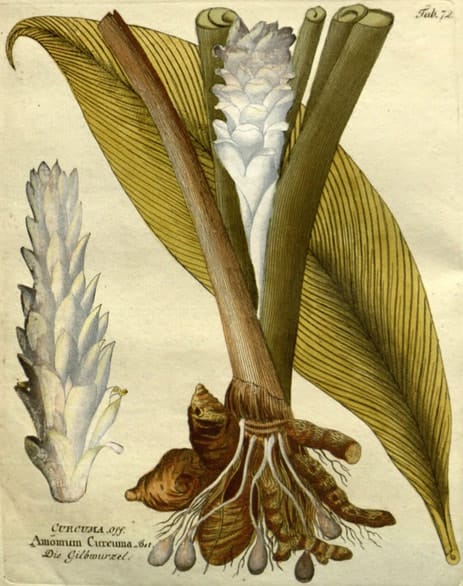
Icones Plantarum Medcio-oeconomico, Vietz, 1800
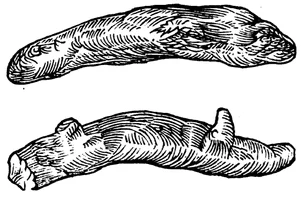
Parkinson, Theatrum Botanicum, 1640
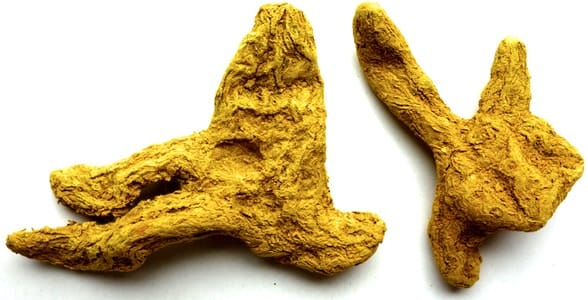
Whole Turmeric Root (Adam, 2016)
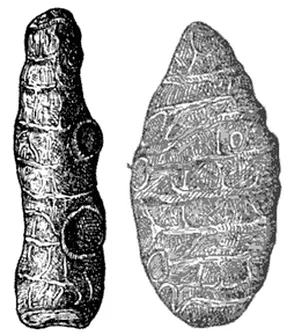
LONG AND ROUND TURMERIC
Notes on Pharmacognosy, Otto Augustus Wall, 1902
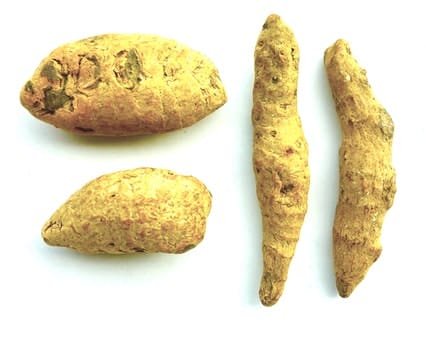
Long and Round Turmeric, Chengdu Medicine Market
(Adam, 2017)
Botanical name:
Curcuma longa (syn. C. domestica, C. rotunda, C. xanthorrhiza, Amomum curcuma)
Long and Round types were traditionally used.
Parts used:
Root (long and round)
Temperature & Taste:
Warm, dry. Pungent, Bitter
“Hot and dry in the second degree” (Avicenna)
Classifications:
Uses:
1. Moves the Blood, Clears Stasis, Eases Pain:
-pain from Cold and Blood stagnation: Chest, Abdominal or Joint pain
-Arthritis, Rheumatism, Headache, Sprains, Fractures
-relaxes and loosens Tendons and Ligaments; used as an aid in Yoga
2. Moves the Blood, Promotes Menstruation:
-Dysmenorrhea from coldness and blood stagnation
-given at Childbirth to promote Labor
-it has been advocated for bleeding during Pregnancy
3. Moves Qi, Opens Obstructions:
-‘proper for the Gall’;
-Jaundice and all obstructions of the Gall Bladder
-poor Liver function, Hepatitis, Fatty Liver
-chronic Inflammatory diseases of the Bowels: Colitis, Ulcerative Colitis, Crohn’s Disease
-‘accumulation and stagnation formed in the epigastrium and abdomen’. (Ben Cao Gang Mu)
4. Clears Damp, Promotes Urine:
-Edema; retention of Urine
-Cystitis; Turbid Urine
-Diabetes (Ayurveda)
5. Clears Cold Phlegm, Stops Cough:
-Chronic Cough, Bronchitis, Bronchial Asthma
-Chronic Rhinitis, Allergic Rhinitis, Sinusitis
6. Clears Wind, Resists Poison:
-Colds, Sore Throat
-Measles, Urticaria, Leprosy
-‘sudden onset of pain of arthralgia due to attack of pathogenic Wind and Cold’. (Da Ming)
-‘disperses invading pathogenic Wind and Heat’ (Ben Cao Gang Mu)
7. Used as a Contraceptive:
-root impregnated with Goat urine was said to make a man sterile if taken
-Turmeric taken for 3 days during menstruation and 3 days after is used as a Contraceptive for women (Ayurveda)
8. Externally:
-externally with Alum is excellent for Sprains, Bruises, Wounds, Black Eyes etc; in India a paste of Turmeric with Lime and Salt, or a paste with Myrrh and Egg White is applied
-Also used to cleanse foul Ulcers.
-As a lotion or paste, it is used to promote scab formation in Chicken Pox Eruptions, Measles, Mumps, Herpes lesions, Leprosy sores, Ringworm and Scabies, as well as for Pimples, Boils, Eczema and Psoriasis and all inflammatory skin diseases.
-Boils and Cysts, Turmeric ashes are applied as a paste with water
-The paste has also been applied to poisonous stings and bites, including those of Leeches
-the fumes of burning Turmeric has been used in Ayurveda as a fumigation for Scorpion bites.
-A decoction is used as a wash for eye disorders including Conjunctivitis, Opthalmia, and festering Eye inflammations
Dose:
Powder: 1–3 grams
Decoction: 3–9 grams
Tincture (1:3 in 45% alcohol): 3–15mls.
Substitutes:
1. Madder
2. Curcuma amada (Unani)
3. Zedoary
Correctives:
-Citron; Lemon juice (Unani)
Preparation:
It may be stir-fried with Wine or Vinegar to enhance its ability to move the Blood.
Main Combinations:
Barberry & Turmeric
Turmeric is often combined with Neem in Ayurveda
Liver:
1. Jaundice:
i. obstructive Jaundice, Turmeric, Aniseed, White Wine. (Avicenna)
ii. Turmeric with Saffron and Myrrh (Western)
iii. Turmeric with Barberry
iv. Turmeric (½ oz.), Saffron (15 grains), Rhubarb (2 drams). Infuse in wine (12 oz.) for 24 hours. (Tractatus de materia medica, Geoffroy, 1741)
v Turmeric with Rhubarb, Saffron, Celandine, Fumitory
vi. Turmeric, Phyllanthus amarus, Picrorhiza, Long Pepper
vii. Turmeric, Long Pepper, Neem, Sida cordifolia, Licorice
2. Hepatitis:
i. Turmeric with Gentian, Agrimony, Licorice
ii. Chronic with deficiency, Turmeric with Paeonia Bai Shao, Atractylodes Bai Zhu, Scuettlaria Huang Qin, Licorice (TCM)
iii. Damp-Heat, Turmeric, Phyllanthus amarus, Picrorhiza, Long Pepper
Inflammation, Arthritis:
3. Inflammation (Heat with Blood stagnation):
i. Turmeric with Barberry or Scutellaria Huang Qin
ii. Turmeric with Myrrh, Frankincense, Safflower
iii. Turmeric, Frankincense, Myrrh, Barberry (or Scuettlaria Huang Qin)
iv. Turmeric with Bdellium, Tinospora (Ayurveda)
v. from Damp-Heat (Phlegm-Bile), Neem with Turmeric and Tinospora
4. Arthritis:
i. Turmeric, Frankincense, Bdellium, Black Pepper
ii. Turmeric, Withania, Frankincense, Shilajit (Ayurveda)
iii. Tumeric, Frankincense, Cyperus rotundus, Ginger, Long Pepper (Ayurveda)
iv. Tumeric, Frankincense, Cat’s Claw, Licorice, Ginger
v. Turmeric, Myrrh, Rhubarb, Celery seed, Saffron
5. Psoriatic Arthritis, Turmeric, Sarsaparilla
6. Gout from Phlegm, Turmeric, Emblic Myrobalan, Cyperus rotundus
Blood Stagnation, Circulation:
7. Blood stagnation, Bruising, fixed or chronic Pain:
i. Turmeric, Myrrh
ii. Turmeric, Bdellium, Frankincense, Safflower, Clove
iii. Turmeric, Bdellium, Shilajit
iv. Turmeric, Madder, Rhubarb, Bitter Almond, Myrrh, Black Pepper
8. Chest pain, Angina, Atherosclerosis:
i. Turmeric, Bdellium, Arjuna, Emblic Myrobalan (Ayurveda)
ii. Turmeric, Clove, Sandalwood, Saffron
iii. Turmeric, Salvia Dan Shen (TCM)
9. High Cholesterol:
i. Turmeric, Ginger, Garlic
ii. Turmeric, Bdellium
Gynecology:
10. Promotes Menstruation:
i. Turmeric with Cinnamon (TCM)
ii. Turmeric with Saffron and Mugwort
iii. Turmeric powder (½ dram), Saffron (5 grains), with Syrup of Mugwort, form a bolus. (Tractatus de materia medica, Geoffroy, 1741)
iv. Turmeric with Zedoary, Dang Gui
v. Blood stagnation with pain and clots, Turmeric, Cyperus rotundus, Bdellium, Boerhaavia
11. Cervical Dysplasia, Turmeric, Licorice, Asparagus Shatavari, decocted and used as a douche.
Clear Heat:
12. Acute Sore Throat, Cold, Flu, Fever, Turmeric, Ginger, Licorice, Clove (Ayurveda)
13. Pharyngitis, Turmeric, Licorice, Rock Salt, used as a gargle (Ayurveda)
14. Dermatitis, Urticaria, Itching:
i. Turmeric, Psoralea, Madder, Trubulus seed
ii. Neem, Madder, Turmeric, Picrorhiza
iii. from Wind-Phlegm, Neem, Turmeric, Licorice
iv. Inflammatory skin conditions, Neem, with Turmeric, Gotu Kola, Madder, Tinospora, Rose
v. Turmeric with Ginger, Black Pepper, Long Pepper, Three Myrobalans, Turpeth, Cyperus rotundus. (Ayurveda)
15. Acne, Turmeric with Neem, Bdellium, Tinospora, Triphala (Ayurveda)
Other:
16. Diabetes:
i. Turmeric with Emblic Myrobalan (Ayurveda)
ii. Turmeric with Emblic Myrobalan, Barberry (Ayurveda)
iii. Turmeric with Emblic Myrobalan, Tinospora, Shilajit
iv. Turmeric, Gymnema, Emblic Myrobalan, Cinnamon, Shilajit (Ayurveda)
v. Turmeric with Neem with Fenugreek, Gymnema
vi. Turmeric with Neem, Gymnema, Shilajit (Ayurveda)
vii. Turmeric with Neem, Gymnema, Bdellium, Bitter Melon, Shilajit (Ayurveda)
17. Memory loss, poor concentration, speech disorders, Turmeric, Calamus, Costus, Ginger, Cumin, Licorice, Rock Salt with Ghee (Chakradatta)
Externally:
18. Topically for skin inflammation or infection:
i. Turmeric with Neem as a wash
ii. Turmeric, Peppermint
19. Hemorrhoids, Turmeric with Mustard oil, applied topically.
20. Eye disorders:
i. Turmeric with Triphala is mixed with Ghee and applied to the eyes.
ii. Turmeric, Barberry, Chebula, Indian Spikenard, Costus, Long Pepper
Major Formula
Turmeric Decoction 4 (Yung ba 4) (Tibetan)
Cardamon 19 (Sug smel bcu dgu) (Tibetan)
Emblic 6 (Kyu ru duk pa) (Tibetan)
Cautions:
1. Not used during Pregnancy (note that it has been used for Bleeding during Pregnancy)
2. High doses aggravate Heat types (Pitta-Bile constitutions)
Drug Interactions:
May potentiate anticoagulant and anti-platelet medication.
Main Preparations used:
Click the above Tabs for more information on this medicine
-Tumeric has been used in many traditional medical systems and pharmacopeias including those of Europe, China, India, the Philippines, New Guinea, Polynesia and much of Asia and the Pacific Islands.
-In India it is said to bring one into contact with the Goddess energy. It has a cleansing effect on the energy of the body, including the Chakras and Meridians. In addition, it has long been used to aid the practice of Yoga by relaxing tight tendons.
-The Saffron colored root turns a red–brown when it comes in contact with alkalies. Chemists used this towards the end of last century in the form of ‘Tumeric Paper’.
“In Akkadian, turmeric is kurkanu and sapalginu. No doubt, kurkum comes ultimately from the Akkadian which, in turn, is related to the
Sanskrit kunkuma. However, in Sanskrit, even though haridra is supposed to indicate turmeric only and kunkuma only crocus, there was nevertheless confusion as to these two botanicals. Haridrà gave rise to Persian hurd. Throughout the ancient Mesopotamian, Classical and Arabio eras, this confusion persisted. The pharmacological uses are also uncertain since both of these plants were taken one for another over a long period of time.
Turmeric is indigenous in the East Indies and grows wild in Cochin China. In Bali and Java, it is called kunyit. Javenese employed turmeric to facilitate childbirth, in complaints of the urethra and bladder, and in mesenteric obstructions. In Babylonia, it was employed medicinally in strangury, for the eyes, muscles, mouth, nose, and head. In India, turmeric is known as a stomachic.
In Islamic times, turmeric was prescribed by al-Kindi in a preparation for gum and mouth pustules, by al-Akfäni for coughs, and by
ibn al-Bayān in a poultice for moist scabs.
Crocus, in modern times, is still taken for Curcuma, and vice versa. In Persia today, turmeric is prescribed as a stimulant, tonic, and
aromatic, and in a decoction as a coolant for conjunctivitis. In modern Egyptian medicine, turmeric is an aperient, emmenagogue, and diuretic”. (Early Arabic Pharmacology, Levey, 1973)
Dioscorides mentions an Indian plant as a kind of Cyperus resembling ginger, but having when chewed a yellow colour and bitter taste: probably turmeric was intended. Garcia de Orta (1563), as well as Fragoso (1572), describe turmeric as Crocus indicus. A list of drugs sold in the city of Frankfort about the year 1450, names Curcuma along with zedoary and ginger. In its native countries, it has from remote times been highly esteemed both as a condiment and a dye-stuff; in Europe, it has always been less appreciated than the allied spices of the ginger tribe. In an inventory of the effects of a Yorkshire tradesman, dated 20th Sept., 1578, we find enumerated—”x. ouncis of turmeracke, x d.” (Pharmacographia, Fluckiger & Hanbury, 1879)
GENERAL / REVIEW
–A Comprehensive Review on the Therapeutic Potential of Curcuma longa Linn. in Relation to its Major Active Constituent Curcumin
ANTIBACTERIAL:
–Evaluation of antimicrobial activity of Curcuma longa rhizome extract against Staphylococcus aureus
–Antimicrobial Potential of Single Metabolites of Curcuma longa Assessed in the Total Extract by Thin-Layer Chromatography-Based Bioautography and Image Analysis
–Composition and Antimicrobial Activity of the Essential Oil from Leaves of Curcuma longa L. Kasur Variety
–Antimicrobial Activity of Curcuma longa L. Extract on Periodontal Pathogens
ANTI-FUNGAL:
–Evaluation of the antifungal efficacy of different concentrations of Curcuma longa on Candida albicans: An in vitro study
–The Inhibitory Effects of Curcuma longa L. Essential Oil and Curcumin on Aspergillus flavus Link Growth and Morphology
–Antifungal activity, main active components and mechanism of Curcuma longa extract against Fusarium graminearum
ANTI-OXIDANT:
–The effect of hydro-ethanolic extract of Curcuma longa rhizome and curcumin on total and differential WBC and serum oxidant, antioxidant biomarkers in rat model of asthma
COVID
–Activity of phytochemical constituents of Curcuma longa (turmeric) and Andrographis paniculata against coronavirus (COVID-19): an in silico approach
ANTI-INFLAMMATORY:
–Curcuma longa extract improves serum inflammatory markers and mental health in healthy participants who are overweight: a randomized, double-blind, placebo-controlled trial
–Anti-inflammatory Effect of Curcuma longa and Allium hookeri Co-treatment via NF-κB and COX-2 Pathways
–Benefits of Cardamom (Elettaria cardamomum (L.) Maton) and Turmeric (Curcuma longa L.) Extracts for Their Applications as Natural Anti-Inflammatory Adjuvants
IMMUNOMODULATORY:
–Evaluation of in vitro anti-proliferative and immunomodulatory activities of compounds isolated from Curcuma longa
POSTPRANDIAL DISTRESS SYNDROME:
–Efficacy of Curcuma longa in treatment of postprandial distress syndrome: An open-label randomized-controlled trial
PROBIOTIC:
–Interaction of turmeric (Curcuma longa L.) with beneficial microbes: a review
COLITIS / INTESTINAL INFLAMMATION:
–EFFICACY OF CURCUMA LONGA IN THE TREATMENT OF DIVERSION COLITIS IN RATS
–Effects of Boswellia Serrata Roxb. and Curcuma longa L. in an In Vitro Intestinal Inflammation Model Using Immune Cells and Caco-2
–Effect of turmeric on colon histology, body weight, ulcer, IL-23, MPO and glutathione in acetic-acid-induced inflammatory bowel disease in rats
ANTI-OBESITY:
–Anti-obesity effect of extract from fermented Curcuma longa L. through regulation of adipogenesis and lipolysis pathway in high-fat diet-induced obese rats
FATTY LIVER DISEASE:
–Water Extract of Curcuma longa L. Ameliorates Non-Alcoholic Fatty Liver Disease
CHOLESTEROL
–Curcumin and Curcuma longa L. extract ameliorate lipid accumulation through the regulation of the endoplasmic reticulum redox and ER stress
HEPATOBILIARY DISEASE:
–Preclinical Evidence of Curcuma longa and Its Noncurcuminoid Constituents against Hepatobiliary Diseases: A Review
HEPATOPROTECTIVE:
–Hot water extract of turmeric (Curcuma longa) prevents non-alcoholic steatohepatitis in mice by inhibiting hepatic oxidative stress and inflammation
–A hot water extract of turmeric (Curcuma longa) suppresses acute ethanol-induced liver injury in mice by inhibiting hepatic oxidative stress and inflammatory cytokine production
–Does Curcuma longa root powder have an effect against CCl4-induced hepatotoxicity in rats: a protective and curative approach
–Protective effect of Curcuma longa L. extract on CCl4-induced acute hepatic stress
ATHEROSCLEROSIS:
–Herbal composition of Cinnamomum cassia, Pinus densiflora, Curcuma longa and Glycyrrhiza glabra prevents atherosclerosis by upregulating p27 (Kip1) expression
DIABETES:
–Recent Progress for the Utilization of Curcuma longa, Piper nigrum and Phoenix dactylifera Seeds against Type 2 Diabetes
–Effects of resistance training and turmeric supplementation on reactive species marker stress in diabetic rats
ASTHMA:
–The effect of hydro-ethanolic extract of Curcuma longa rhizome and curcumin on total and differential WBC and serum oxidant, antioxidant biomarkers in rat model of asthma
ANXIOLYTIC, SEDATIVE, ANTICONVULSANT:
–Neuropharmacological profile and chemical analysis of fresh rhizome essential oil of Curcuma longa (turmeric) cultivated in Southwest Nigeria
PARKINSON’S DISEASE:
–Dose-dependent effect of Curcuma longa for the treatment of Parkinson’s disease
ALZHEIMER’S DISEASE:
–Supplementation with Curcuma longa Reverses Neurotoxic and Behavioral Damage in Models of Alzheimer’s Disease: A Systematic Review
–Effects of curcuminoids identified in rhizomes of Curcuma longa on BACE-1 inhibitory and behavioral activity and lifespan of Alzheimer’s disease Drosophila models
EMOTIONAL STATE:
–Effect of a water extract of Curcuma longa on emotional states in healthy participants
OSTEOARTHRITIS:
–The efficacy and safety of Curcuma longa extract and curcumin supplements on osteoarthritis: a systematic review and meta-analysis
–Reflections about Osteoarthritis and Curcuma longa
–Bio-optimized Curcuma longa extract is efficient on knee osteoarthritis pain: a double-blind multicenter randomized placebo controlled three-arm study
–Bioactive Turmerosaccharides from Curcuma longa Extract (NR-INF-02): Potential Ameliorating Effect on Osteoarthritis Pain
PSORIATIC ARTHRITIS:
–Treatment of Psoriatic Arthritis With Acupuncture, Turmeric (Curcuma longa), Sarsaparilla (Smilax officinalis) and Vitamin D: A Case Report
CANCER:
–Unveiling antimicrobial and anticancerous behavior of AuNPs and AgNPs moderated by rhizome extracts of Curcuma longa from diverse altitudes of Himalaya
CERVICAL:
–In vitro and in vivo evaluation of a standardized Curcuma longa Linn formulation in cervical cancer
LUNG:
–Inhibition of lung cancer cells A549 and H460 by curcuminoid extracts and nanoemulsions prepared from Curcuma longa Linnaeus
PROSTATE:
–Curcumin against Prostate Cancer: Current Evidence
–Combinatorial cytotoxic effects of Curcuma longa and Zingiber officinale on the PC-3M prostate cancer cell line
PTERYGIUM:
–Curcuma longa Is Able to Induce Apoptotic Cell Death of Pterygium-Derived Human Keratinocytes
You must be logged in to view this content, please login. If you're not a member then Click this link to subscribe