Cuminum, Cumin
Sweta Jiraka (Ayurveda)
Cirakam (Siddha)
Zeera Safaid (Unani)
Kammun (Arabic)
Zi ra dkar po ཟི་ར་དཀར་པོ (Tibetan)
Tin Tir (Sumerian)
Kamunu (Akkadian)

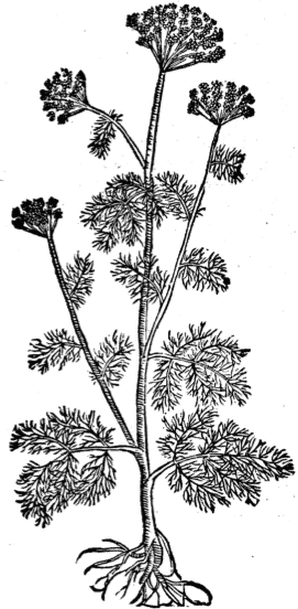
Della Materia Medicinale, Andrea Valuassori, 1562
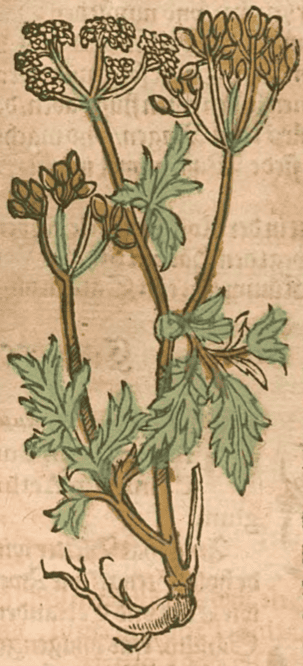
Krauterbuch, Lonitzer, 1578
Botanical name:
Cuminum cyminum
Hippocrates said the Ethipion Cumin is “Kingly” with the Egyptian Cumin being of next quality.
Four Kinds are described in Unani:
- Farsi, or Persian
- Nabti, Nabathean
- Kirmani, Black Cumin
- Shami, or Syrian
Parts used:
Seed
Temperature & Taste:
Very Warm, dry. Pungent
“Cumin is hot in the second and dry in the third degree”. (Avicenna)
Classifications:
2C INCIDERS. 2D ATTENUATERS OF CONGEALED BLOOD. 2H. CARMINATIVE. 2Q. ANODYNE
3C. ALEXIPHARMIC. 3F. LITHONTRIPTIC. 3H. LACTAGOGUE. 4e. STOMACHIC. 4f. SPLENETIC. 4g. HEPATIC
Uses:
1. Warms the Stomach, Moves Qi:
-Wind, Colic, Bloating, Tympanites (Edema with wind)
-Food Stagnation
-Malabsorption
-used to aid slimming
2. Warms the Lungs, clears Phlegm, stops Cough:
-common Cold, hoarseness
-Cough, Asthma, shortness of Breath, Pleurisy (Electuary with Honey or boiled in wine with Figs)
-“According to Galen its oral intake with vinegar and water is useful in Dyspnea” (Avicenna)
-“useful for treating Breathlessness” (Avicenna)
3. Settles Wind, Benefits the Head:
-Headache, Migraine, Dizziness, Vertigo etc. (Salmon)
-Insomnia, Amnesia (taken with Honey)
-“The extract of wild cumin improves eye-sight” (Avicenna)
-Cold Palpitation (Avicenna)
4. Warms the Kidney, Clears Damp, Promotes Urine:
-Edema, Renal Colic, urinary complaints including Incontinence
-Arthritis, Gout
-Gonorrhea
-the oil has been given for Stones
-Regarded as Aphrodisiac
5. Benefits in Pregnancy, Promotes Milk:
-taken throughout Pregnancy to aid Fetal development, relieve Morning Sickness and promote easier Childbirth (Ayurveda)
-promotes Milk postpartum
-it has developed a reputation to increase Breast size
6. Moves the Blood, Promotes Menstruation:
-Amenorrhea, Dysmennorhea
-large doses promote Miscarriage
-also for Blood stagnation, Bruising
7. Resists Poison:
-Slow, Persistent Fevers (Ayurveda)
-Snake bite (decocted in wine)
-topically for Scorpion bites (Ayurveda)
-Insect Bites (Avicenna)
8. Externally:
-a plaster (made with wine and Barley meal) is applied to Stitches and pains of the Sides; also to the abdomen for Colic.
-applied topically to joint pain, as well as swellings of the Joints, Breast or Genitals
-applied as a paste to Boils and Scorpion stings in Ayurveda.
-Boiled in Wine and made into a poultice for Swellings of the Testicles caused by Wind or Water.
-Unani texts state it ‘destroys’ pterygium
-“Washing with it cleanses the face” (Avicenna)
-“Finely powdered cumin… heals the Wounds” (Avicenna)
-applied to Bruising and blood spots in or around the Eye (Avicenna)
-Scabies, Pterygium: “It is chewed with salt to enable it to get mixed up with saliva. In this form it is applied in cases of Scabies, Pterygium” (Avicenna)
Dose:
Powder: 500mg–3 grams
Decoction: 2–6 grams
Preparation:
1. Roasted Cumin
Cumin seed is sometimes roasted in India. This moderates its heat and pungency, and is often eaten after a meal to help digestion.
2. Vinegar-prepared Cumin:
Cumin seed is steeped 3 days in viengar, then dried. This makes it strong to settle Wind, moderates its Heat, and also leads its effect more strongly to the Liver. It was also chewed to mitigate Vertigo.
Corrective:
Tragacanth (Unani)
Substitutes:
1. Ammi seed
2. Caraway
3. Carum copticum
4. Nigella seed
Main Combinations:
Digestion:
1. Indigestion, Colic, Food Stagnation, Cumin with Long Pepper, Rue and Saltpeter (as in Lesser Cumin Composition of Galen)
2. Indigestion, Bloating, Colic, Bowel Pain:
i. Cumin with Fennel, Coriander, Cardamon
ii. Cumin with Cinnamon, Clove, Galangal, Calamint, Ginger, Black Pepper, Cardamon (as in Powder of Cumin Greater of Nicholas)
iii. Cumin with Ginger, Cinnamon, Clove, Aloeswood, Galangal, Long Pepper, Cardamon (as in Electuary of Cumin of Mesue)
iv. Cumin with Aniseed, Fennel seed, Caraway, Camomile, Raisin (as in Carminative Decoction)
3. Loss of Appetite, Cumin with Ammi, Cardamon, Mastic (as in Powder for Loss of Appetite of Nicholas)
4. Hiccup, Cumin with Long Pepper in Honey (Ayurveda)
5. Stomach Pain, Cumin with Camomile, Rue, Marjoram, Pennyroyal, Rosemary, Aniseed, Fennel seed (as in Decoction for Stomach Pain)
Lungs:
6. Cough, Asthma, shortness of Breath, Pleurisy, Cumin with Figs, decocted in wine (Gerard)
7. Cough with Cold Phlegm, Cumin, Long Pepper, Licorice (Ayurveda)
8. Hoarseness and Loss of Voice:
i. Cumin roasted with Mustard seed, Black Pepper, Calamint, Pyrethrum (as in Electuary to Clarify the Voice of Galen)
ii. Cumin with Tumeric, Calamus, Costus, Long Pepper, Ginger, Licorice, Rock Salt (as in Kalya Avaleha of Ayurveda)
Other:
9. Renal Colic, Cumin with Caraway and Black Salt (Ayurveda)
10. Gout, Cumin with Caraway and Coriander seed (Ayurveda)
11. Vertigo:
i. Cumin with Coriander, Calamus, Marjoram, Aniseed, Fennel seed (as in Sugar for Vertigo of Gabelhover)
ii. Cumin with Nutmeg, Coriander seed, Mistletoe, Peony seed, Galangal, Calamus, Betony (as in Powder of Nutmeg for Vertigo)
12. Aphrodisiac, Cumin with Black Pepper and Honey (Unani)
13. Menstrual pain, Cumin with fresh Ginger and Valerian (Ayurveda)
14. To aid Fetal development, relieves Morning Sickness and promote easier Childbirth, decoct Cumin in Milk and add Honey. (Ayurveda)
15. To promote Milk, Cumin with Ammi, Fennel, Shatavari. (Ayurveda)
16. Insect Bites, Cumin with Rue (Avicenna)
17. Hemorrhoids: 60 grams of Cumin seed, half of which has been roasted are ground together; 3 grams of this powder is taken as a dose with water (Ayurveda)
Externally:
17. Bruising, Congealed Blood, Cumin, Salt (1 oz. each), Honey (4 oz.) Beat the Cumin and Salt then heat with the Honey and apply warm. (The Secrets of Alexis, 1615)
18. Abscess of the Testicles, Cumin powder, Raisin pulp, Bean meal mixed with Honey and applied. (The Secrets of Alexis, 1615)
19. Orchitis, Cumin, Bean meal with Olive oil is applied (Avicenna)
20. Conjunctivitis: Bruised Cumin seed is wrapped in clean linen, dipped in mothers milk and applied to the eyes frequently. (Ayurveda)
Major Formula:
Carminative Decoction
Carminative Decoction (Pharm. Dogmaticum)
Lesser Cumin Composition (Galen)
Powder of Cumin Greater (Diacyminum) (Nicholas)
Electuary of Cumin (Diacyminum) (Mesue)
Powder of Cinnamon Compound (Mesue)
Powder for Loss of Appetite (Nicholas)
Electuary for Gastric Pain
Cautions:
1. Avoid large doses during Pregnancy.
2. Not used in Hot or Bilious constitutions
3. Ancient writers said continual taking of Cumin causes paleness. However, Avicenna said “Its excessive use, however, imparts a yellow colour to the body”.
Main Preparations used:
Distilled Water of the Seeds, Distilled Oil
1. Essential Oil of Cumin
Made as Distilled Oil of Aniseed.
“It is good against Wounds of the Spleen, and disperses wind in the Stomach, Belly, Bowels, and Matrix. It helps the Cough and shortness of Wind, it is good against the fretting of the Belly, either taken by potion or clyster. It is profitable for those that have the burning of Urine and cannot hold their water, being drunk with water of Fern. It helps digestion of gross humors in the Stomach’” (A Brief Answer of Josephus Quercetanus Armeniacus, Doctor of Physick, 1591)
It is Carminative; good for obstructions and pains of the Spleen, reins and Bladder. Good for colic; it promotes urine and expels Stones.
Dose: 3-8 drops on sugar.
Click the above Tabs for more information on this medicine
-Used in Babylonia for mouth and foot trouble, strangury, eye and ear difficulties
-Cumin was regarded by old western herbalists as being a better carminative than either Fennel or Caraway; its use was stopped because of its strongly disagreeable flavour and it has been largely replaced by Caraway in Europe. Cumin was one of the most commonly used spices in the Middle Ages.
-“Cummin well chewed in your mouth will make a juice, that if you annoint your face, hands, and whole body well with it, if you can, they will never trouble you”. (Alexius)
-“The Hind purges herself with large Cumin, before she brings forth, that her birth may come more easily from her”. (‘Natural Magic’, John Baptista Porta, 1537-1615)
-“Cumine taken in drink causes paleness. So it is reported, that the followers of Portius Latro, that famous maser of rhetoric, endeavored to imitate that color which he had contracted by study. And Julius Vindex, that asserter of liberty from Nero, made this the only bawd to procure him and executor ship. They smoke themselves with Cumine, who disfigure their faces, to counterfeit holiness and mortification of their body” (‘Natural Magic’, John Baptista Porta, 1537-1615). This is interesting when we note the research listed under ‘Cautions’ below.
-To Remove the Evil Eye: wrap 9 Cumin seeds in paper, pass over the victim’s head 3 times, then throw into the fire. When the seeds crackle, the spell in broken. If no sound is heard, repeat.
GENERAL / REVIEW
–A review on traditional uses, phytochemistry, pharmacology, and clinical research of dietary spice Cuminum cyminum L.
–Chemistry, technology, and nutraceutical functions of cumin (Cuminum cyminum L): an overview.
ANTIBACTERIAL
–Phytochemical analysis, antioxidant and antibacterial potential of some selected medicinal plants traditionally utilized for the management of urinary tract infection.
–Cuminum cyminum L. Essential Oil: A Promising Antibacterial and Antivirulence Agent Against Multidrug-Resistant Staphylococcus aureus.
–Antibacterial activity of cuminaldehyde on food-borne pathogens, the bioactive component of essential oil from Cuminum cyminum L. collected in Thailand.
–Antibacterial screening of traditional herbal plants and standard antibiotics against some human bacterial pathogens.
–In Vitro Antibacterial Activity of three Indian Spices Against Methicillin-Resistant Staphylococcus aureus.
–Antibacterial activity of Cuminum cyminum L. and Carum carvi L. essential oils.
ANTIFUNGAL
–In vitro and in vivo antifungal activity of Cuminum cyminum essential oil against Aspergillus aculeatus causing bunch rot of postharvest grapes.
–Antifungal activity of the essential oils of some medicinal plants against human and plant fungal pathogens.
–Chemical composition of essential oils from the apiaceae family, cytotoxicity, and their antifungal activity in vitro against candida species from oral cavity.
–Analysis and in vitro anti-Candida antifungal activity of Cuminum cyminum and Salvadora persica herbs extracts against pathogenic Candida strains.
ANTIOXIDANT
–Phytochemical analysis, antioxidant and antibacterial potential of some selected medicinal plants traditionally utilized for the management of urinary tract infection.
HYPERTENSION
–Cuminum cyminum, a dietary spice, attenuates hypertension via endothelial nitric oxide synthase and NO pathway in renovascular hypertensive rats.
INHIBITS PLATELET AGGREGATION
–Extracts from two frequently consumed spices–cumin (Cuminum cyminum) and turmeric (Curcuma longa)–inhibit platelet aggregation and alter eicosanoid biosynthesis in human blood platelets.
HIGH CHOLESTEROL
–Supplementation of cumin seed powder prevents oxidative stress, hyperlipidemia and non-alcoholic fatty liver in high fat diet fed rats.
–Effects of methanolic extract of Cuminum cyminum on total serum cholesterol in ovariectomized rats.
–Hypolipidemic effect of Cuminum cyminum L. on alloxan-induced diabetic rats.
FATTY LIVER DISEASE
–Supplementation of cumin seed powder prevents oxidative stress, hyperlipidemia and non-alcoholic fatty liver in high fat diet fed rats.
ANTI-DIARRHEA
–Anti-diarrhoeal investigation from aqueous extract of Cuminum cyminum Linn. Seed in Albino rats.
OSTEOPOROSIS
–Methanolic extract of Cuminum cyminum inhibits ovariectomy-induced bone loss in rats.
OBESITY
–Efficacy of Six Plants of Apiaceae Family for Body Weight Management: A Review from the Perspective of Modern and Traditional Persian Medicine.
–Anti-Obesity Effect of Arq Zeera and Its Main Components Thymol and Cuminaldehyde in High Fat Diet Induced Obese Rats.
–The Effect of Cumin cyminum L. Plus Lime Administration on Weight Loss and Metabolic Status in Overweight Subjects: A Randomized Double-Blind Placebo-Controlled Clinical Trial.
–Effect of the cumin cyminum L. Intake on Weight Loss, Metabolic Profiles and Biomarkers of Oxidative Stress in Overweight Subjects: A Randomized Double-Blind Placebo-Controlled Clinical Trial.
MEMORY LOSS
–Cuminum cyminum extract attenuates scopolamine-induced memory loss and stress-induced urinary biochemical changes in rats: a noninvasive biochemical approach.
OPIATE ADDICATION
–Effects of the fruit essential oil of Cuminum cyminum L. on the acquisition and expression of morphine-induced conditioned place preference in mice.
–Effects of the fruit essential oil of Cuminum cyminum Linn. (Apiaceae) on acquisition and expression of morphine tolerance and dependence in mice.
DIABETES
–Evaluation the effect of 50 and 100 mg doses of Cuminum cyminum essential oil on glycemic indices, insulin resistance and serum inflammatory factors on patients with diabetes type II: A double-blind randomized placebo-controlled clinical trial.
–The effect of cumin (Cuminum cyminum L.) supplementation on glycemic indices: A systematic review and meta-analysis of randomized controlled trials.
COUGH
–Comparative Antitussive Effects of Medicinal Plants and Their Constituents.
ESTROGENIC
–Estrogenic activity of Cuminum cyminum in rats.
PROMOTES BREAST MILK
–Galactagogue action of Cuminum cyminum and Nigella staiva.
INHIBITS SPERM PRODUCTION
–Contraceptive studies of isolated fractions of Cuminum cyminum in male albino rats.
LOWERS TESTOSTERONE
–Contraceptive studies of isolated fractions of Cuminum cyminum in male albino rats.
MALE CONTRACEPTIVE
–Evaluation of reversible contraceptive activities of Cuminum cyminum in male albino rats.
–Contraceptive studies of isolated fractions of Cuminum cyminum in male albino rats.
CANCER
BREAST
–Cumin Prevents 17β-Estradiol-Associated Breast Cancer in ACI Rats.
–Cuminum cyminum fruits as source of luteolin- 7-O-glucoside, potent cytotoxic flavonoid against breast cancer cell lines.
SKIN WHITENING
–Skin-whitening mechanism of cumin (Cuminum cyminum L.) extract.
You must be logged in to view this content, please login. If you're not a member then Click this link to subscribe