
Cremanthodium ellisii, Ming can nag po མིང་ཅན་ནག་པོ་
Himalayan Mini Sunflower
Ming can nag po (Tibet)
Kuai Gen Chui Tou Ju (TCM)
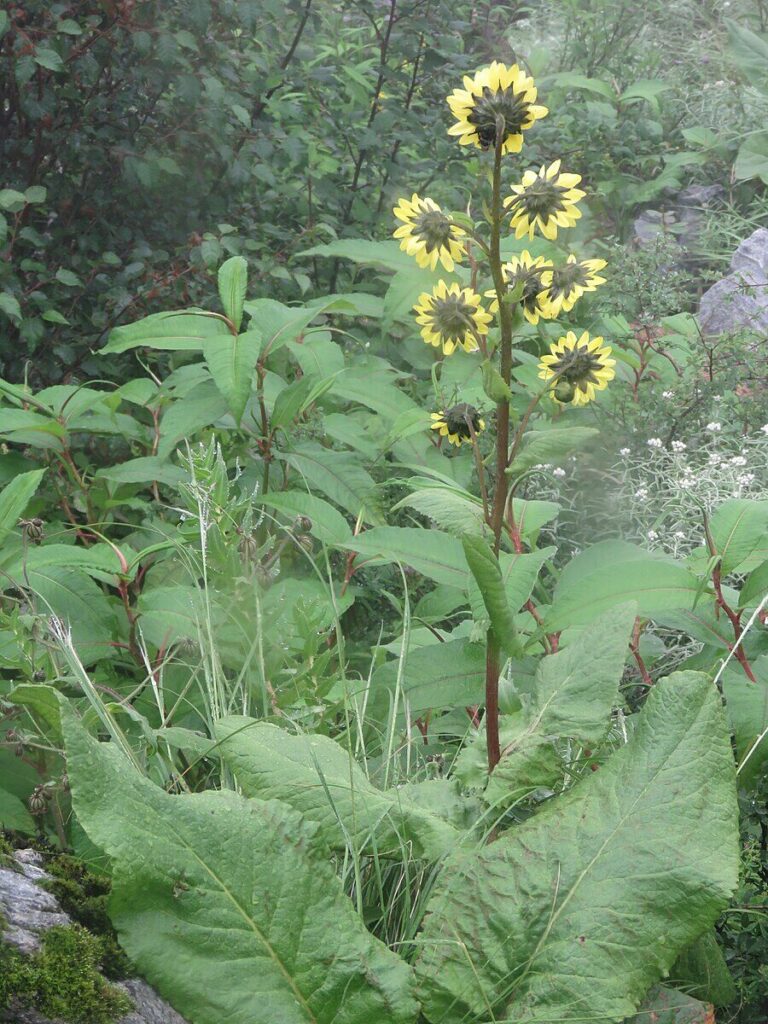
Botanical name:
Cremanthodium ellisii (syn. C. plantagineum) is the principle species.
Two varieties of Ming can are mentioned in Tibetan texts:
- Black (Ming can nag po): C. ellisii, C. helianthus, C. bupleurifolium, C. arnicoides, C. tanguensis (in Bhutan)
- Yellow (Ming can ser po): C. angustifolium, C. humile, C. lineare, C. pleurocaule
Cremanthodium has been referred to as ‘the high alpine representatives of Lugularia’. (Kletter)
Parts used:
Flower, or Whole herb in flower
Temperature & Taste:
Cool, dry. Bitter, Sweet (Tibet; Warm according to TCM sources)
Uses:
1. Clears Heat, Resists Poison:
-various types of internal Inflammation, including of the muscles and tendons
-Acute Sore Throat, Diphtheria
-Diarrhea (India)
-Acute Fever, Influenza
2. Clears Phlegm, Stops Cough and Wheezing: (TCM)
-Cough, Asthma
-has the effect of opening the chest
-Tuberculosis (TCM)
3. Supports Qi, Settles Wind:
-taxation damage, senile vacuity deficiency headache (Encyclopedia of TCM)
-Deficiency in the elderly (TCM)
-Headache
-Hypertension
Dose:
Decoction: 6–12 grams
Powder: 2–4 grams
Substitutes:
1. Pulicaria insignis has been given as a source (Kletter and others). This may be considered a variety, or may be used as a substitute in some regions.
2. Doronicum falcioneri appears to be collected as the Yellow variety in some areas.
3. Inula grandiflora and I. britannica has been given as a source of Ming can ser po, and Inula hookeri has been used in Nepal for Ming can ser po.
4. Senecio spp. have been used in the Buryat region
5. Hieracium spp. are used for Ming can ser po in Buryat and according to some sources, for Ming can nag po.
Main Combinations:
Major Formulas:
Aloeswood 19 (Tibetan)
Influenza Pills (Lo gyon ril bu) (Tibetan)
Notopterygium 29 Pills (Spru nag nyer dgu) (Tibetan)
Oxytropis 25 (Stag sha nyer lnga) (Tibetan)
Cautions:
None noted. Cold, so not suitable in cold and weak digestion.
Main Preparations used:
1. Phenylpropanosids, lignans and other constituents from Cremanthodium ellisii.
2. Apoptosis of Hela cells induced by extract from Cremanthodium humile. (related species)
3. Anti-cancer effects have been reported in Chinese texts.
4. Anti-bacterial effects have been reported in Chinese texts.
You must be logged in to view this content, please login. If you're not a member then Click this link to subscribe

.jpg)