Cotoneaster, Tshar ‘brum ཚར་འབྲུམ་
Cotoneaster
Tshar ‘brum (fruit), Tshar pa dkar po (Tibet)
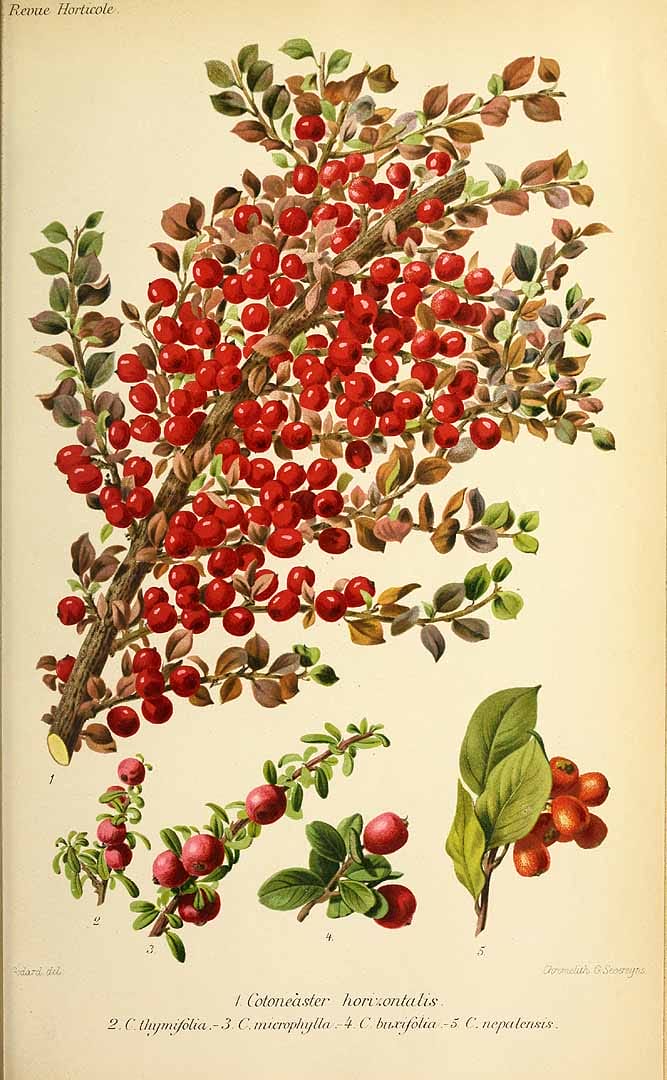
Cotoneaster acuminatus
Revue horticole, sér. 4, Vol 61 (1889)
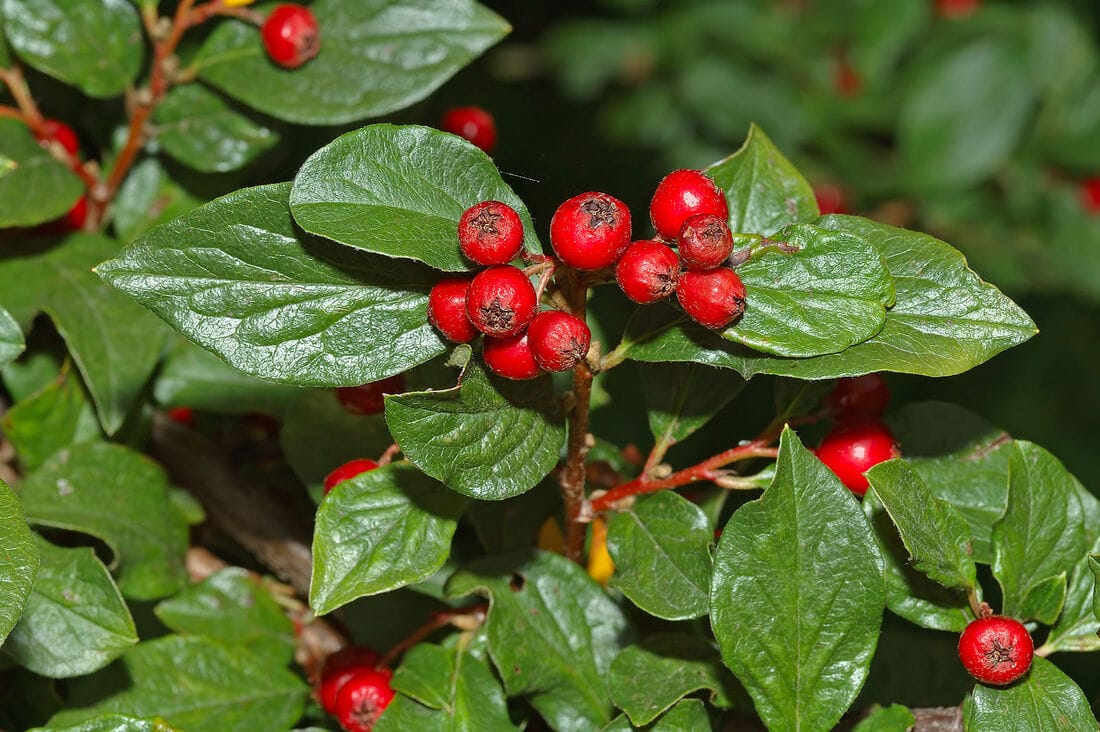
Cotoneaster acuminatus
(Photo by Aka) (Wikimedia)
Botanical name:
Cotoneaster spp.
Three main types are mentioned in Tibetan texts: 1. Black type; 2. White type; 3. one growing on ‘high rocks’
1. C. acuminatus (syn. C. bakeri, C. nepalensis, C. royleanus, C. roylei, Mespilus acuminata) Tshar pa dkar po
2. C. microphyllus: Tshar leb
3. C. melanocarpus (Black-fruited variety, used in Nepal)
4. C. frigidus: Tshar dkar, Tshar pa
5. Pyracantha crenulata
Parts used:
Fruit
Temperature & Taste:
Cool, dry. Sweet, Sour
Uses:
1. Clears Heat, Stops Bleeding:
-excess Menstruation, spotting
-said to be very useful for other types of bleeding such as blood in the stool
-twigs and leaves also stop Bleeding
2. Clears Damp-Heat:
-Diarrhea, Gastritis, Colitis
-used for damp accumulating in the joints of the extremities
-in Unani the root decoction is used for Joint pain
Roots have an Anti-hypertensive effect
Dose:
Some texts suggest the best method is to prepare a concentrated decoction from the ripe fruit. If this is not possible, the dried fruit can be used.
Decoction: 3–9 grams
Powder: 1–3 grams
Main Combinations:
Cautions:
Toxic in overdose. Contains cyanogenic glycosides.
Main Preparations used:
Click the above Tabs for more information on this medicine
You must be logged in to view this content, please login. If you're not a member then Click this link to subscribe