Coriandrum, Coriander
Kishneez, Kishniz (Unani, Seed)
Dhanyaka (Ayurveda)
Koththumali Vitai (Siddha)
‘U su འུ་སུ (Tibetan, Seed)
Kuzbarah (Arabic)
Kusibirru (Akkadian)
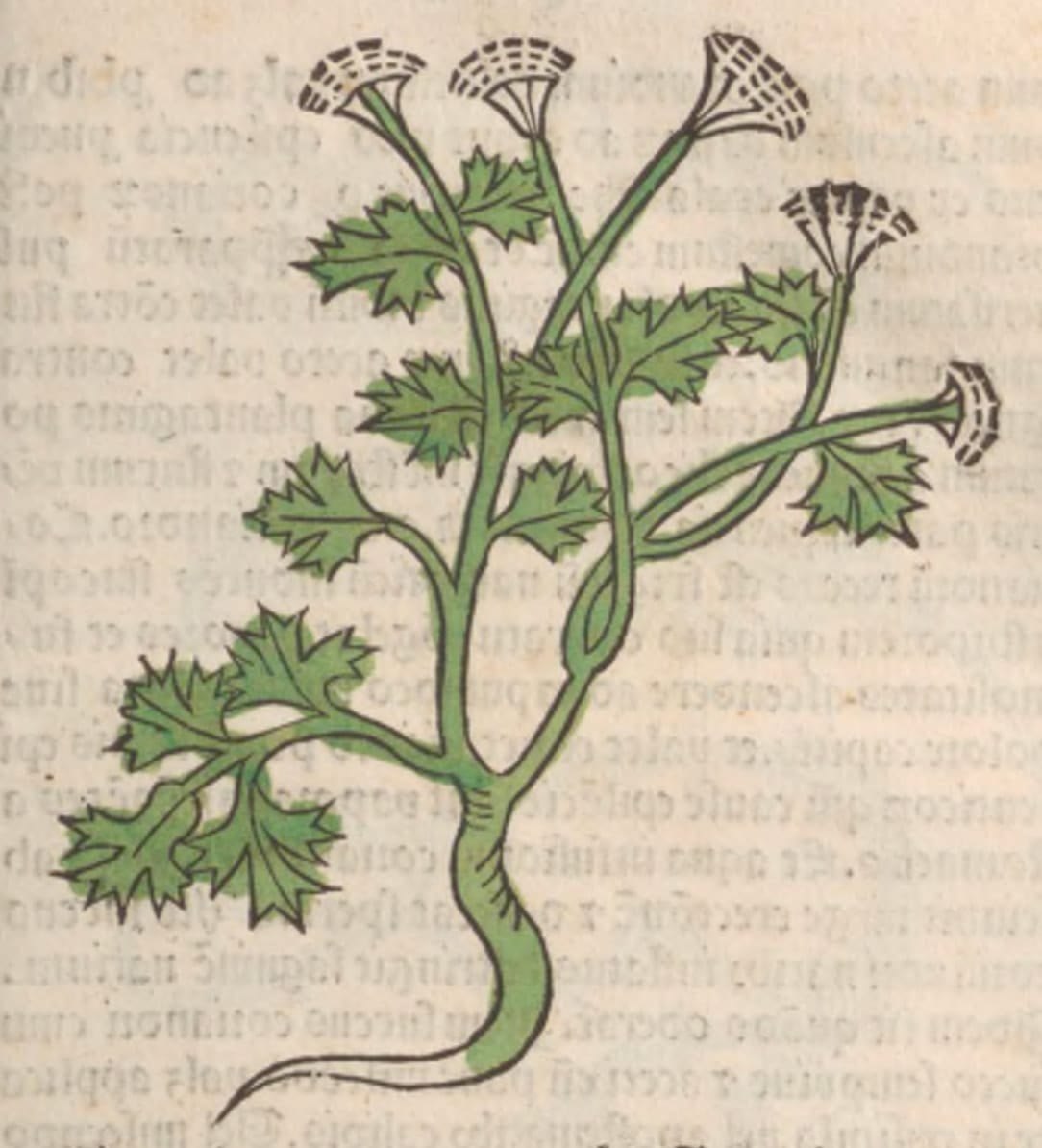
Herbarius latinus, Petri, 1485
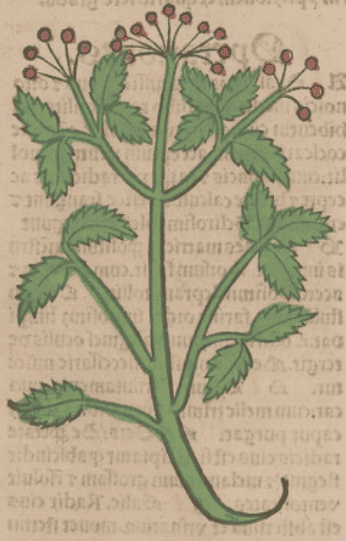
Ortus Sanitatis, Meydenbach, 1491
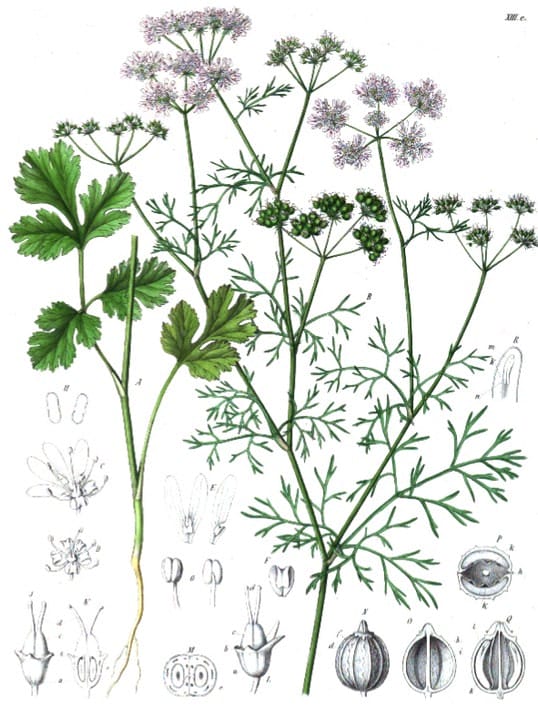
Darstellung und Beschreibung Pharmacopoea Borussica, Berg, 1858
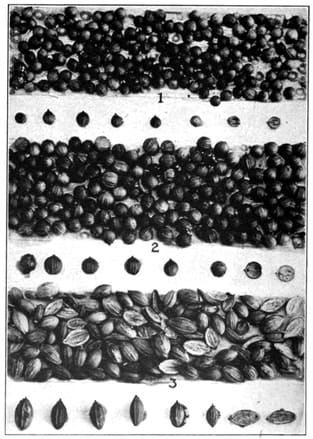
CORIANDER FRUIT
1. Small coriander. 2, Coriander of a normal size, 3, Indian coriander (not official)
Squibb’s Atlas of the Official Drugs, Mansfield, 1919
Botanical name:
Coriandrum sativum
Parts used:
Seed; Herb
Tibetan Medicine generally uses a combination of seed and herb.
Temperature & Taste:
Cool, dry. Pungent
“Coriander is Cold from the last phase of the First degree up to the Second degree. It is Dry in the Second degree”. (Avicenna)
Classifications:
2K. RESOLVENT. 2R. NARCOTICS & HYPNOTICS
3D. CORDIALS & CARDIACS. 3F. LITHONTRIPTIC
4c. CARDIAC. 4e. STOMACHIC
Uses:
The following uses are principally for the Seed:
1. Clears Wind-Cold, Resists Poison:
-Cold, Flu, Sinusitis, Rhinitis
-Epidemic Fever, Malaria, Small Pox
-promotes Eruption of Measles, Small Pox
-Food Poisoning
-“useful against heat and hoarseness of Mouth and Throat”. (Rhazes)
-poisoning from Croton or Castor seed (Ayurveda)
2. Benefits Stomach, moves Qi:
-good for the Stomach; indigestion, colic, nausea, vomiting
-good for looseness if taken after food;
-suppresses vapors (Wind) that hurt the Head and cause belching.
-Morning Sickness
-“it comforts a Cold and Moist Stomach, helps digestion, stops Vomiting” (Salmon)
3. Clears Wind-Damp, Promotes Urine:
-Edema, Ascites, Cystitis
-Rheumatism, Gout, Bone pain, Neuralgia
-Prostatitis
-“useful for an aching, indurated Bladder”. (Rhazes)
4. Moves the Blood, Promotes Menstruation:
-promotes and regulates Menstruation; can check excess menstrual flow
-Pain during Childbirth
-“Its extract, if used with milk, provides relief from all kinds of severe injuries” (Avicenna)
-“reported to be the safest and most certain herbal abortificant”. (large doses)
5. Settles Wind, Clears the Mind and Senses:
-Mental weakness, to improve Memory
-Headache, Deafness, Vertigo, Dizziness, Epilepsy
-acute diseases of the Sense organs
-also for Palpitations (Avicenna)
-“Dizziness and Epilepsy associated with Bilious or Phlegmatic fevers”. (Avicenna)
-“Its chief characteristics to prevent the vapours ascending towards the head”. (Avicenna)
6. Kills Worms
-including Filiariasis (seed powder, especially in children)
7. Externally:
-infusion of the seeds is used as an eyewash in Conjunctivitis, Blindness, and other eye diseases
-mouthwash for mouth Sores and a gargle for Throat Ulcers.
-poultice of the seeds is applied to Ulcers, Sores and Carbuncles
-juice or Cataplasm applied dissolves Lumps, Nodes and hard Tumors
-of particular benefit to chronic Ulcers (Ayurveda)
-seed fumes are used for Hemorrhoids (TCM)
-wash or enema of the decoction for rectal prolapse. (TCM)
Dose:
Infusion of the Seed: 1–4 grams (or 1 teaspoonful per cup)
Decoction: 3–9 grams, added towards the end of decocting.
Powder: 1–3 grams
Fluid Extract: 5–30 drops
Oil of the Seed: 1–4 drops on sugar
Freshly expressed juice: 5 mls.
Preparation:
1. Vinegar prepared Coriander seed:
Coriander seed was commonly steeped in Vinegar, then dried for use in the Western Tradition.
Some infused in equal parts of Wine and Vinegar.
2. Roasted Coriander seed:
Roasted Coriander seed is more warming, milder, and more astringent; it was said to cause Constipation.
Corrective:
1. Lemon juice;
2. Honey
Substitute:
1. Lettuce seed;
2. Poppy leaf (Unani)
Main Combinations:
1. Indigestion, Colic:
i. Coriander seed with Fennel and Aniseed, Cinnamon and Clove
ii. Coriander seed with Fennel, Cumin, Cardamon
iii. digestive symptoms that occur after eating (nausea, bloating, heaviness, fullness, flushing, headaches, drowsiness etc.), Coriander seed with Aniseed, Fennel seed, Nutmeg, Cinnamon, Clove, Long Pepper (as in Peptic Powder)
iv. Indigestion after eating, combine Coriander seed with Fennel seed, Tabasheer, Sodium bicarbonate, Emblic Myrobalan and Cardamon (as in Powder of Coriander, Unani)
v. Indigestion with Stomach weakness, Coriander seed with Aniseed, Cinnamon, Aromaticum Rosatum, Chicken Gizzard skin (as in Powder to Restore)
2. Poor Appetite, Coriander seed with Cardamon and Black Pepper (Ayurveda)
3. Hernia, Coriander seed with Comfrey, Valerian, Shilajit
4. Fever: Coriander seed with Fresh Ginger (TCM)
5. Thirst:
i. Coriander decoction with Sugar relieves Thirst from any cause. (Tibet)
ii. Coriander, Swertia, Emblic Myrobalan, Raisin (Tibet)
6. Acute Wind-Cold: Coriander seed, Ginger, Radish seed, equal parts in powder, taken with warm water. “This has been proven most thoroughly” (Tibetan Medicine–Tibetan Buryat Medicine)
7. Cough, Wheezing:
i. Coriander seed with Licorice and Long Pepper
ii. from Allergies, Coriander seed with Adhaotoda vasica
iii. Coriander seed, Radish seed, Licorice
8. Hemoptysis, Coriander with Plantain juice (Avicenna)
9. To strengthen Memory, Coriander seed with Bitter Almonds (Wirtzung)
10. Vertigo, Coriander seed with Cumin, Calamus, Marjoram, Aniseed, Fennel seed
11. Apoplexy, Coriander seed with Peony, Nutmeg, Mistletoe, Galangal, Cinnamon, Long Pepper, Rosemary
12. Excessive Menstruation, Coriander seed with Red Earth, Mastic, Amber (as in Powder for Menstrual Flux)
13. Morning Sickness:
i. Coriander seed with fresh Ginger
ii. Coriander seed with Ginger and Cyperus rotundus (as in Decoction for Morning Sickness of Ayurveda)
14. Threatened Miscarriage:
i. Coriander seed with Aloeswood, Sandalwood, Tabasheer, Bistort Purslane, Mastic, Red Coral, Cowry
ii. Bleeding during pregnancy, Coriander seed with Plantain, Bistort, Purslane (as in Powder for Bleeding During Pregnancy)
15. Melancholy, Coriander seed with Ginger, Cardamon, Saffron, Balm (as in Powder for Melancholy of Philon)
16. Madness, Mental Illness, Coriander seed with Water Lily flower Violet flower Rose Lettuce seed Poppy seed Red Coral Red Sandalwood
17. Stones, Burning Urine:
i. Coriander seed with Tribulus seed, Madder, Boerhaavia
18. Diabetes,:
i. Coriander seed with Acorn, Frankincense, Gum Arabic, Armenian Earth (as in Powder for Diabetes)
ii. Coriander seed with Rose, Pomegranate, Myrtle (Unani)
19. Incontinence, Coriander seed with Cypress nut, Myrtle berry, Red Coral, Amber, Tabasheer, Cyperus, Galangal (as in Electuary for Incontinence)
20. Rheumatism, Coriander seed with Fennel seed, Chebulic and Belleric Myrobalans, Licorice, Rose, Dill seed (Ayurveda)
21. Hot swellings, Coriander, Whiute Lead, Vinegar, applied topically (Avicenna)
22. Urticaria and Eczema, Coriander seed, Rose oil, Honey, Raisins, applied topically. (Avicenna)
23. Scrofula, Coriander, Broad Bean, roatsed Wheat flour, Chickpea flour, topically. (Avicenna)
24. Orchitis, fresh Coriander with Honey and Raisins applied (Avicenna)
Major Formula:
Triphala Electuary of Coriander (Itrifal Kashneezi)
Powder for Diabetes (Wirtzung)
Powder for Diabetes (Unani)
Powder for Bleeding During Pregnancy
Powder for Dizzyness and Vertigo (Gabelhover)
Powder for Menstrual Flux (Wirtzung)
Powder for Madness (Rondeletius)
Powder to Strengthen the Stomach of Andernacus
Decoction for Morning Sickness (Ayurveda)
Pomegranate 9 Decoction (Se bru dgu thang) (Tibetan)
1. Carminative Spirit:
i. Coriander seed, Fennel seed, Carrot seed, Aniseed, Caraway seed, Dill seed (½ oz. each), Proof Spirit (4 lbs.). Digest several days, strain, then add White Sugar (12 oz.). Mix, filter. Dose: ½–1 oz. (Pharmacopoeia Wirtembergica, 1798)
2. Honey Water:
i. Coriander (8 oz.), Fresh Lemon peel (1 oz.), Nutmeg, Storax, Benzoin (½ oz. each), Vanilla (3 drams), Alcohol (48 oz.). Infuse 24 hours, then distil. A little Ambergris and Musk can be added. Cephalic, Nervine, Cardiac, Pectoral, and Cosmetic. Dose: ½ ounce. (Pharmacopoeia Generalis, 1783)
Cautions:
Coriander seed was commonly said to hurt the Stomach and Head when taken raw, and was ordered to be steeped overnight in Vinegar, then dried. This is milder in effect. The hurtful quality is especially in the fresh state, and is lessened when dried, but corrected when prepared or roasted.
1. Not used in Yin deficiency.
2. Use carefully in Pregnancy (avoid large doses and it is best used after stir-frying)
3. Said in Unani to lessen sexual activity in men and be adverse to the memory if taken in excess. “The fresh and dry Coriander reduces the Sexual desire, erectile power, and the volume of Semen” (Avicenna)
4. “Excessive use of fresh and dry Coriander causes mental confusion” (Avicenna)
Drug Interactions:
Due to the coumarins which increase blood clotting time, patients on anticoagulant therapy (such as Warfarin) may experience problems with their medication if large doses are taken on a prolonged basis.
Main Preparations used:
Vinegar-Prepared Seed, Confection of the prepared Seed, Distilled Water, Distilled Oil
Confected Seed
They are confected as other seeds.
They dry the ascending vapors of the Stomach, and are good for the Stomach. They strengthen and dry the brains, and are good against Vertigo, Paralysis, and to procure Sleep. (Wirtzung)
“The seeds of Coriander prepared with Sugar prevail much against the Gout”. A small quantity is taken after supper. (Gerard)
Click the above Tabs for more information on this medicine
-One of the oldest herbs, having been cultivated for over 3000 years. Used by many cultures; mentioned by old Greek, Egyptian, Arab, Sanskrit, Chinese and Latin herbals. It was imported into China around 2000 years ago.
-The name Coriandrum was first termed by Pliny, coming from the Greek koros, after the strong smelling leaves.
-To the ancient Chinese it was said to ‘stimulate Arousal and confer Immortality’.
-The Jews eat Five bitter herbs during their Passover, these being Lettuce, Coriander, Horehound, Nettle and Horseradish
-The Oil is added as a flavour to Gin, Vermouth and Chartreuse.
“Coriander, Coriandrum sativum L., is kuzbarah which in originally known in medicine from India. This conclusion is based on philological grounds. The Arabic kuzbarah and the Persian kuzburah are from the Aramaic kusbarethà, in turn from the Akkadian kusibirru related to the original Sanskrit kustumbari. Coriander was known in ancient Egypt as [?] for head ailments; it has been found in 22nd Dynasty tombs.
Coriander, today, grows in India, North Africa, Egypt, Syria, Iran and in the Caucasas. It is also known in Tibet and China. In Turki it is yun-ma-su, in Tibetan u-su, and in Chinese hu-sui. On the other hand, it is celendre in Anglo-Saxon and sometimes coliandre, going back to Greek.
In Arabic times, al-Bitriq has coriander in a purgative, al-Kindi in a headache reliever using the dry leaf, ibn Badis in the preparation
of an apricot colored liqa, and Hunain in treatment for ophthalmia. Maimonides gives the synonyms as an-nagda, an-nada, andkazburah yabisa. The last is the dry leaves.
Today, in Egypt, coriander is a stomachic and carminative; in Iran it is used for toothache and headache.* (Early Arabic Pharmacology, Levey, 1973)
You must be logged in to view this content, please login. If you're not a member then Click this link to subscribe