Corchorus, Huang Ma 黄麻
Jute, Jew’s Mallow (C. olitorius)
Korkoros (Dioscorides)
Chunchu, Chanchu; Kalasaka (C. capsularis) (Ayurveda)
Huang Ma, Huang Ma Ye (leaf) (C. capsularis); Sha Ma (C. olitorius) (TCM)
Chang Shuo Huang Ma (C. olitorius, TCM)
Baqla, Mlokheyeh (C. olitorius) (Arabic)

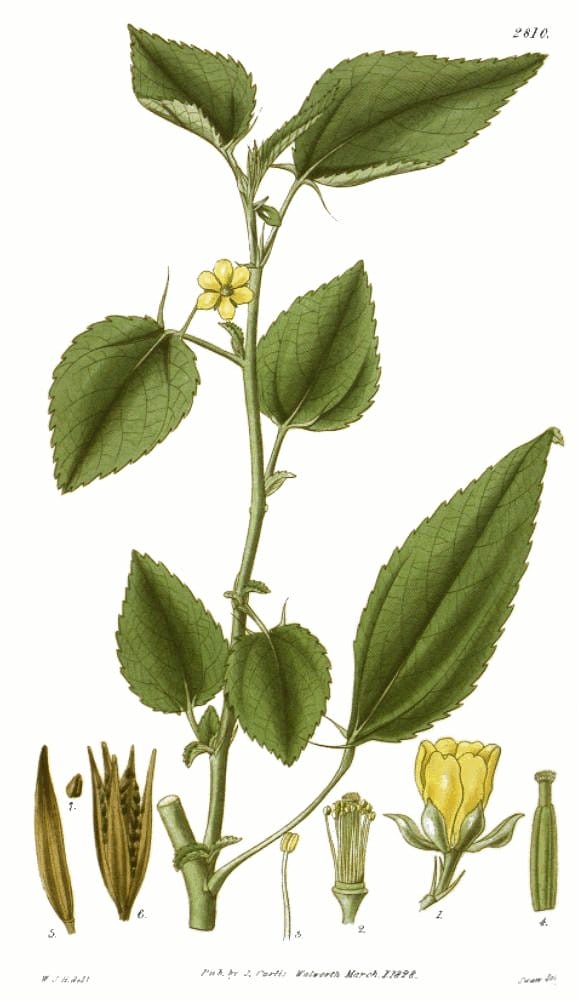
Corchorus olitorius
Curtis, W., Curtis’s botanical magazine (1800-1948)
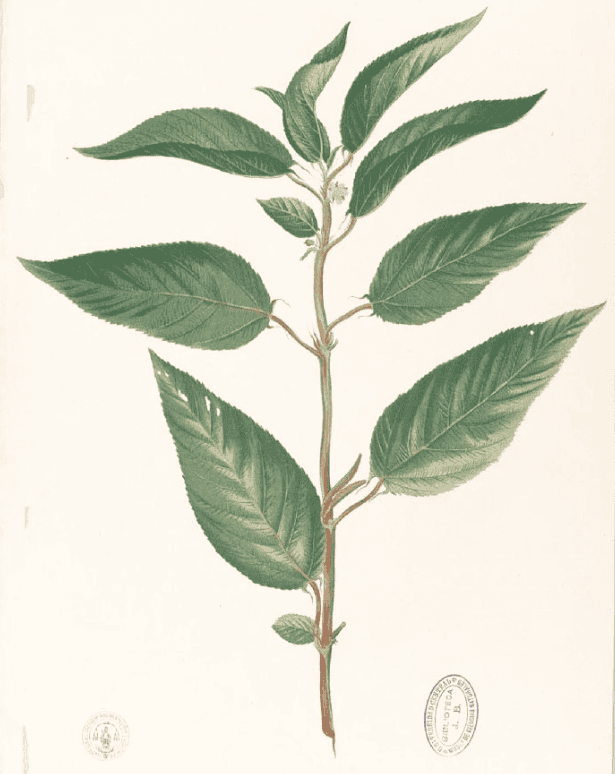
C. aestuans (syn. C. acutangulus)
Blanco, M., Flora de Filipinas, ed. 3 (1877-1883)
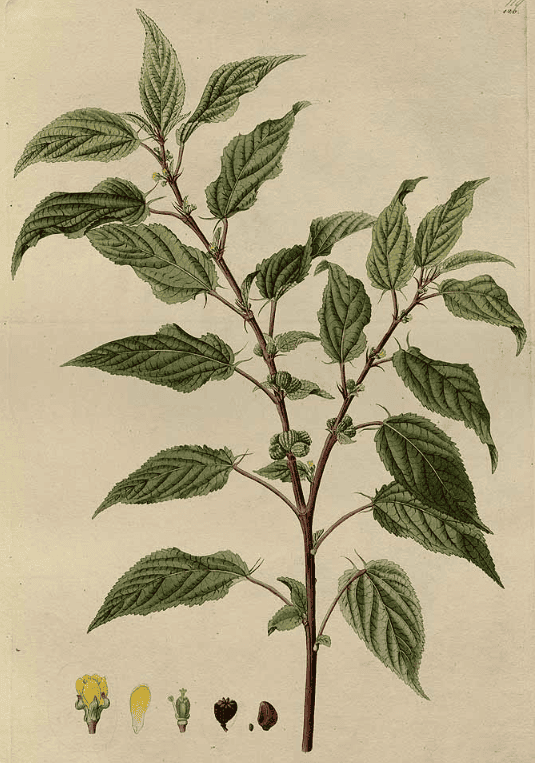
C. capsularis
Jacquin, J.F. von, Eclogae plantarum rariorum (1844)
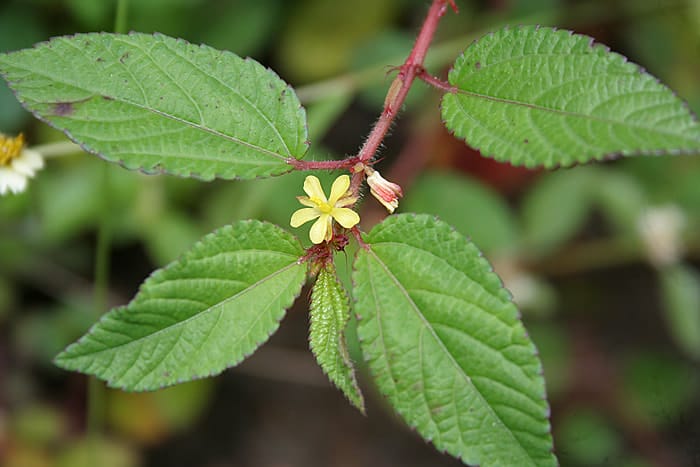
Botanical name:
Corchorus spp.
- C. olitorius (Greater variety) (Ayurveda, TCM)
- C. capsularis (Lesser variety) (Ayurveda, TCM)
- C. aestuans (syn. C. acutangulus) (Ayurveda)
- C. depressus (Unani)
- C. trilocularis (Unani)
In Unani (Pakistan) C. depressus is used. According to Indusyunic Medicine, C. capsularis and C. trilocularis are accepted substitutes, meaning that it and C. trilocularis are synonymous species.
Parts used:
Whole Herb; also the Seed
Temperature & Taste:
Cold, dry. Bitter, Pungent
Constituents:
Cardioactive Glycoside (Digitoxigenin): Seed (4120ppm), Stem (230ppm), Root (110ppm), Leaf (20ppm) (Duke)
Uses:
1. Clears Wind-Heat, Resists Poison:
-Cold or Flu with Fever and Cough
-Fever (TCM, Unani); Heatstroke (TCM)
-Acute Sore Throat, Tonsillitis (TCM); Hoarseness (Unani)
-Pain of the Head and Eyes (traditional Jewish use)
-Dysentery (TCM, Unani, Ayurveda)
-Gonorrhea (Unani)
-Sores, Boils, Abscesses (topically and internally)
2. Clears Heat, Cools the Blood: (Unani, TCM)
-Unani writers regarded it as cleansing Blood and Liver
-Eczema
-also Epistaxis and Consumptive Cough
3. Increases Digestion: (Ayurveda, Unani)
-Digestive stimulant (Ayurveda); stimulates appetite (Unani)
-Abdominal pain
-regarded as a restorative
-clears aggravated Phlegm
-ashes have been taken with Honey for obstructions of the organs (Ayurveda)
4. Strengthens Kidneys, Promotes Urine: (Ayurveda, Unani)
-Urinary disease from obstruction or infection, while strengthening the Kidneys (Unani)
-Edema, Dysuria (Ayurveda)
5. Promotes Semen: (Unani)
-increases Semen
-reduces Premature Ejaculation (by thickening semen)
-for these uses the powder is mixed with sugar and taken with Milk
6. Benefits the Heart:
-Cardiotonic (seed of C. capsularis is used to strengthen Heart in TCM)
-Chest Pain
-High Cholesterol
Dose:
1. Seed and Herb can be taken in similar doses
Decoction of the Herb: 3–6 grams (some sources say 15–30 grams)
Powder of the Herb: 2–5 grams
Jute Ashes: 500–1500mg
A paste of the fresh leaf is applied topically.
Comment:
1. Several species are used between the different systems. C. aestuans is used in Ayurveda, while C. olitorius and C. capsularis are used in Ayurveda and TCM. C. olitorius (Jews Mallow) is used in Unani, Ayurveda and TCM, and can probably be realised as the primary species of Corchorus. C. aestuans and C. capsularis are apparently used in Iraq. This together shows the various species appear synonymous in use.
2. Jew’s Mallow was apparently an important article of food in the middle east. It is believed by some to be the Mallow referred to in the Bible. It is also eaten by peasants in India where it is eaten like Spinach.
3. Corchorus spp. supply Jute.
Correctives:
1. Honey, Brown Sugar
2. Black Pepper
Substitute:
1. “Prosper Alpinus tells us, That it is very like Marshmallows in Vertue”.
2. Dioscorides include Korkoros under Anagallis (Scarlet Pimpernel). This suggests them to have similar properties.
3. Some Unani texts name it as a relative of Purslane (Baqla) calling C. olitorius Baqla Yahudiyya.
Main Combinations:
1. As a digestive stimulant, Corchorus with Coriander seed and Aniseed. (India)
Major Formulas:
Cautions:
1. Contains Cardioactive Glycosides. The seed is by far the richest and is toxic in overdose. The herb contains only traces and is eaten as a potherb.
2. Not used in Pregnancy. Used as an abortifacient in Africa.
3. Regarded as hard of digestion and likely to cause flatulence.
Drug Interactions
Avoid use in patients taking Heart medication.
Main Preparations used:
1. Anti-inflammatory (Corchorus capsularis)
2. Anti-histamine (Corchorus olitorius)
3. Cardiotonic–contains cardioactive glycosides.
4. Hypoglycemia (Corchorus olitorius)
You must be logged in to view this content, please login. If you're not a member then Click this link to subscribe