Clerodendrum paniculatum, Bai Long Chuan Hua Tou 白龙船花头
Scarlet Glory Bower, Red Pagoda Tree
Bai Long Chuan Hua Tou, Long Chuan Hua (TCM)

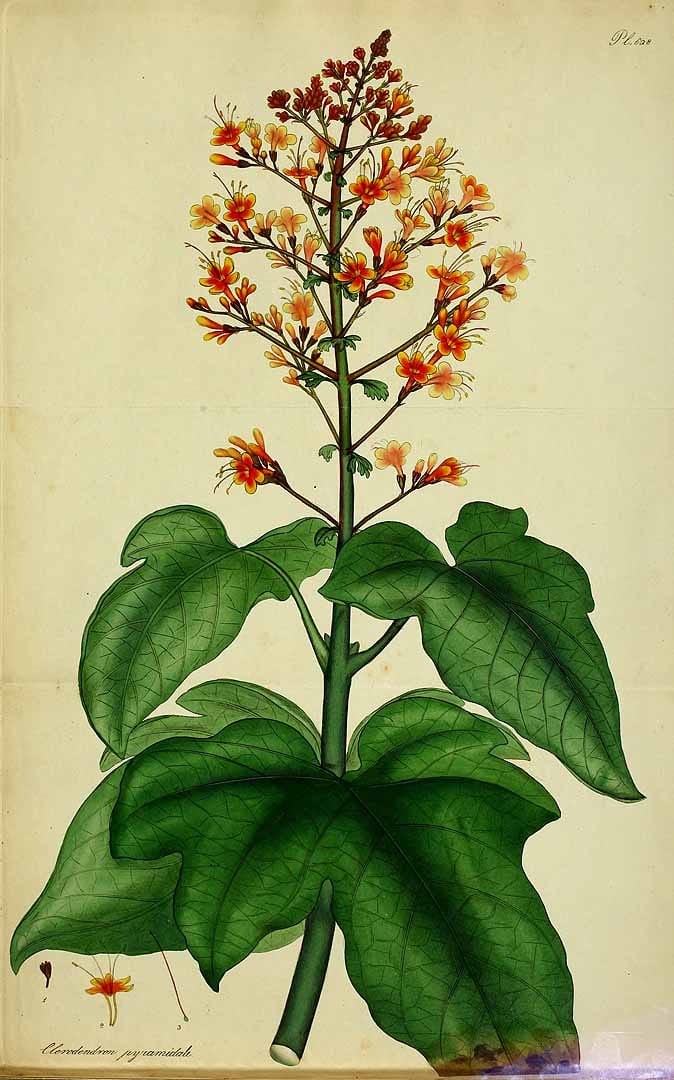
Clerodendrum paniculatum
Andrews, H.C., botanist’s repository (1810)
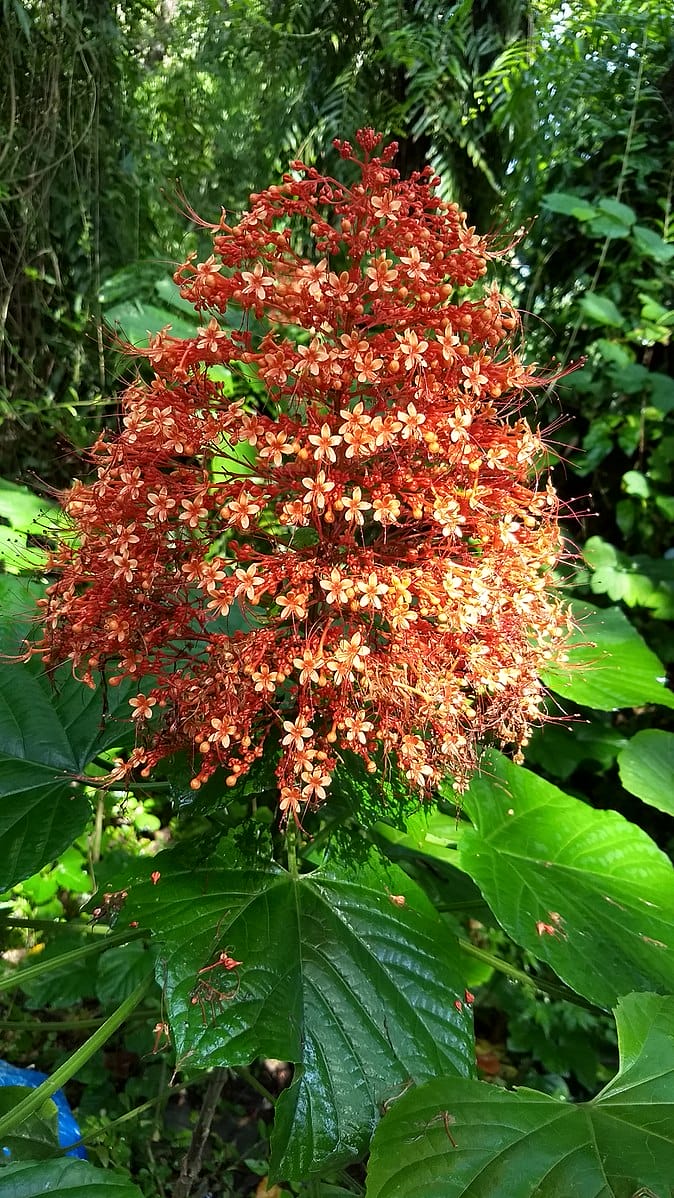
Clerodendrum paniculatum
(Photo by Renjusplace) (Wikimedia)
Botanical name:
Clerodendrum paniculatum (syn. Clerodendron paniculatum)
Parts used:
Root; leaf is also used
Temperature & Taste:
Warm (some sources say Cool), dry. Sweet, Slightly Bitter
Uses:
1. Moves the Blood, Clears Stasis, Regulates Menstruation:
-Painful or Irregular Menstruation from Blood stagnation
2. Clears Wind and Damp, Eases Pain:
-Wind-Damp pain of the muscles and joints
-Arthritis, Rheumatism
3. Clears Damp, Promotes Urine:
-frequent urination, Polyuria, especially in Diabetes
-Cloudy Urine
-Leukorrhea
Dose:
Decoction: 3–12 grams
Comment:
The leaves are used for Worms.
Main Combinations:
1. Wind-Damp muscle and joint pain, Clerodendrum paniculatum with Cinnamon twig (Gui Zhi), Phellodendron Huang Bai, Poria Fu Ling, Atractylodes Cang Zhu
2. Promote Menstruation:
i. with coldness and fluid retention, Clerodendrum paniculatum with Nutmeg and Motherwort (Yi Mu Cao)
ii. with Blood deficiency, Clerodendrum paniculatum with Dang Gui, Paeonia Bai Shao
iii. obstructed by Qi stagnation, Clerodendrum paniculatum with Cyperus rotundus (Xiang Fu), Paeonia Bai Shao
3. Leukorrhea:
i. Clerodendrum paniculatum with Canarium album root Qing Guo Gen.
ii. from Damp-Heat with yellow discharge and a foul smell. Clerodendrum paniculatum with Phellodendron Huang Bai, Gentian (Long Dan Cao)
4. Frequent Urination in Diabetes:
i. from Yin deficiency, Clerodendrum paniculatum with Liu Wei Di Huang Wan
ii. from Yang deficiency, Clerodendrum paniculatum with Ba Wei Di Huang Wan (Shen Qi Wan)
Major Formulas:
Cautions:
1. Avoid long-term use.
2. Not used during Pregnancy or Breastfeeding
3. Avoid in Liver or Kidney disease
Drug Interactions:
1. Caution while using Fluoroquinolone antibiotics
2. Caution while using drugs metabolized by cytochrome P 4502C8 (CYP2C8) such as Paclitaxel.
Main Preparations used:
Click the above Tabs for more information on this medicine
You must be logged in to view this content, please login. If you're not a member then Click this link to subscribe