Carduus Benedictus, Blessed Thistle
Holy Thistle, Carduus
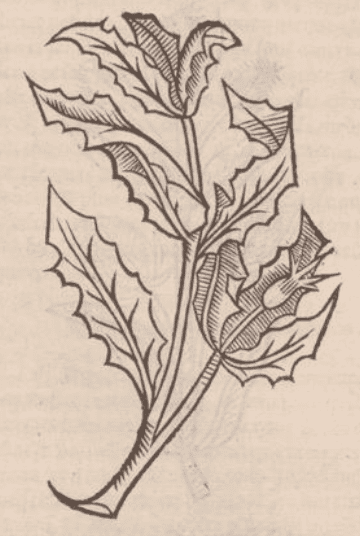
Ortus Sanitatis, Cube, Johann von, 1501
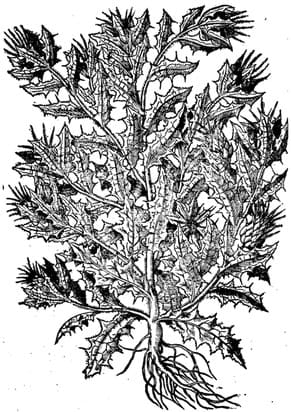
New Kreuterbuch, Matthiolus, 1563
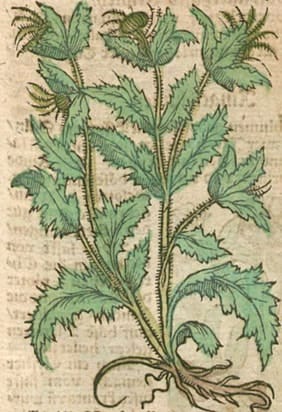
Kurtzes Handtbuchlein, Ryff, 1599
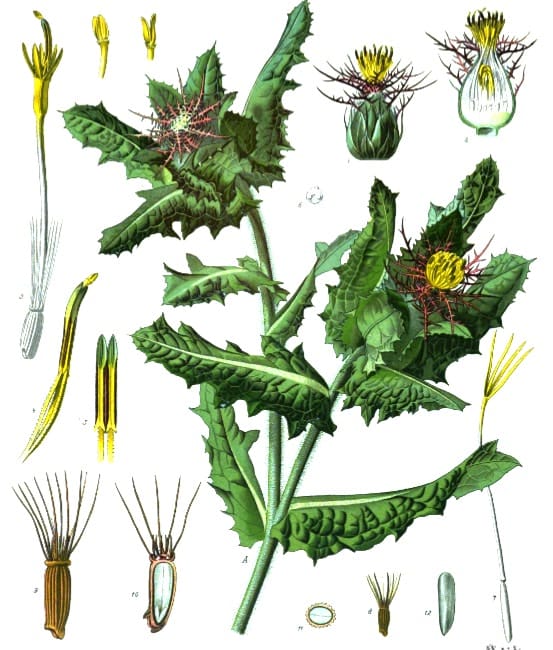
Koehler’s Medizinal Pflanzen, 1887
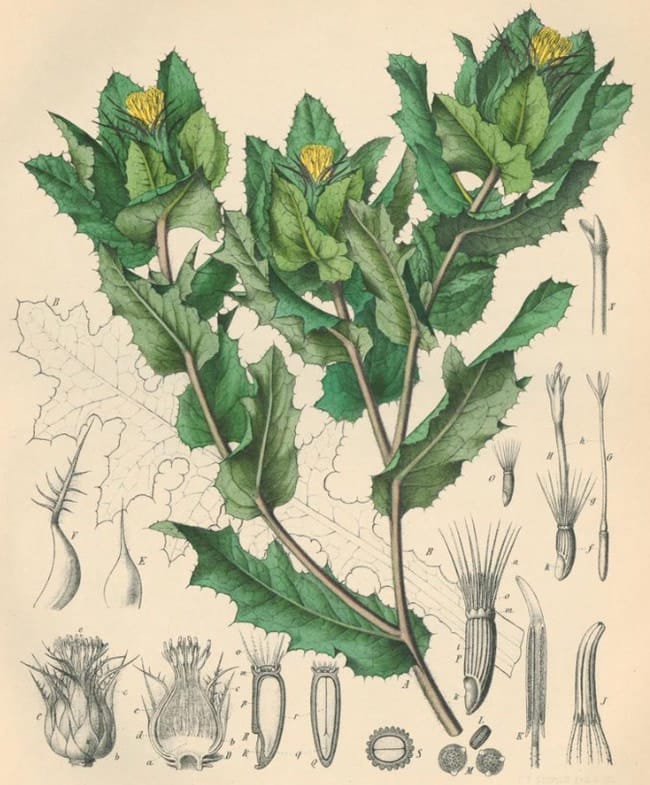
Atlas der Officinellen Pflanzen, Berg & Schmidt, Leipzig, 1893
Botanical name:
Carduus benedictus (syn. Cnicus benedictus, Centaurea benedicta)
Parts used:
Herb; Seed
Temperature & Taste:
Warm, dry. Bitter, pungent
attenuates, opens, discusses, and is cordial
Classification:
2F. PURIFYING
3A. SUDORIFICS & DIAPHORETICS. 3C. ALEXIPHARMIC. 3D. CORDIALS & CARDIACS. 3L. ANTI-TUSSIVE. 3M. ARTHRITIC
4c. CARDIAC. 4d. PECTORAL. 4e. STOMACHIC
Uses:
1. Clears Wind-Heat, Resists Poison, Promotes Sweat:
-Antidote; Preserves from and treats Epidemic and Infectious diseases
-Cold, Flu, acute Cough, Asthma, Allergies
-Fever, Eruptive Fever, old Fevers and Quartan Fevers; Plague, Syphilis
-venomous bites including Rabid Dogs
-Eczema, Sores, Boils, Itch
-“it heals all manner of Fevers”. (Alexis)
-“very good against all bitings of Serpents”. (Alexis)
-“especially against the Pestilence, as also deadly Poisons”. (Matthiolus)
-“The herb itself, as well green as dried, both drunk, and laid outwardly to the grief, doth heal Ulcers”. (Matthiolus)
-“it has no equal in consolidating putrid and stubborn Ulcers, and the very Cancer itself”. (Simon Paulii)
2. Clears Wind-Heat, Calms the Liver, stops Wind:
-Headache, Migraine, Epilepsy, Dizziness
-Madness, Insanity, Melancholy
-benefits Memory, Hearing and Eyesight
-for “all pains of the Head”.
-“a singular remedy against Deafness”.
-“juice of it laid to the Eyes, quickeneth the Sight”. (Culpeper)
-“wonderful use in the Falling Sickness”. (Salmon)
-“The herb eaten, doth strengthen the trembling and Palsy [Paralytic] members”. (Culpeper)
3. Clears Damp-Heat:
-obstructions of the Liver or Spleen
-Jaundice, Cholecystitis
-hot and painful urine
4. Clears Phlegm-Heat, Stops Cough and Wheezing:
-Cough, Wheezing, Asthma
-opens the Lungs and frees the Breath
-“The juice drunk with Wine, is good against shortness of breath, and the diseases of the Lungs”. (Culpeper)
5. Promotes Digestion:
-promotes appetite and strengthens Digestion (as a bitter)
6. Warms the Yang:
-strengthens the principle Organs (Brain, Heart, Liver, Stomach, Lungs and Kidney)
-often used to strengthen the Brain and Memory.
-strengthens the Back, tones the ligaments
-“fastens loose and weak sinews”. (Turner)
7. Promotes Milk
-promotes and enriches Breast Milk
-Some called it the “best” medicine for nursing women to ensure milk.
8. Kills Worms
-wine of Blessed Thistle is effective
9. Externally:
-poultice to sores and swellings
-externally to stop Gangrene (as a poultice)
-stubborn, indolent and gangrenous Ulcers
-foul and putrid Ulcers, especially of the Breast, sprinkle the powder on (Herbarium Horstianum, 1630)
-“Water or Juice dropped into the eyes, cureth the redness, bloodshotten, and itching of them”. (Culpeper)
-“when it is eaten, it makes a man to have good teeth and gums”. (Alexis)
Dose:
Fresh plant was often preferred. Culpeper said “… the Powder and (distilled) Water of the Herb is most to be regarded”; although others said “The Decoction is best”. It was sometimes decocted in Wine or Boy’s Urine.
Different preparations better serve different intentions: i. the Cold Infusion is a tonic to a weak Stomach and indigestion; ii. the Warm Infusion promotes Diaphoresis, Opens the Lungs, and Milk in nursing Mothers; iii. Strong Decoctions will induce Vomiting.
Powder: 1–3 grams (half–1 dram); 1 dram of the powder with wine for Epidemic disease
Decoction: 3–6 grams, up to 9 grams
Tincture (1:5): 20–30 drops
Saturated Tincture: 10–20 drops, 3 times daily
Dry Extract: 300mg–1 gram
Substitutes:
1. The seeds of Milk Thistle (Silybum marianum) and various other thistles have been used similarly
2. Culpeper said Angelica is “much like it in vertue, that if the one be wanting, the other may be taken”.
3. Camomile
Main Combinations:
1. A good way to use is to decoct Blessed Thistle with Raisin and Licorice (Decoction of Carduus); especially good for Cough, Asthma, Wheezing
2. Fever:
i. Quartan Fever, 1 dram of the powdered herb with wine (Herbarium Horstianum, 1630)
ii. Blessed Thistle with Centaury and Wormwood
iii. Blessed Thistle with Centaury, Sorrel, Chicory, Dandelion, Licorice (Kroeber)
3. Prevent Infection during Epidemics:
i.: “a dram of it, or a Walnut shell full, taken immediately after a man feeleth himself infected, expelleth the Venom of the Pestilent infection from the Heart: so that if a man sweat afterward, he may be preserved”. (Culpeper)
ii. Blessed Thistle, Angelica
4. Antidote against Wind-Cold infection:
i. Blessed Thistle, Angelica
ii. Blessed Thistle with Scordium, Elecampane, Zedoary, Myrrh, Juniper berry
5. Syphilis:
i. Blessed Thistle, Guaiacum (Matthiolus)
ii. Blessed Thistle, Sarsaparilla
6. Asthma, Breathlessness:
i. Dustilled Water of Blessed Thistle taken morning and night benefits Asthma (Herbarium Horstianum, 1630)
ii. Blessed Thistle with Horehound, Pimpinella, Knotgrass
iii. Blessed Thistle with Licorice, Raisins, Coltsfoot
7. Cholagogue:
i. Blessed Thistle with Wormwood, Peppermint, Dandelion
ii. Blessed Thistle with Gentian, Camomile
iii. Blessed Thistle with Gentian, Centaury, Camomile, Orange peel, Nutmeg, Clove (Fuller)
8. Inflammations, Blessed Thistle with Elder flower, Peppermint, Ginger
9. Diarrhea, Blessed Thistle with Agrimony, Tormentil
10. Epilepsy:
i. decoction or Wine of Blessed Thistle taken morning and night (Herbarium Horstianum, 1630)
ii. half dram of powdered Blessed Thistle with Linden Water (Herbarium Horstianum, 1630)
iii. or Apoplexy, Blessed Thistle with Angelica, Zedoary, Bistort, Gentian, Balm, Sandalwood, Clove
11. Loss of Memory, decoction of the herb and seed strengthens Memory (Herbarium Horstianum, 1630)
12. Breast Cancer: “A woman whose breast were quite consumed by a Cancer was restored to health by the Distilled Water of it, and by sprinkling the powder of the leaves on the Ulcers”. (Pechy)
13. Chronic Leg Ulcers: “Arnoldus de Villa nova relates, that he saw the putrid and hollow Ulcers of a Man, who had all the flesh of his Legs consumed to the very Bone, and who had tried all other Medicines in vain, cured by the following Receipt: Take the bruised Leaves of this Plant, and boil them with some generous Wine, then add some melted Hog Lard, let them boil a little more, and then put in some Wheat-flower, stirring it about all the while with a Spatula till it comes to the confidence of an Ointment. Lay this warm on the Ulcers, twice every Day”. (Tournefort, 1730)
Major Formula
Bitter Decoction
Purging Bitter Decoction
Decoction to Promote Appetite
Syrup of Balm (Fernelius)
Electuary of Elecampane (Unani)
Tincture Against Asthma
Tincture for Suppressed Menstruation
Powder Against Toxicity and Venom (Wecker)
Cautions:
Some have said it shouldn’t be used in Pregnancy
Main Preparations used:
Distilled Water, clarified Juice, Spirit, Distilled Oil, Conserve, Syrup, and an Extract
1. Extract of Blessed Thistle:
i. fresh Blessed Thistle, any amount. Pound in a stone mortar, adding a little water, then press and evaporate to the consistency of an extract.
ii. Blessed Thistle (2 lbs.), Cold Water (20 lbs.). Macerate 24 hours, stirring, and strain. Set aside, and evaporate to an extract.
iii. Blessed Thistle leaf, any quantity, boiling water, sufficient. Infuse, strain, then evaporate to an extract.
2. Syrup of Blessed Thistle:
i. Juice of Blessed Thistle, depurated and reduced to half (18 oz.), White Sugar (32 oz.). Make a Syrup. (Dispensatorium medico pharmaceuticum Palatinatus, 1764)
3. Tincture of Blessed Thistle:
i. Blessed Thistle herb (4 oz.), Alcohol (2 lbs.). Steep, press, strain, then add more Blessed Thistle (2 oz.). Digest several days, then press and filter. Dose: 1 dram in wine. (Pharmacopoeia Wirtembergica, 1798)
4. Distilled Water of Blessed Thistle:
i. Bruised Blessed Thistle herb (1 part), Water (2 parts); distil two-thirds. (Pharmacopoeia Sardoa, 1773)
Good for the Head, strengthens the Memory, good for Vertigo etc. It promotes sweat, strengthens the heart. Good against all fevers from heat. Also good for pains of the head.
Dose: 1–3 oz., taken with wine if the Stomach is cold
5. Ointment of Blessed Thistle:
“Carduus benedictus stamped and boiled with Barrows grease, Wine and Wheat flour to an Ointment, this is so sovereign that it cures all Ulcers, Fistulas, and Sores, yea, though the very bones be bare”. (Mizald)
Click the above Tabs for more information on this medicine
-Its name is testamount to its revered status in earlier times. It was not much used before the mid 16th century when its vertues were “discovered” by a Benedictine Monk.
-“It provokes urine, the stopping of which is usually caused by Mars or the Moon”. (Culpeper)
-“God hath indued, and (as I may say) Blessed this Herb”.
-“It consumes and wastes away all bad Humours”. (Matthiolus)
–Gerard first cultivated Blessed Thistle in 1597. In 1598 in his Poore Man’s Jewell, Thomas Brasbridge spoke of the treatment of the Pestilence (Plague) in which he gave special mention of the virtues of Carduus benedictus and Angelica. Both these herbs were especially recommended for the Pestilence, their names being derived largely from this fact. Later, Culpeper in his School of Physick (1679) also gave special dedication to these two herbs where he gave an extended and detailed account of their medicinal uses (see below).
“The Sovereign Vertues of Carduus Benedictus” (Culpeper):
“It is excellent for the Head, and the Parts Thereof.
“This herb eaten, or the Powder of Juice of it drunk, keepeth a Man from the Headache, and Megrim; it also driveth it away. Being taken in meat or drink, it is good against Dizzyness, and the Swimming Giddiness of the Head [Vertigo]. It comforteth Brain, sharpeneth the Wit, strengthens the Memory; it is a singular remedy against Deafness: for it amendeth the thickness of Hearing, and provokes Sleep. The juice of it laid to the Eyes, quickeneth the Sight: Also the Water in the Which the Powder, or Herb dried, is steeped hath the same effect, if the eyes be washed therewith. The Herb eaten, is good for the same purpose. The Water or Juice dropped into the eyes, cureth the redness, bloodshotten, and itching of them. Some write, that it doth strengthen the Teeth … It comforteth the Stomach.
“The Broth of the Herb, otherwise called Decoction, drunk in wine, is good for an Evil Stomach; it helpeth a weak Stomach, and causeth an appetite to meat. Also the Wine wherein it hath been boiled, doth cleanse and mundify the infected Stomach. The powder thereof eaten with Honey, or drunk in Wine, doth rip and digest Cold Phlegm, purgeth and bringeth up that which is in the breast, scouring the same of gross Humours, and causeth to breathe more easily …
“It helpeth the Heart.
“The powder being taken before a man is infected, preserveth him from the Pestilence. And a dram of it, or a Walnut shell full, taken immediately after a man feeleth himself infected, expelleth the Venom of the Pestilent infection from the Heart: so that if a man sweat afterward, he may be preserved. The same effect hath the herb boiled in wine, or in the urine of a healthful man-child drunk … The leaves, powder, juice, or water of the herb drunk, the patient well covered with clothes, sweating three hours, expelleth Poison taken in at the mouth, and other corruption or infection that may hurt and annoy the Heart.
“It helpeth the Liver, Lungs, and other parts of the Body.
“The herb boiled in Wine, and drunk hot about a quarter of an hour before the Fit, and the patient afterward well covered in the bed, driveth away the Ague. The powder and water of the herb drunk with Wine, hath the same effect. The juice drunk with Wine, is good against shortness of breath, and the diseases of the Lungs. It strengthens the members, and is good against the ache of the body. The herb boiled in the Urine of a Healthful man-child, and drunk, doth help the Dropsy, breaketh all Apostumes, mastereth the Falling Sickness … It is also good for them that begin to have the Consumption, called the Ptysick. The herb eaten, doth strengthen the trembling and Palsy members … The juice drunk with Wine, or the herb boiled in wine, and drunk Hot, breaketh the Stone, and driveth out Gravel: being sodden in water, and the patient sitting over it, so that the hot vapour may come unto the diseased place, it helpeth against the same infirmity. After the same manner being used, it is good against the Green Sickness … Also the Wine or Water in which this herb is boiled, being drunk, consumeth the Evil humours, and preserveth the Good”. (Culpeper, School of Physic 1679).
Mathiolus on Carduus:
“Carduus benedictus is a plant of great vertue, especially against the Pestilence, as also deadly Poisons: as well taken inwardly, or laid outwardly to the stingings and bitings of Venomous Beasts. They are healed with this herb, that are sick of a Quartan, or other Agues, that come with a Cold, and that by the drinking of the Decoction, or Stilled Water, or a Dram of the powder … it provoketh Sweat; it Killeth the Worms, and is good against other diseases of the Womb. The herb itself, as well green as dried, both drunk, and laid outwardly to the grief, doth heal Ulcers. On such extraordinary occasions, it is mingled with the drink made of Guaiacum, Wine, and Water for the French Pox”.
From “The Secrets of Alexis”, 1559
“If you eat Carduus Benedictus, it will heal all headaches, and causes a good Hearing and Memory, takes away the whirling or giddiness [dizziness] of the head, comforts the Brain, causes a good Sight, not only when a man eats of it, but also when he rubs his eyes with the juice, or when a man puts the powder or water of it into his eyes. It purges also the Stomach, the Throat, and Phlegm, it brings a good Appetite, conforts the Breast, consumes Rheums and Murrs [Catarrh], and heals the pain the Belly. The Wine of his decoction, and the water which is distilled of him, dries up all evil humors, and Itches, heals the Spleen, and the Stone: and when a Clyster [enema] is made of it, and of wine or piss, it heals all ventosity, Apostumes, and the Plague, so that you drink the juice, or the powder of it immediately after you feel the grief. And if a man lay the white and rough cotton that it has after it is blossoms, upon any wounds that is not mortal, it will heal it in three days without pain or grief. The said herb causes a sweet breath, and when it is eaten, it makes a man to have good teeth and gums, it heals the diseases of the Matrix [Uterus], and cheers the Heart. When a man makes a Clyster of it with the urine of a man-child, it heals the Falling Sickness [Epilepsy]; the Stitch or Pain of the side when it is drunken with white wine warmed, and with hot water; it heals all manner of Fevers, when a man takes it four hours before the fit comes, but while he sweats he must be well covered. If the Navel of little children fall [Umbilical Hernia], boil the said herb in wine, and wash the Navel with it; it is also very good against all bitings of Serpents, and other Poison”. (The Secretes of the Reverende Mayster Alexis of Piemount, 1559)
GENERAL /. REVIEW:
–The constituents and pharmacology of Cnicus benedictus-A review
ANTIBACTERIAL:
–HPLC/ESI-MS Characterization of Phenolic Compounds from Cnicus benedictus L. Roots: A Study of Antioxidant, Antibacterial, Anti-Inflammatory, and Anti-Alzheimer’s Activity.
–[Constitution and antibiotical properties of the essential oil of Cnicus benedictus (author’s transl)].
–[Antibiotic and cytotoxic activity of cnicin isolated from Cnicus benedictus L].
–The antimicrobial activity of the Cnicus benedictus L. extracts
–Antibacterial Activity of Ethanolic Extract of Roots of the Blessed Thistle (Cnicus Benedictus L.)
–Antibacterial activity of ethanolic extract of leaves of the blessed thistle (Cnicus benedictus L.)
ANTI-INFLAMMATORY:
–HPLC/ESI-MS Characterization of Phenolic Compounds from Cnicus benedictus L. Roots: A Study of Antioxidant, Antibacterial, Anti-Inflammatory, and Anti-Alzheimer’s Activity.
–Properties of antioxidant and anti-inflammatory activity and phenolic profiles of Şevketi Bostan (Cnicus benedictus L.) cultivated in Aegean Region from Turkey
–Anti-inflammatory activity of Ethanolic extract of Cnicus Benedictus
ANTIOXIDANT::
–HPLC/ESI-MS Characterization of Phenolic Compounds from Cnicus benedictus L. Roots: A Study of Antioxidant, Antibacterial, Anti-Inflammatory, and Anti-Alzheimer’s Activity.
–Properties of antioxidant and anti-inflammatory activity and phenolic profiles of Şevketi Bostan (Cnicus benedictus L.) cultivated in Aegean Region from Turkey
–In vivo and in vitro antioxidant activity of Cnicus benedictus
ANTINOCICEPTIVE:
–Antinociceptive activity of Cnicus benedictus L. leaf extract: a mechanistic evaluation.
INHIBITS ACETYLCHOLINESTERASE:
–Inhibitory potential of some Romanian medicinal plants against enzymes linked to neurodegenerative diseases and their antioxidant activity.
NEURODEGENERATIVE DISEASES:
–Inhibitory potential of some Romanian medicinal plants against enzymes linked to neurodegenerative diseases and their antioxidant activity.
PROMOTES NERVE REGENERATION:
–Cnicin promotes functional nerve regeneration
ALZHEIMER’S DISEASE::
–HPLC/ESI-MS Characterization of Phenolic Compounds from Cnicus benedictus L. Roots: A Study of Antioxidant, Antibacterial, Anti-Inflammatory, and Anti-Alzheimer’s Activity.
DIABETES:
–Investigation of the antidiabetic activity of Cnicusbenedictus L. in rats
CANCER:
–[Antibiotic and cytotoxic activity of cnicin isolated from Cnicus benedictus L].
–The cytotoxicity effect of ethanolic crude extract of Cnicus benedictus leaves on the murine mammary adencarcinoma cell line AMN-3
–In vitro anti-tumour studies on Cnicus wallichi DC
–Cytotoxicity of six South African medicinal plant extracts used in the treatment of cancer
–THE CYTOTOXIC EFFECT OF ETHANOLIC EXTRACT OF CNICUS BENEDICTUS L. FLOWERS ON THE MURINE MAMMARY ADENOCARCINOMA CANCER CELL
WOUNDS
–Cnicus benedictus extract-loaded electrospun gelatin wound dressing for treating diabetic wounds: An in vitro and in vivo study.
You must be logged in to view this content, please login. If you're not a member then Click this link to subscribe