Artemisia vulgaris, Mugwort
Damanka (Ayurveda)
Birenjafif (Unani)
Khan nag འཁན་ནག་ (Tibet)
Artemisia argyi, Chinese Mugwort, Ai Ye 艾叶
Ai Ye (TCM)


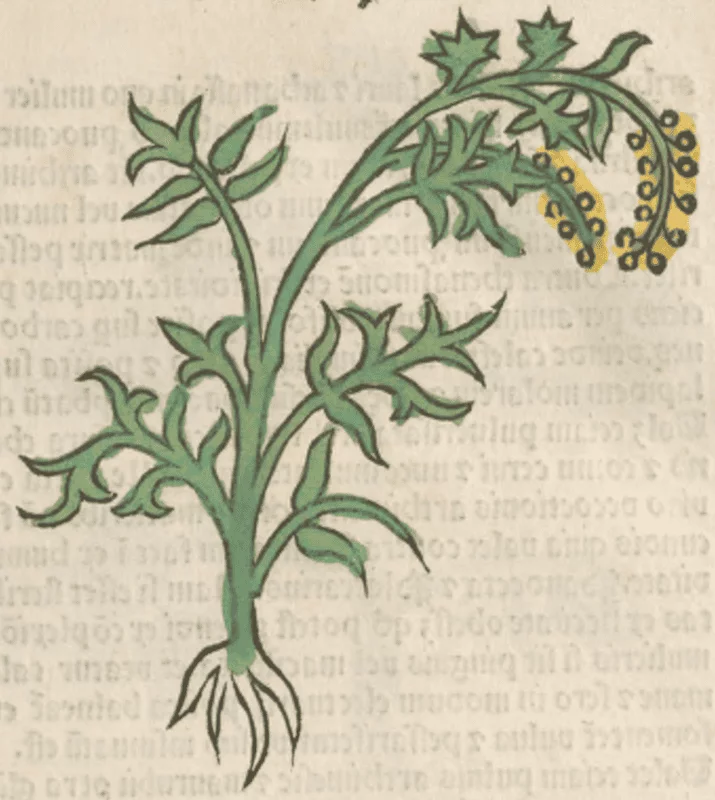
Herbarius latinus, Petri, 1485
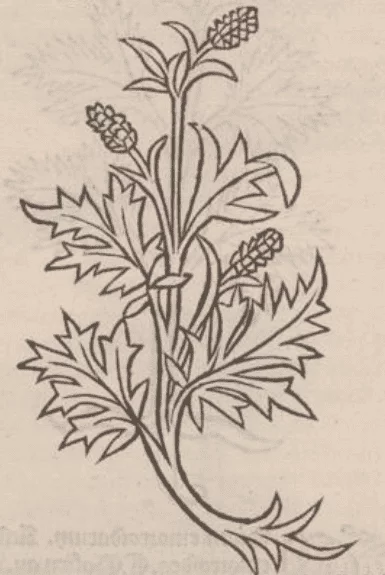
Ortus sanitatis, Cube, Johann von, 1501
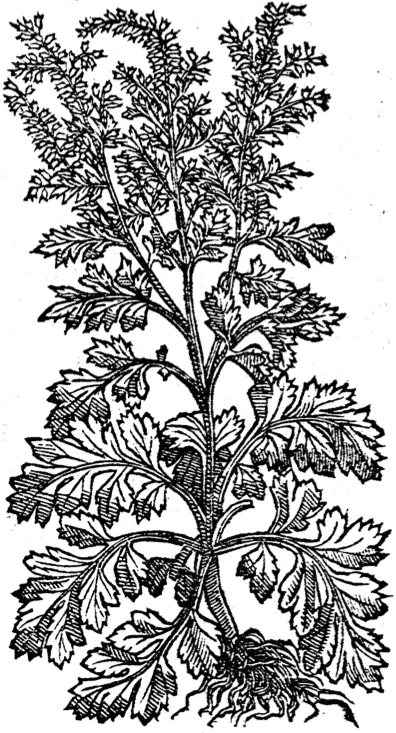
Artemisia (Dioscorides Materia Medica, Mathias, 1563)
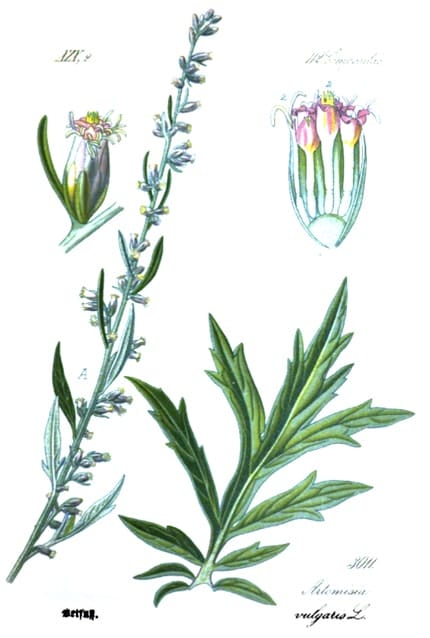
Flora von Deutschland (29), Kohler, 1887
Botanical name:
Artemisia vulgaris
Red and White varieties were traditionally known.
The Chinese Mugwort is principally derived from A. argyi. However, nearly 2 dozen local species supply the market including A. mongolica, A. princeps, A. stolonifera, A. indica. In Northern parts of China, A. vulgaris and Artemisia vulgaris var. xizangensis are used.
Parts used:
Herb; root is used for Arthritic conditions
“The leaves of this herb are more suitable for medicine than the roots, and the greens are more useful than the dry ones”. (Dorsetn, 1540)
Temperature & Taste:
Warm, dry. Pungent, Bitter
opens, discusses
Classifications:
2D ATTENUATERS OF CONGEALED BLOOD. 2J. RAREFYING
3G. EMMENAGOGUE. 3Q. ANTHELMINTIC
4e. STOMACHIC. 4i. UTERINE
Uses:
1. Warms the Womb, Stops Bleeding, Promotes Menstruation: (TCM, West)
-Amenorrhea, Dysmenorrhea, associated with Cold or Blood stagnation (West)
-Uterine Bleeding, prolonged Menstruation associated with Coldness of the Womb. (TCM)
-Infertility (TCM, West)
-Labor Pains, Restless Fetus (TCM, West)
-promotes Birth and Afterbirth (West)
-the effect in stopping Bleeding was used for Trauma in the West
-internally, and externally in Baths and Douches etc.
-“Decocted in wine and drunk for difficult labor”. (Dorsetn, 1540)
-“If any woman has a dead fetus in the womb, let her drink a decoction of this herb, and she will be gently delivered”. (Dorsetn, 1540)
-“The root of this herb, when crushed, is so powerfully laxative and purgative, that it expels the live or dead foetus from the womb of a woman”. (Dorsetn, 1540)
2. Clears Wind-Damp, Calms Spasms: (West)
-Epilepsy, Shaking, Tremors; “Mugwort cures shaking of the joints inclining to Palsy” (Gerard)
-Sciatica, Back Pain, Arthritis; some termed it specific for Sciatica
-‘Three drams of the powder of the dried leaves taken in wine, is a speedy and the best certain help for the Sciatica’ (Culpeper)
-nervous and spasmodic complaints (India, West)
-to cause pleasant dreams (West); also used for Sleepwalking (TCM)
-also Cough and Asthma (TCM)
-“It helps with lumbago.” (Dorsetn, 1540)
-Mugwort root is often used for these purposes in the West.
3. Clears Wind-Phlegm, Resolves Masses: (TCM, West)
-lumps and nodes of the neck (internally and topically)
-it has been used for Tumors and Thyroid swellings in TCM.
-in China for Cancers of the Thyroid, Digestive system and Breast.
4. Clears Cold, Benefits Digestion: (TCM, West)
-poor appetite, nausea, anorexia, chronic diarrhea
-epigastric or abdominal pain from Cold
5. Resists Poison: (West)
-in Antidotes
-sore Swollen Throat, Tonsillitis (Culpeper)
-antidote against Opium
-“very beneficial against poisons and the bites of Rabid animals”. (Dorsetn, 1540)
6. Clears Damp, Promotes Urine: (West, Ayurveda)
-Edema, Jaundice
-Obstruction of the Liver and Spleen
-Gravel, Stones (West, Ayurveda)
-“Taken with wine promotes urine, and when ground into powder and mixed with water, it helps with Stones.” (Dorsetn, 1540)
7. Benefits Qi:
-Fatigue, weakness and weariness (Pliny)
-used similarly in Chinese Folk Medicine and by Native Americans.
-‘exceedingly nourishes patients of the deficiency type’. (Old Chinese Herbal)
8. Kills Worms:
–Threadworm, Roundworm (Oil has especially been used for Worms)
-washes and fumigations as an insect repellent
9. Externally:
-ointments for Nodes, Swellings, Scrofula
-baths and washes for Sciatica, Shaking, Trembling, Cramps
-vinegar tincture is applied to sprains and bruising
-topically for eczema, dermatitis
-in douches for Uterine Pain and Tumors of the Uterus.
-bruised and used as a pessary with oil of Myrrh (Pliny)
-decocted in water and applied as a plaster to the lower abdomen or vagina to promote speedy labor
Dose:
Decocted in wine to promote Menstruation, clear obstructions and tumors of the Uterus.
Decoction: 3–9 grams
Powder: 1–3 grams
Tincture (1:5): 1–2 mls.
Fluid Extract (1:1 in 25% alcohol): 0.5–4 mls, 2–3 times daily
Comment:
1. The varieties of Mugwort used in the West and TCM are similar in appearance, taste, use and chemical composition. In addition, a large number of local species are used in China for Ai Ye, and it is probable that A. vulgaris is used in North-Western China. The focus in TCM is on stopping Bleeding, whereas it was most commonly used in the West to promote Menstruation. These apparently opposing effects are both related to the Warming, blood-moving effect. It can be used for excess or prolonged bleeding when associated with Cold, but is also used for Dysmenorrhea (and Amenorrhea) when also caused by Cold. Importantly, both have been used for Infertility associated with Coldness of the Womb. Therefore, we can say they are synonymous and can substitute one another.
2. Chinese Mugwort is beaten to a fluffy powder to form Moxa which is held over acupoints to warm the channels, clear Cold and Damp, and relieve pain.
Preparation:
Several Preparations are used in TCM.
1. Fresh leaves are less Warming and can be used with appropriate herbs for Blood-Heat and Bleeding.
2. Dry-Fried Mugwort: the herb dry-fried (sometimes it is sprayed with Vinegar), until lightly scorched. This is more warming and better to clear Cold-type pain. That sprayed with Vinegar is better to relieve pain, specifically, Dysmenorrhea.
3. Charred Mugwort: the herb is dry fried until scorched or charred, then sprayed with water or vinegar to cease the burning, then dried. This is used to Stop Bleeding.
Main Combinations:
Gynecology & Obstetrics:
1. Amenorrhea, Dysmenorrhea:
i. “Mugwort stamped and put to the Navel, or the juice thereof mingled with Myrrh and made in a pessary does provoke the flowers [menstruation]” (The Treasury of Health, 1550). The decoction in wine can also be used, and was regarded as one of the surest simple remedies to promote Menstruation.
ii. Mugwort with Betony, Elecampane, Hyssop (as in Decoction to Promote Menstruation)
iii. Mugwort with Oregano, Camomile, Mint (as in Infusion for Painful Menstruation of Matthioli)
iv. Mugwort with Feverfew, Pennyroyal, Balm, Mallow (as in Decoction to Promote Menstruation)
v. Mugwort with Pennyroyal, Oregano, Balm, Rue, Peony, Elecampane (as in Syrup of Mugwort)
vi. Mugwort with Cyperus, Angelica, Valerian, Madder, Pennyroyal, Carrot seed, Cinnamon, Saffron (as in Emmenagogue Decoction)
vii. Mugwort with Madder, Couch grass, Butchers Broom root, Carrot seed, Marjoram, Calamint (as in Syrup of Mugwort Lesser)
viii. Mugwort, Feverfew, Pennyroyal, Balm, Mallow, boil in wine (Wirtzung)
ix. Mugwort, Senna, Pennyroyal, Cinnamon, Mace, boil in Wine. This was specifically recommended after menstruation had been induced to assure completion of the menstruation. (Wirtzung)
x. Mugwort, Juniper, Madder, Cinnamon, Myrrh, decoct, strain, add Borax (Wirtzung)
xi. Mugwort, Celery root, Asparagus root, Aniseed, Fennel seed, Pennyroyal, Mint, Feverfew
xii. to strongly promote Menstruation: Mugwort, Savin (1 handful each), boil in wine (2 quarts) until one-third is wasted. Take 2 spoonfuls morning and evening. (Wirtzung)
xiii. Mugwort, Sage, Oregano, Cumin, Savin, Balm, Pennyroyal, Dill, Betony, Anise, Lovage
2. Uterine Bleeding from Cold:
i. Mugwort, Cyperus rotundus, Ginger, Shatavari (Ayurveda)
3. Uterus pain from Cold:
i. Theriac, Saffron, taken with Decoction of Mugwort
ii. Turbith (1 dram), Ginger (1 scruple), take with a strong decoction of Mugwort. (Wirtzung)
4. PMS, emotional problems aggravated by Menstruation, combine Mugwort with Balm, St. Johns wort, Valerian
5. Hysteris, PMS: Motherwort, Mugwort, Juniper berry, Savin, Nigella, Amber, Aniseed, Lesser Cardamon (as in Hysterical Extract of Lazarus Riverius)
6. Infertility:
i. Mugwort with Ivory, Deer horn, Nutmeg powdered, mixed with Honey and taken with wine decoction of Mugwort (Arnold de Villa Nova)
ii. Mugwort with Broom flower, Celery seed, Parsley seed, Cumin, Feverfew, Aloe, Indian Salt, Saffron (as in Pills Against Barrenness)
iii. Mugwort with Madder, Mint, Wormwood, Fennel root, Marjoram, Calamus, Aniseed, Clove, Balm, Cyperus root, Cinnamon, Raisin, Mastic, Ginger, Clove, Ivory, Saffron (as in Electuary to Promote Fertility)
iv. Mugwort with Syrup of Vinegar, Syrup of Agrimony, Feverfew, Elecampane. This was to be used after purging. (Wirtzung)
v. To make a women fruitful: boil Mugwort and Wormwood in Goat Milk and drink morning and evening. Every day, take the following bath: Mugwort, Pennyroyal, Rue (one handful each), put in a bag and use in the bath, renewing it every 3 days. (Wirtzung)
vi. a Bath for Infertility: Mugwort, Balm, Marjoram, Mint, Pennyroyal, Feverfew (Wirtzung)
7. Promote Labor:
i. Mugwort with Savin, Pennyroyal, Cassia Fistula, Saffron, Cinnamon, Myrrh (as in Powder to Facilitate Birth)
ii. Stopped Labor, decoct Pennyroyal, Mugwort and Betony in Milk then put it under her as hot as possible. (Wirtzung)
8. Douche for Uterine Pain: Mugwort, Calamint, Pennyroyal, Camomile, Fenugreek, Linseed; decoct for use
Nerve & Joint:
9. Nerve diseases, combine Mugwort with St. Johns wort, Rue, Peony, Calamus
10. Paralysis and senselessness of the Limbs:
i. Mugwort, Camomile, Sage, decocted and used as a formentation or wash. (Herbarium Horstianum, 1630).
ii. Another similar combined Mugwort, Camomile and Valerian, decocted in wine and used as a wash. (Dorsetn, 1540)
11. Pain or Spasms of the Digestive organs:
i. Mugwort with Costus, Fennel, Cinnamon
ii. Mugwort, Fumitory, Betony, Mint, Aniseed, Fennel seed, Calamus (add Senna to purge) (Wirtzung)
12. Obstruction of the Spleen or Liver from Cold, decoct Mugwort with Wormwood and Scolopendrum (Arnold de Villa Nova)
13. Arthritis:
i. Mugwort root, Rhubarb, Germander, Lesser Centaury, St. Johns wort, Macedonian Parsley (Pharmacopoeia Generalis, 1783)
ii. beat green Mugwort and boil in oil until the juice is consumed. This is a very good application to Arthritis.
Wounds & Trauma:
14. Vulnerary drinks for Wounds:
i. Mugwort with Agrimony, St. Johns wort, Betony, Bugle, Comfrey, Ribwort Plaintain, Tormentil, Wormwood (as in Decoction for Wounds)
ii. Mugwort, Betony, Cowslips, Vervain (especially of the Head)
iii. Mugwort, Betony, Veronica, Sanicle, Tormentil (especially of the Head)
Urinary:
15. Stones:
i. Mugwort Water helps eliminate Stones
ii. powdered tops of Mugwort taken before bathing climinates Stones (Herbarium Horstianum, 1630)
Externally:
16. Topical wash for Cramps and Pains of the Sinews: Mugwort, Camomile, Agrimony (Culpeper)
17. Paralysis, Mugwort, Camomile, Sage decocted in wine as a wash externally. (Botanicon Continens Herbarum, Dorsten, 1540)
18. As a hip bath to promote Menstruation:
i. Mugwort with Bay leaf
ii. Mugwort, Rosemary, Thyme, Calamint, Cyperus
iii. Mugwort, Sage, Betony, Calamint, Oregano, Pennyroyal, Camomile, St. John’s wort
19. Ointment for Back Pain, Mugwort with Agrimony, Betony
20. Pain from Fractures, Mugwort, Betony, Horsetail, made into an ointment with Mastic, Myrrh, Frankincense and Wax (Wirtzung)
21. As a wash for Fungal Infections, with Neem (Ayurveda)
22. Weak or Lax Joints, Comfrey, Soloman’s Seal, Yarrow, Mugwort, make an ointment with fresh Butter or animal Fat. (Madame Young’s Guide to Health, 1858)
Major Formulas:
Infusion for Painful Menstruation (Matthioli)
Decoction to Promote Menstruation (Wirtzung)
Decoction to Promote Menstruation (Turner)
Syrup of Mugwort Lesser (Bononiense)
Syrup of Mugwort (Augustana)
Antidotum Haemagogum (Nicholas)
Electuary to Promote Fertility (Wirtzung)
1. Compound Syrup of Mugwort:
The Original Syrup of Mugwort is famous for Female complaints. These are variations.
i. Madder, Dyer’s Broom root (2 oz. each), Mugwort, Pennyroyal, Balm Dittany of Crete, Savin (3 drams each), St. John’s wort tops (2 drams),
Fennel seed (½ oz.), Cassia Lignea (1 oz.).
Cut the roots, infuse in 3 pounds water; boil gently in the morning, then infuse the other ingredients in 2 pounds of the strained decoction. Filter after 24 hours, and to every 9 ounces, add White Sugar 16 oz. (Pharmacopoeia Wirtembergica, 1798)
ii. Fresh leaves of Sweet Basil, Marjoram, Feverfew, Rue, Hyssop (of each 4 parts), Catmint, Pennyroyal, Savin, Mugwort (each 8 parts)
Bruise, press the juice and coagulate. Mix the fecula with the residue of the expression, and with Aniseed (1 part), Cinnamon (2 parts), Water (120 parts), distil 20 parts. Mix with the depurated Juice, and to 4 parts add White Sugar (7 ½ parts) and form a syrup with a gentle heat. (Pharmacopee Usuelle, Louvain, 1821)
Cautions:
1. Best avoided in Pregnancy. When used, the dose should be small.
2. Not used in conditions with excess Heat or Yin deficiency.
Main Preparations used:
Distilled Water of the Tops, Distilled Oil, Compound Syrup, Salt of the Ashes (Fixed Salt), Volatile Salt
1. Volatile or Essential Salt:
Take Mugwort, fresh and full of juice, a sufficient quantity, and bruise it well in a mortar. Then cover generously with water and boil down to half. Strain and press it out strongly, then boil to the thickness of new Honey. Put it into a glass vessel and set in a cold place for at least 8 days and a Salt will form; discard the remaining liquor, and dry the Salt for use.
‘Excellent to strengthen the womb, help conception, and cure fits of the mother’. (Salmon)
Various other Bitter herbs were prepared into an Essential Salt such as Wormwood, Blessed Thistle etc.
2. Fixed or Elemental Salt:
The herb must be calcined (without excessive heat). From the ashes is extracted the Salt using pure Water; this is then filtered to remove the ashes. The water may then be gently boiled away with gentle heat which will leave a Salt. This may again be dissolved, filtered, and coagulated until it is very white. (Sometimes, such as in the preparation of the Salt of Wormwood, the plant was ordered to be calcined when green; it was also calcined to a blue color, once obtained)
Moves the Blood, Promotes Menstruation, brings away Birth and Afterbirth. (Salmon)
Dose: 3-6 grains; if it is prepared until very white, 1 grain is stronger than 6 grains of the first salt, which is not very clear.
Salts from many herbs may be prepared this way including: Thyme, Wormwood, Rose-mary, Centaury the less, Blessed Thistle, Parsley, Camomile etc.
Click the above Tabs for more information on this medicine
You must be logged in to view this content, please login. If you're not a member then Click this link to subscribe