
Agrimonia, Agrimony
Chinese Agrimony, Xian He Cao 仙鹤草
Xian He Cao (TCM)
Ghafis (Unani)

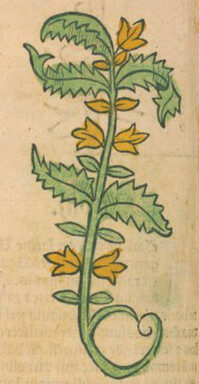
Ortus Sanitatis, Meydenbach, 1491
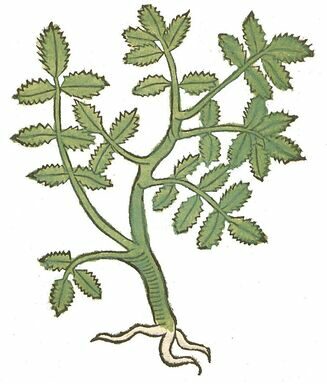
Herbarius Moguntinus, 1484
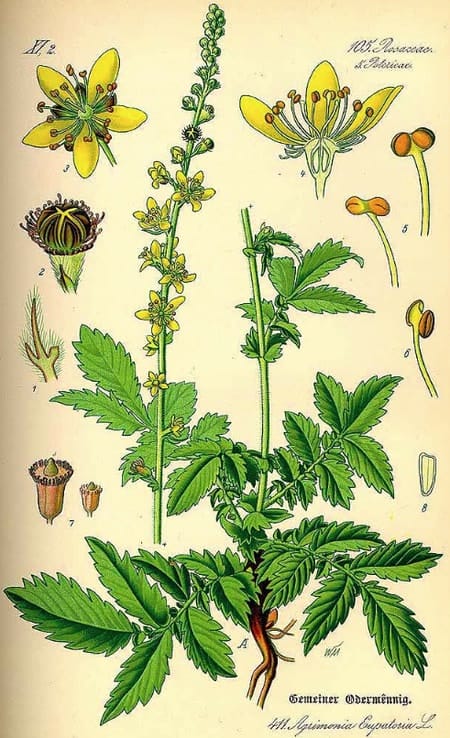
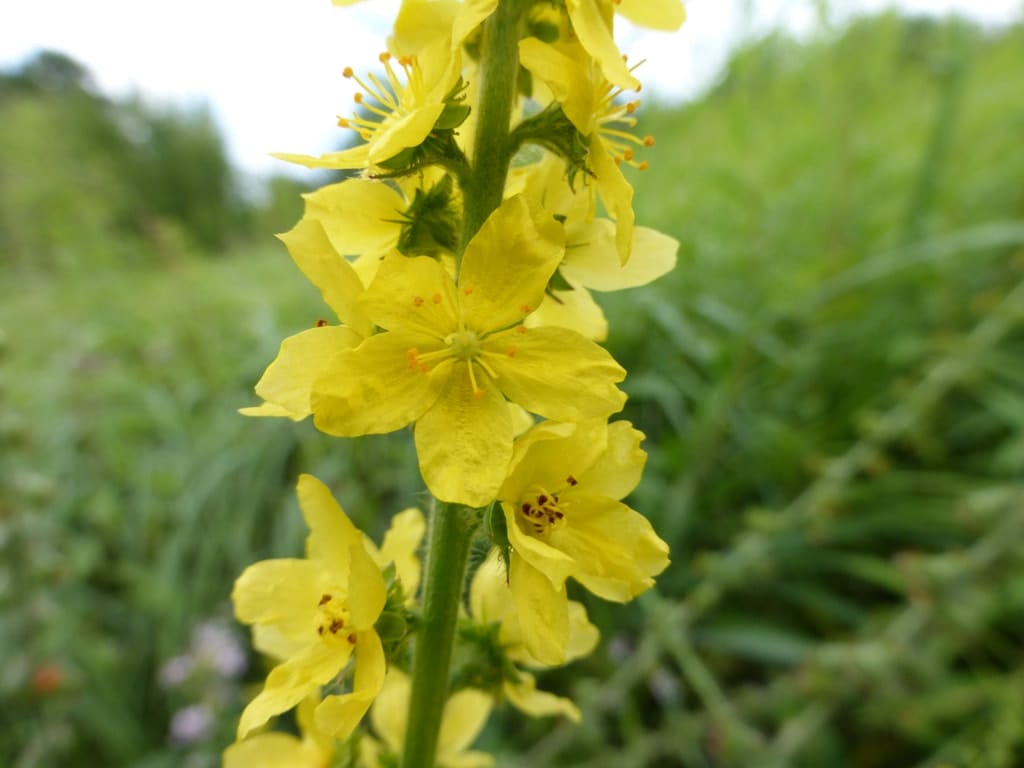
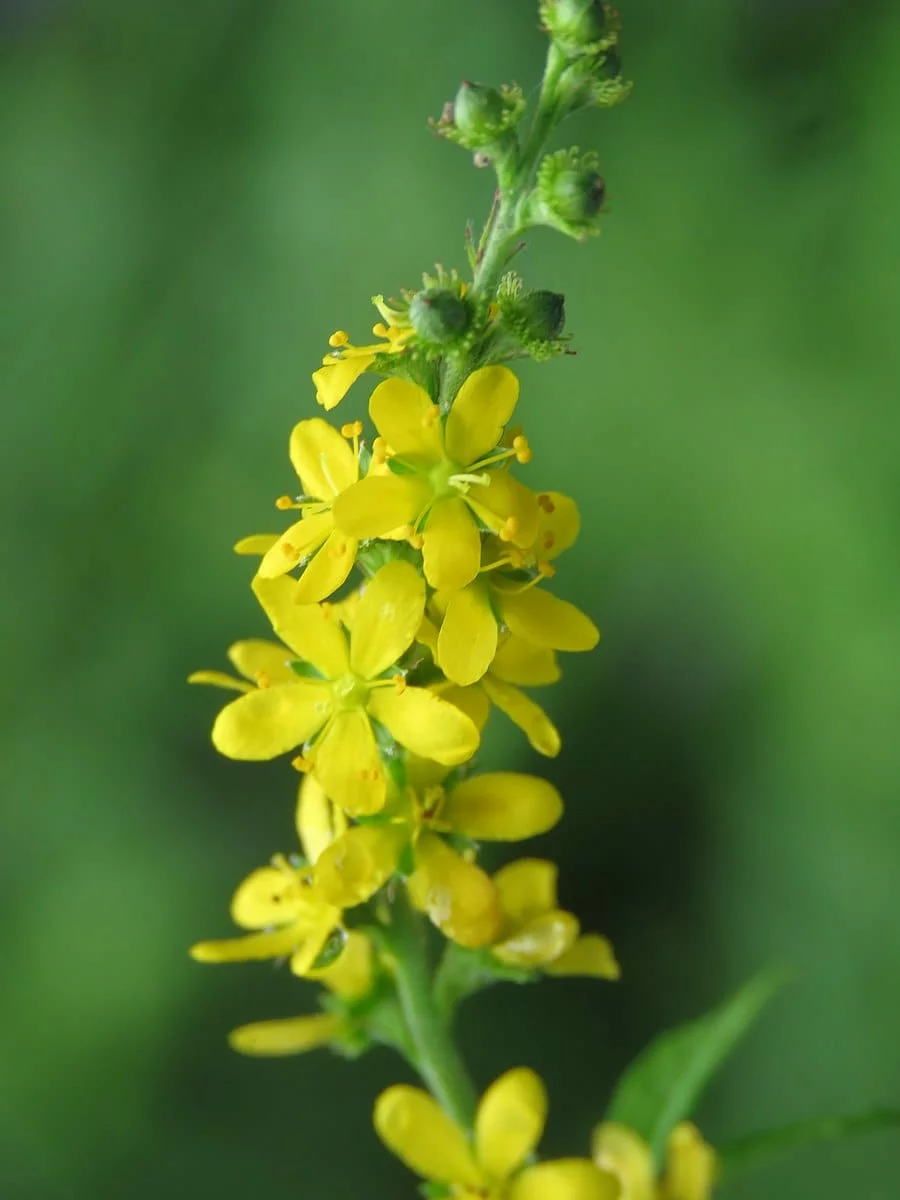
Agrimonia eupatoria
Thomé, O.W., Flora von Deutschland Österreich und der Schweiz, Tafeln, (1885)
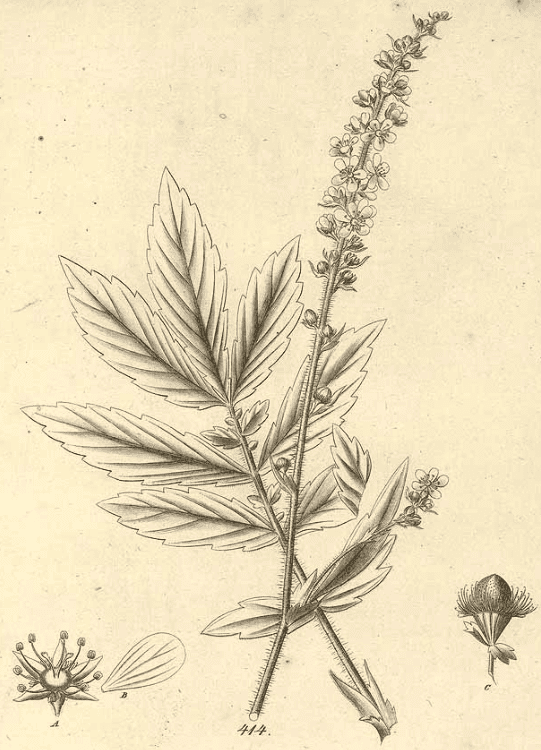
Agrimonia pilosa, used in TCM
Reichenbach, H.G.L., Iconographia botanica seu plantae criticae, (1823-1832)
Eupatorium
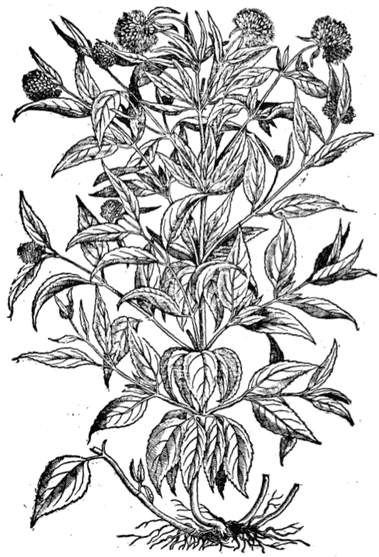
Eupatorium of Avicenna
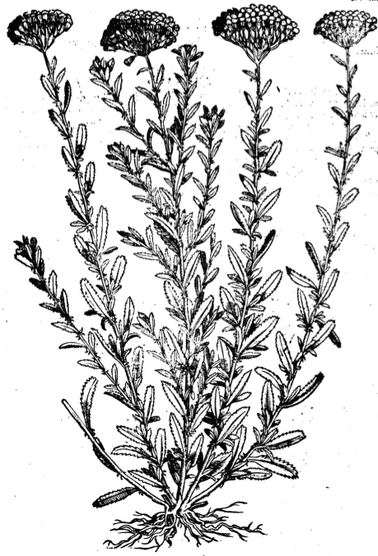
Eupatorium of Mesue
New Kreuterbuch, Matthiolus, 1563
Botanical name:
Agrimonia eupatoria
A, pilosa and A. nipponica are used in TCM
Eupatorium of the Arabs are different plants with similar functions to Agrimony. Agrimony was generally used for them in Europe.
Parts used:
Herb; dehydrated Juice
The buds of the Chinese variety are preferred for Worms.
Temperature & Taste:
Neutral (Mildly Warm), dry; Bitter, Sour
thin, opening, cleansing, strengthening
Classification:
2A APERIENT MEDICINES. 2C INCIDERS. 2F. PURIFYING. 2P. HEMOSTATICS. 2T. GLUTINATE
3B. FEBRIFUGE & ANTIPYRETIC. 3C. ALEXIPHARMICS. 3E. DIURETIC. 3O. EMETIC
4e. STOMACHIC. 4f. SPLENETIC. 4g. HEPATIC
TCM:
L. Stop Bleeding
Uses:
1. Benefits the Liver, Clears Heat and Damp:
-Jaundice, Liver Abscess, Cholecystitis, Acute Hepatitis, Cirrhosis etc.
–“Strongly fortifies the Liver”. (Salmon)
–“an admirable remedy for such whose Livers are annoyed by heat or cold”. (Culpeper)
-due to the beneficial effect on the Liver, it can be useful in various chronic diseases
-obstruction of the Liver or Spleen
-“Agrimony is accounted among the Specifics for Madness, being boiled in Spring Water”. (Tournefort, 1730)
2. Moves the Blood, Resolves Stasis, Resolves Masses, Eases Pain: (TCM, West)
-Bruising, Trauma, Dislocation, Blood Stasis
-Ulcers and Fistulas used internally and topically
-obstructed Menstruation
-related Chinese species is also used in Cancer Treatment
-strong decoction or extract has been found very effective for the severe pain of Cancer.
-“Agrimony consumed in food, is very beneficial for those suffering from Cancer”. (Dorsetn, 1540)
-In Cancer Wirtzung (1598), among others, said the juice of Agrimony is “much commended for this disease”; it can “cause the good flesh to separate from the bad flesh”.
-“The drink will relieve all internal pains of the body”. (Dorsetn, 1540)
-“Agrimony is of wonderful profit in medicines and especially against hollow Wounds and Ulcers”. (The Treasury of Health, 1550)
3. Stops Leakage and Bleeding: (TCM, West)
-Fluxes (looseness and leakages) of the Bowels; Diarrhea and Dysentery, Mucus Colitis; Ulcerative Colitis
-specific for Passive Bleeding
-commonly used in TCM for all types of Bleeding depending on the herbs its combined with
-Diabetes
-“It heals all internal Ulcers” … “Fresh herb decoction is used for malignant Ulcers”. (Dorsetn, 1540)
–“Very beneficial to the Bowels, healing all inward Wounds, Bruises, Hurts, and other distempers”. (Culpeper)
4. Clears Damp-Heat, Promotes Urine:
-Edema, Cystitis, stoppage of Urine, Lumbar pain
-“makes them urinate clear speedily”. (Culpeper)
5. Clears Phlegm, Stops Cough:
-Cough, Bronchitis, Catarrh, Wheezing
6. Clears Heat, Resists Poison: (TCM, West)
-Fevers including chronic and complex Fever
-Abscesses, Toxic Sores
-Venereal Diseases, Syphilis (Tournefort, 1730)
-Venomous Bites (since Dioscorides)
-“Agrimony is very useful for sharp, continuous, inveterate Fevers—in this respect it has no match”. (Rhazes)
-“Decoction of the fresh herb, or the Juice drunk, drives away the fever”. (Dorsetn, 1540)
-“The juice drunk, helps those who have been bitten by poisonous animals”. (Dorsetn, 1540)
-“Agrimony most wonderfully expels Poison, and with great facility helps the Bitings of Venomous Beasts”. (Culpeper)
7. Benefits Qi and Blood:
-Anemia, Fatigue, Exhaustion
-Rickets and weakness in Children
-as a tonic in both East and West, primarily in Folk Medicine; related to its beneficial effect on the Liver
-in some areas of China it is used as a Qi tonic in exhaustion where it is called Tuo Li Cao 脱力草 (Loss-of-strength Herb) (Bensky)
-“When tired from a long journey, wash your feet with Agrimony decoction, it will relieve Fatigue”. (Dorsetn, 1540)
-“The root boiled with wine and consumed, it has a healing effect on paralytic limbs”. (Dorsetn, 1540)
8. Kills Worms and Parasites: (TCM, West)
-Worms, especially Roundworm and Tapeworm (TCM, West; proven effect)
-Trichomonas (in enemas)
-Malarial disorders (TCM)
–Schistosomiasis (TCM, proven effect)
-Agrimony bud or sprout is especially used in TCM
9. Externally:
-good in baths and enemas
-topically for Dislocations and Joint Pain
-applied to various inflammations
-gargled for Sore Throat
-distilled water is “commended for the curing of the Ulcers of the Mouth”. (Tournefort, 1730)
-mixed with vinegar and salt and applied to Itch
-applied with strong Vinegar to Warts
-Malignant Ulcer (Weinmann, Phytanthoza iconographia, 1737)
-“Powdered Agrimony is poured into deep Wounds or Fistulas, it cures wonderfully.” (Dorsetn, 1540)
-“Applied to bruised Joints, it heals”. (Dorsetn, 1540)
-“Agrimony boil’d in Wine, or Vinegar, and applied to the Scrotum by way of Cataplasm, will allay the Inflammation of the Testicles”. (Tournefort, 1730)
-crushed fresh leaves are applied to Snake Bite (TCM, Fu Jian Min Jian Cao Yao [Fujian Folk Medicine])
Dose:
In Decoction: 3–15 grams (up to 30 grams. In TCM, mega-doses of 100–500 grams have occasionally been used);
Of the Powder: 1–3 grams. For Worms, 30–50 grams of Agrimony buds or sprouts are given in Powder (TCM).
Of the Dehydrated Juice: 250–500mg (up to 1 or 2 grams)
Tincture (1:5 in 45% alcohol): 1–4 mls, up to 6 mls, 2–3 times daily;
Fluid Extract: (1:1 in 25% alcohol): 1–3, or 4 mls
Comment:
1. The similar use, appearance and chemical composition of the Agrimonia species used in the West and TCM means that these species can be considered synonymous.
2. Agrimony was used by the Europeans in place of Eupatorium of the Arab physicians.
3. This Root is proper in that fort of Scurvy, which proceeds from the Laxity of the Vessels, and Toughness of the Humours; in all languid Viscera, in the Lochia, in the Diseases of Maids and Children, in spitting or pissing of Blood, in the Dysentery, &c. It is much cried up in Convulsions and Epilepsies. It is used both in Decoction, Powder and Infusion, &c.” (Boerhaave)
Substitutes:
1. Maidenhair
2. Golden Rod
3. Avens
4. Ground Ivy
5. Rose
Main Combinations:
Liver:
1. Liver Heat and Obstruction:
i. Agrimony with Barberry and Centaury
ii. Agrimony with Wormwood, Indian Spikenard, Rhubarb, Fennel seed (as in Syrup of Agrimony Mesue)
iii. Agrimony, Amomum, Wormwood, Costus, Bitter Almond, Aniseed (Hepatico Potio Mirabilis of Nicholas)
iv. Agrimony with Asparagus root, Couch Grass root, Raisins, Oregano, Rosemary, Mugwort, Fumitory, Rhubarb, Cyperus, Licorice (as in Tincture for Hepatic Obstruction)
2. Jaundice, Liver obstruction:
i. “An infusion of 6 oz. of the crown of the root in a quart of boiling water sweetened with honey and half a pint drank 3 times a day” was commended by Dr. Hill (1751)
ii. or Liver Tumors or Hardness, Agrimony with Aloe, Yellow Myrobalan (as in Pills of Agrimony Lesser of Mesue)
iii. or Chronic Fever, Agrimony with Rose, Indian Spikenard, Rhubarb, Licorice (as in Troches of Rose and Agrimony of Mesue)
4. Cholelithiasis, Agrimony with Horehound, Rhubarb, Restharrow (Pick)
5. Cholecystitis, Gall Bladder disease:
i. Agrimony with Dandelion, Tumeric, Barberry (as in Decoction of Dandelion)
ii. Agrimony with Chicory root, Maidenhair, Wormwood (as in Decoction for the Gall Bladder)
6. Hepatitis:
i. Agrimony, Gentian, Balm, Licorice
ii. Agrimony with Juniper berry, Cleavers, Yarrow, Centaury, Dandelion root (as in Decoction for Hepatitis)
7. Cirrhosis of the Liver, Agrimony with Spikenard, Licorice, Asarum, Senna, Barberry, Rhubarb, Cinnamon, Saffron, Agnus Castus, Cyperus rotundus (as in Troches for Liver Hardness)
Bleeding:
8. Bleeding:
i. Agrimony with Shepherd’s Purse
ii. Hemoptysis, Agrimony with Comfrey and Plantin
iii. Hematuria, Agrimony with Imperatae Bai Mao Gen (TCM)
iv. Hematuria, Agrimony, Ladies Mantle, Yarrow, Burnet, Rose, St. Johns wort, Comfrey, Plantain seed (Gazophylacium Medico-Physicum, Woyts, 1746)
v. Uterine Bleeding, Agrimony (Xian He Cao) with Cuttlefish bone (TCM)
vi. profuse menstrual bleeding, Agrimony (Xian He Cao), Eclipta Han Lian Cao, Burnet (Di Yu), Dryopteris Guan Zhong, Motherwort (Yi Mu Cao), Siegesbeckia Xi Xian Cao
vii. bleeding from Heat and Yin deficiency, Agrimony Xian He Cao with Rehmannia Sheng Di Huang
viii. Bleeding from Blood deficiency, Agrimony Xian He Cao with Paeonia Bai Shao and Rehmannia Shu Di Huang
ix. bleeding from serious Yin and Blood deficiency, Agrimony Xian He Cao with Ass Hide Glue (E Jiao)
x. bleeding from Spleen deficiency with Spleen not able to manage Blood, take Agrimony Xian He Cao with Gui Pi Tang.
Gastrointestinal:
9. Diarrhea, Colitis, chronic Bowel complaints:
i. Agrimony with Camomile (internally and in enemas)
ii. Agrimony with Tormentil
iii. Agrimony with Chebulic Myrobalan, Costus
10. Dysentery:
i. Agrimony decocted in water and wine
ii. Agrimony seed decocted in wine (Herbarium Horstianum, 1630)
Urinary:
11. Edema:
i. Decoction of Agrimony heals
12. Dysuria,
i. Dysuria, Agrimony with Black Cohoch, Pulsatilla (Ellingwood)
ii. with Edema, Agrimony with Rhubarb, Bitter Almond, Madder, Celery seed (as in Powder for Edema)
13. Incontinence:
i. “The Powder of dried Agrimony given in any proper vehicle, is very much commended by Riverius, in his Practice and Observations, against involuntary Pissing”. (Tournefort, 1730)
ii. Agrimony with Plantain seed
iii. Agrimony, Horsetail, Golden Rod
iv. Agrimony, Raspberry leaf, Oak bark
v. Agrimony with Chicken Gizzard Skin (as in Powder for Incontinence)
vi. Agrimony with Hemp seed, Shepherds Purse, Plantain, Knotgrass (as in Decoction of Hemp Seed)
vii. associated with Menopause, Agrimony, Black Cohosh, Raspbery leaf
14. Stones, Agrimony with Knotgrass, Shepherds Purse, Camomile, Horsetail (as in Decoction for Stones)
15. Diabetes:
i. combine Agrimony with Nettle and Yarrow
ii. Agrimony, Nettle, Cranesbill, Yarrow, Ginger (equal parts)
Swellings, Tumors, Cancer:
16. Scrofula, Lymphatic swellings:
i. The strong decoction, sweetened with Honey, has been used successfully in the treatment of chronic Scrofulous complaints and lymphatic swellings, but its use must be continued for some time.
ii. Agrimony with Herb Robert, Horehound (as in Decoction Against Scrofula)
iii. Agrimony with Figwort, China root (as in Decoction of Figwort)
iv. Agrimony with Figwort, Cinquefoil, Meadowsweet (as in Electuary of Figwort of Avicenna)
17. Cancer:
i. Agrimony with Barberry, Burdock, Yellow Dock, Poke root, Camphor (The Medical Herbalist)
ii. Agrimony with Yellow Dock, Quassia, Woody Nightshade, Cinquefoil (as in Decoction for Cancer)
iii. Agrimony with Figwort, Mullein, Herb Robert, Ceterach, Tormentil (as in Decoction for Cancer of Fuller)
iv. Agrimony with Black Nightshade, Figwort, Rhubarb
iv. Agrimony Xian He Cao with Bitter Orange (Zhi Ke), Toxicodendron Gan Qi, Pteropus Wu Ling Zhi (Flying Squirrel feces), Curcuma Yu Jin, Alum, Potassium nitrate, Nux Vomica (Ma Qian Zi) (as in the well-known Chinese Anti-Cancer Medicine Ping Xiao Capsules)
v. Colon Cancer: Agrimony, Scutellaria barbata, Lonicera (see research below)
Other:
18. Chronic Fever, Agrimony, Wormwood, Yellow Myrobalan, Dodder seed, Agaric, Aloe taken with Troches Diarrhodon and Troches of Rhubarb (as in Pil. Philagril of Mesue)
19. Rheumatoid Arthritis:
i. Agrimony, Balmony (British Herbal Pharmacopoeia)
ii. Agrimony, Nettle, Birch leaf, Celery seed, Rose hip
iii. combine Agrimony with Nettle, Celery seed and Rosehip (as in Infusion for Rheumatoid Arthritis)
iv. Agrimony, Burdock, Raspberry leaf, Yarrow, Bogbean (½ oz. ea.), boil in a quart of water for 10 minutes, strain and take a wineglassful three times daily. (Slack’s Herbal, 1892)
20. Inflammation of the Breast, combine Agrimony with Betony and Vervain (The Physicians of Myddvai, translated by John Pughe esq., 1861)
21. Cough from Lung weakness, Agrimony with Hyssop, Ground Ivy, Coltsfoot, Elecampane, Licorice (Pharmacopoea Dogmaticum Resititua, 1622)
22. Consumption, Agrimony with Raspberry leaf, Barberry(as in Infusion for Consumption)
23. Anemia
i. Agrimony, St. John’s Wort, Heartsease (30 grams ea.), Elecampane root, Chicory root (20 grams ea.), Gentain, Juniper berries (10 grams ea.)
ii. with weakness and exhaustion Agrimony (50 grams), Chinese Dates (Da Zao) (10 in number), decoct. (TCM)
24. Venereal disease, Syphilis etc., Agrimony, Sarsaparilla
25. Tapeworm: An Infusion of Agrimony is taken with Alum and Honey
Externally:
26. Trauma, Wounds:
i. Agrimony with Mugwort, Angelica, St. Johns wort, Betony, Bugle, Comfrey, Plantain, Tormentil, Wormwood (as in Decoction for Wounds)
ii. Agrimony with Wintergreen, Sanicle, Strawberry, Mugwort, Ladies Mantle, Plantain (as in Vulnerary Tincture)
iii. Agrimony with Rue, Hyssop, Sage, Yarrow, Self Heal, Comfrey, Vervain, Rosemary, Betony (as in Ungentum Contra Casum from Antidotarium Speciale Wecker, 1588)
27. Pain and Inflammations of the Limbs, Agrimony juice, Fenugreek meal, Armenian Earth mixed with pig fat and applied. (Arnold de Villa Nova)
28. Cold and painful joints: “Agrimony decocted with the root of Elecampane in a copper pot, if one washes the chilled and sore joints in that decoction in the morning at 8 o’clock, it cures them within eight days.”. (Dorsetn, 1540)
29. Dislocation, beat fresh Agrimony to a paste and apply topically. (The Secrets of Alexis, 1615)
30. Ointment for Back Pain, Agrimony with Mugwort, Betony (as in Ointment for Back Pain)
31. Ointment for Bruising and Congealed Blood, with Rosemary, Lavender, Marjoram, Sage, Yarrow, Costus, Wormwood, St. Johns wort, Rue, Tansy (as in Ointment for Congealed Blood)
32. As a gargle for Apthae, Pharyngitis and Sore Throat, Agrimony with Sage
Major Formulas
The Immortal Antidote
Opening Hepatic Decoction
Decoction for the Liver (Nicholas)
Decoction of Fumitory Compound
Purging Bitter Decoction
Syrup for Excess Menstrual Bleeding
Syrup of Agrimony Mesue
Powder for the Liver
Troches of Agrimony
Troches of Gum Lacca (Trochisci de Lacca) (Unani)
Troches of Rose and Agrimony (Mesue)
Confection of Rhubarb (Mesue)
Electuary of Figwort (Avicenna)
Pills of Agrimony Lesser (Mesue)
Pills of Agrimony Greater (Mesue)
Cautions:
Generally Safe.
1. In TCM it is not used in acute bacterial Diarrhea.
2. Rare side effects have been reported which may include nausea, vomiting, dizziness, cold sweats, chest oppression, palpitations. These are usually only reported in full-to-mega doses, sometimes used in TCM. Symptoms dissipate with cessation of treatment.
Main Preparations used:
Distilled Water, clarified Juice, Quiddonie, Syrup; Salt from the ashes, Ointment
1. Quiddonie of Agrimony:
i. Juice of Agrimony, depurated (8 pounds), White Sugar (1 pound). Mix them to dissolve the Sugar.
Very good for the Liver; it opens the Liver and the Spleen, and strengthens them, Very good for Diarrhea, Consumption, Hemoptysis, or Hematuria. Also Urinary disorders, internal bruising and Rickets in children ‘causing them to out-grow their weak habit of body’.
Dose: 1–3 oz., taken 3 times daily for weeks for Rickets or Consumption. (Pharmacopoeia Bateana)
2. Ointment of Agrimony:
“Outwardly applied, being stamped with old Swines grease, it helpeth old sores, Cancers, and inveterate Ulcers; and draweth forth Thorns, Splinters or Wood, Nails, or any other such thing gotten into the Flesh”. (Culpeper)
Click the above Tabs for more information on this medicine
-The name Agrimonia is said to be derived from an ancient word for ‘shining’, derived from its ancient use of bathing the eyes with the infusion to clear the sight and restore lost sight. Eupatoria refers to the Liver, for which it has been long used.
-One of the many plants employed as a wound herb in older times.
–Pliny said it is a “herb of princely authority”.
-“It is a most admirable remedy for such whose Livers are annoyed either by Heat or Cold. The Liver is the former of Blood, and the Blood the nourisher of the body, and Agrimony a Strengthener of the Liver”. (Culpeper)
-In the Middle ages, it was used to cause sleep if laid under or upon the head. Some advocated making a pillow of Agrimony and leaving the pillow under the head of one who is asleep. They were said to remain in a deep sleep until the pillow is removed.
-A bath of a strong infusion of Agrimony is said to promote psychic healing. It is also said to give courage.
-A bath to remove a Hex: Agrimony, Camomile, Angelica, Hydrangea flowers, Lovage and Cinquefoil. Make a strong infusion and add to bath water.
-It has been used as a tea substitute by European peasants, especially in France.
-The whole plant, gathered in flower, provides a bright yellow dye.
GENERAL / REVIEW
–The therapeutic effects of Agrimonia eupatoria L.
–Agrimonia eupatoria L.: An integrative perspective on ethnomedicinal use, phenolic composition and pharmacological activity.
–The Medicinal Plant Agrimonia pilosa Ledeb.: Botanical Description, Traditional use, Phytochemistry and Pharmacology.
–Agrimonia pilosa Ledeb.: A review of its traditional uses, botany, phytochemistry, pharmacology, and toxicology.
–Agrimonia pilosa: A Phytochemical and Pharmacological Review.
ANTI-BACTERIAL:
–Extracts of Agrimonia eupatoria L. as sources of biologically active compounds and evaluation of their antioxidant, antimicrobial, and antibiofilm activities.
–Investigations into the antibacterial activities of phytotherapeutics against Helicobacter pylori and Campylobacter jejuni.
–Antibacterial and free radical scavenging activity of the seeds of Agrimonia eupatoria.
–Oxidative Stress-Mediated Antibacterial Activity of the Total Flavonoid Extracted from the Agrimonia pilosa Ledeb. in Methicillin-Resistant Staphylococcusaureus (MRSA).
ANTI-VIRAL:
–Anti-influenza A virus activity by Agrimonia pilosa and Galla rhois extract mixture.
–Promising Antiviral Activity of Agrimonia pilosa Phytochemicals against Severe Acute Respiratory Syndrome Coronavirus 2 Supported with In Vivo Mice Study.
–Potent antiviral activity of Agrimonia pilosa, Galla rhois, and their components against SARS-CoV-2.
ANTI-INFLAMMATORY:
–Anti-Inflammatory Flavonoids from Agrimonia pilosa Ledeb: Focusing on Activity-Guided Isolation.
–Antioxidant, Anti-Inflammatory, and Analgesic Activities of Agrimonia eupatoria L. Infusion.
–Phytochemical and Pharmacological Research in Agrimonia eupatoria L. Herb Extract with Anti-Inflammatory and Hepatoprotective Properties.
–Antioxidant and Anti-Inflammatory Activities of Agrimonia pilosa Ledeb. Extract.
ANTI-OXIDANT / FREE RADICAL SCAVENGING:
–Antioxidant, Anti-Inflammatory, and Analgesic Activities of Agrimonia eupatoria L. Infusion.
–Agrimonia eupatoria L. and Cynara cardunculus L. Water Infusions: Phenolic Profile and Comparison of Antioxidant Activities.
–Radical scavenging capacity of Agrimonia eupatoria and Agrimonia procera.
–Antibacterial and free radical scavenging activity of the seeds of Agrimonia eupatoria.
–Antioxidant and Anti-Inflammatory Activities of Agrimonia pilosa Ledeb. Extract.
ANALGESIC:
–Antioxidant, Anti-Inflammatory, and Analgesic Activities of Agrimonia eupatoria L. Infusion.
DIURETIC:
–[Diuretic and uricosuric activity of Agrimonia eupatoria L].
VASORELAXANT:
–Vascular Effects of Polyphenols from Agrimonia eupatoria L. and Role of Isoquercitrin in Its Vasorelaxant Potential in Human Arteries.
MYOCARDIAL INFARCTION:
–Network Pharmacology-Based Combined with Experimental Validation Study to Explore the Underlying Mechanism of Agrimonia pilosa Ledeb. Extract in Treating Acute Myocardial Infarction.
LIVER DISEASE:
–Agrimonia eupatoria L. (Agrimony) Extract Alters Liver Health in Subjects with Elevated Alanine Transaminase Levels: A Controlled, Randomized, and Double-Blind Trial.
HEPATOPROTECTIVE:
–Agrimonia eupatoria protects against chronic ethanol-induced liver injury in rats.
–Phytochemical and Pharmacological Research in Agrimonia eupatoria L. Herb Extract with Anti-Inflammatory and Hepatoprotective Properties.
–Preclinical Hepatoprotective Effect of Herbalism Against Ethanol Induced Hepatotoxicity: A Review.
–New dimeric phloroglucinol derivatives from Agrimonia pilosa and their hepatoprotective activities.
HEPATITIS:
–Inhibition of hepatitis B virus by an aqueous extract of Agrimonia eupatoria L.
INFLAMMATORY BOWEL DISEASE:
–Medicinal Plants, Phytochemicals and Regulation of the NLRP3 Inflammasome in Inflammatory Bowel Diseases: A Comprehensive Review.
–Protective mechanisms of Agrimonia pilosa Ledeb in dextran sodium sulfate-induced colitis as determined by a network pharmacology approach.
OBESITY:
–Investigation of Selected Medicinal Plants for Their Anti-Obesity Properties.
DIABETES:
–Comparative polyphenolic profiling of five ethnomedicinal plants and their applicative potential in the treatment of type 2 diabetes.
–Flavonoid compound from Agrimonia pilosa Ledeb improves adipose insulin resistance by alleviating oxidative stress and inflammation.
–Agrimonia eupatoria L. and Cynara cardunculus L. Water Infusions: Comparison of Anti-Diabetic Activities.
–Traditional plant treatments for diabetes. Studies in normal and streptozotocin diabetic mice.
–Agrimonia pilosa Ledeb. Ameliorates Hyperglycemia and Hepatic Steatosis in Ovariectomized Rats Fed a High-Fat Diet.
ANTICHOLINESTERASE:
–Anticholinesterase, antioxidant activity and phytochemical investigation into aqueous extracts from five species of Agrimonia genus.
NEUROPROTECTIVE:
–Effect of neuroprotective flavonoids of Agrimonia eupatoria on glutamate-induced oxidative injury to HT22 hippocampal cells.
CANCER:
–Proteomics Analysis of Antitumor Activity of Agrimonia pilosa Ledeb. in Human Oral Squamous Cell Carcinoma Cells.
–Agrimonolide inhibits cancer progression and induces ferroptosis and apoptosis by targeting SCD1 in ovarian cancer cells.
–Quercetin and Quercitrin from Agrimonia pilosa Ledeb Inhibit the Migration and Invasion of Colon Cancer Cells through the JNK Signaling Pathway.
–Agrimoniin sensitizes pancreatic cancer to apoptosis through ROS-mediated energy metabolism dysfunction.
–New Properties and Mitochondrial Targets of Polyphenol Agrimoniin as a Natural Anticancer and Preventive Agent.
–Effects of a Chlorogenic Acid-Containing Herbal Medicine (LASNB) on Colon Cancer.
WOUND HEALING:
–Agrimonia eupatoria L. Aqueous Extract Improves Skin Wound Healing: An In Vitro Study in Fibroblasts and Keratinocytes and In Vivo Study in Rats.
You must be logged in to view this content, please login. If you're not a member then Click this link to subscribe


Dysuria
‘There is a form of dysuria which affects women and often girls, especially those who are suffering from some form of dysmenorrhea or those in which the establishment of the menstrual function is accomplished only with great distress and with very many unpleasant or painful symptoms. It will be found that while this is due sometimes to an irritable condition of the bladder it is so often accompanied with hysterical symptoms and other evidences of uterine irritation or ovarian congestion, that the treatment must be such as will relieve both conditions. When the nervous system is excitable the desire may occur almost at the will of the patient and at certain times existing conditions will cause an immediate desire and the discharge of a large quantity of urine. At other times but a small quantity is passed and the patient will find it necessary to rise many times during the night to evacuate the bladder. The older physicians used agrimony to correct this condition. Some of the symptoms will be relieved by thuja, the sharp cutting pain will be benefited by hydrangea. Gelsemium will relieve a portion of the general nervous irritability. But one of our old writers claimed that agrimony will more effectually relieve the entire group of symptoms than any other remedy which he could prescribe. When he first used it he gathered the herb from the garden, and made a strong decoction of it, giving this in ounce doses every two or three hours. Later he prescribed the specific agrimony and obtained as nearly good results. In a number of cases he gave agrimony, macrotys and pulsatilla, and succeeded in correcting the entire train of symptoms. The proportions were about as follows: Agrimony, five drams, macrotys, one dram; pulsatilla, one dram; water to make eight ounces. If any of our readers have had experience with this remedy in the treatment of this distressing condition I should like reports of that treatment’. (Ellingwood’s Therapeutist, 1908)