Aconitum, Bong nga བོང་ང༌ The Tibetan Aconites
Bong nga (general name for Aconites in Tibetan Medicine)
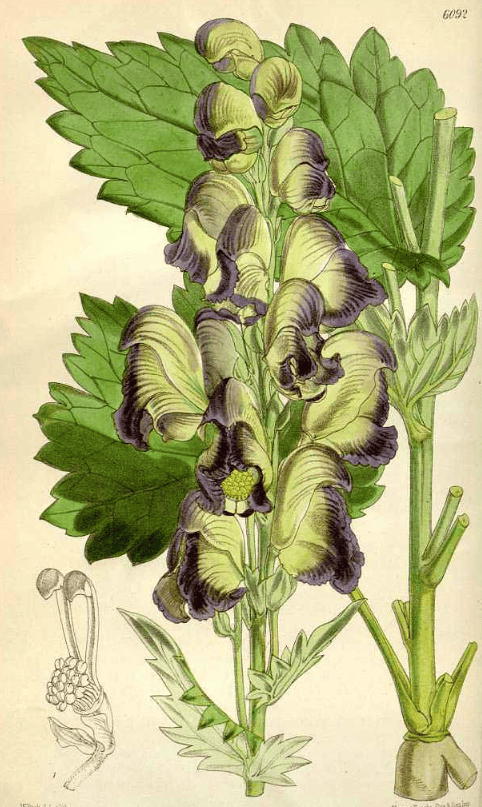
Aconitum heterophyllum
White Aconite
Curtis’s Botanical Magazine, (1874)
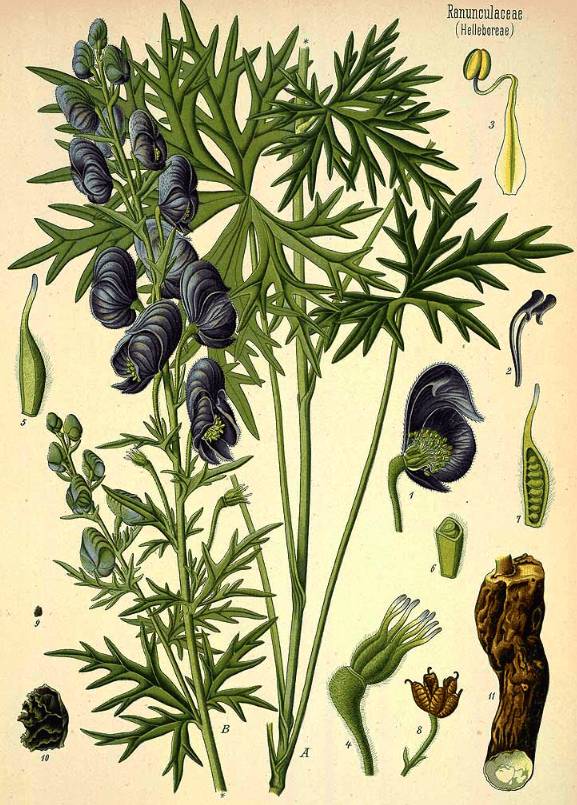
Aconitum ferox
Black Aconite
F.E. Koehler, Medizinal Pflanzen, (1890)
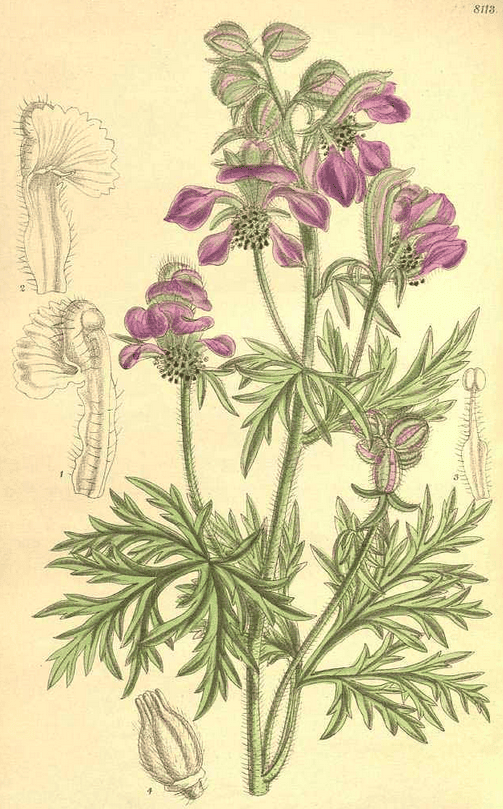
Aconitum gymnandrum
‘Red Aconite’ (Lesser variety)
Curtis’s Botanical Magazine (1907)
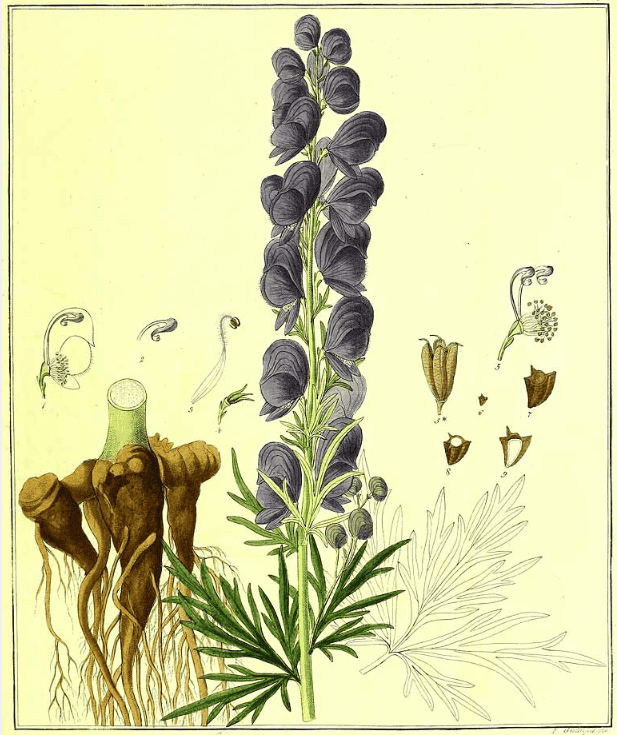
Aconitum tauricum
“Yellow Aconite”
F.G. Hayne, Getreue Darstellung und Beschreibung der
in der Arzneykunde gebräuchlichen Gewächse, (1833)
Botanical name:
There are 4 main types of Aconite used in Tibetan Medicine, differentiated based on the color of their root-tissue (Kletter)
The categorization is complex, with some species being listed differently according to different sources.
Bong nga dkar po (Bong dkar) བོང་ང་དཀར་པོ ‘White Aconite’, Also called Spyang dug
a. Aconitum heterophyllum
b. A. palmatum
Other species suggested: A. tanguticum
Bong nga nag po (Bong nag): བོང་ང་ནག་པོ ‘Black Aconite’ (Dark Blue): Also called Btsan dug, Sman chen, Ha la ha la
a. Aconitum ferox (Nepal Aconite), Bish, Nipo er Wu Tou 尼泊尔乌头
b. A. chasmanthum
c. A. flavum (Tibet, West China)
d. A. pendulum (syn. A. szechenylanum)
e. A. laciniatum
f. A. balfouri
g. A. spicatum (Sman chen)
h. A. richardsonianum var. crispulum (Ha la ha la) 直序乌头
i. A. kusnezoffii (Ha la)
j. A. violaceum (Sman chen)
Other species suggested:
k. A. acutiusculum var. aureopilosum (Yunnan)
l. A. brachypodum (Sichuan, Yunnan)
m. A. bracteolosum (Yunnan)
n. A. dolichorhynchum (Yunnan)
o. A. forrestii (SW China)
p. A. gezaense (Yunnan)
q. A. henryi (syn. A. sungpanense)
r. A. kongboense (SW China)
s. A. sungpanense
Note: Black Aconite is highly poisonous; it is synonymous with the Chinese Aconites (Chuan Wu, Wu Tuo etc.) and has been used as a substitute for Aconitum napellus.
Bong nga dmar po (Bong dmar) བོང་ང་དམར་པོ “Red Aconite”,
a. Aconitum tanguticum
b. A. naviculare (syn. A. creagromorphum)
c. A. brunneum
d. A. gymnandrum (an inferior type)
e. Delphinium densiflorum is listed by some sources
Bong nga ser po (Bong ser, Bong nga rigs ser po): བོང་ང་སེར་པོ “Yellow Aconite”, Also called ‘Brit shil ma, Ser po btsan dug
a. A. fischeri
b. Aconitum tauricum (syn. A. autumnale)
c. A. kongboense (this is classed as ‘Black’ [toxic] Aconite by some sources); Ra dug dkar po
Other varieties:
Dzin pa, Dzin pa dkar po (synonymous with ‘Black Aconite). This is a less toxic variety of “Black Aconite”, containing only traces of the highly toxic diester diterpene alkaloids (DDA). It contains monoester or norditerpenoid alkaloids (such as gymnandine and talatisamine).
a. Aconitum flavum
b. Aconitum gymnandrum
Synonyms:
The Aconites, more than almost any other medicinal genus of plants, have many synonyms. Names are often confusing and the exact range of species that supply each of the 4 types in Tibetan Medicine is complex. Therefore, we have given synonyms for the the major varieties.
1. Aconitum heterophyllum:
A. atees, A. cordatum, A. ovatum, A. petiolare
2. Aconitum naviculare
A. bhutanicum, A. creagromorphum, A. ferox (Brühl)
3. Aconitum ferox
A. atrox
5. Aconitum tauricum:
A. autumnale, A. eustachium, A. formosum, A. koelleanum, A. latemarense, A. multifidum
Aconitum napellus (Rchb.) has also been given as a synonym
Uses:
See individual species
You must be logged in to view this content, please login. If you're not a member then Click this link to subscribe