Acacia, Gum Arabic
Egyptian Thorn
Babula (Ayurveda)
Aqaqia (Unani)
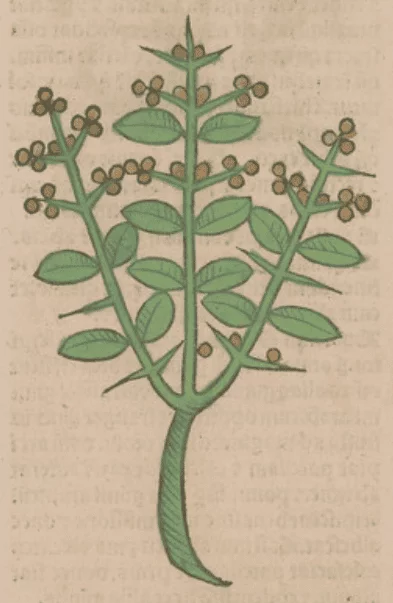
Ortus Sanitatis, Meydenbach, 1491
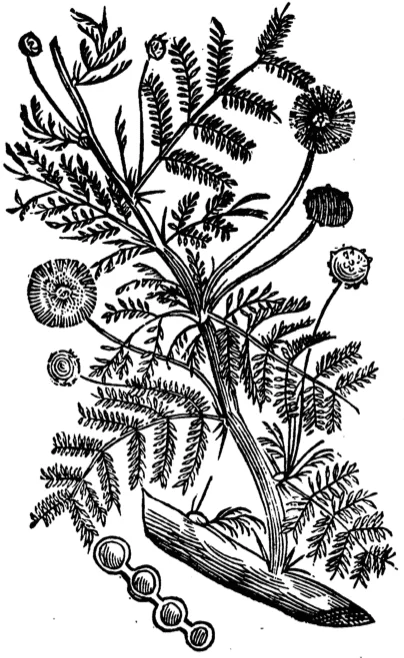
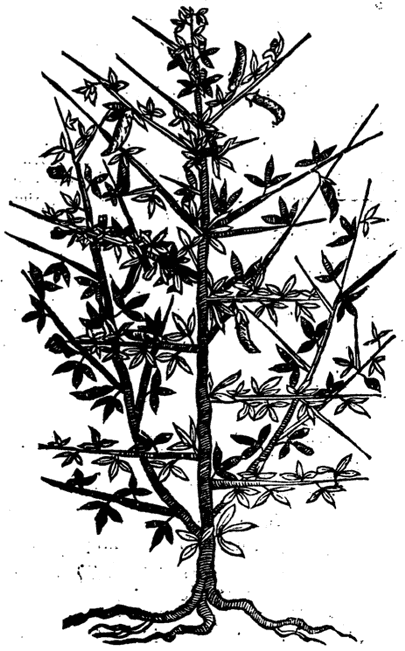
Egyptian Acacia (left), Acacia of Dioscorides (right)
Parkinson, Theatrum Botanicum, 1640
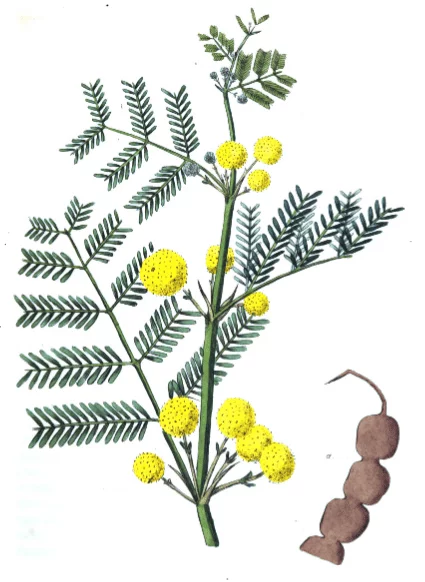
Flora Medica, Royal College of Physicians, 1829
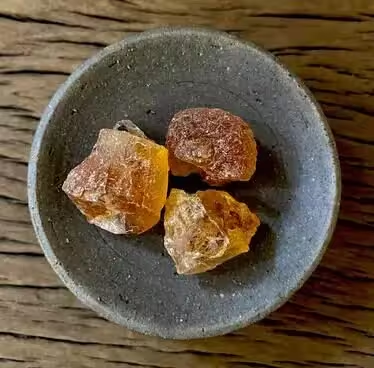
Top quality Gum Arabic pieces
(Adam, 2024)
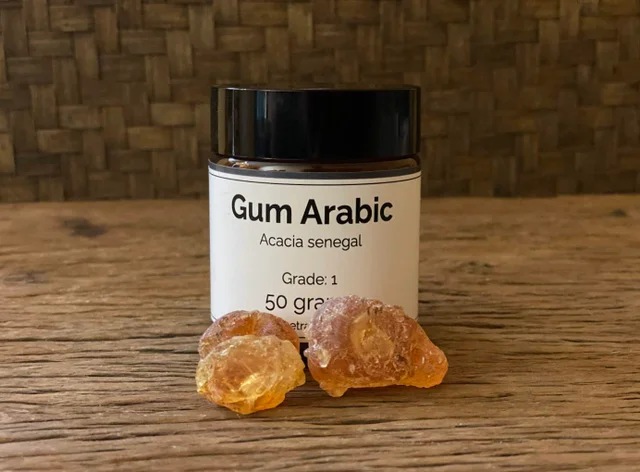
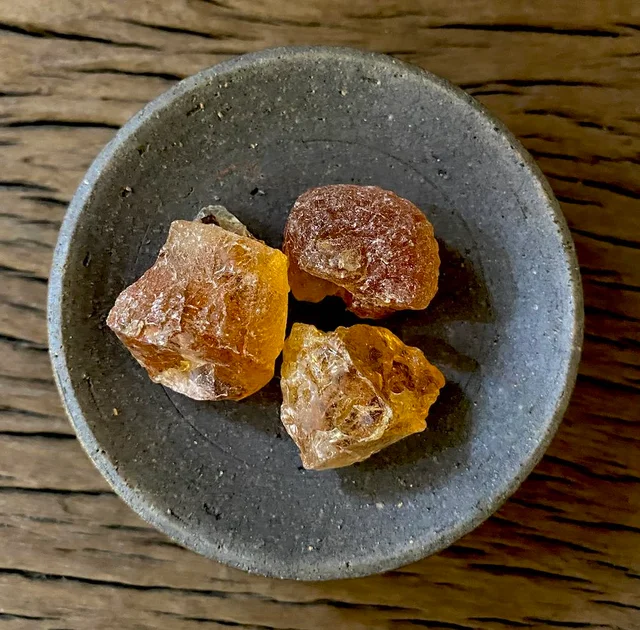
Gum Arabic 50 grams
GRADE 1
Premium Gum Arabic in large masses.
Botanical name:
Acacia arabica
Modern sources of ‘Gum Arabic’, or ‘Acacia gum’ are varied:
1. Senegal Gum:, Hashab A. senegal
2. Suakin, Talca or Talha Gum: A. stenocarpa, A. seyel
3. Sokoto, Combretam, Nigerian Acacia gum: lower grade, mixed Acacia gum
4. Morocco, Mogador or Brown Barberry Gum: A. nioltica
5. Cape Gum: A. horrida, A. karroo, A. capensis
6. East India Gum: from various African sources
7. Egyptian Gum Arabic: A. vera
8. Australian Gum Arabic: A. decurrens, A. mollissima, A. dealbata, A. homalophylla
Parts used:
Gum (‘Gum Arabic’); extract of the seed pods (‘Gum Acacia’)
The bark is also used in Unani and Siddha medicine
Temperature & Taste:
Neutral (some said Cool), moist in the 1st degree
It thickens
Classifications:
2E LENITIVE. 2G. CLEANSING. 2O. ASTRINGENTS. 2P. HEMOSTATICS. 2S. STRENGTHENING MEDICINES
3F. LITHONTRIPTIC
4d. PECTORAL. 4e. STOMACHIC
Uses:
1. Clears Heat, Benefits Yin:
-sore, rough and dry Throat; dry or irritating Cough
-irritation of the Stomach and Intestines; Gastritis, Diarrhea
-Inflammatory Bowel Diseases, Ulcerative Colitis (proven effect)
-heat and irritation of the Urine; Cystitis, Gonorrhea
-also bleeding from Heat
-Peptic Ulcers
-removes the acrimony of Medicines
2. Benefits Yin, Strengthens the Kidneys, Restrains Essence:
-Yin deficiency with dryness of the mouth, Night Sweats
-spermatorrhea, Premature Ejaculation, Frequent discharges; benefits the viscosity of the semen
-weakness in men from excess Sex
-“stops the pores of the skin” (therefore stops excess sweating)
-Diabetes (proven effect)
-Rheumatoid Arthritis
-Chronic Kidney disease
-Osteoporosis (proven effect)
-Sickle Cell Anemia
3. Externally:
-applied to burns and scalds
-also applied to sore or chapped nipples (often mixed with Egg White).
-in poultices to retain warmth and moisture, as well as absorbing discharge.
-As a styptic, it has been used to stop bleeding, particularly that coming from Leech bites.
-Teeth disorders are helped by chewing the fresh bark.
-Periodontitis
-as a douche is also good for leukorrhea.
BARK:
1. Used for Worms
Dose:
500mg–2 grams of the Powder
Substitutes:
1. Gum Arabic and Tragacanth may generally be substituted for one another
2. Salmon (Seplasium) said Cherry or Plum tree gums may be used as Gum Arabic.
3. “Some people believe that the gum of sweet almonds is similar to the gum arabic” (Avicenna)
4. Dried juice of the unripe fruit of Sloes was called German Acacia and commonly supplied the shops for Acacia in parts of Europe.
5. A large number of Acacia species from different countries have supplied ‘Gum Arabic’ (see above)
6. Acacia arbica bark: Oak bark (Waring)
Main Combinations:
Often combined with Tragacanth.
1. To strengthen Sexual vigor, Gum Arabic with Ghee, Withania, Ginger, Nutmeg, Cinnamon (as in Electuary of Gum Arabic, Unani)
2. Urinary Stones, Barley, Gum Arabic, Juniper, Marshmallow
3. Rheumatism, Gum Arabic with Nutmeg, Orange peel, Arum root (Formulaire Magistral et Memorial Pharmaceutique, 1823)
4. Heat-type Cough:
i. Gum Arabic, Tragacanth, Tabasheer, Rose, Licorice, Saffron
ii. Gum Arabic with Mullein, Violet, Marshmallow
5. Ulcerative Colitis, Gum Arabic, Basil (see research below)
6. Laryngitis, Acacia arabica bark (30 grams), Betel nut, Catechu, Galls, Alum (2 grams each), prepare a decoction to be used as a gargle. (Siddha)
7. Heavy Menstrual Bleeding, prepare a vaginal suppository from Gum Arabic and Camphor. (See research below)
Major Formulas:
Syrup of Violet (De morbus internis curandis)
Tragacanth Cooling Powder (Diatragacanth Frigidum) (Nicholas)
Powder of Three Sandalwoods (Diatrisantalum) (Mesue)
Powder of Haly (Haly)
Aromatic Rose Compound (Aromaticum Rosatum)
Troches of Saffron (Damocrates)
Troches of Amber (Trochisci de Succino) (Mesue)
Troches of Earth of Lemnos (Trochisci de Terra Lemna)
Troches of Spodium (Trochisci Spodii) (Avicenna)
Troches of Poppy seed (Unani)
Troches of Ramich (Mesue)
Troches of Gordon (Trochisci Gordonii)
Troches for Cough (Andromachus)
Sugar Penid (Diapenidon Frigidum) (Nichoals)
Sugar Penid with Spices (Diapenidon Compositum) (Nicholas)
Abbots Confect of Rose (Diarrhodon Abbatis) (Nicholas)
A Sound and Experienced Electuary (Mesue)
Electuary of Pine Nuts (Looch de Pino) (Mesue)
Electuary to Restore Humidity (Arnold de Villa Nova)
Electuary of Poppy (Diapapaver) (Mesue)
Electuary of Micleta (Nicholas)
Restorative Electuary (Antidotus Analeptica) (Nicholas)
Lohoch of Poppy (Lohoc de Papavere)
Pills of Rhubarb (Greater) (Pil. de Raved Sceni) (Mesue)
Pills Against Fluxes (Nicolas)
Cautions:
None noted
Main Preparations used:
Powder; Mucilage; Purified Gum (dissolved in water, strained, and thickened)
1. Mucilage of Gum Arabic:
i. Gum Arabic (1 part), boiling water (2 parts). Digest with frequent agitation until the gum dissolves, then strain through linen.
2. Troches of Gum:
i. Gum Arabic (4 parts), Starch (1 part), refined Sugar (12 parts), Rose Water (sufficient). Make Troches. (Edinborough)
ii. some versions used Orange flower water.
3. Demulcent Powder:
i. Gum Arabic (3 oz.), Licorice (1 oz.), White Sugar (2 oz.). Mix. (Pharmacopoeia Hannoverana, 1819)
ii. Gum Arabic, Licorice, White Sugar (equal parts) (Pharmacopoeia Suecica, 1817)
iii. Starch, Licorice (1 part each), Gum Arabic, White Sugar (2 parts each). Mix. (Pharmacopoeia Austriaca, 1820)
iv. Licorice, Florentine Orris (3 drams each), Gum Arabic (1 oz.), Tragacanth (half oz.), Starch (5 oz.), Sugar (16 oz.). Mix. (Pharmacopoeia Generalis, 1783)
4. Astringent Demulcent Powder (Pulvis Incrassans Fulleri):
i. Gum Arabic, Marshmallow root, Licorice, Dragons Blood (equal parts) (Pharmacopoeia Generalis, 1783)
Click the above Tabs for more information on this medicine
‘The history of this drug carries us back to a remote antiquity. The Egyptian fleets brought gum from the gulf of Aden as early as the 17th century B.C. Thus in the treasury of king Rhampsinit (Ramses III.) at Medinet Abu, there are representations of gum-trees, together with heaps of gum. The symbol used to signify gum, is read Kami-en-jmnt. i.e. gum from the country of Punt. This, in all probability, includes both the Somali coast as well as that of the opposite parts of Arabia. Thus, gum is of frequent occurrence in Egyptian inscriptions; sometimes mention is made of gum from Canaan. The word kami is the original of the Greek [?], whence through the Latin our own word gum.
The Egyptians used gum largely in painting; an inscription exists which states that in one particular instance a solution of Kami (gum) was used to render adherent the mineral pigment called chesteb, the name applied to lapis lazuli or to a glass coloured blue by cobalt.
Turning to the Greeks, we find that Theophrastus in the 3rd and 4th century B.C. mentioned [?] as a product of the Egyptian [?], of which tree there was a forest in the Thebais of Upper Egypt. Strabo also, in describing the district of Arsinoe, the modern Fayum, says that gum is got from the forest of the Thebaic Akanthe.
Celsus in the 1st century mentions Gummi acanthinum; Dioscorides and Pliny also describe Egyptian gum, which the latter values at 3 denarii [2 shillings] per lb.
In those times gum no doubt used to be shipped from north-eastern Africa to Arabia; there is no evidence showing that Arabia itself had ever furnished the chief bulk of the drug. The designation gum arabic occurs in Diodorua Siculus in the first century of our era, also in the list of goods of Alexandria mentioned in our article on Galbanun.
Gum was employed by the Arabian physicians and by those of the school of Salerno, yet its utility in medicine and the arts was but little appreciated in Europeun til a much later period. For the latter purpose at least the gummy exudations of indigenous trees were occasionally resorted to, as distinctly pointed out about the beginning of the 12th century, by Theophilus or Rogker: “gummi quot exit de arbore ceraso vel prano.”
During the middle ages, the small supplies that reached Europe were procured through the Italian traders from Egypt and Turkey. Thus Pegolotti, who wrote a work on commerce about A.D. 1340, speaks of gum arabic as one of the drugs sold at Constantinople by the pound not by the quintal. Again, in a list of drugs liable to duty at Pisain 1305, and in a similar list relating to Paris in 1349, we find mention of gum arabic. It is likewise named by Pasi, in 1521, as an export from Venice to London.
Gum also reached Europe from Western Africa, with which region the Portuguese had a direct trade as early as 1449.’ (Pharmacographia, Fluckiger & Hanbury, 1879)
GENERAL / REVIEW
–The Efficacy of Gum Arabic in Managing Diseases: A Systematic Review of Evidence-Based Clinical Trials.
–Molecular perspectives on Acacia Gum as a functional polysaccharide for biomedical and industrial applications: A review.
–Gum Arabic: A Commodity with Versatile Formulations and Applications
ANTIBACTERIAL
–Screening of antibacterial potentials of some medicinal plants from Melghat forest in India.
–The antimicrobial effects of seven different types of Asian chewing sticks.
ANTI-VIRAL
–In vitro antiviral activity of plant extracts on goatpox virus replication.
ANTI-FUNGAL
–Evaluation of the Antifungal Efficacy of Natural Gum Acacia and Aloe Vera against Candida albicans on Conventional and Digital Denture Base Materials: An In Vitro Study.
ANTI-INFLAMMATORY
–Gum acacia dietary fiber: Significance in immunomodulation, inflammatory diseases, and cancer.
IMMUNOMODULATORY
–Gum acacia dietary fiber: Significance in immunomodulation, inflammatory diseases, and cancer.
INCREASED PHAGOCYTOSIS
–Gum Arabic Increases Phagocytosis of Escherichia coli by Blood Leukocytes of Young and Old Healthy Volunteers.
ANXIETY
–Acacia catechu Willd. and Acacia arabica Willd. decrease the extent of anxiety behavior by reducing oxidative stress and moderating neurochemicals.
PREBIOTIC
–Natural gums (gum Arabic, guar gum and xanthan gum) as a promising source of prebiotics: a review on their functional roles and food applications.
–Effect of gum Arabic as natural prebiotic on intestinal ecosystem of post-hatched broiler chicks.
–Prebiotic potential of gum Arabic for gut health.
–Polysaccharides from exudate gums of plants and interactions with the intestinal microbiota: A review of vegetal biopolymers and prediction of their prebiotic potential.
PEPTIC ULCERS
–A Review on Herbal Drugs Used in the Treatment of Peptic Ulcer.
INFLAMMATORY BOWEL DISEASE
–Novel anti-inflammatory properties of mannose oligosaccharides in the treatment of inflammatory bowel disease via LGALS3 modulation.
ULCERATIVE COLITIS
–Ameliorating effects of Acacia arabica and Ocimum basilicum on acetic acid-induced ulcerative colitis model through mitigation of inflammation and oxidative stress.
ARTHRITIS
–Mitigation of inflammation and oxidative stress in FCA-induced arthritic rat model through gum acacia intervention: a comprehensive in‑vivo study.
OSTEOPOROSIS
–Acacia arabica (Lam.) Willd. On osteoblastogenesis, osteoblast proliferation, osteoclastic activity, and bone calcium mineralization.
NEPHRPROTECTIVE
–Protective effects of Gum Arabic and vitamin C combination in glycerol-induced nephrotoxicity by modulating oxidative stress, inflammation, and apoptosis.
–Attenuation of carbon tetrachloride-induced nephrotoxicity by gum Arabic extract via modulating cellular redox state, NF-kappaB pathway, and KIM-1.
CHRONIC KIDNEY DISEASE
–Therapeutic Potential of Gum Arabic (Acacia senegal) in Chronic Kidney Disease Management: A Narrative Review.
DIABETES
–Insulin secretory actions of ethanolic extract of Acacia arabica bark in high fat-fed diet-induced obese Type 2 diabetic rats.
–Identification of Multiple Pancreatic and Extra-Pancreatic Pathways Underlying the Glucose-Lowering Actions of Acacia arabica Bark in Type-2 Diabetes and Isolation of Active Phytoconstituents.
–The role of Acacia Arabica extract as an antidiabetic, antihyperlipidemic, and antioxidant in streptozotocin-induced diabetic rats.
–Effects of Acacia arabica and Caralluma edulis on blood glucose levels of normal and alloxan diabetic rabbits.
HEAVY MENSTRUAL BLEEDING
–Efficacy of a vaginal suppository formulation prepared with Acacia arabica (Lam.) Willd. gum and Cinnamomum camphora (L.) J. Presl. in heavy menstrual bleeding analyzed using a machine learning technique.
CANCER
–Gum acacia dietary fiber: Significance in immunomodulation, inflammatory diseases, and cancer.
GINGIVITIS
–Anti-gingivitis effects of Acacia arabica-containing toothpaste.
–Short-term clinical effects of commercially available gel containing Acacia arabica: a randomized controlled clinical trial.
–The effects of Acacia arabica gum on the in vitro growth and protease activities of periodontopathic bacteria.
ANTI-PLAQUE
–The finding of antiplaque features in Acacia Arabica type of chewing gum.
You must be logged in to view this content, please login. If you're not a member then Click this link to subscribe